Any day of the week
- Open daily
- Checked Nov 2026
No weekly closing day. Aim to be up the stairs well before the 6:00 pm close.
Home › Phnom Penh › Wat Phnom
Doun Penh district, Phnom Penh
Yes, stop if you are on the riverside: US$1 takes you up the 27 m hill where, by legend, the city began.
By Laura Brennan · updated
How long
Climb, look round the sanctuary, come down. It fits at the end of a riverside walk, not as a day on its own.
What is on topCost
The Ministry of Tourism lists a US$1 ticket; Into Cambodia says Khmer visitors enter free. The museum is extra.
Ticket detailWhy go
This is the city's namesake hill, and the legend is still alive: pilgrims come to make wishes.
Read the legendSkip if
Skip it if you have done the Royal Palace and care little for legends, or you would arrive after 6:00 PM.
Opening hoursOne guide suggests a half-day route in this order.
Stop 1
The Royal Palace and Silver Pagoda.
Stop 2
The National Museum.
Stop 3
Wat Phnom for city views.
The name literally means Penh's hill. In the legend, a woman named Penh found Buddha statues that the Mekong had carried downstream and set them on this hill.
Treat it as legend, not a record: the versions disagree on what Penh found and when. The wish part has outlived the story, though. Locals believe anyone who makes a wish at Wat Phnom will have it granted, the Ministry of Tourism says, and Wikivoyage describes the hill as always busy with pilgrims and fortune-tellers. By tradition the hill is where the city began. The shrine to Grandmother Penh near the chapel is where the story ends up.
Swipe or use the arrows.
 1/6
 2/6
 3/6
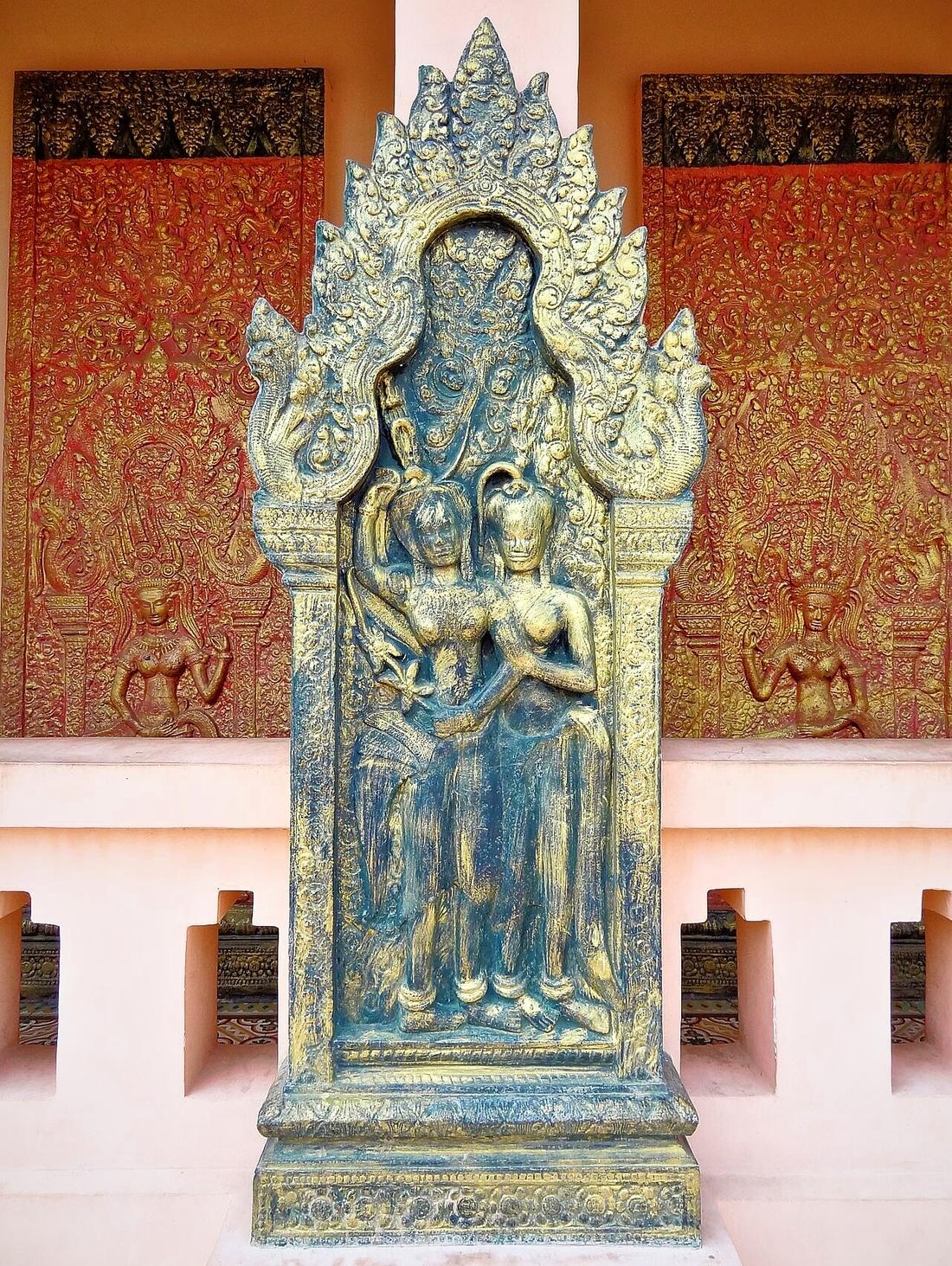 4/6
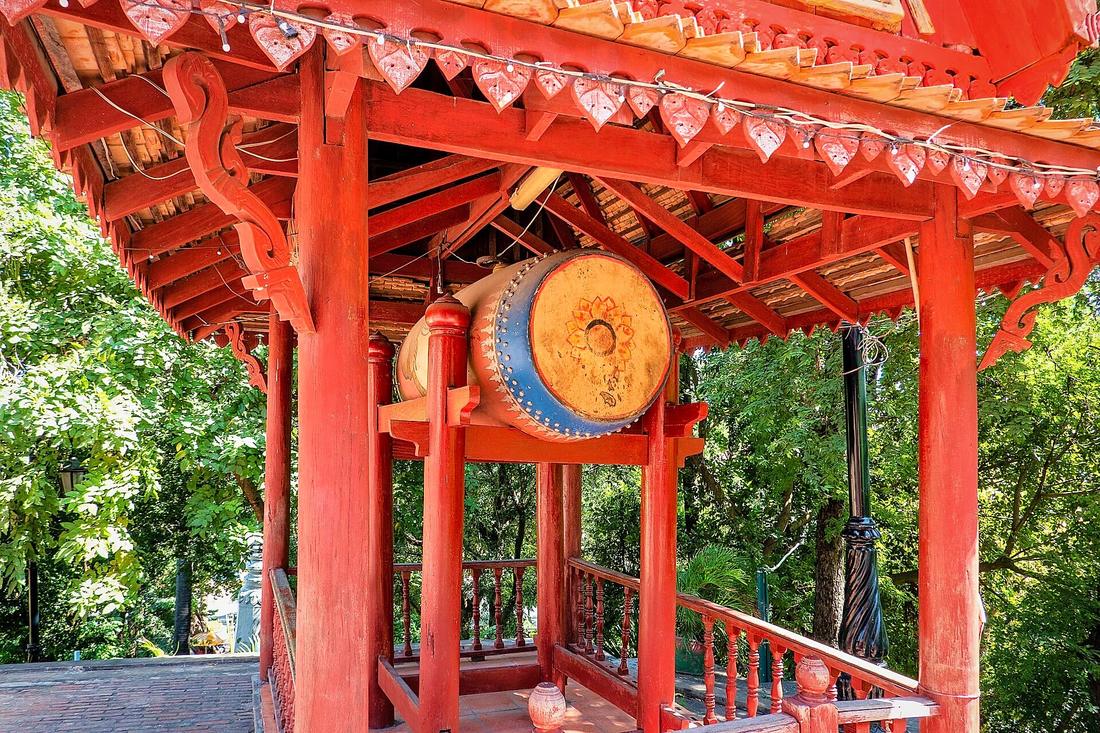 5/6
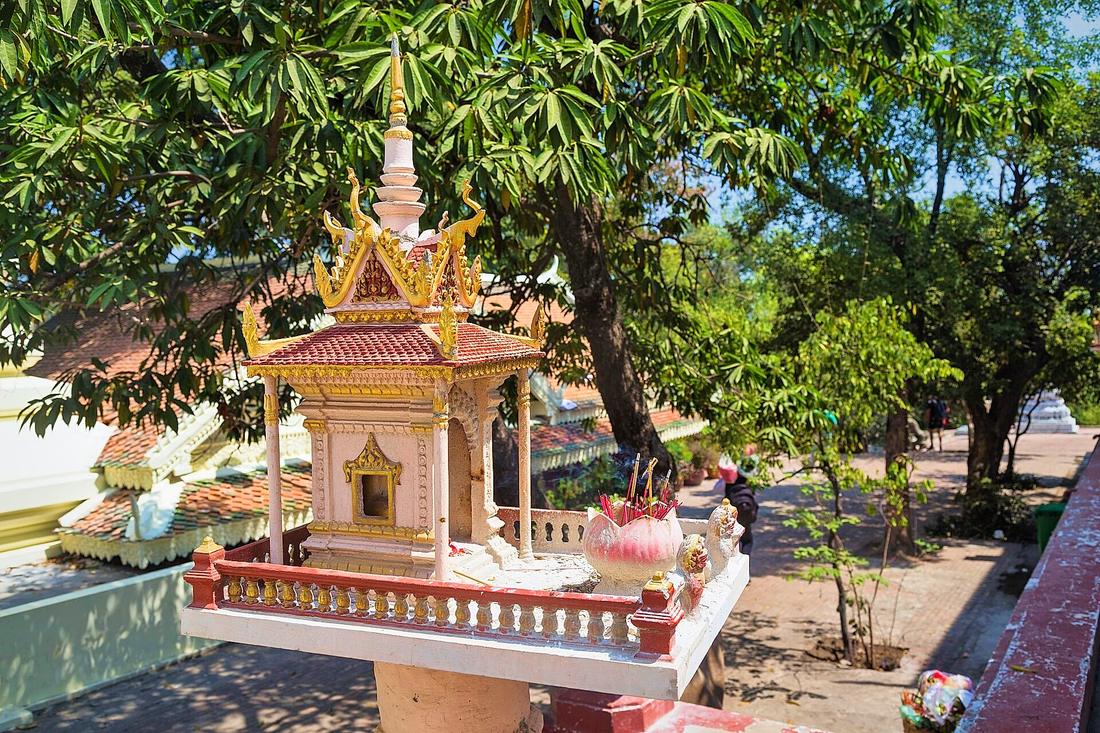 6/6
A rebuilt sanctuary, a stupa for a king and a shrine to Lady Penh, on a knoll the Ministry of Tourism puts at 27 m. The layout, shrine and mural details below come from guides (Wikipedia, Into Cambodia), not an official page. One guide calls the hill man-made.
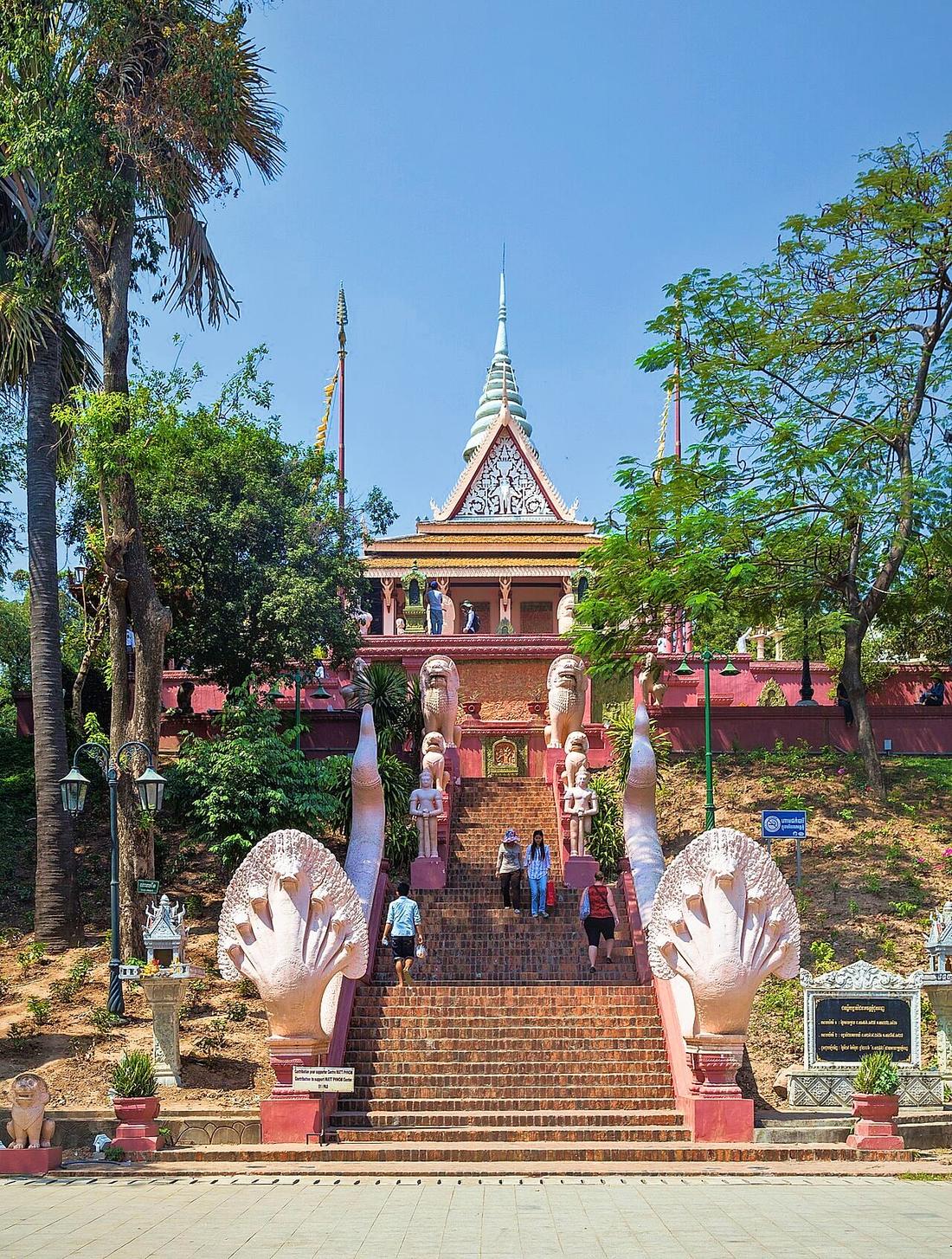
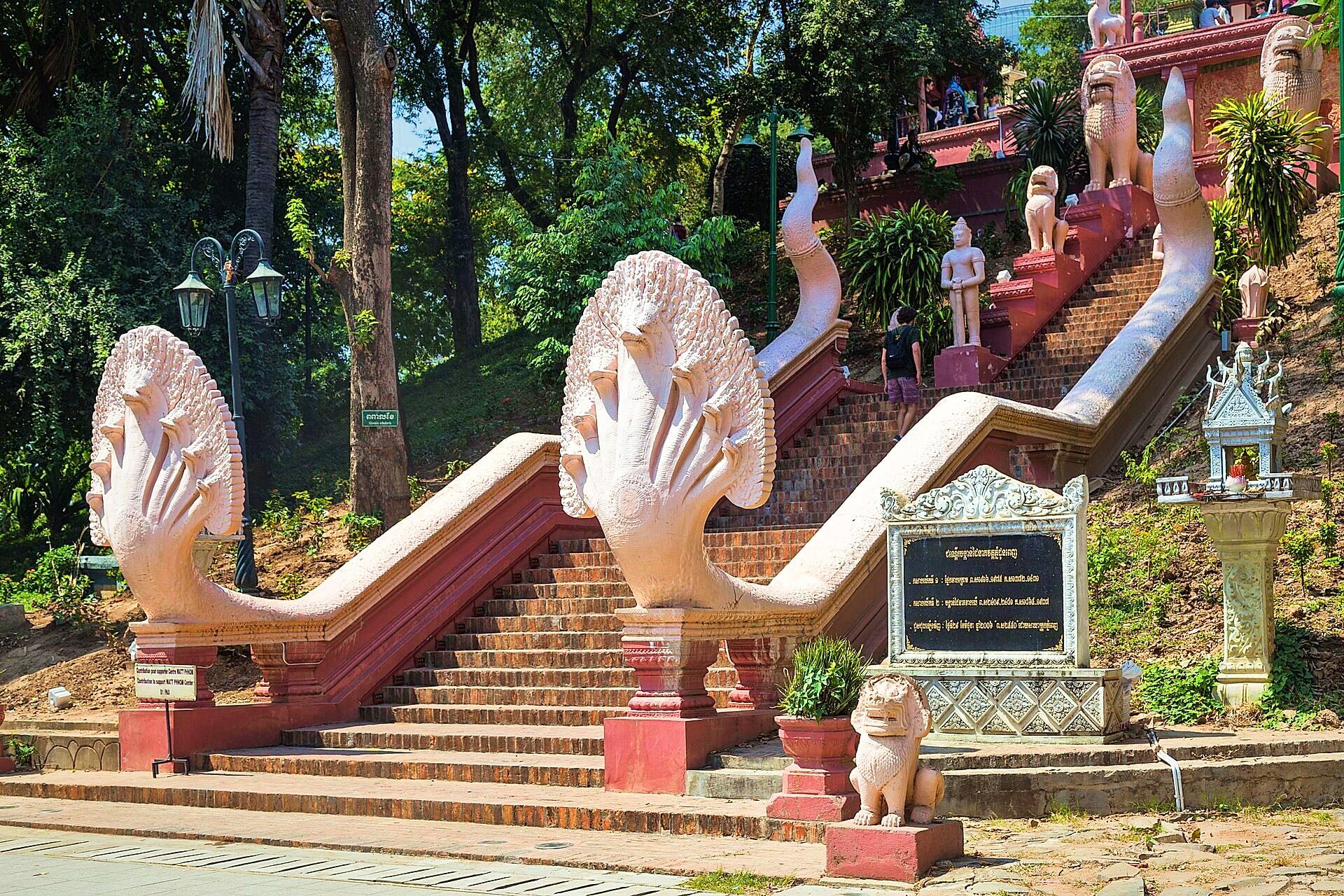
One guide says the complex faces east, with nagas guarding the stair up. The ticket booth sits at its foot.
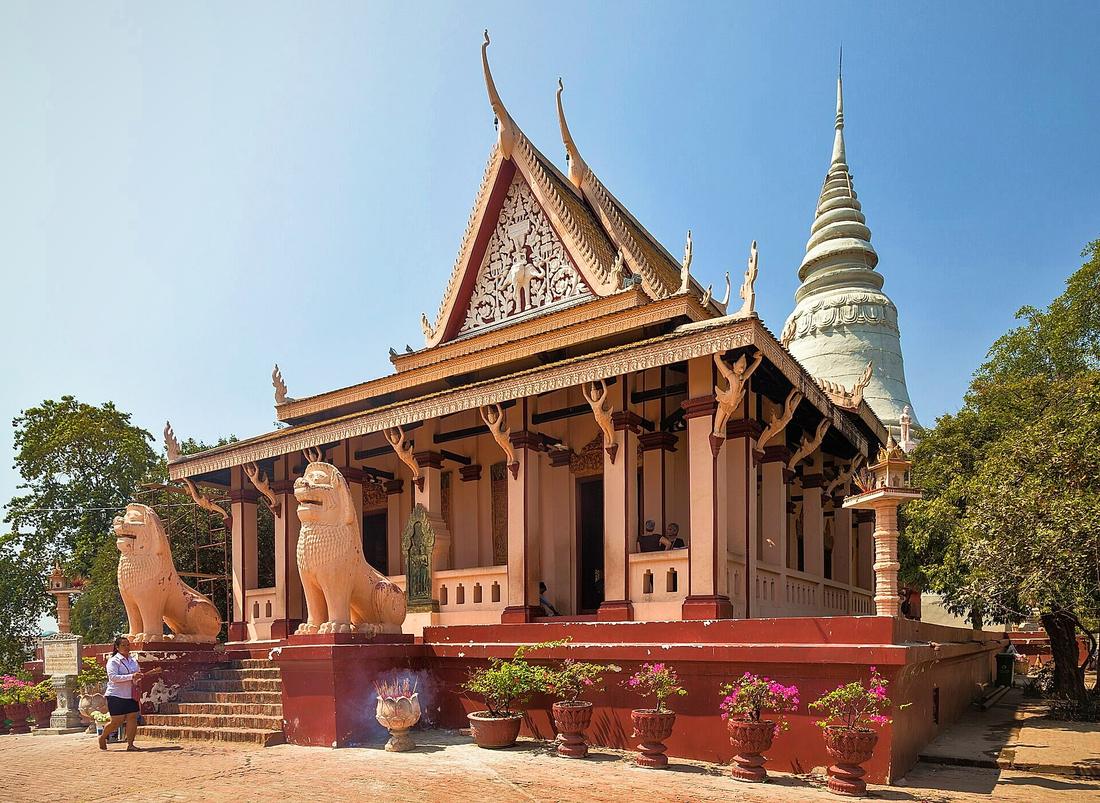
The large stupa holds the ashes of King Ponhea Yat, per one guide. Hill and stupa together reach 46 m, per Wikipedia.
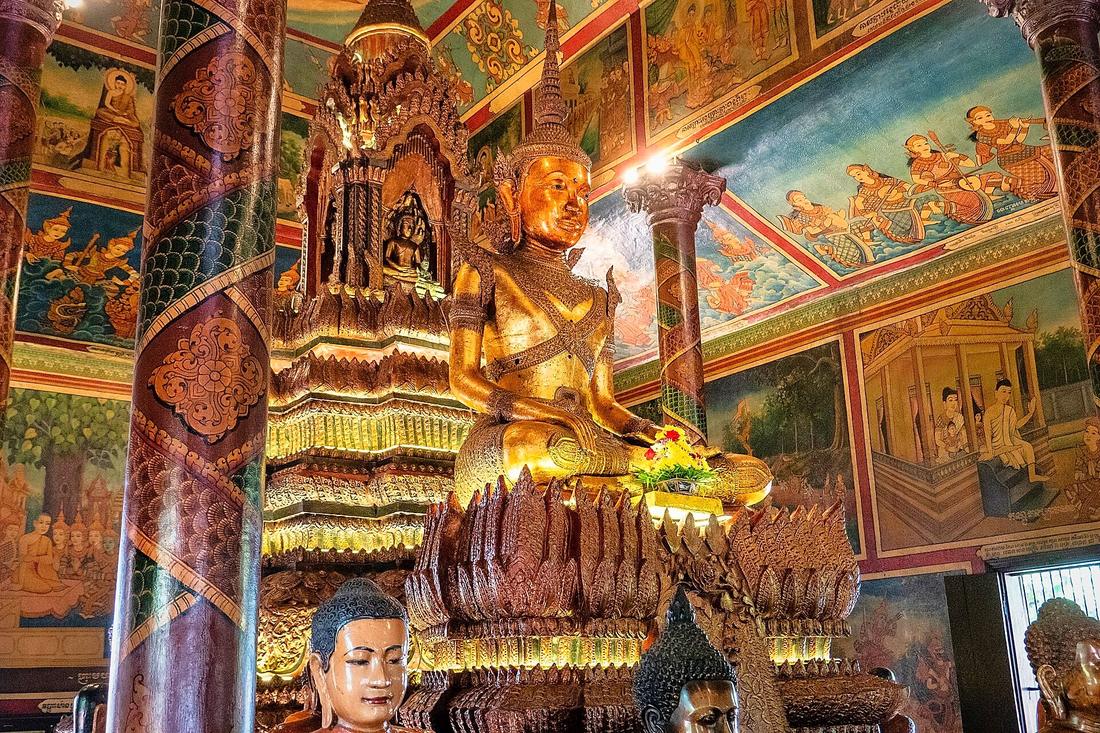
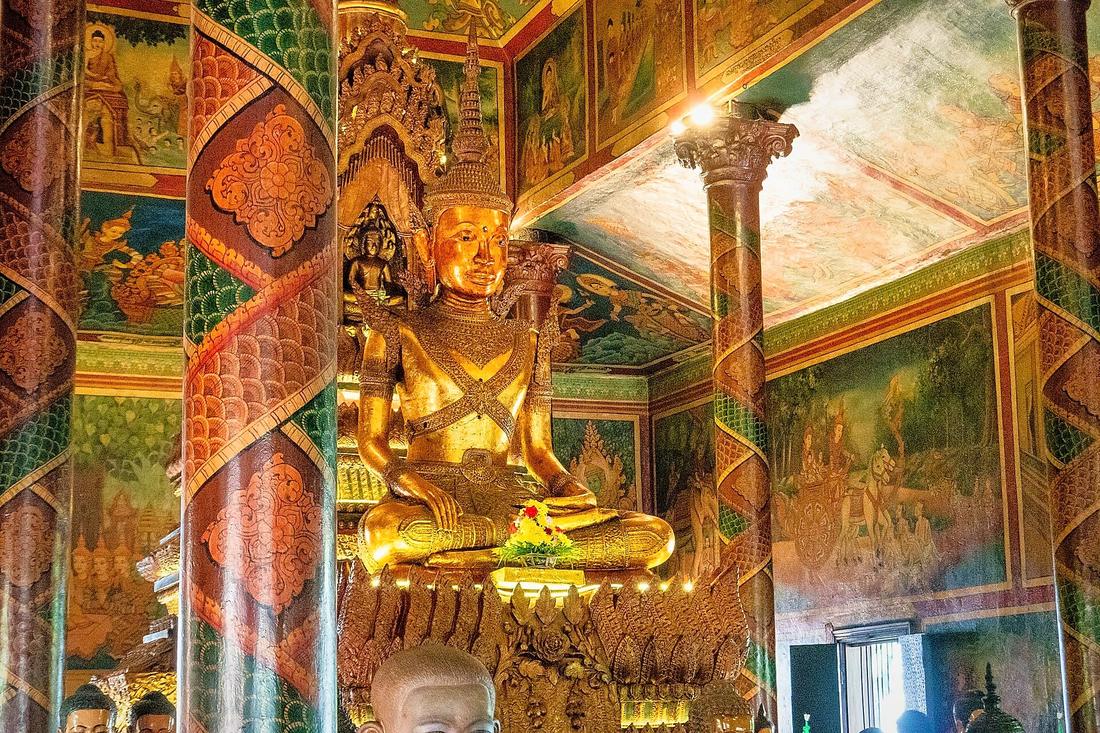
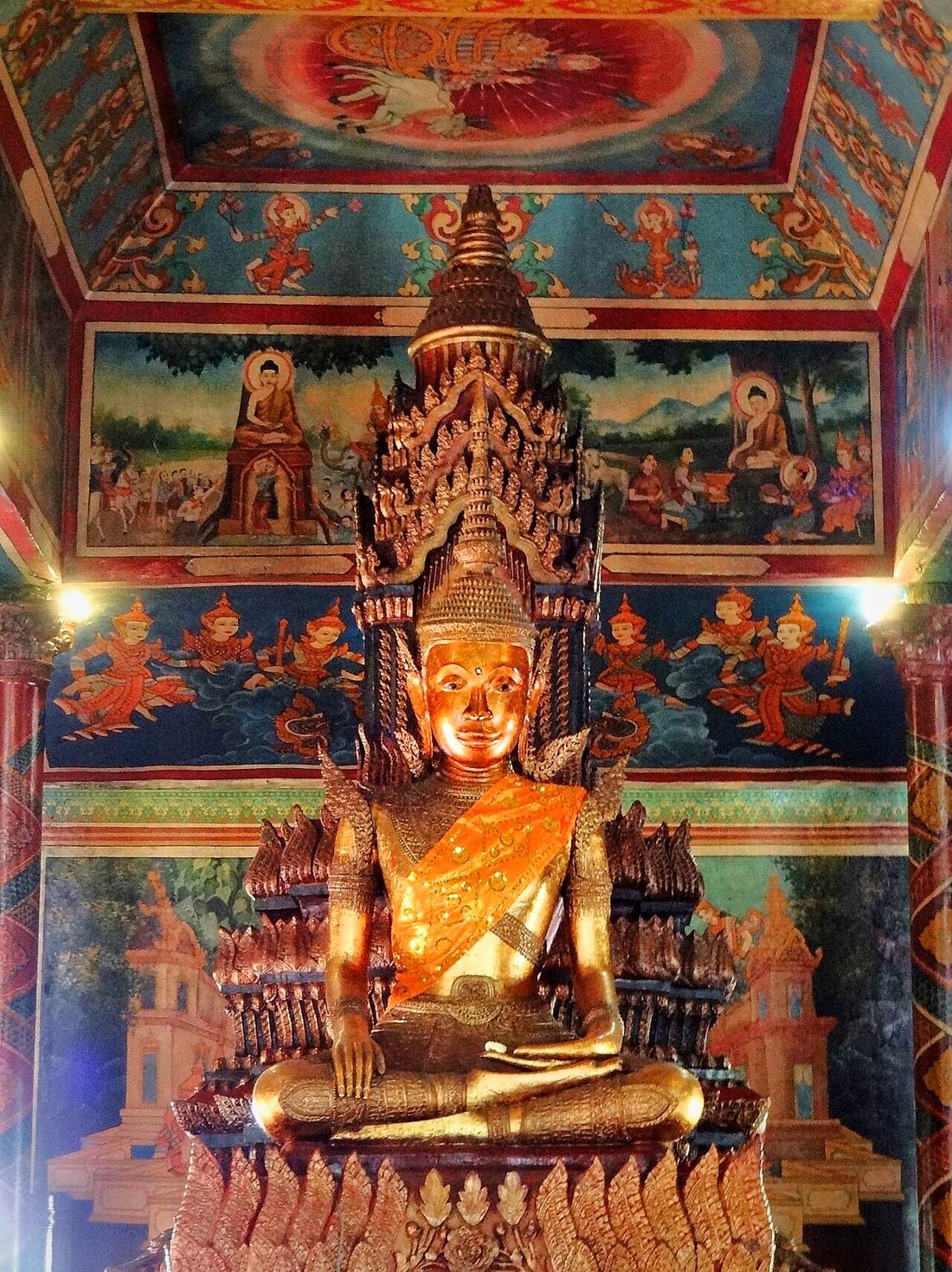
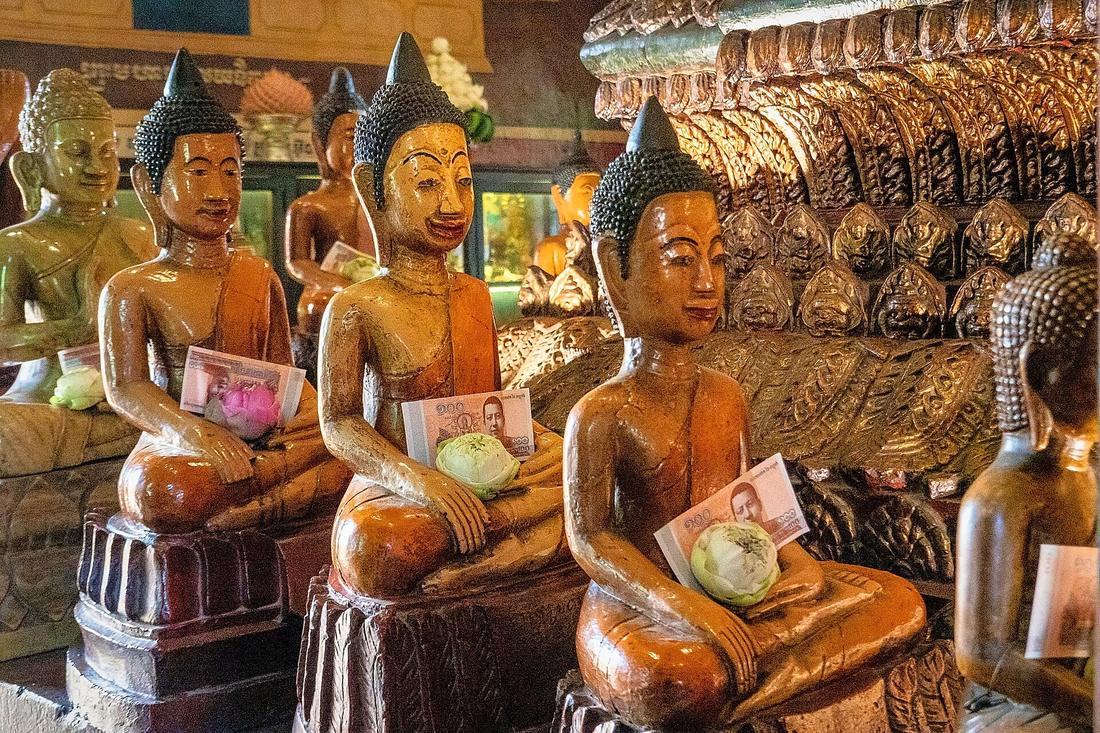
A large seated Buddha stands among other statues; Into Cambodia says today's statue is a cement copy of an original now in the National Museum. One guide says the murals tell Reamker scenes, the Khmer Ramayana, and Jataka tales of the Buddha's earlier lives.
A small shrine to Grandmother Penh stands near the chapel; one guide places it at the south-west corner of the complex.
According to Into Cambodia, the Buddha statue seen today is a cement copy, and the original is held in the National Museum.
At the foot of the hill, one guide describes a giant floral clock almost 20 m wide, a gift from China in 2000.
One guide says monkeys live around Wat Phnom and entertain visitors sitting on the hill; locals come to relax in the shade on the slopes.
The site is designated Wat Phnom Historical Park and is a Theravada Buddhist temple in Doun Penh district.
No. The vihara has been rebuilt at least four times, most recently in 1926, and the original sanctuary no longer survives.
Sources differ on the founding date; one account ties the founding to King Ponhea Yat.
The Ministry of Tourism's date for the first pagoda on the site.
Per Wikipedia, Ponhea Yat moved his court to the Tonle Sap confluence after floods in 1396. His stupa was later built on the hilltop.
The Ministry of Tourism lists each rebuild of the vihara.
The most recent rebuild, and the building you climb to.
Opening hours
Every day, 7:00 am to 6:00 pm, according to the Ministry of Tourism. Festival days bring the biggest crowds.
No weekly closing day. Aim to be up the stairs well before the 6:00 pm close.
Wat Phnom is the centre of celebration for International New Year, Khmer New Year and Pchum Ben, one guide says.
Even outside festivals the hill is rarely empty: worshippers come to pray and make wishes.
The Ministry of Tourism lists 7:00 am to 6:00 pm daily. One guide gives dawn to dusk instead, so treat the ministry figure as the working answer and check at the gate.
Foreigners pay US$1; buy it at the booth at the base of the eastern stairs.
The Ministry of Tourism gives a US$1 entrance ticket; Into Cambodia says Khmer visitors enter free. One guide says that dollar covers the top of the hill and the small museum on site costs US$2.
A working temple, not a park
People come here to pray and make wishes, so walk round the shrines quietly and let worshippers pass. Monkeys live around the hill, one guide says.
According to one guide it stands near the Tonle Sap River in the north-east of the city, at the top end of the riverfront Doun Penh district, which runs down to the Royal Palace.
Trip.com's estimate from 16 Apr 2026, not a live fare. Check the price in the app before you ride.
Wat Phnom is a stop on both lines, per Wikipedia.
Start at the Royal Palace and Silver Pagoda and follow the Tonle Sap north.
Other sights in Phnom Penh.
It is a short stop, not a half-day sight. For US$1 you get the temple at the spot where, by legend, the city was founded, plus a painted sanctuary and the stupa of King Ponhea Yat.
The Ministry of Tourism lists a US$1 entrance ticket (checked November 2026); Into Cambodia says foreigners pay US$1 and Khmer visitors enter free. One guide says the small museum on site costs US$2 more.
Daily from 7:00 am to 6:00 pm, according to the Ministry of Tourism (checked November 2026). One guide gives dawn to dusk instead.
Phnom Penh means Penh's hill. In the legend a woman named Penh found Buddha statues carried by the Mekong and placed them on this hill, and the city took her name.
The Ministry of Tourism gives 27 m for the tree-covered knoll. Wikipedia gives 46 m for hill and stupa together.
No. The Ministry of Tourism says the vihara was rebuilt in 1434, 1806, 1894 and most recently 1926, and one guide notes the original sanctuary no longer survives.
Yes. Per Wikipedia, Wat Phnom is a stop on city bus Line 2A and Line 4A (checked November 2026).