Home › Cambodian food › Fish amok
Khmer dish guide
Fish amok: what it is and how to order the real one
Order the fish version: a curry steamed 20-30 minutes in kroeung and coconut cream until it sets like a mousse, served hot. One travel guide says to expect about US$5-9 at a tourist-friendly Khmer restaurant Checked Nov 2026. If the menu offers chicken, tofu or beef, that is a substitute.
By Laura Brennan · updated
What is fish amok? The dish in four rows Checked Nov 2026
- What
- A steamed fish curry with a mousse-like consistency, mixed with coconut cream and eggs. Also written amok trei or amok trey.
- Base
- Fresh kroeung, a yellow or green herb paste, plus coconut cream. One travel guide calls it a gently spiced coconut custard.
- Served
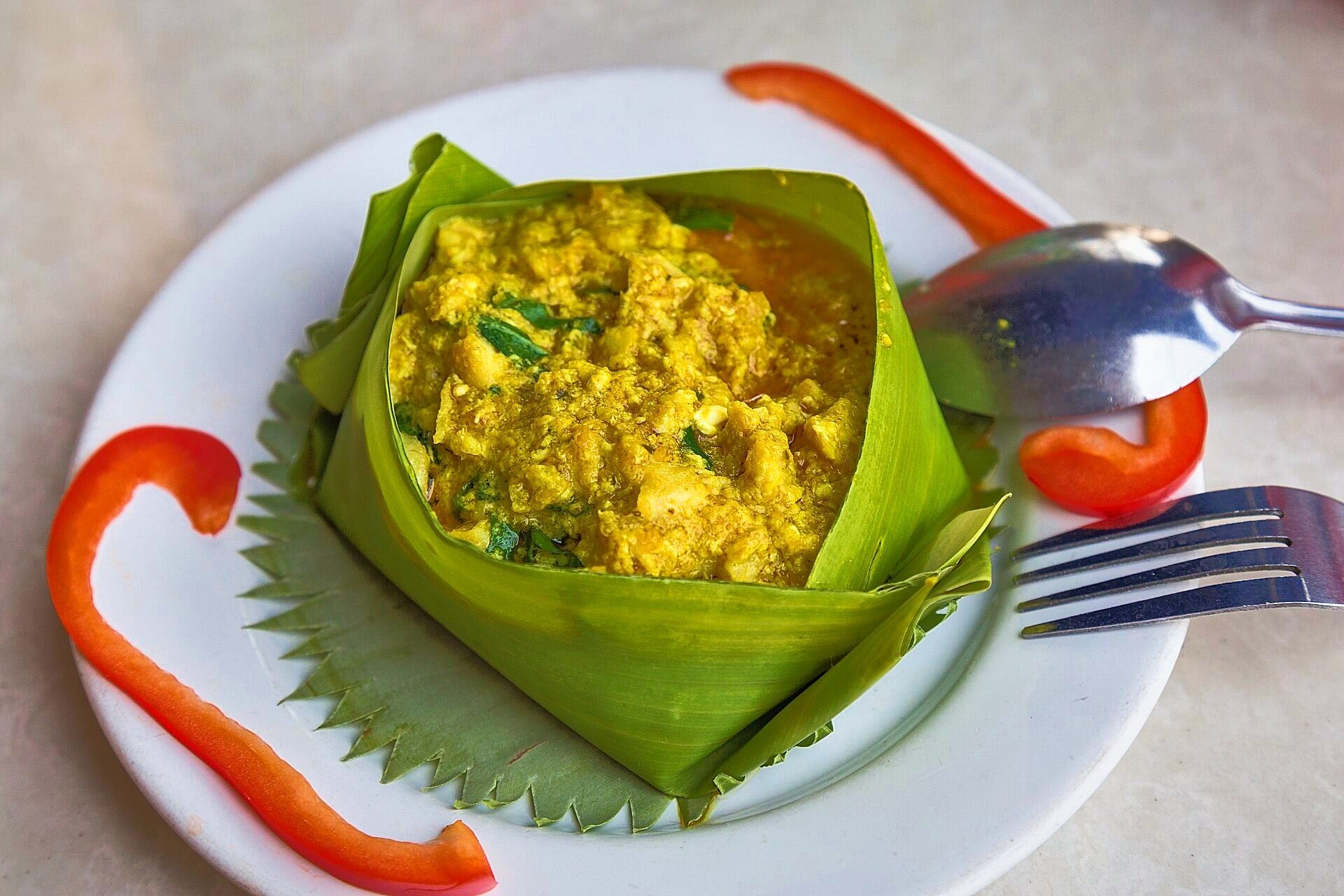
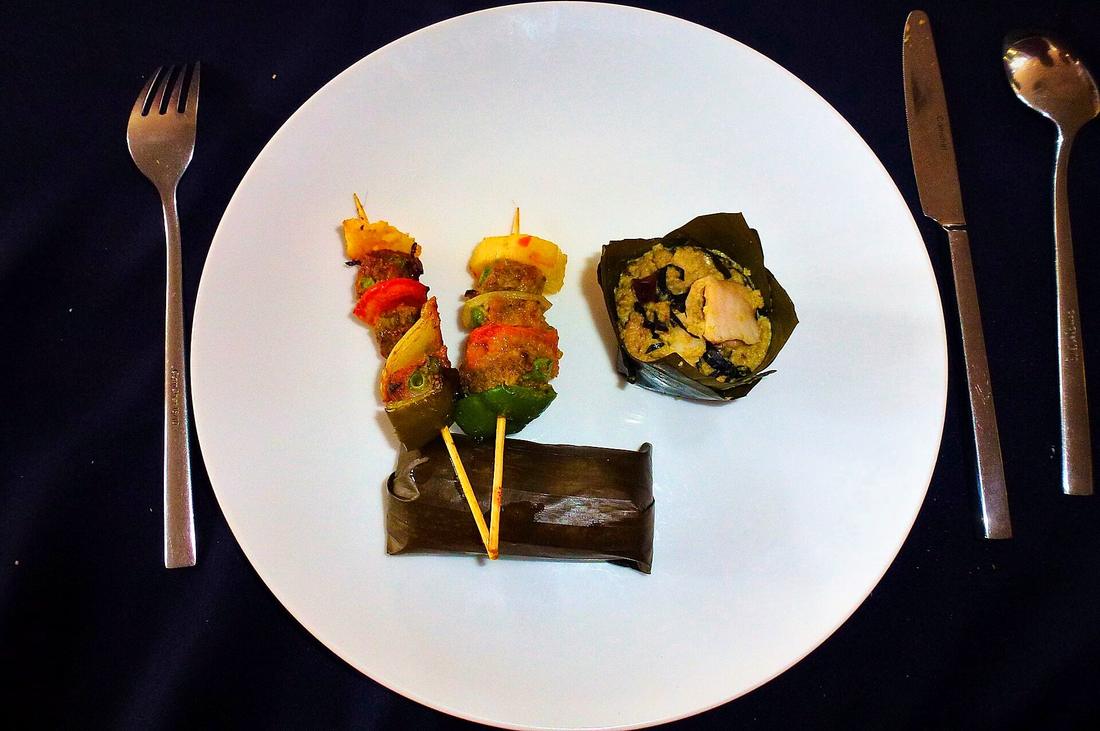
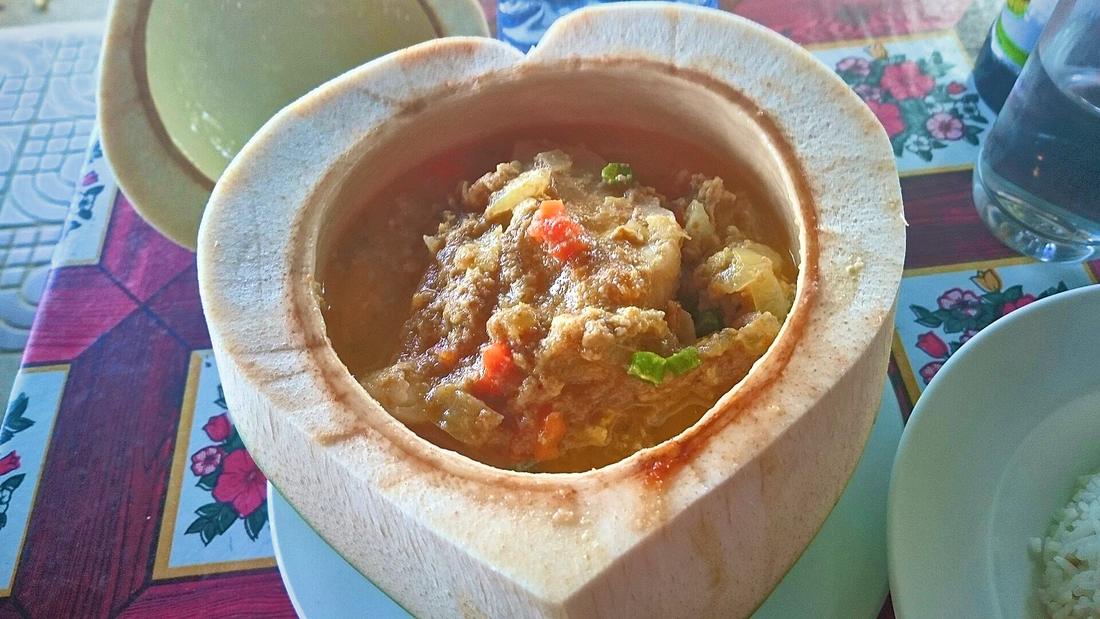
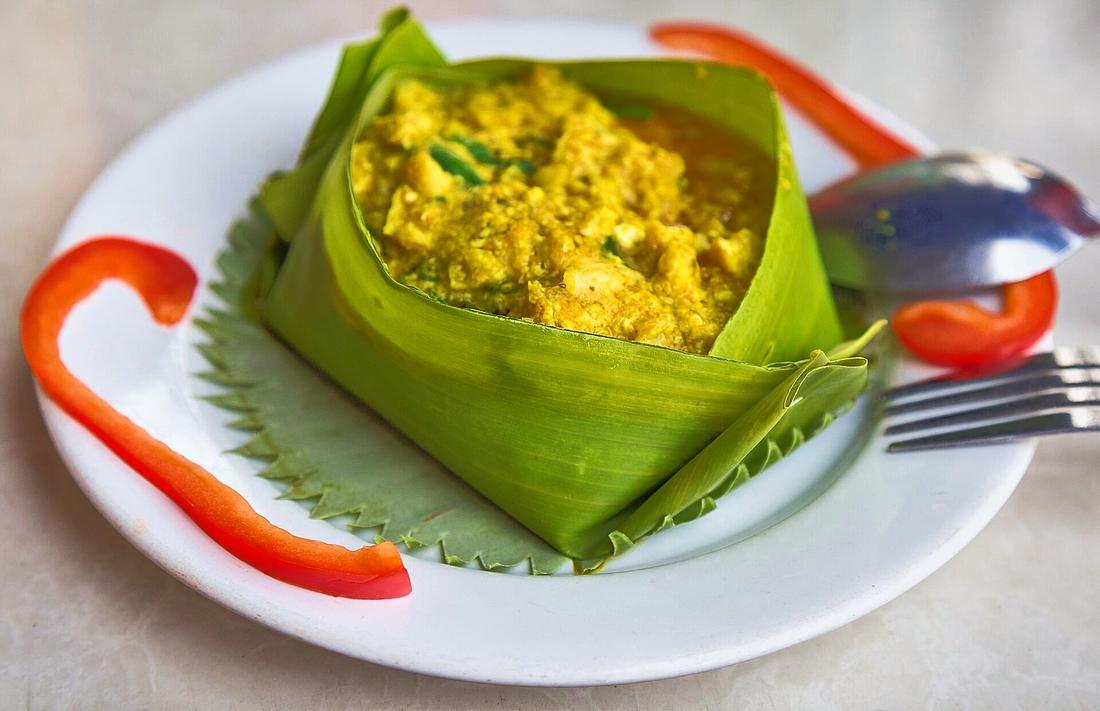
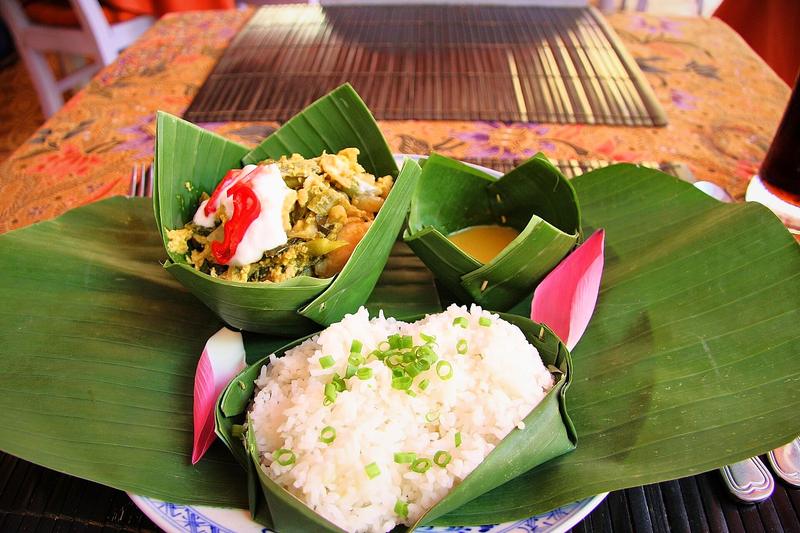
- Hot, with rice. Usually in banana leaf containers or coconut shells.
- Price
- US$5-9, or KHR 20,000-35,000, at a tourist-friendly Khmer restaurant, per one guide.
What does fish amok taste like?
Gently spiced coconut custard. One travel guide describes it as steamed with fish and kroeung herbs, usually with rice.
Kroeung is to Cambodian cooking what Thai curry paste is to Thai food, so the herb paste carries the flavour. One recipe site says the noni leaf gives amok its distinctive taste.
How can I tell real amok on the plate?
Fish in the pot, steamed, served hot. That is the classic. Anything else on the menu is a variation with the same name.
The classic
River fish, steamed
Classic amok uses freshwater fish from Tonle Sap Lake and the Mekong River. It is usually goby, snakehead or catfish, and the curry sits in banana leaf or a coconut shell. One recipe site says authentic amok must be steamed.
The substitute
Chicken, tofu or beef
Many restaurants serve less traditional amok with chicken, tofu or beef instead of fish. Chefs also sometimes use freshwater snails. Firm white fish, shrimp and chicken breast turn up in home recipes too. Fine to eat, but it is a different order.
A set texture. Steamed amok reaches a mousse-like consistency, not a thin soup.
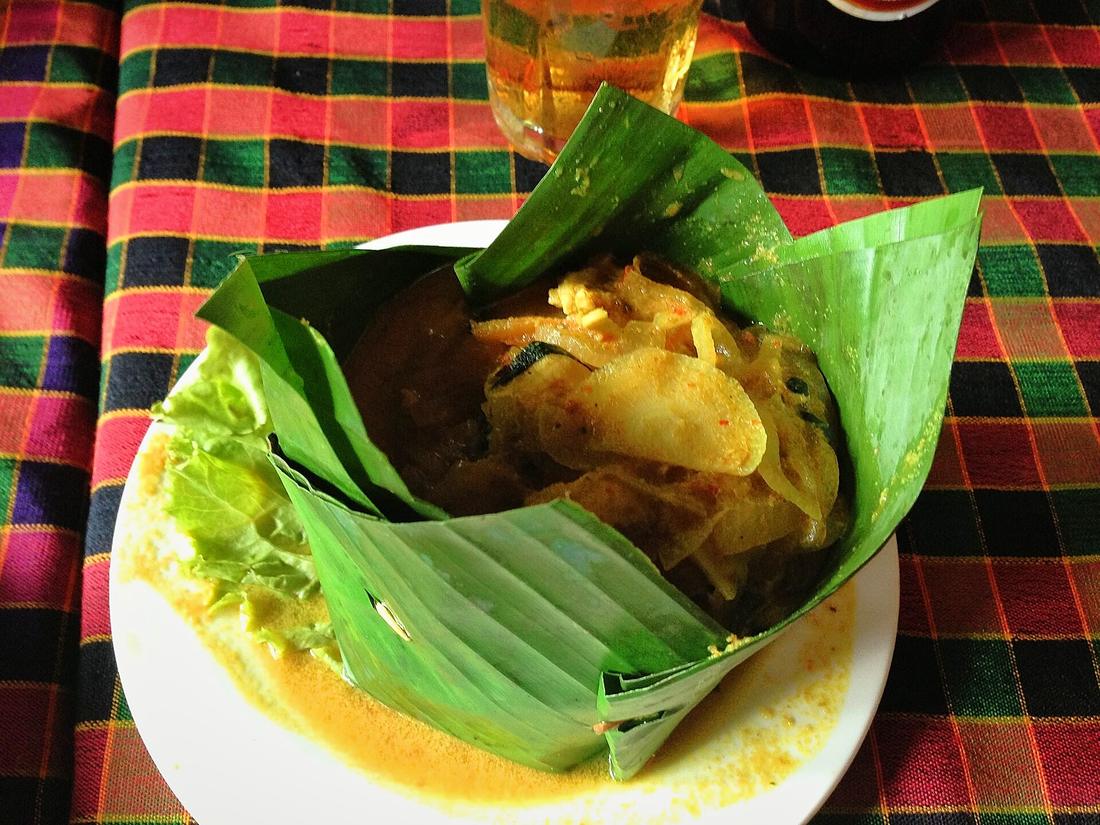
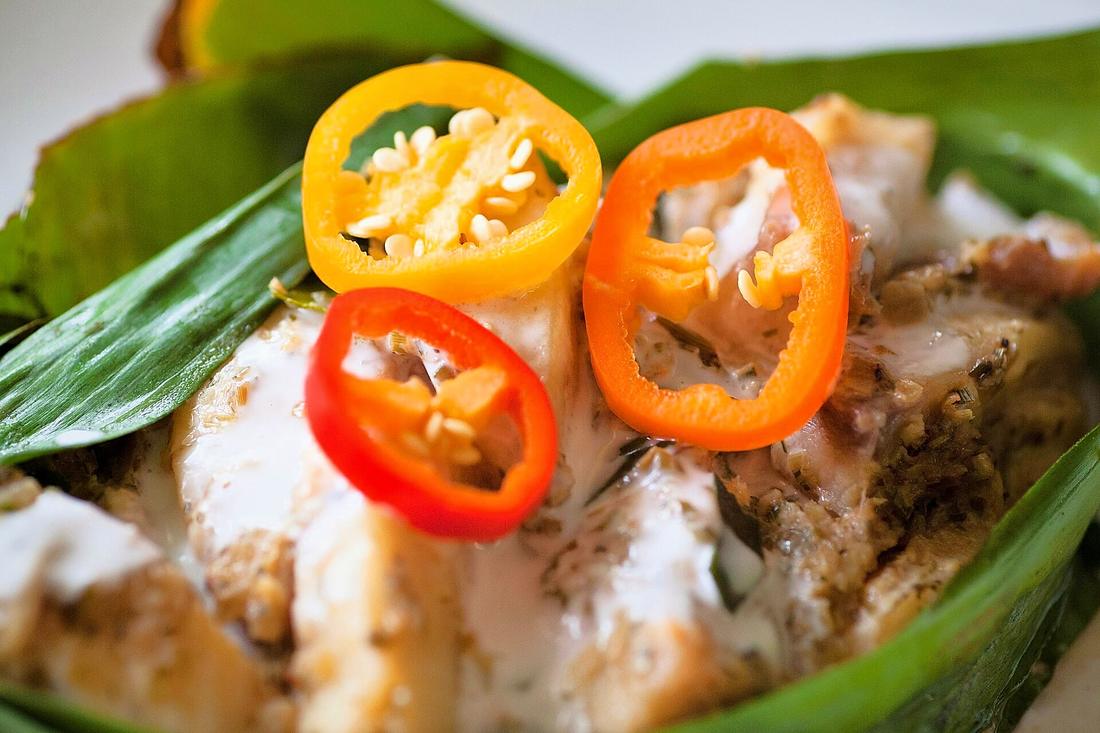
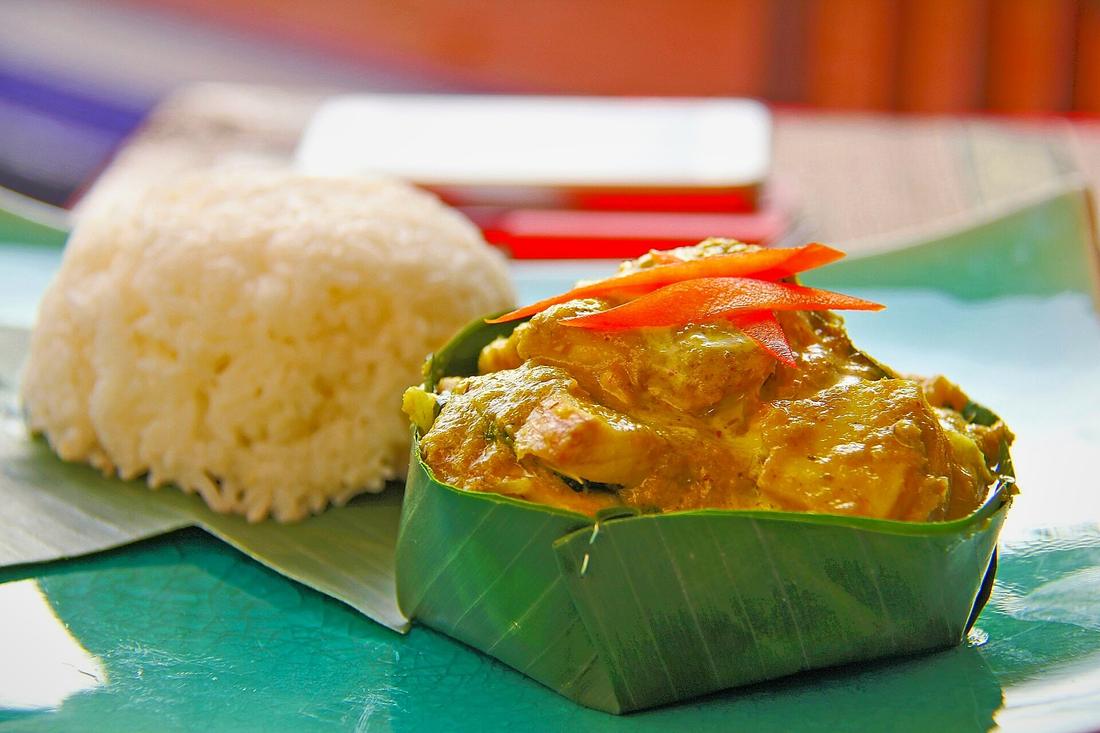
A leaf cup. Banana leaf containers or coconut shells are the usual vessels.
River fish. Restaurant chefs sometimes swap river fish fillets for chicken, beef, tofu or freshwater snails, so ask.
Ask which fish goes in. If the answer is chicken, you have your answer.
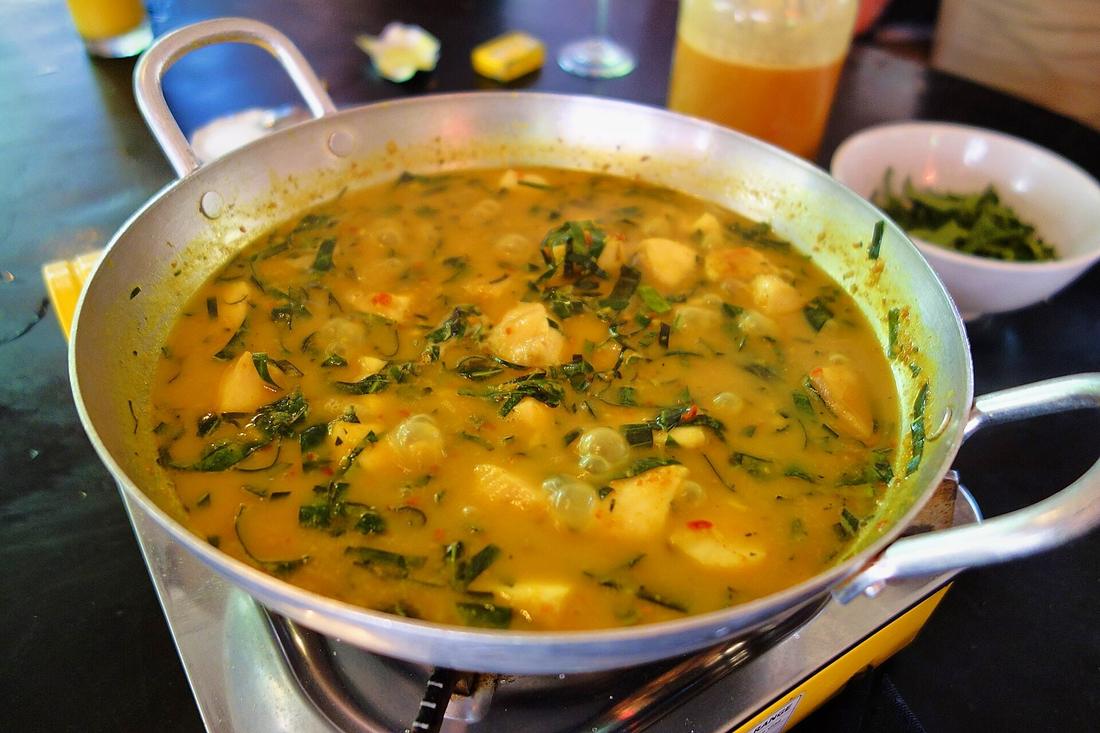
What does amok look like when served?
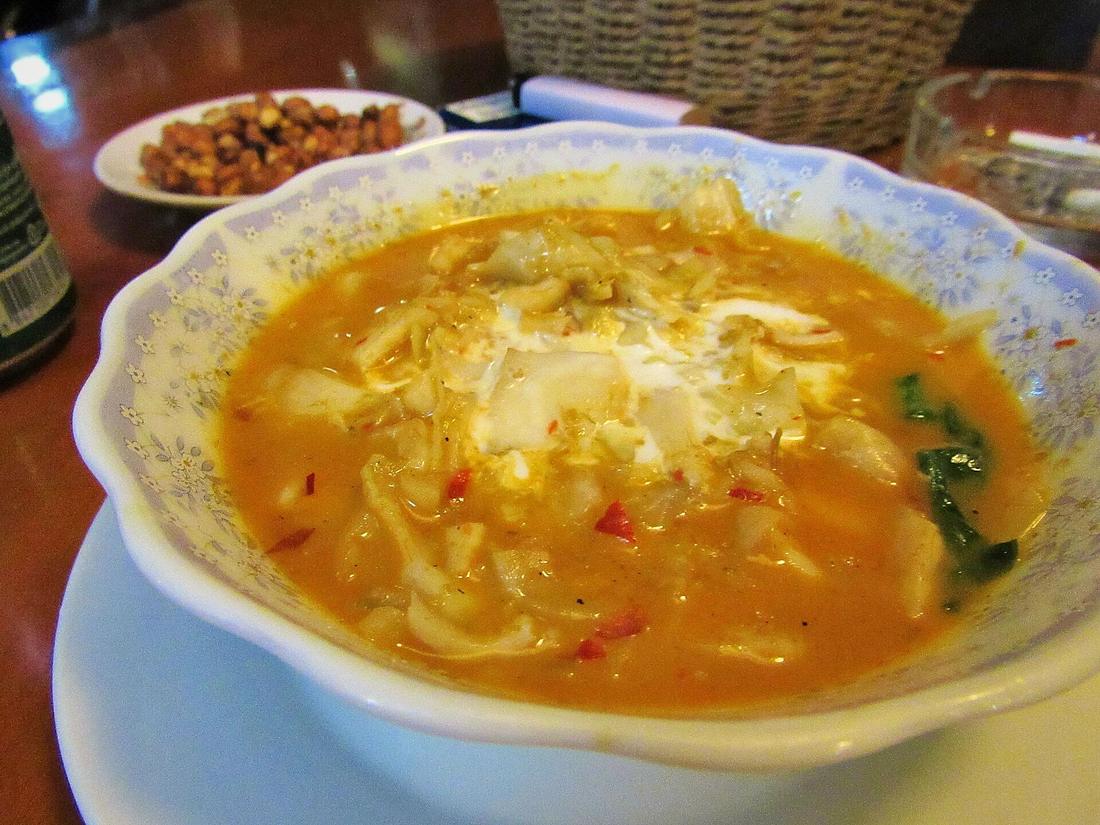
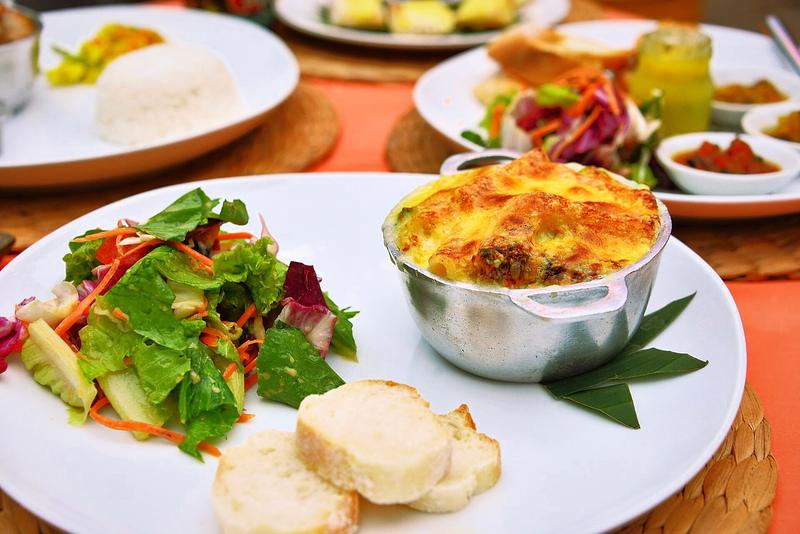
Banana leaf, coconut shell or bowl. Swipe or use the arrows.
 1/7
 2/7
 3/7
 4/7
 5/7
 6/7
 7/7
What is kroeung, and what does it do to amok?
Kroeung is the flavour. It is to Khmer cooking what Thai curry paste is to Thai food, and amok starts with it.
The paste
Kroeung is a word for several spice and herb pastes. Lemongrass, makrut lime zest and leaves, galangal and turmeric are the usual core. Traditionally it is chopped fine and ground with a heavy mortar and pestle.
Yellow or green
Amok uses a freshly made yellow or green kroeung. Turmeric is the main colouring ingredient of the yellow kind, which turns up in everyday dishes. The finished colour ranges from yellow to yellow-green to orange-brown.
Coconut cream, eggs, leaves
The paste is mixed with coconut cream or milk and eggs. Bitter noni leaves line the banana-leaf cup, and one recipe site says they give amok its distinctive taste.
More detail: kroeung types, leaves and substitutes
Kroeung types. Wikipedia says there are five common types. Royal kroeung is fairly standardised, unlike the individual pastes made for particular dishes. A Phnom Penh guide describes kroeung as the fresh flavouring paste of Khmer curries, soups and stir-fries.
The leaves. A recipe blog says the amok ngor leaves are unique to Cambodia, with kale or spinach as alternatives. An SBS recipe lines coconut shells or heatproof moulds with noni or spinach leaves. Another recipe lays 50 g of chopped noni leaves in each cup.
Dairy swap. One recipe says evaporated milk or cooking cream can replace coconut milk when you cook at home.
How is fish amok cooked and served?
Steamed 20 to 30 minutes until it reaches a mousse-like consistency. One recipe site likens the texture to a mix of mousse, mousseline, souffle and custard.
Pound the paste. The foundation of amok trey is kroeung pounded by hand.
Line the cup. Cooks fold banana leaf into cups and put bitter slok ngor (noni) leaves at the bottom.
Steam it. Cooks steam the curry inside hand-folded banana leaf cups.
Finish on top. A drizzle of coconut cream and sliced kaffir lime leaves goes on before serving.
Serve it hot. Amok comes with rice. Prefer steaming hot, since the CDC says lukewarm food lets food-poisoning germs grow.
More detail: one recipe's timings and the banana leaf
One Cambodian recipe steams the leaf layer for 20 minutes, adds the marinade for 20 minutes more, then the coconut cream topping for 5 minutes. A recipe blog notes that the banana leaf is not eaten and is not entirely essential to the dish.
Can vegetarians eat amok, and can I learn to cook it?
Sometimes, and yes. Both need a question or a booking, not a guess.
You eat no meat
Ask how it is made
Some restaurants make amok with vegetables, mushroom or tofu. Fish sauce, oyster sauce and chicken powder are frequently used even in vegetable dishes, so a vegetarian amok may not be fully meat-free. Named vegan venues are under where to find amok.
You want to cook it
Take a class
One operator lists a countryside class with fish or chicken amok on the sample menu at US$26-58 per person; a reviewer enjoyed making the paste most. Checked Nov 2026
Halal: this page has not checked any halal venue, so it makes no halal claim. Ask the kitchen what goes in.
Is fish amok really Cambodia's national dish?
One of them. Fish amok is considered one of Cambodia's national dishes, and tradition ties it to the royal courts. Its roots are debated.
- Royal
- Fish amok is believed to be a royal Khmer dish dating to the Khmer Empire. Tradition holds that it began in the royal courts of the Khmer kingdoms.
- Revived
- Surviving elders and contemporary chefs revived amok after the Khmer Rouge years.
- Thai cousin
- Thailand's hor mok is a related steamed curry, spicier per a Wall Street Journal piece cited by Wikipedia. A Thai dictionary defines it as steamed fish or chicken in coconut cream and chili sauce.
- Debate
- Sources differ on where it began. Wikipedia, citing the same piece, calls the origins a source of regional debate, and some question a Cambodian origin. Alford and Duguid suggest the word and technique may be Khmer.
More detail: what hor mok means
Per the Wall Street Journal piece cited on Wikipedia, hor mok translates as bury wrap. Thai commentators point to a sub-district called Tambon Hor Mok in Bang Sai District, Ayutthaya Province, though Wikipedia notes that section may need verification.
Where to find amok: city food guides and neighbouring dishes
This page does not list restaurants. Start with the two city food guides. One guide names The Corn in Phnom Penh and Chamkar in Siem Reap as serving vegan amok; it is undated, so check current. Checked Nov 2026
 Siem Reap foodCity food guide for Siem Reap
 Phnom Penh foodCity food guide for Phnom Penh
 Cambodian foodThe hub for Khmer dishes
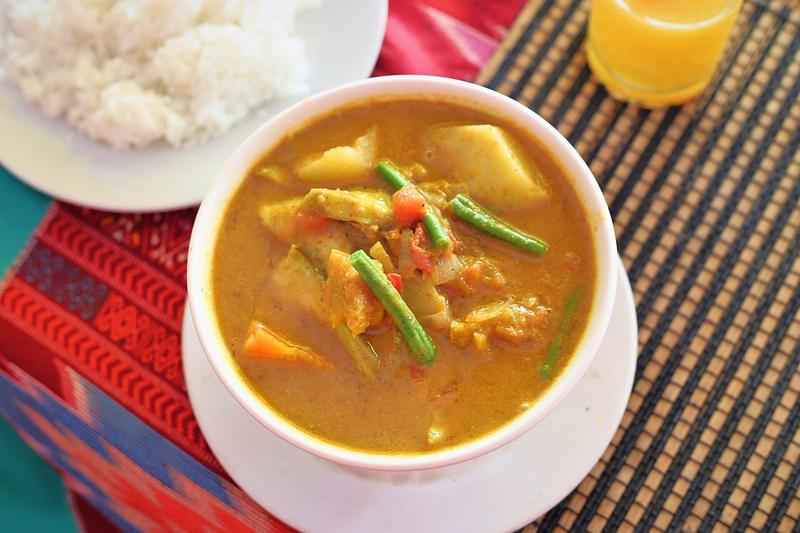 Cambodian curryIndian merchants brought spices around the 2nd century
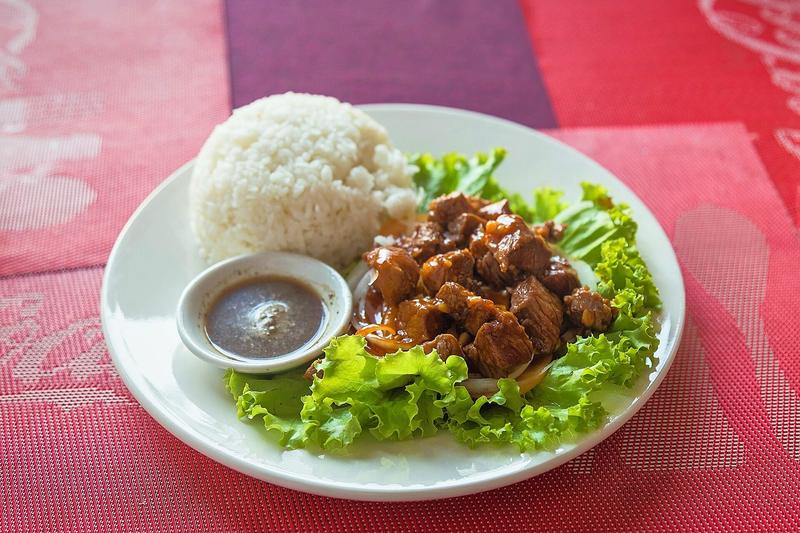 Lok lakAnother Khmer dish guide
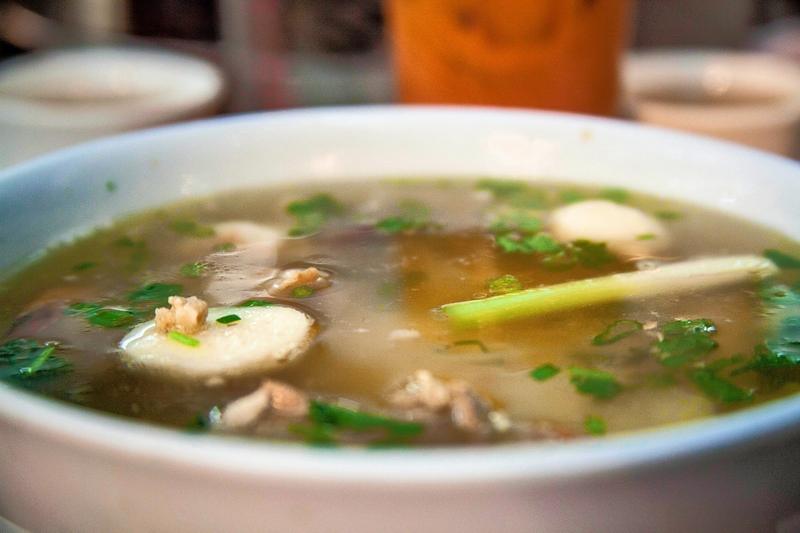 Khmer noodle soupKhmer noodle soup guide
Num banh chok →The fermented rice noodles and fish gravy in full
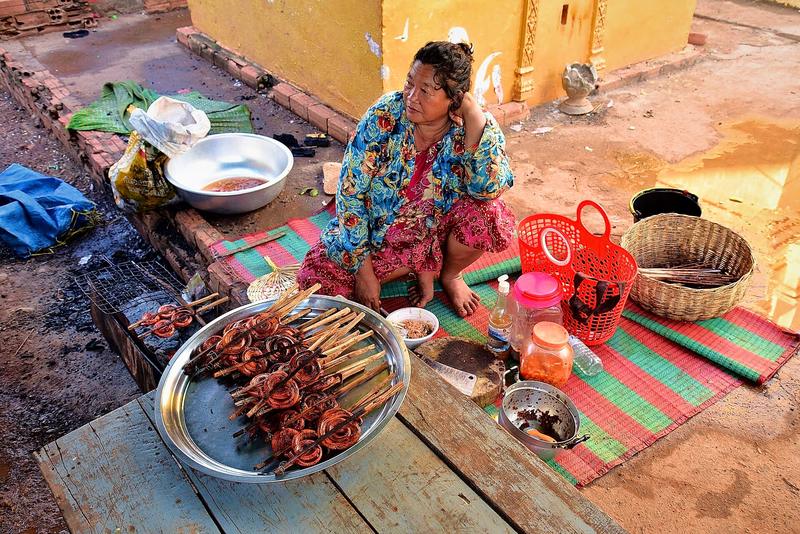 Cambodian street foodStreet food guide
To drink with the meal, see Cambodian drinks.
Fish amok FAQ
The dish
What is fish amok?
Fish amok is a steamed fish curry with a mousse-like consistency. Fresh kroeung paste is mixed with coconut cream, and the dish is also spelled amok trei or amok trey.
What fish is used in amok?
Amok is usually made with goby, snakehead or catfish. Classic versions use freshwater fish from Tonle Sap Lake and the Mekong River. An SBS recipe says catfish is traditional but any firm white fish is suitable.
What is kroeung?
Kroeung is a word for several spice and herb pastes that form the base of many Khmer dishes. Common ingredients are lemongrass, makrut lime zest and leaves, galangal and turmeric, and turmeric colours the yellow kind.
How long does amok take to cook and how is it served?
Amok is steamed about 20 to 30 minutes until it reaches a mousse-like consistency. It is served hot, usually in banana leaf containers or coconut shells, with rice.
Ordering
Why did my amok come with chicken or tofu?
Many restaurants serve less traditional amok with chicken, tofu or beef instead of fish, and chefs sometimes use freshwater snails. If you want the classic, ask for the fish version.
Can vegetarians eat amok?
Sometimes. Some restaurants make amok with vegetables, mushroom or tofu. Fish sauce, oyster sauce and chicken powder are frequently used even in vegetable dishes, so a vegetarian amok may not be fully meat-free. Ask how it is made.
How much does fish amok cost?
One travel guide says to expect KHR 20,000-35,000 (US$5-9) for amok at a tourist-friendly Khmer restaurant. Checked Nov 2026
Origin
Is fish amok the national dish of Cambodia?
Fish amok is considered one of Cambodia's national dishes, not the only one. It is believed to be a royal Khmer dish from the Khmer Empire era, though Wikipedia notes that its origins are a source of regional debate.
Is Thai hor mok the same as amok?
They are related. Thailand cooks a spicier hor mok, a related steamed curry, according to a Wall Street Journal piece cited by Wikipedia. Food writers Alford and Duguid suggest the word and technique may originally be Khmer.
Sources (17), checked November 2026
- wwwnc.cdc.gov officialCDC: lukewarm food lets food-poisoning germs grow, so prefer food serv
- travelingspoon.com operatorTraveling Spoon countryside class (sample menu with fish/chicken amok); Traveling Spoon sample menu lists fish/chicken amok; a reviewer's favo
- cambodianess.com newsOne Cambodian recipe steams the leaf layer 20 min, adds marinade for 2; Cambodianess recipe lays chopped noni leaves at the bottom of each cup
- sbs.com.au newsSBS recipe lines coconut shells or heatproof moulds with noni or spina
- sbs.com.au newsSBS recipe says catfish is traditionally used in Cambodia but any firm
- seasia.co newsClassic amok uses freshwater fish from Tonle Sap Lake and the Mekong R; Cooks line each banana-leaf basket with bitter slok ngor (noni) leaves
- carolinescooking.com guideA recipe blog says the amok 'ngor' leaves are unique to Cambodia, with
- en.wikipedia.org guideAmok is mixed with coconut cream or coconut milk and eggs; The fish version is also spelled amok trei or amok trey
- en.wikipedia.org guideWikipedia says there are five common types of kroeung; Kroeung is the fresh flavouring paste used in Khmer curries, soups and
- en.wikipedia.org guideIndian merchants introduced many spices to Khmer cuisine around the 2n
- en.wikipedia.org guideFish amok is a steamed fish curry with a mousse-like consistency; Amok is usually made with goby, snakehead or catfish
- en.wikipedia.org guideKroeung is a word for several spice/herb pastes forming the base flavo; The most common kroeung ingredients include lemongrass, makrut lime ze
- en.wikipedia.org guideA Thai dictionary defines hor mok as steamed fish or chicken in coconu; Food writers Alford and Duguid suggest the word and technique may orig
- food.nomadicboys.com guideA recipe blog notes the banana leaf is not eaten and is not entirely e; Kroeung is to Cambodian cuisine what Thai curry paste is to Thai food
- grantourismotravels.com guideOne recipe site says noni leaf gives amok trei its distinctive taste; A recipe site says authentic fish amok must be steamed
- movetocambodia.com guideGuide names The Corn (Phnom Penh) and Chamkar (Siem Reap) as serving v; Some restaurants make amok with vegetables, mushroom or tofu
- travelwithhello.com guideTravel guide: expect KHR 20,000-35,000 (US$5-9) for amok at a tourist-; Travel guide describes amok as gently spiced coconut custard steamed w