Faces: not at sunrise
- Sources differ
Wikivoyage says the tall towers turn dark and flat near sunrise and sunset, against the usual dawn advice.
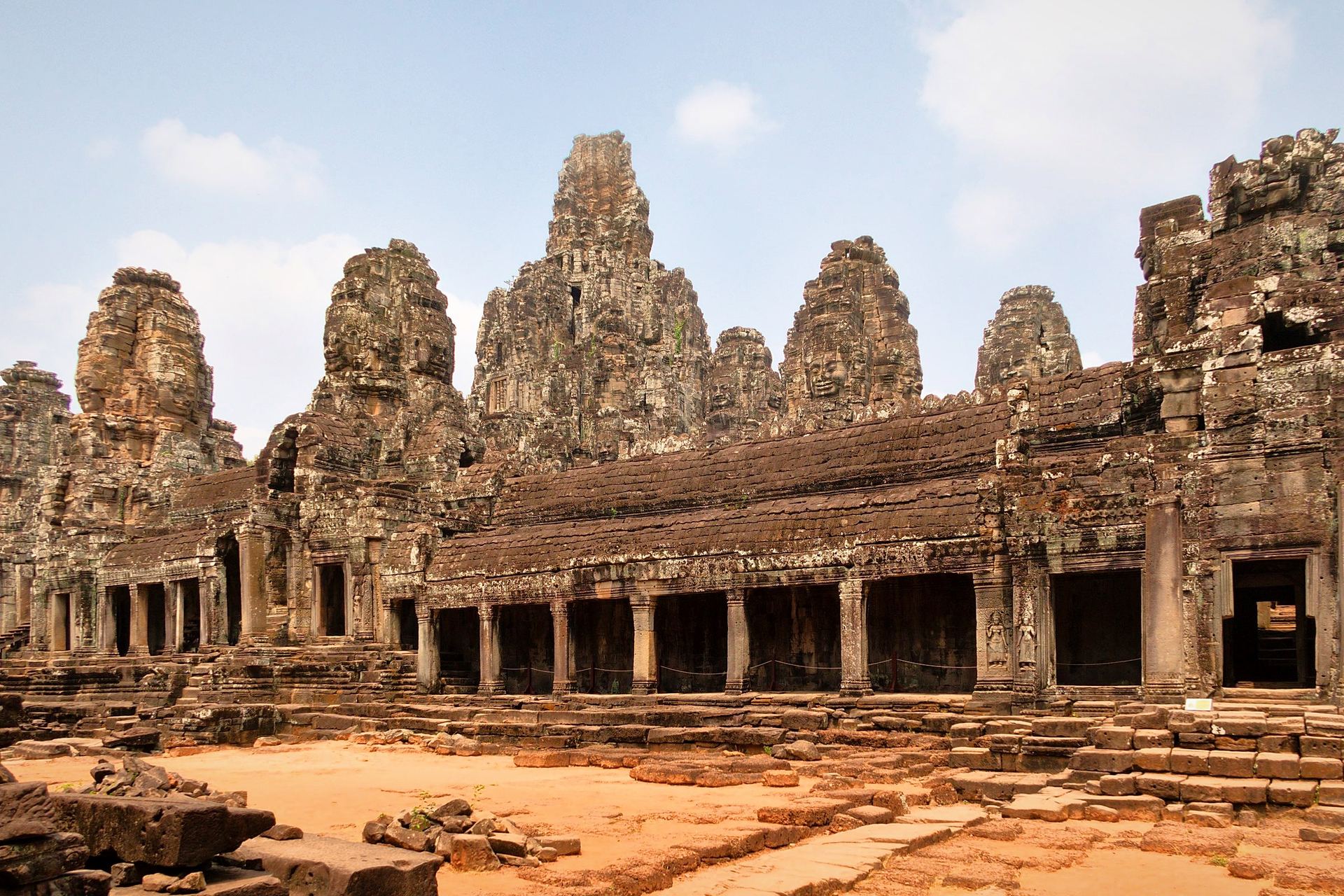
Angkor Thom, Angkor Archaeological Park ប្រាសាទបាយ័ន
Yes, worth it, and not only for the faces. Give it 1 to 2 hours; Wikivoyage advises about 10:00 to 16:00; sources differ on sunrise.
By Laura Brennan · updated
How long
Enough for the faces and one slow lap of the outer reliefs. A quick look takes 30 minutes; the reliefs are what fill the second hour.
The real reason
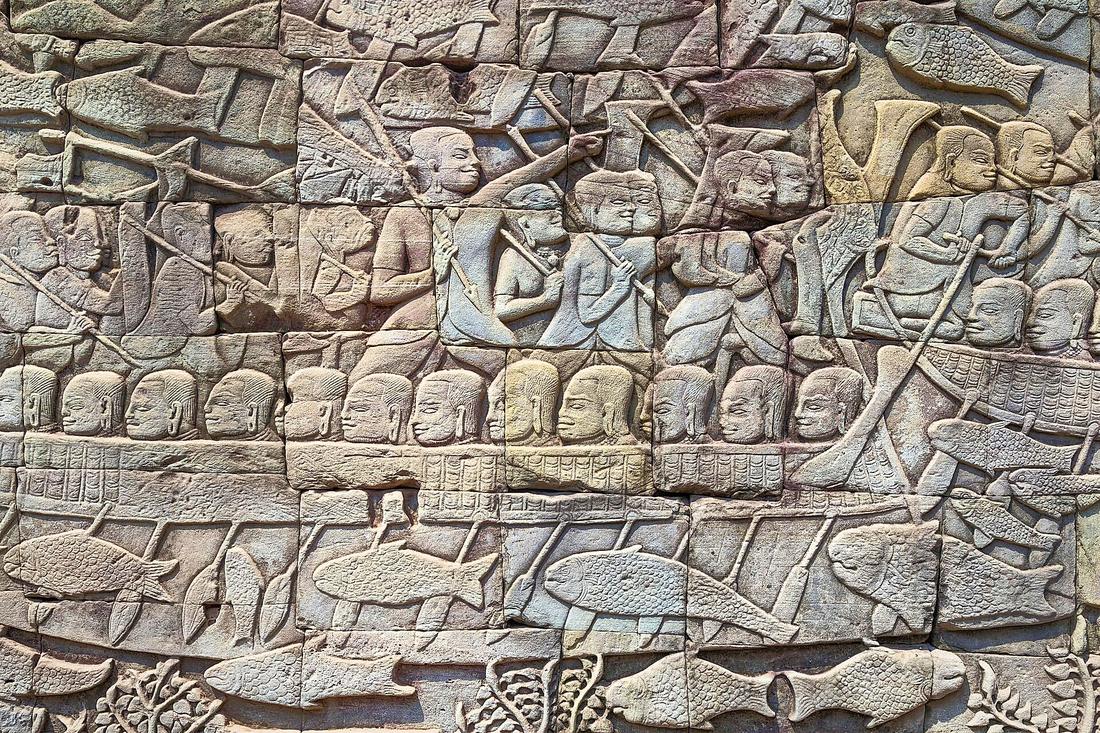
More than 1 km of carving, and the outer walls show markets, cooking and fishing, not just gods and kings.
Which wallsTiming
Bayon is very busy. Coach groups arrive mid-morning, so come at park opening or make it your last stop of the afternoon. Skip it if you only want a sunrise shot: Wikivoyage says the towers look dark and flat near sunrise and sunset, though other guides disagree.
Checked Nov 2026Light and crowdsTicket
The Angkor Temples Park pass covers 50+ temples (US$37 for 1 day); check Bayon on the official list.
Checked Nov 2026Pass and dress codeAt opening
Up to the third level for the faces.
From 10 AM
The outer reliefs, clockwise from the east entrance.
Or late afternoon
Or save Bayon for the last temple of the day.
Go to the south wall of the outer gallery. Under the naval battle on the Tonle Sap, the carvers filled the lower rows with a market, open-air cooking, hunters and women tending children. The inner gallery is mostly Hindu mythology instead.
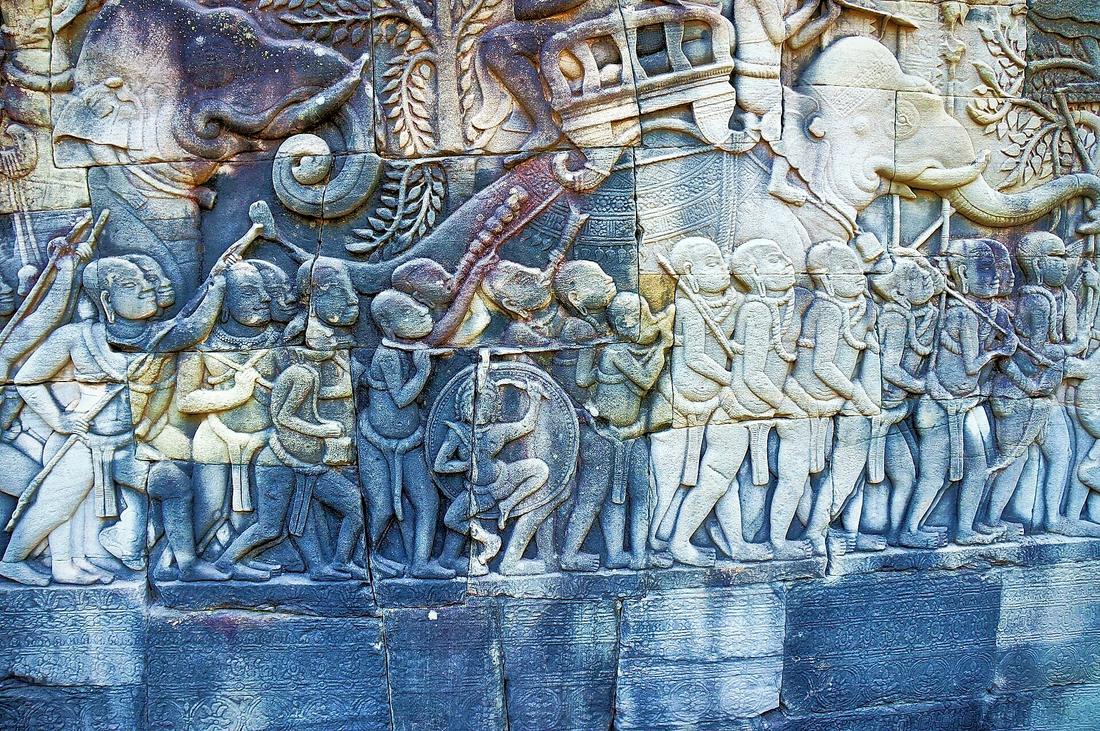
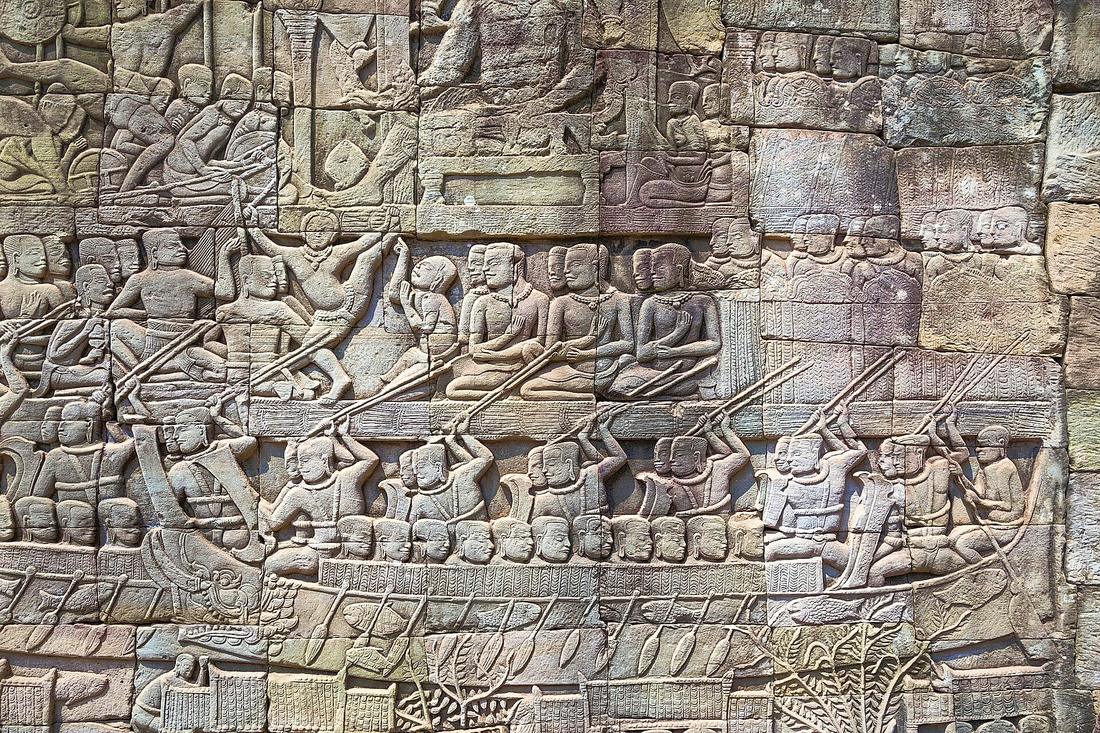
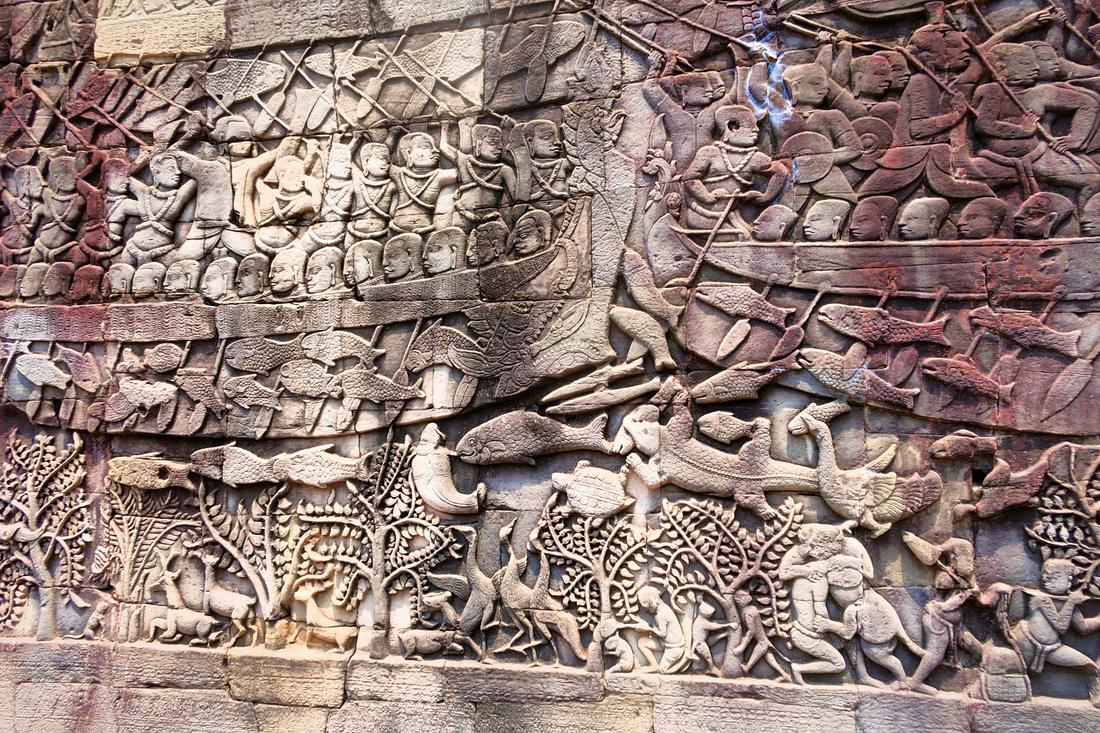
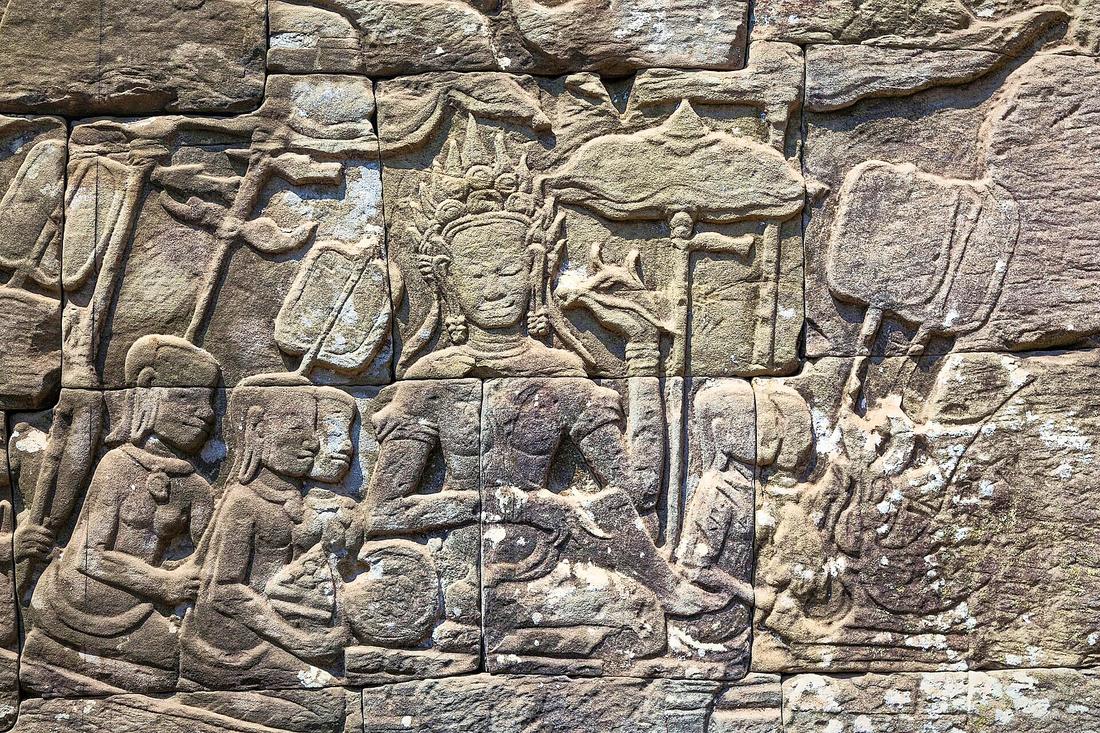
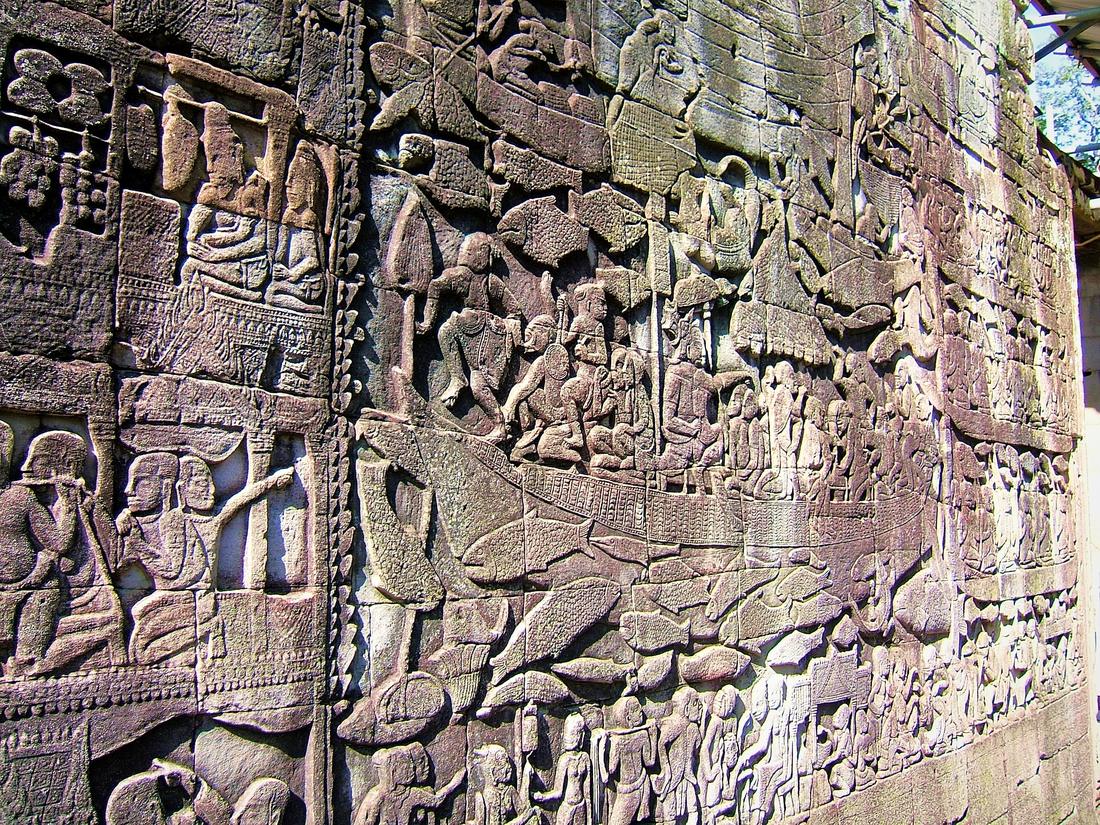
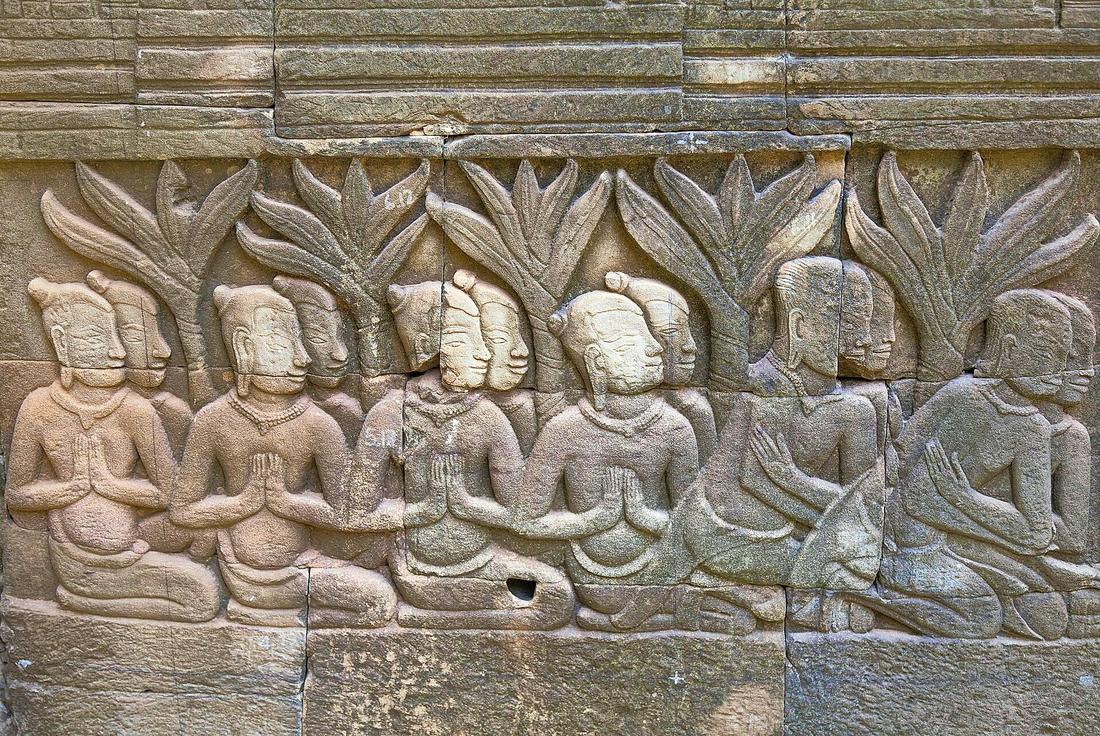
The outer gallery carries no explanatory inscriptions, so which historical events it shows is uncertain; the Cham wars are the usual reading. In places the carving stops abruptly and the figures are only roughed out.
One guide gives the outer gallery as a rectangle of roughly 160 by 140 m. Its courtyard once held 16 chapels, later demolished under Jayavarman VIII. The inner gallery reliefs are attributed to later additions under the same king, which is why the subject matter switches from battles and processions to Hindu myth.
The inner panels of a king wrestling a giant serpent are linked to the legend of the Leper King.
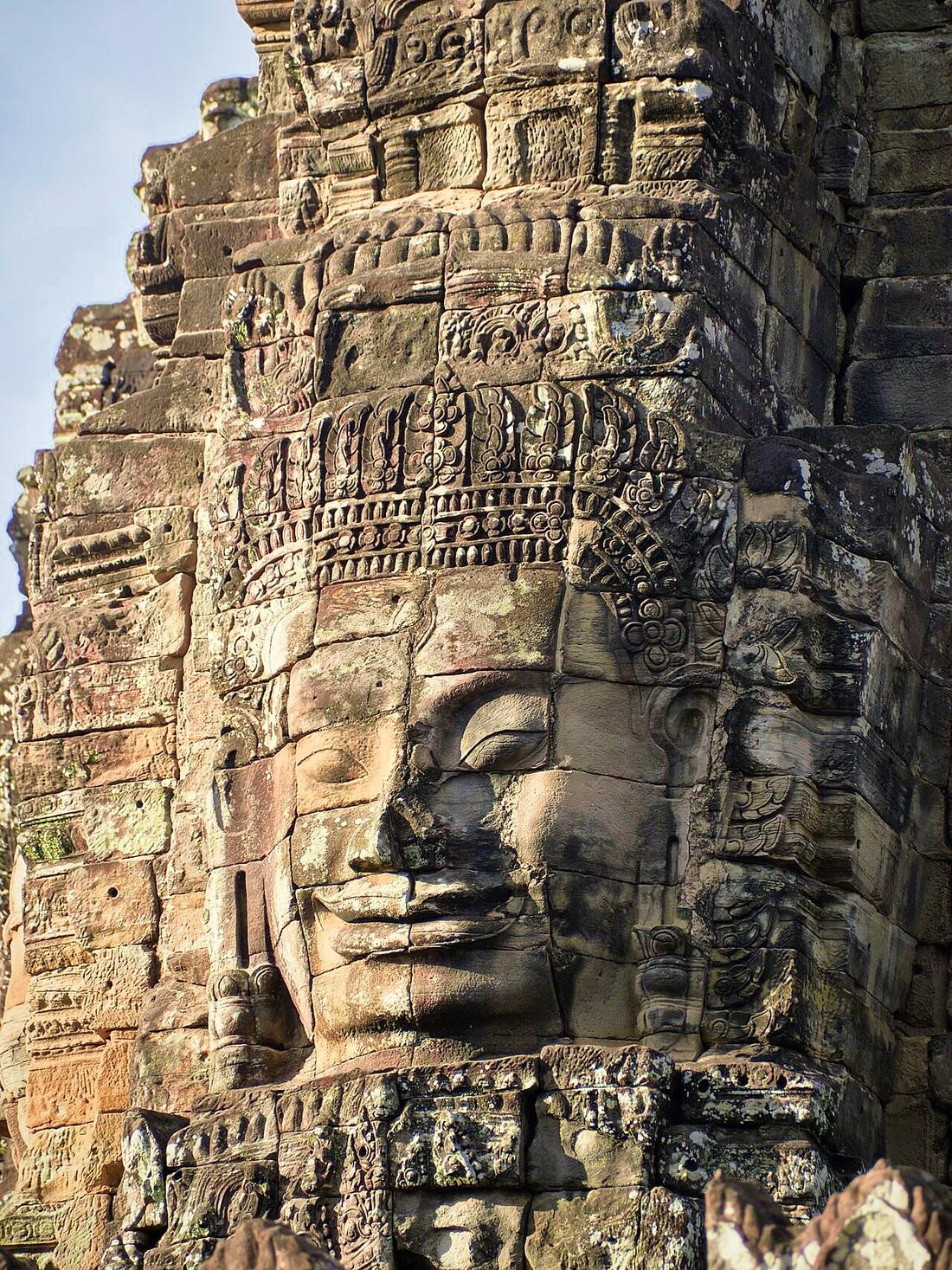
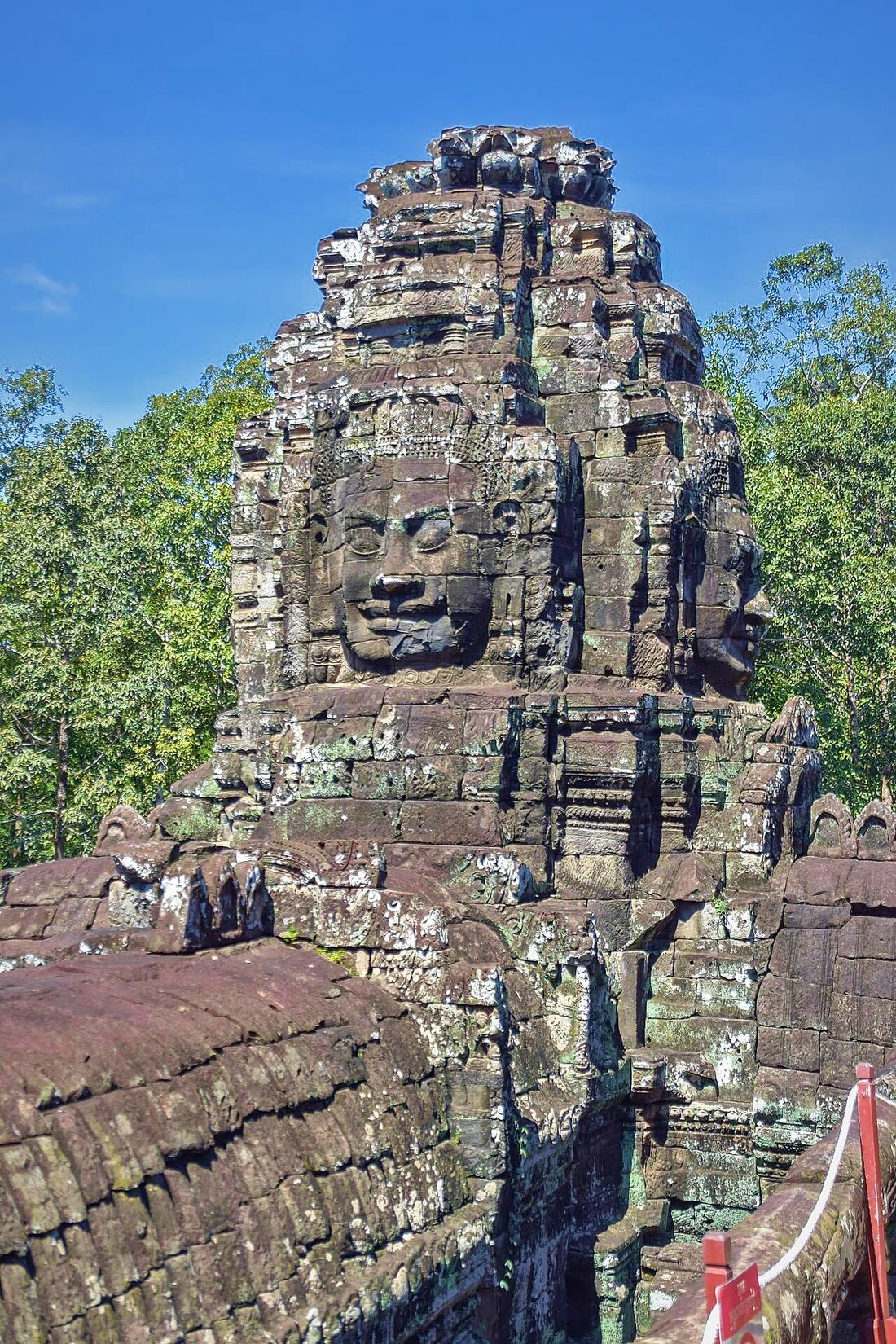
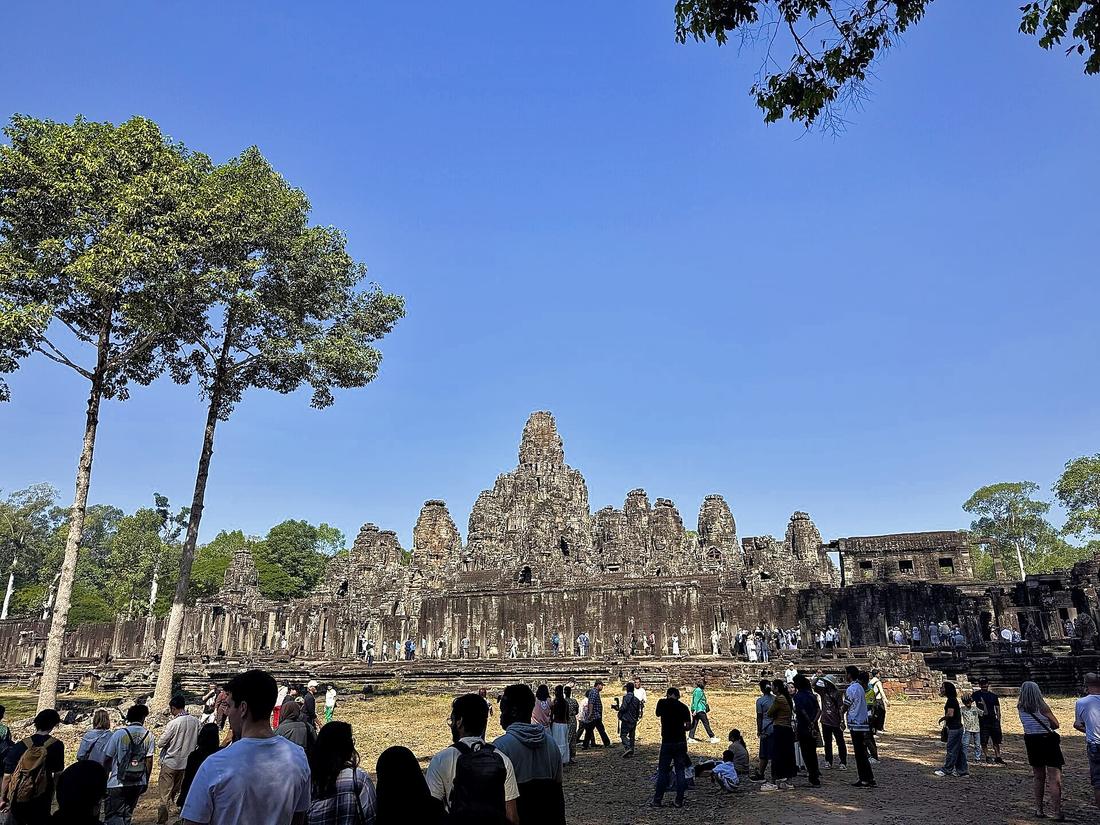
About 200 faces, with no definitive count. Swipe or use the arrows.
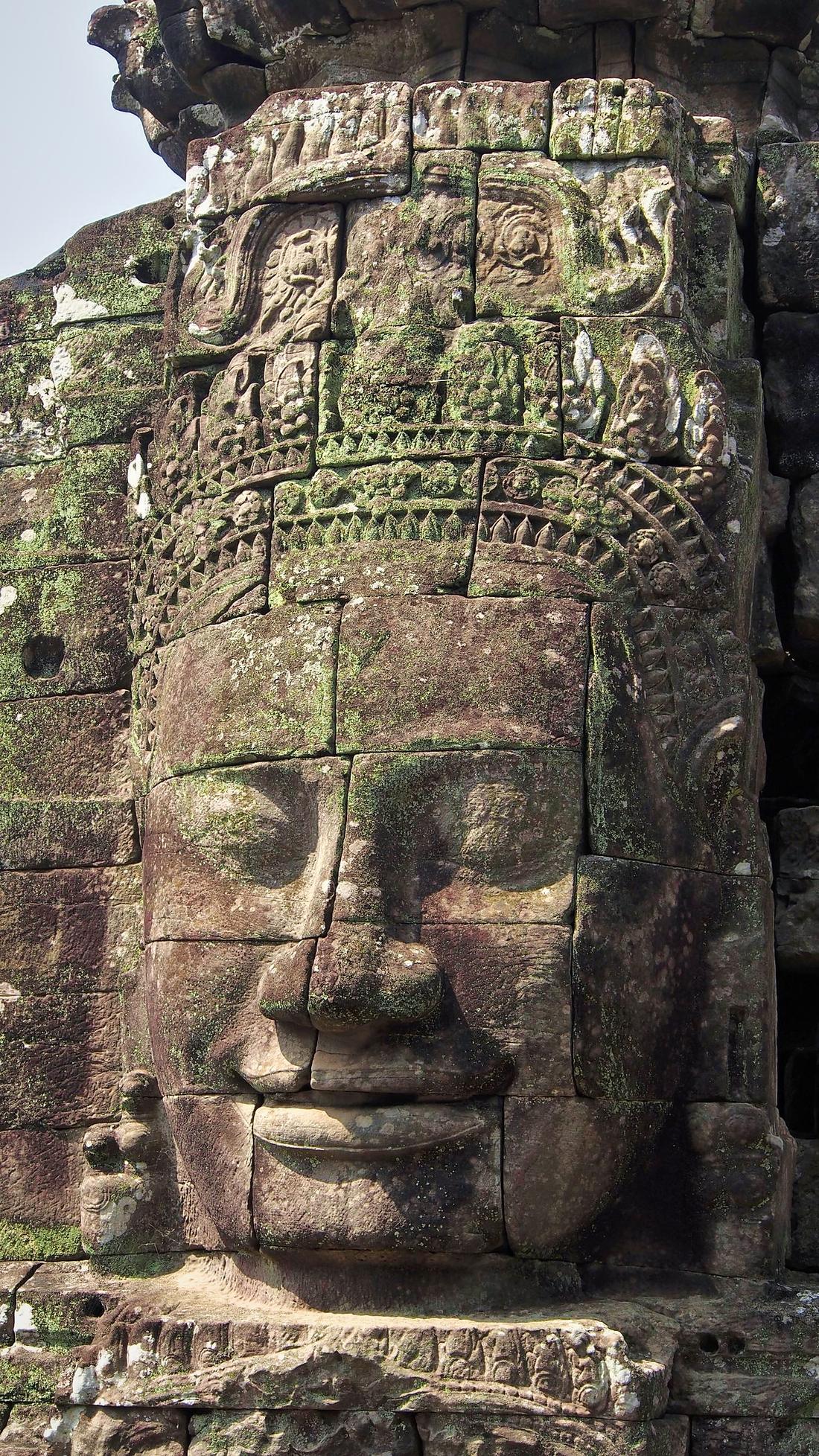 1/7
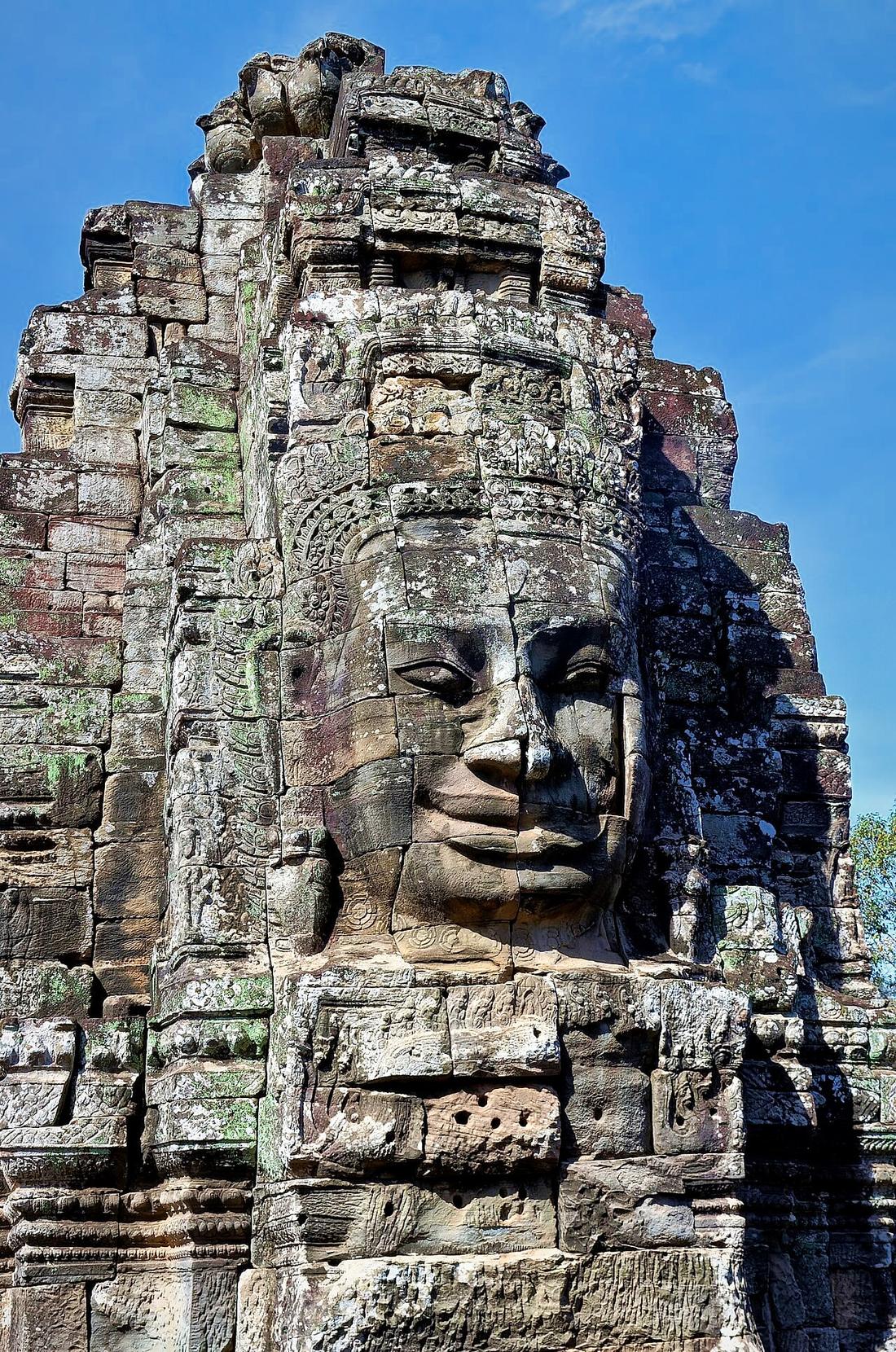 2/7
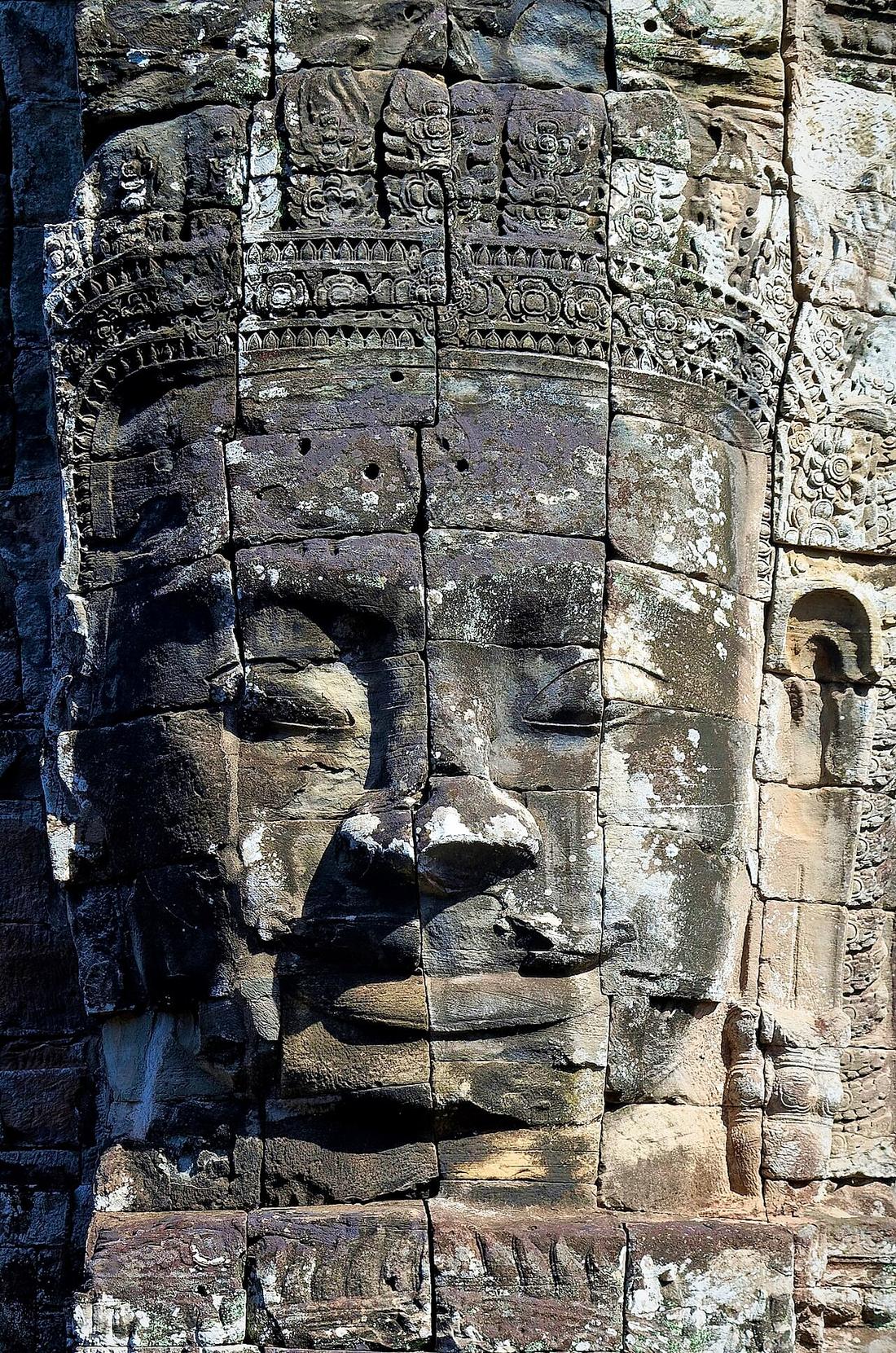 3/7
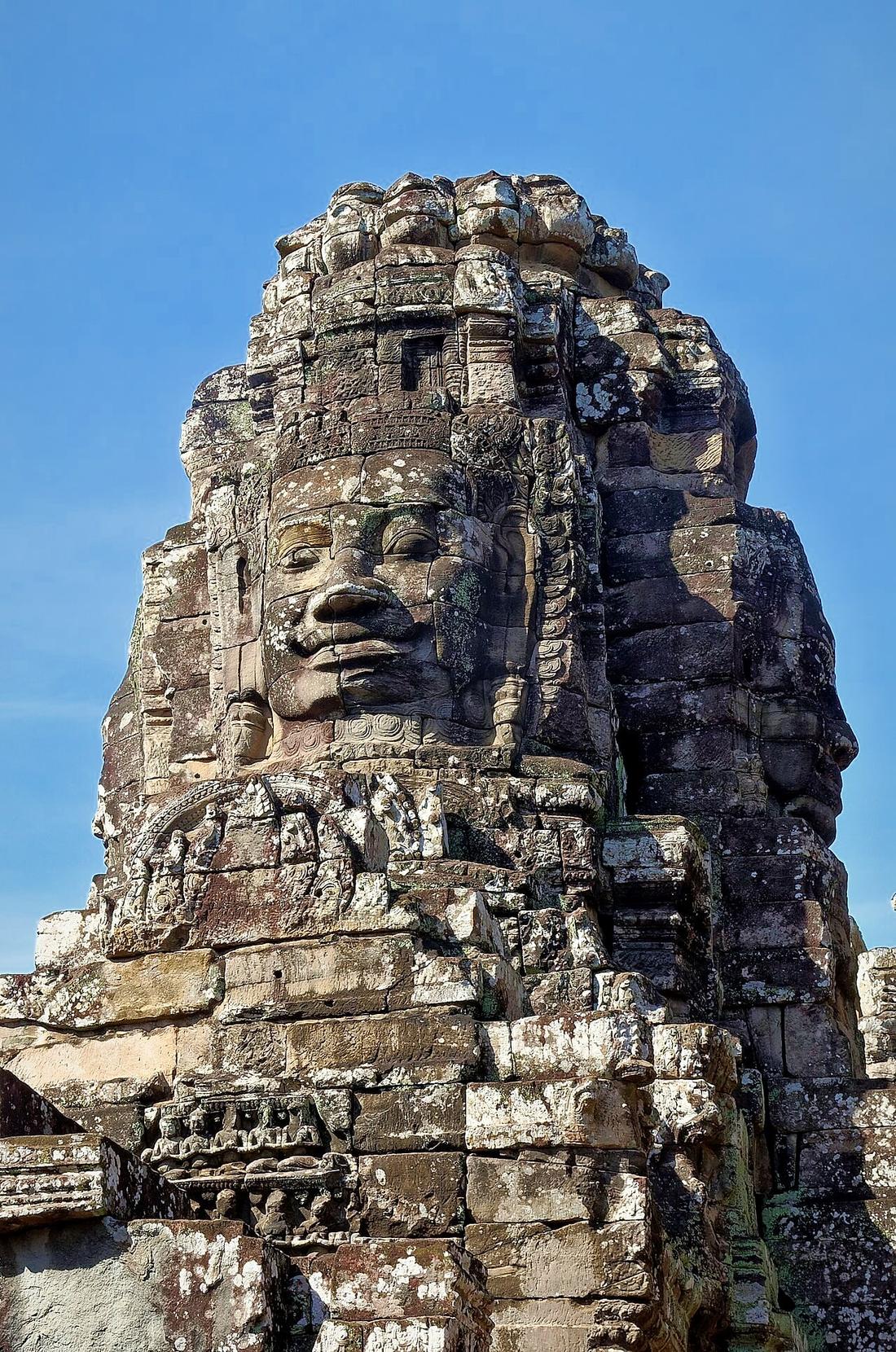 4/7
 5/7
 6/7
 7/7
Counts disagree. Most guides say about 200 faces on 49 towers built, 37 still standing. Wikipedia gives 216 faces, and Wikivoyage counts 54 towers with four faces each, also 216. Treat any exact number as an estimate.
Scholars theorise the faces represent the bodhisattva Avalokitesvara. The Chinese envoy Zhou Daguan saw the towers in 1296 and called them heads of the Buddha. Most of the famous faces, and most visitors, are on the third level.
Light and crowds
Wikivoyage advises roughly 10:00 to 16:00 for good light. For fewer people, park opening or the end of the afternoon. You cannot have both, so pick what you came for. The bar below is approximate.
Wikivoyage says the tall towers turn dark and flat near sunrise and sunset, against the usual dawn advice.
The carvings photograph well at any time, though overhead sun removes the shadows that give them depth.
Wikivoyage calls Bayon very busy. Most visitors gather on the third level, so go up first or leave it to the end of your visit.
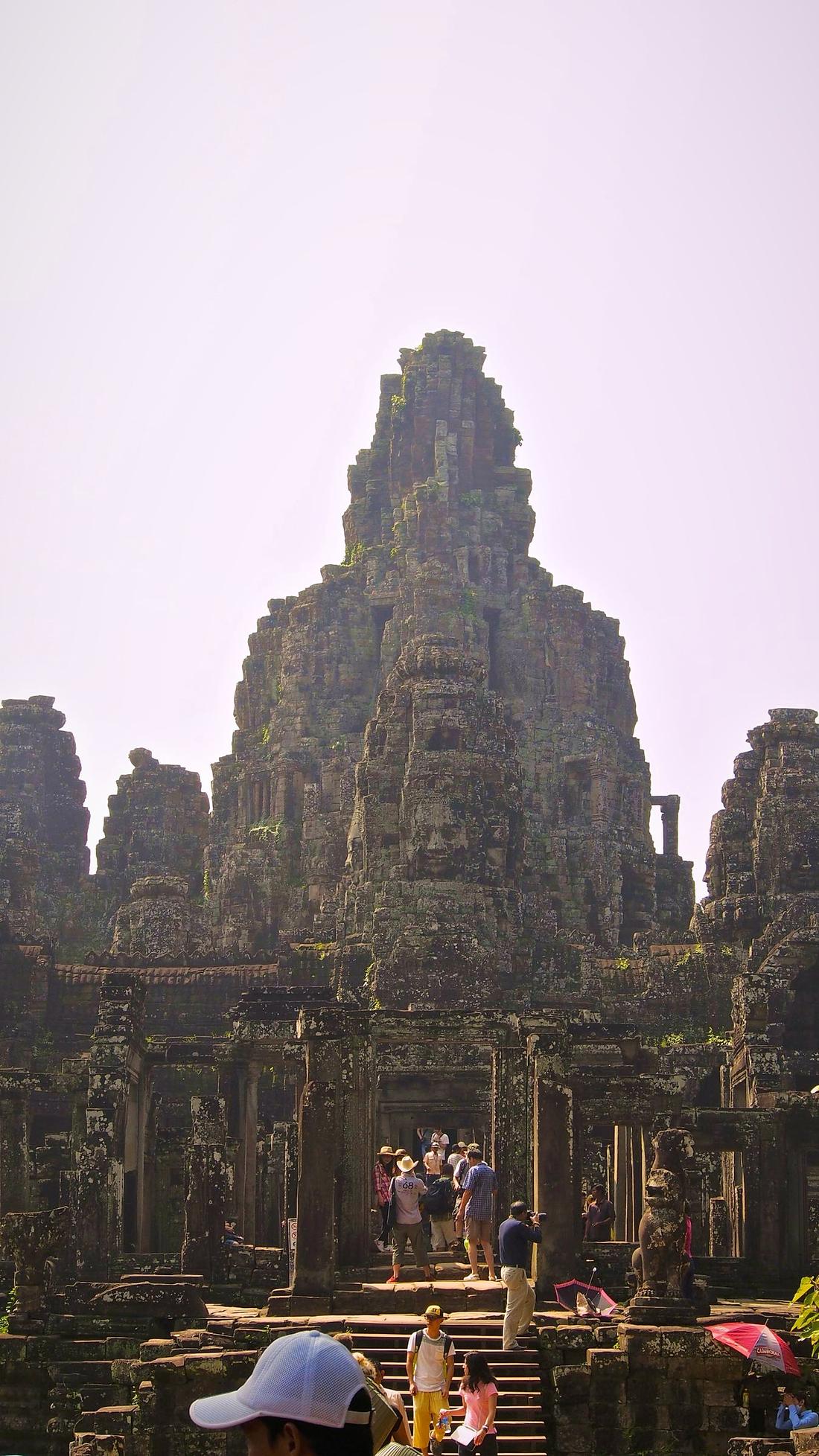
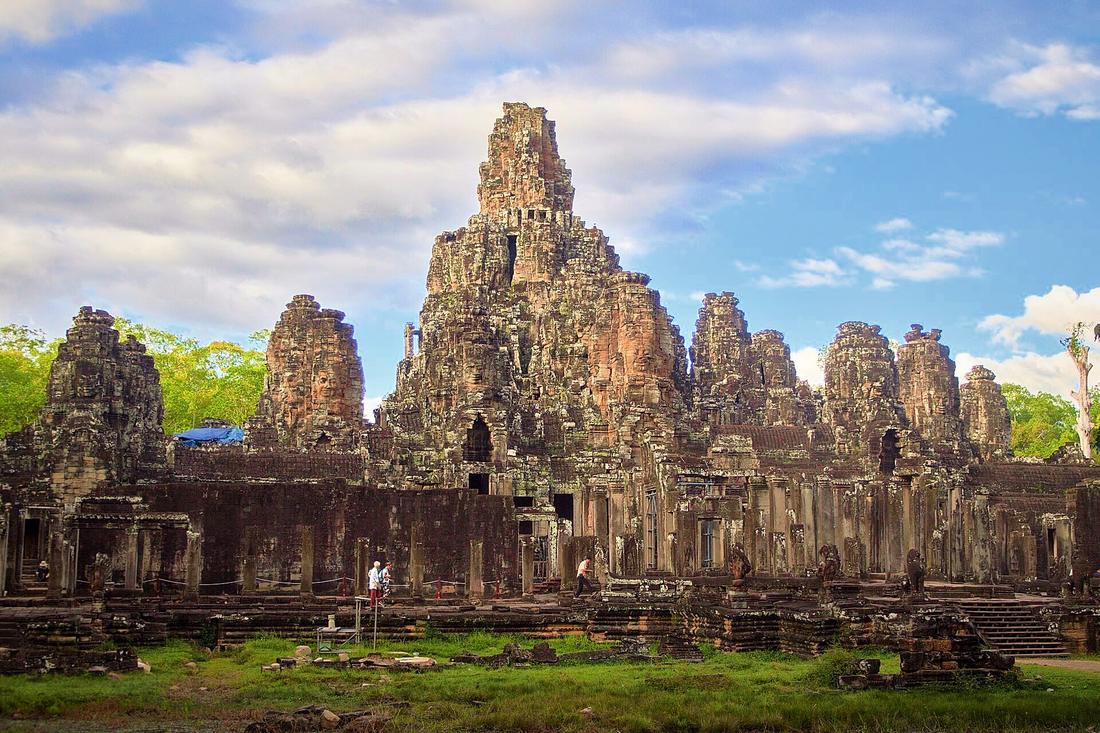
Bayon sits at the exact centre of Angkor Thom, about 1 km north of the city's south gate. That gate is 7.2 km north of Siem Reap.
Carry straight on north. One guide puts Bayon 1.5 km from each of the four gates.
Just Siem Reap lists 3.3 km.
The temple faces east. Enter there and the outer gallery comes into view first, where the clockwise reading starts.
Angkor ThomBayon is inside Angkor Thom; the park pass covers 50+ temples, so check Bayon on the official list. Cover your shoulders and legs; a scarf over a vest is not enough.
Prices from the official Angkor Enterprise ticket page. The park opens 5:00 AM and closes 6:30 PM; one pass covers 50+ temples.
Long trousers or skirt, covered shoulders
Wikivoyage says a scarf draped over the shoulders is not accepted at the strictly policed areas of Angkor. Wear sleeves.
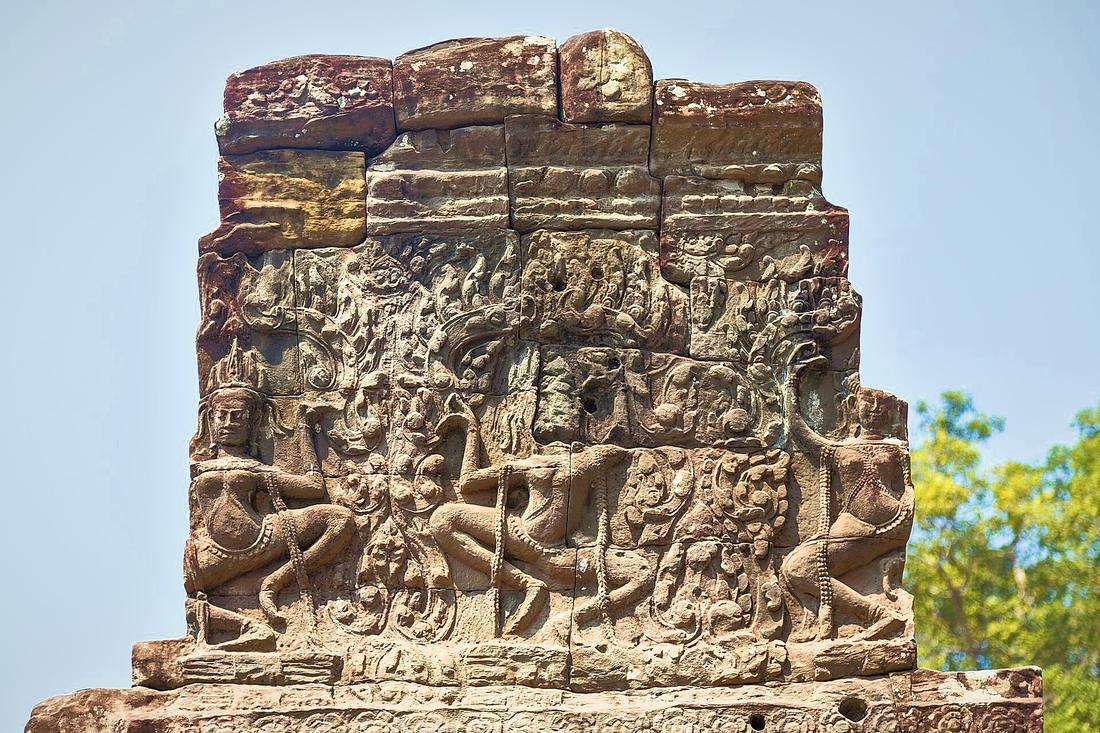
In December 2024 APSARA reported that restoration of the third terrace at Bayon's south-west corner was complete. The work took four months and repaired Naga balustrades, beams and stone floors, after a broken beam and tree roots had damaged the structure.
Not for the faces. For the reliefs, some background helps.
The outer walls carry no captions, so without a guide you are matching scenes yourself; the plan above gets you most of the way. For the background, the Japanese JASA office runs a Bayon Information Center on Sivatha Blvd in Siem Reap.
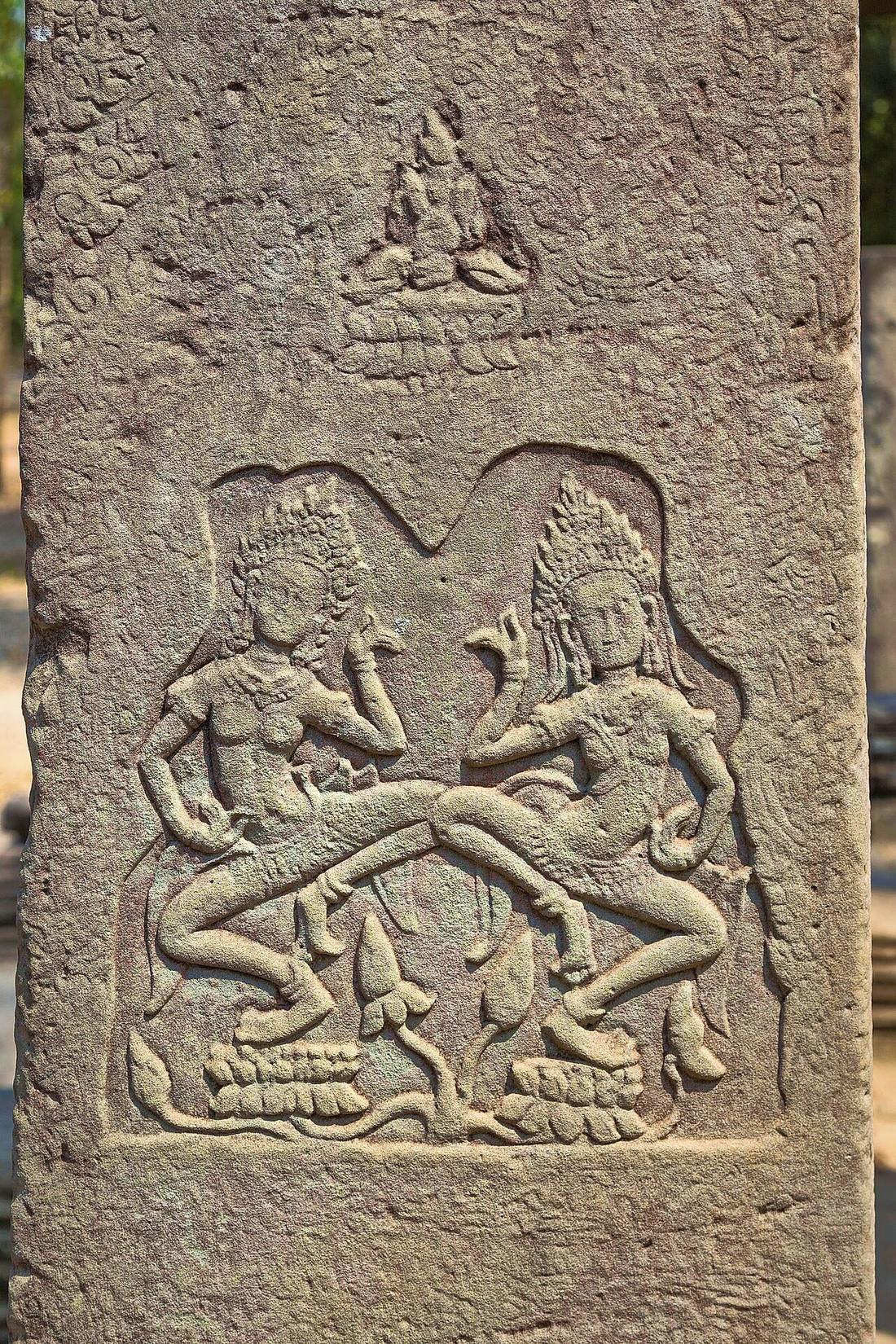
King Jayavarman VII built it in the late 12th or early 13th century as his state temple, the last built at Angkor and the only one made mainly for Buddhist deities.
Cham forces strike the Khmer capital; Jayavarman VII leads the fight back.
He reigns until 1218, rebuilding the city now called Angkor Thom with Bayon at its centre.
The empire reverts to Hinduism and the temple is altered; the inner reliefs are attributed to Jayavarman VIII.
Zhou Daguan sees the towers and calls the faces heads of the Buddha.
Given by Etienne Aymonier; the original name was Jayagiri, Victory Mountain.
The smashed 3.6 m central Buddha is recovered and pieced back together.
UNESCO lists Angkor, naming the Bayon among its artistic masterpieces.
The Japanese Government Team for Safeguarding Angkor becomes the main conservation body.
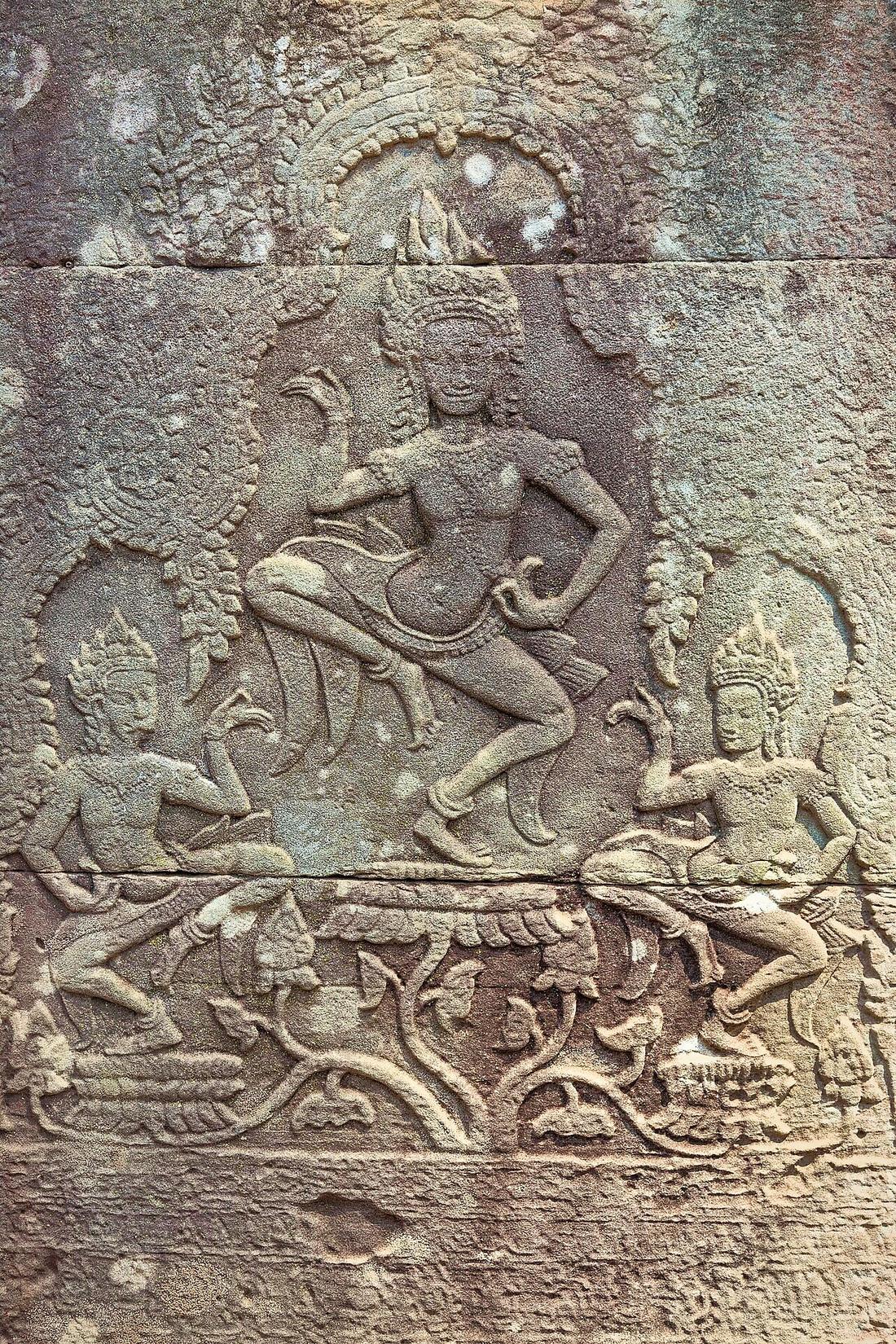
Jayavarman VII was 61 when he was crowned in 1181. His building programme included the Bayon, Angkor Thom, rest houses and hospitals. One inscription calls the king the groom and the city his bride.
Bayon-style temples (1181 to 1243) show hurried building, in contrast to the precision of Angkor Wat. Scholars conclude the upper terrace was not in the original plan; the east terrace, the libraries and the square corners of the inner gallery were also added after a change of design. The Japanese team describes Bayon as the most striking expression of the baroque style of Khmer architecture, against Angkor Wat's classical style.
The original main image was a 3.6 m seated Buddha sheltered by the serpent king Mucalinda. The central sanctuary on the third terrace has 16 doorways, many opening into isolated chambers.
Early 20th-century conservation was led by the EFEO using anastylosis. Since 1993 work across Angkor has been coordinated through the ICC, with UNESCO. The World Heritage area covers 40,100 ha.
You are already inside Angkor Thom. Just Siem Reap lists Ta Prohm 5.0 km away; the rest need a ride.
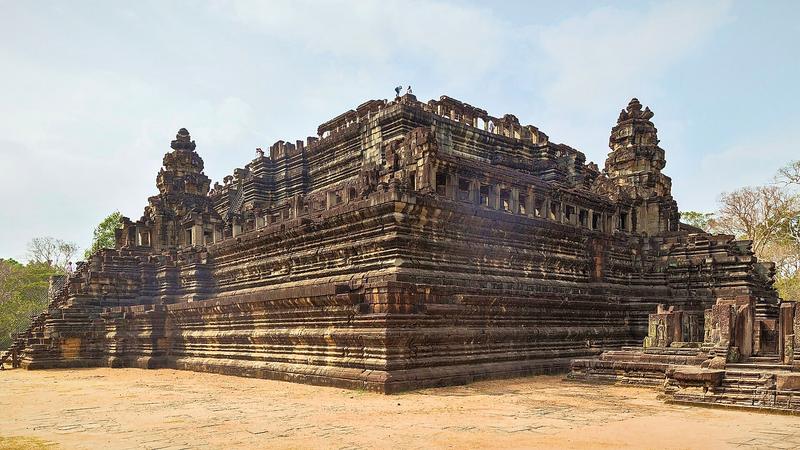 Angkor ThomSame park pass as Bayon (3-day pass US$62)
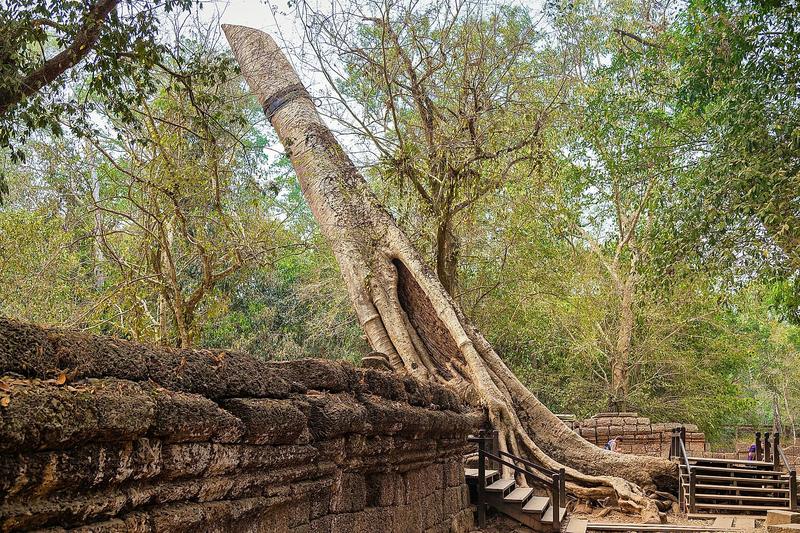 Ta ProhmIts foundation stone dates it to 1186
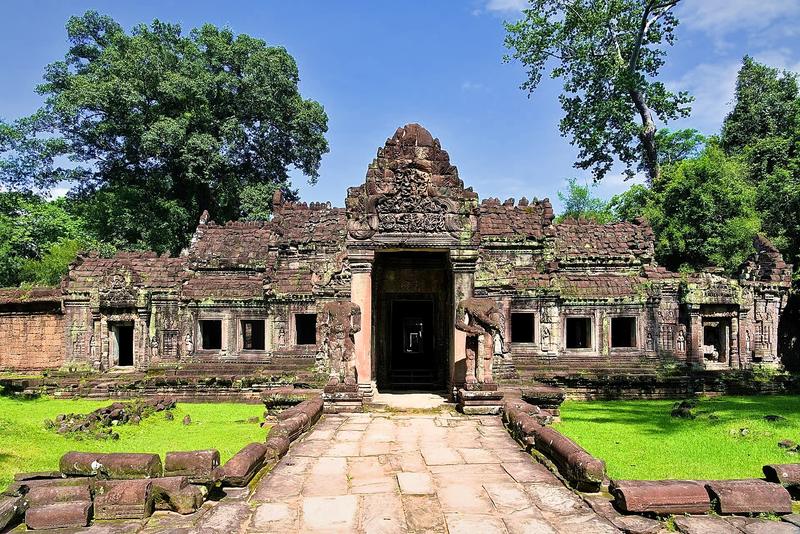 Preah KhanSame park pass as Bayon (3-day pass US$62)
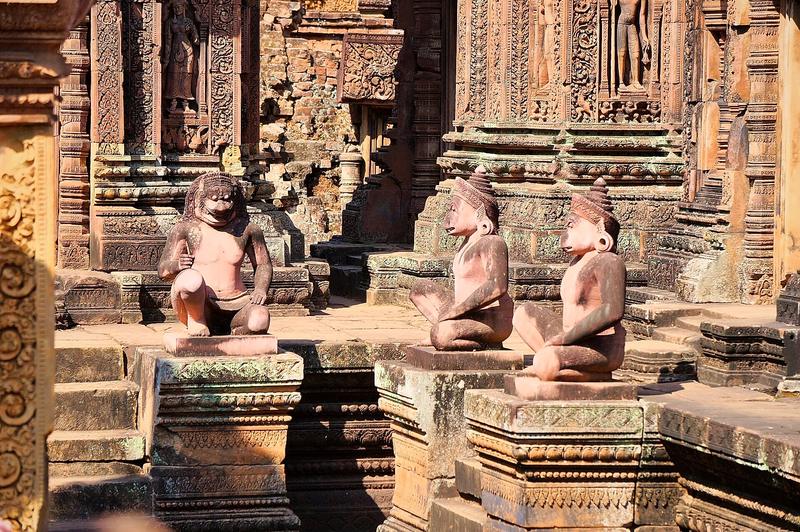 Banteay Srei25 km north-east of the main group
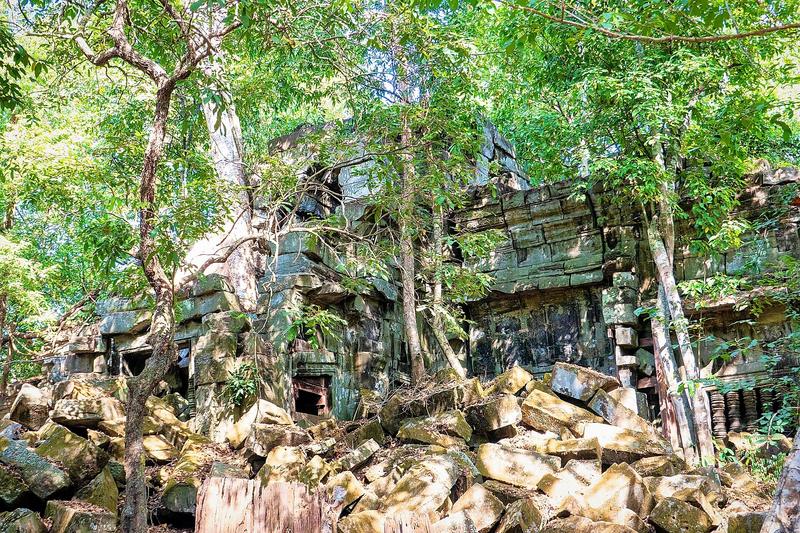 Beng MealeaOpen 6:00 AM to 6:30 PM
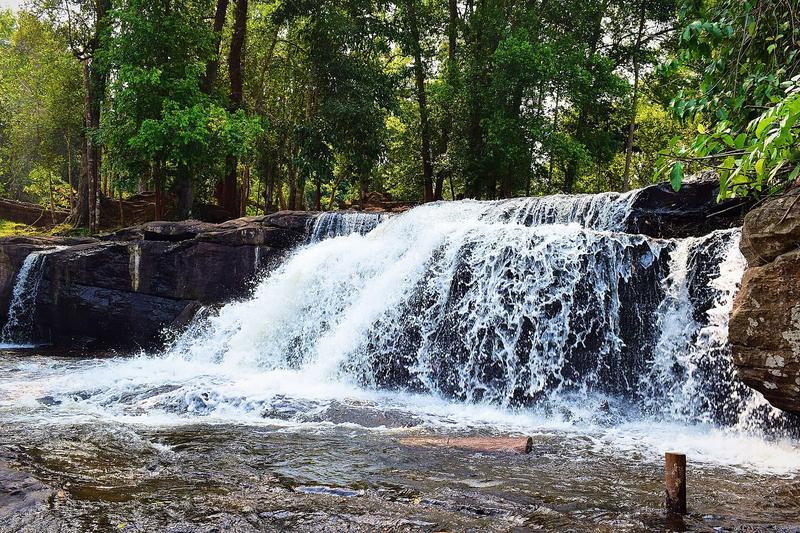 Phnom KulenHills to about 500 m; cars up 7 to 11 AM
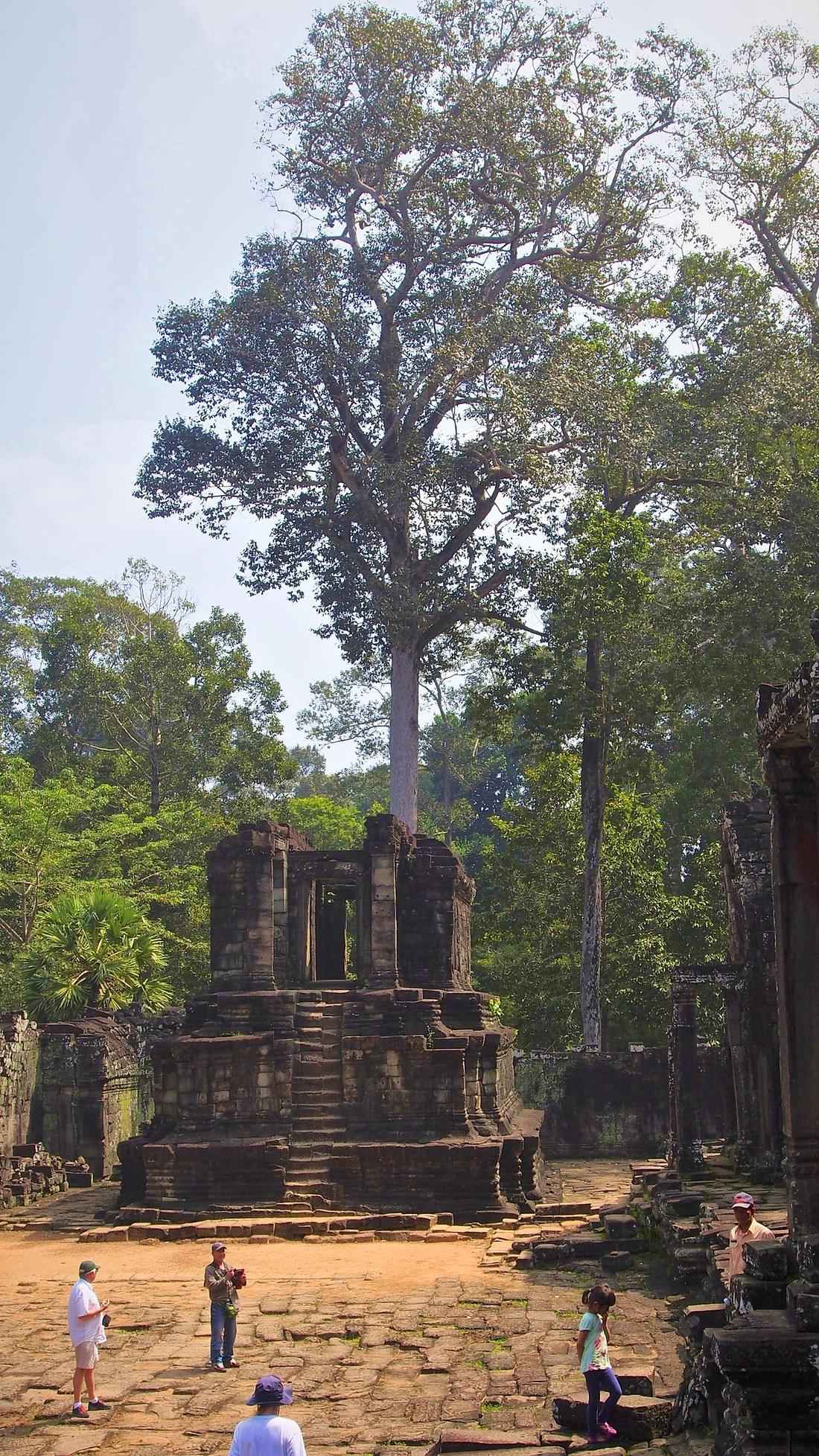 All Angkor templesThe overview of every Angkor temple
The state temple of King Jayavarman VII, built in the late 12th or early 13th century at the centre of Angkor Thom. It was the last state temple built at Angkor and the only one built mainly for Buddhist deities. Its original name was Jayagiri, Victory Mountain.
About 200, and there is no definitive count. Sources differ: Wikipedia gives 216, and Wikivoyage counts 54 towers of four faces, while other guides say 49 towers were built and 37 remain. Each tower carries two, three or, most often, four faces.
Nobody knows for sure. Scholars theorise they represent the bodhisattva Avalokitesvara. The Chinese envoy Zhou Daguan, who saw the towers in 1296, called them heads of the Buddha.
The outer gallery, and above all its south wall: under the naval battle on the Tonle Sap you find a market, open-air cooking, hunters and women with children, then boats, fishermen, a Chinese junk and a cockfight. The inner gallery is mostly Hindu mythology.
Wikivoyage advises roughly 10:00 to 16:00 and says the tall towers look dark and flat near sunrise and sunset, so sources differ with the usual sunrise advice. The reliefs photograph well all day, though midday sun removes the shadows.
Give it one to two hours if you want to read the reliefs. Just Siem Reap gives 30 minutes to 2 hours for a typical visit.
The Angkor Temples Park pass gives access to 50+ temples; check Bayon on the official list. The official ticket page lists US$37 for 1 day, US$62 for 3 days and US$72 for 7 days (checked November 2026).
No. Angkor Thom is the walled city Jayavarman VII rebuilt; Bayon is the temple at its exact centre. Bayon has no wall or moat of its own: the city walls and moat take their place. The city-temple area covers about 9 square kilometres.
Long trousers or a skirt, and covered shoulders. Wikivoyage says a scarf over the shoulders is not accepted at the strictly policed areas of Angkor, so wear a top with sleeves.
Both. It was built for Buddhist worship, but after Jayavarman VII the empire reverted to Hinduism and the temple was altered, so it mixes Buddhist and Hindu images. The inner gallery reliefs are attributed to later additions under Jayavarman VIII.
Yes. The EFEO restored it in the early 20th century using anastylosis, and the Japanese Government Team for Safeguarding Angkor has led conservation since 1995. In December 2024 APSARA reported a four-month repair of the third terrace at the south-west corner, where a broken beam and tree roots had damaged the structure.