King and queen
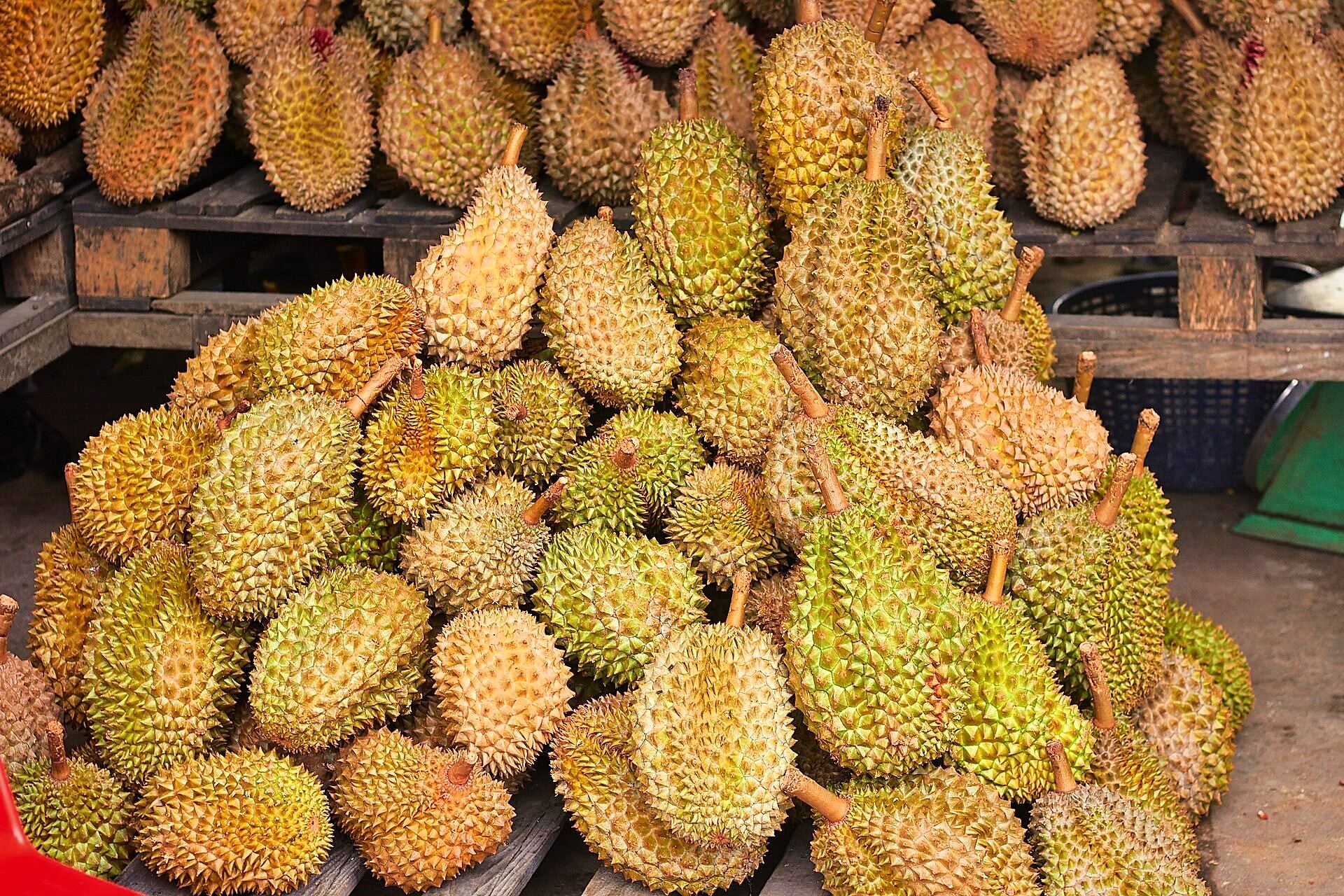
Durian is considered the king of fruits in Cambodia and mangosteen the queen, per one guide.
Home › Cambodian food › Cambodian desserts
Khmer sweets and fruit
One guide calls steaming and grilling the most common dessert techniques. Num ansom and num kom are sticky rice cakes tied to festivals; kralan is rice roasted in bamboo; fruit and palm sugar follow the seasons.
By Laura Brennan · updated
The same guide counts four main types of Cambodian dessert and calls steaming and grilling the most common techniques.
Traditionally at Pchum Ben and Khmer New Year, per one guide. Num kom is also made for weddings, so a visit that overlaps a festival is the easiest time to try them.
Pchum Ben
Num ansom is traditionally eaten at Pchum Ben and num kom is traditionally made for it. One guide says sticky rice cakes are offered to ancestors on the day.
What the cakes areKhmer New Year
Num ansom is traditionally eaten at Khmer New Year, and num kom is traditionally made for it.
More in the FAQA wedding
Num kom is traditionally made for weddings as well as the two festivals.
About num komAfter soup
The tourism ministry says a bowl of Khmer sour soup leaves just enough room for dessert.
Cambodian curryAny time of day
Desserts also fill a snack break, per one guide. Kralan is sold on the roadside, says another.
Street foodGrouped by occasion, not ranked. Check the festival dates for your visit.
In one guide's description, num ansom is the cylinder and num kom the pyramid. Kralan comes in a bamboo tube. All three lean on glutinous rice.
A traditional Khmer sticky rice cake, cylinder-shaped and made from glutinous rice. Vegetarian num ansom uses mung beans; other fillings include banana, jackfruit and pork, per one guide.
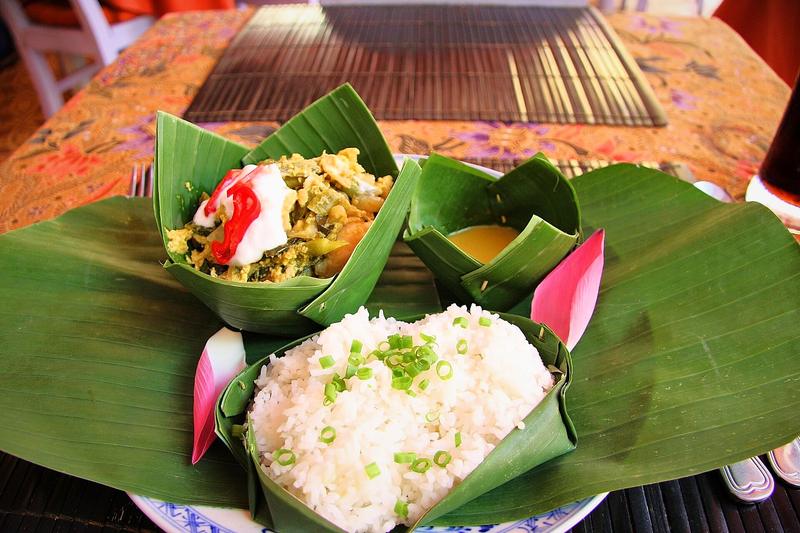
A traditional steamed rice cake of glutinous rice flour, wrapped in banana leaves in a pyramid shape. One guide lists a filling of grated coconut, palm sugar and toasted sesame seeds, and says some documents link it to the reign of King Jayavarman VII (12th-13th century).
Glutinous rice roasted with black-eyed peas or beans and coconut milk inside bamboo, for around 90 minutes, per one guide. The same guide says it is sold on the roadside in Cambodia.
A Khmer dessert that one guide describes as a descendant of the Portuguese fios de ovos.
Cambodia made a record num ansom weighing 4 tons (4,040 kg) in 2015, per one guide. It took about 100 Khmer chefs and almost two days to cook.
Market fruit, sweets and a roadside vendor. Swipe or use the arrows.
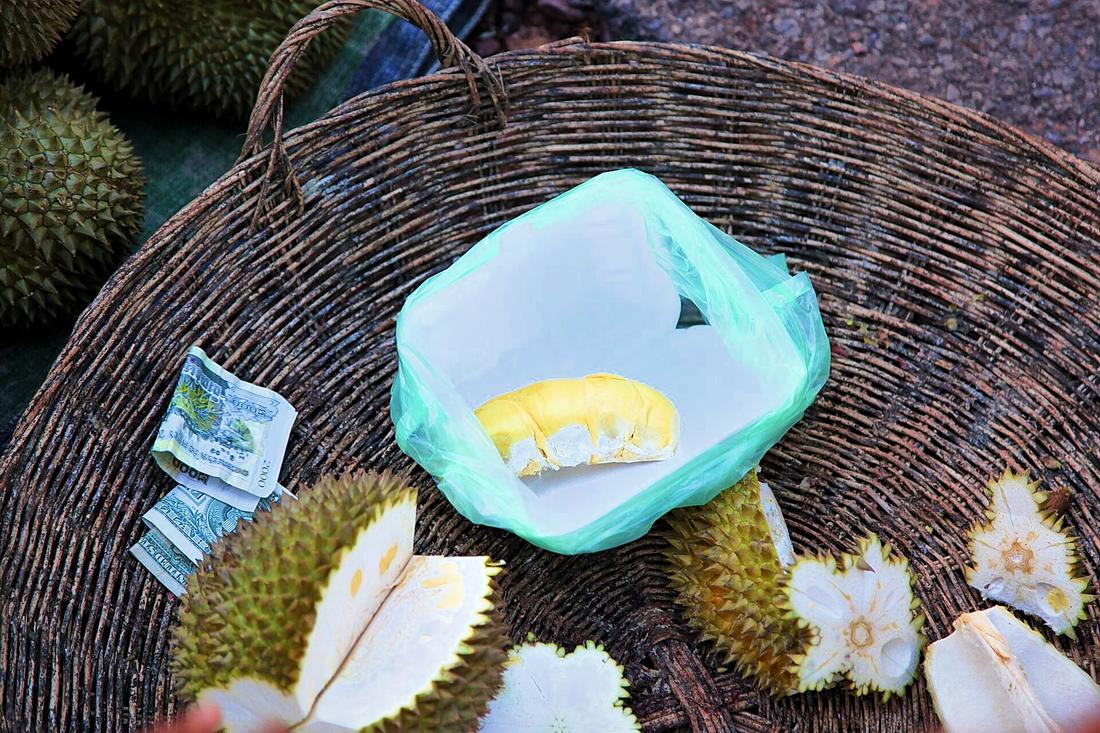 1/5
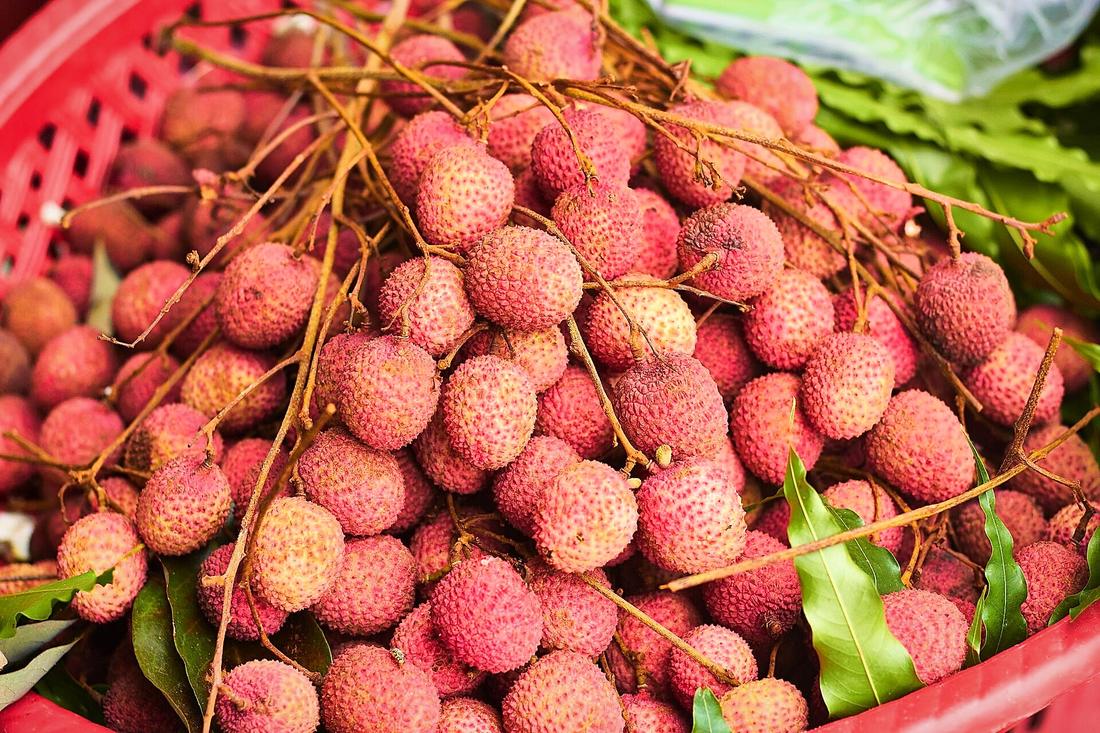 2/5
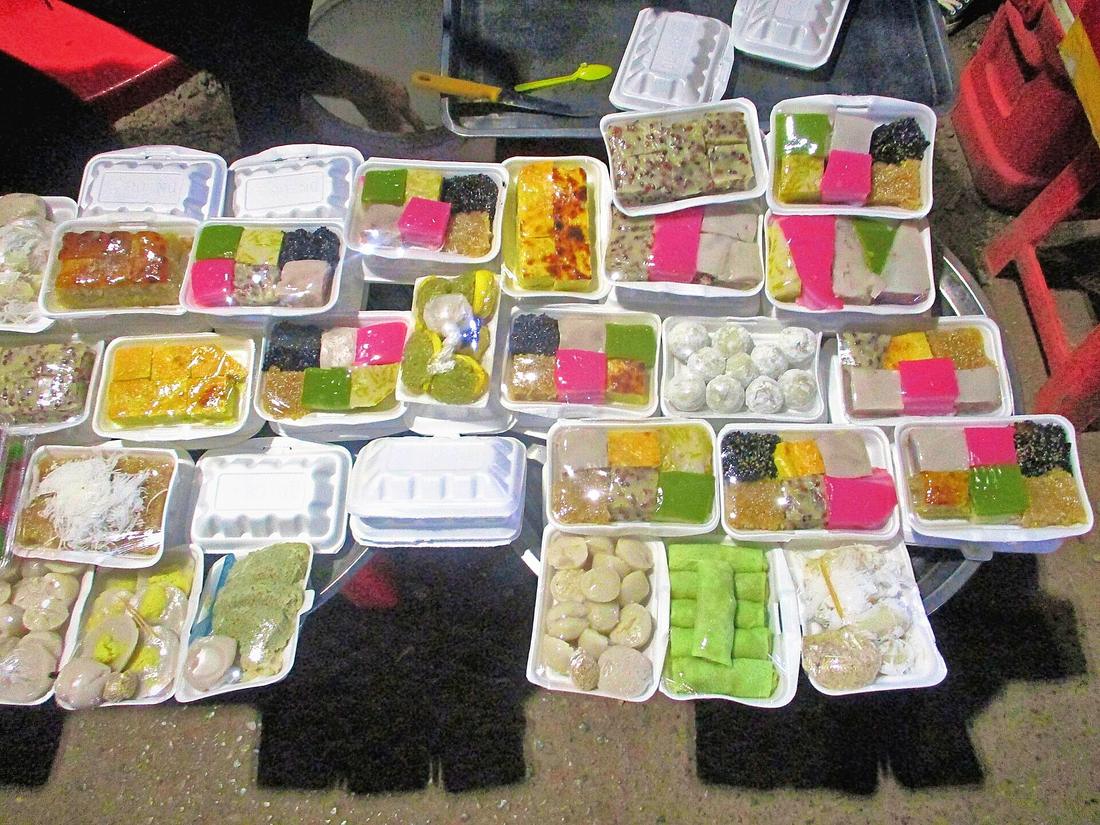 3/5
 4/5
 5/5
Mango has the longest run, April to September. Durian, mangosteen, longan and rambutan start between mid-May and June. These are one guide's usual ranges.
The ranges overlap: in May and June the guide has mango, durian, mangosteen and longan all in season at once, so a fruit stall in those months can carry several. UK TravelHealthPro notes that hepatitis A spreads through contaminated food and water or direct contact with an infectious person.
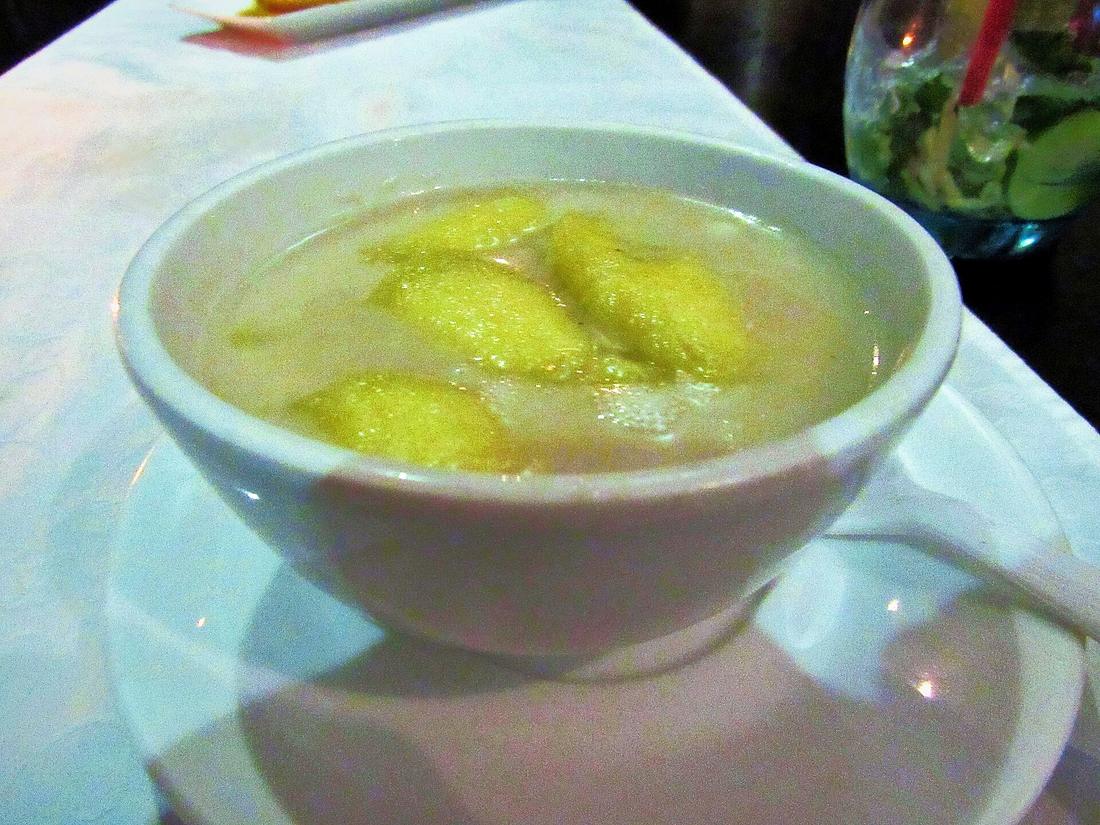
Fruit counts as sweet here too. One guide says some ripe fruits, such as mangoes, are eaten with heavily salted fish and plain rice, and that durian, mangos and bananas are popular smoothie fruits.
Durian is considered the king of fruits in Cambodia and mangosteen the queen, per one guide.
An official source calls it a locally unique variety with bright orange flesh. Kampong Speu, Battambang and Oddar Meanchey are the major mango-producing provinces.
Known for a sweeter taste and no seeds after ripening, per one guide.
Sweet jackfruit is champa and hard jackfruit is khnei, according to one guide.
Kampong Speu palm sugar has a geographical indication covering powder, paste, block and syrup, an official source says.
How it is made
Palm sugar is produced by boiling collected sap until it thickens, per one guide.
When
News reports put the Kampong Speu season at December to May. Good-quality sugar is made from December to March, and rain lowers quality.
Because rain lowers quality, the December to March window matters most for the better sugar. One news report says the Kampong Speu palm sugar association has 150 families and 3,600 trees.
Steaming and grilling are the most common techniques, according to one guide. The cakes below show the range.
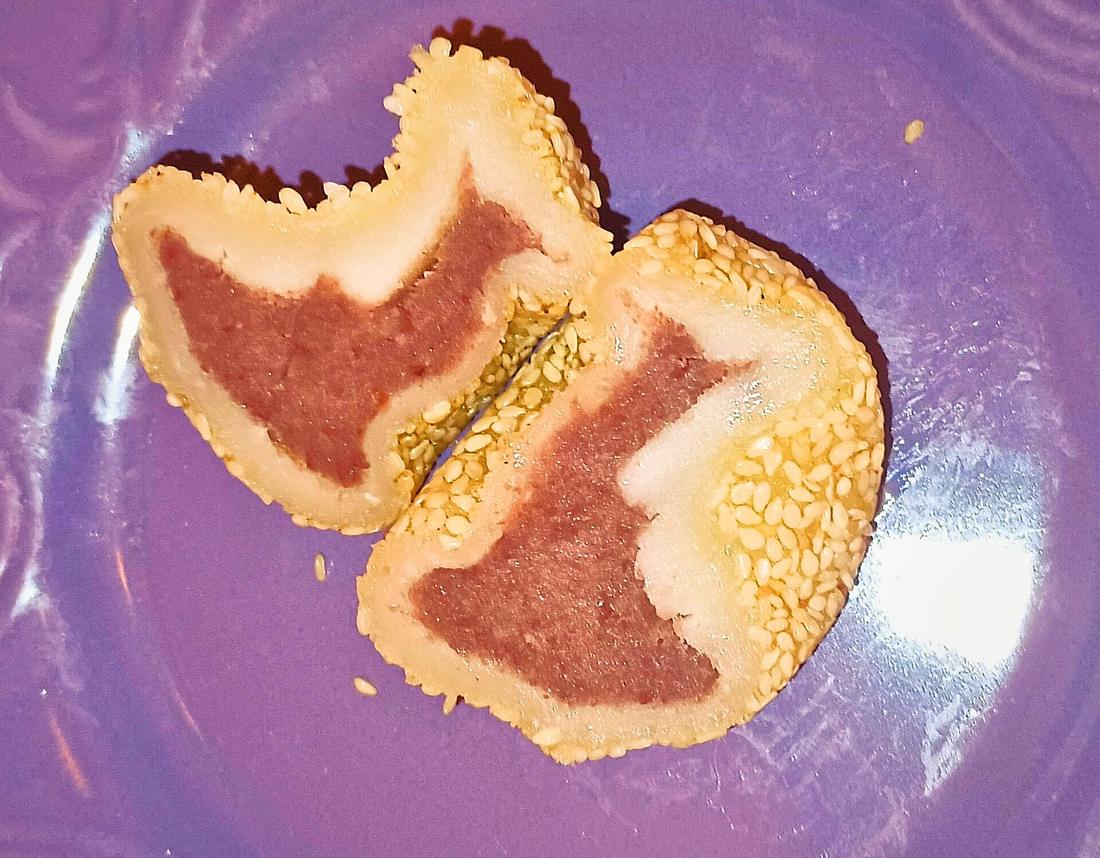
Num kom is a steamed rice cake of glutinous rice flour.
One guide says num kom comes wrapped in banana leaves in a pyramid shape.
Kralan roasts for around 90 minutes, per one guide, with coconut milk and beans among the glutinous rice.
Palm sugar is produced by boiling collected sap until it thickens, per one guide.
Yes, per one guide: vegetarian num ansom uses mung beans.
The same guide lists banana, jackfruit and pork among the other fillings, so check before you buy. Num kom, by the same guide, is filled with grated coconut, palm sugar and toasted sesame seeds.
Each guide covers one corner of the menu; the two city guides cover where to eat.
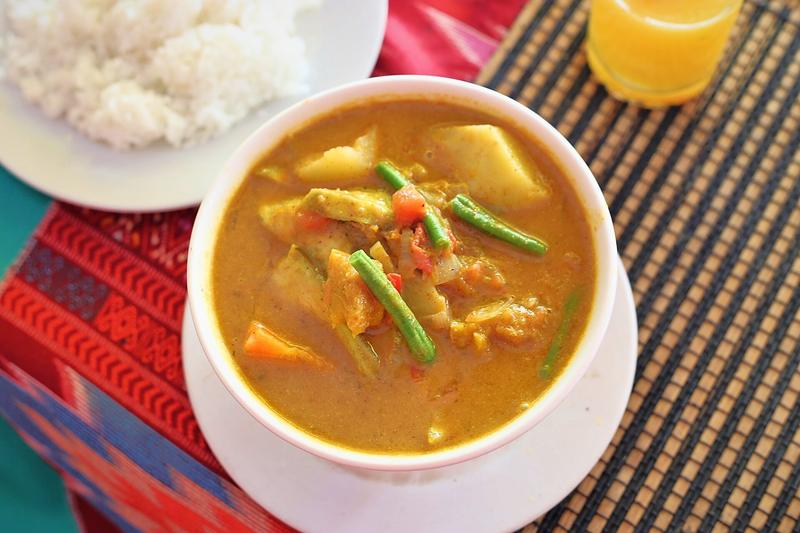 Cambodian curryAmok, samlor and the family of soups and curries
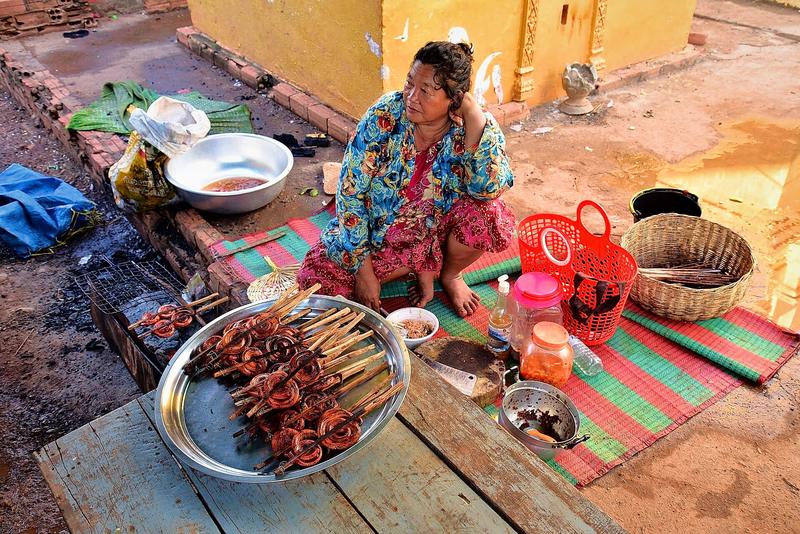 Cambodian street foodStalls, snacks and street drinks
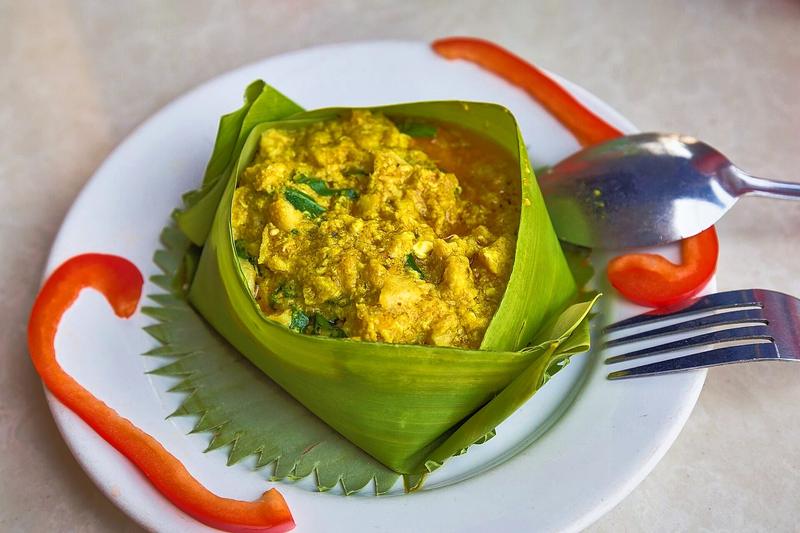 Fish amokThe steamed fish curry in full
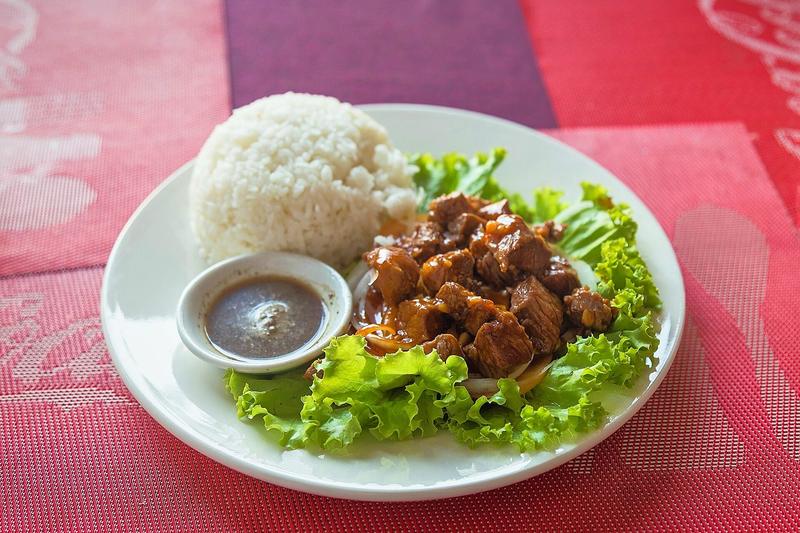 Lok lakPepper-marinated beef with rice and a fried egg
 Siem Reap foodCity food guide for Siem Reap
 Phnom Penh foodCity food guide for Phnom Penh
Cambodian breakfast →What Khmer breakfast tables serve, from noodles to rice porridge
Num banh chok →The fermented rice noodles and fish gravy in full
 Cambodian foodThe hub for Khmer dishes and flavours
Num ansom and num kom are sticky rice cakes, and kralan is roasted glutinous rice in bamboo. One guide counts four main types of Cambodian dessert and says steaming and grilling are the most common cooking techniques.
A glutinous rice flour dough, steamed and wrapped in banana leaves in a pyramid shape. One guide lists a filling of grated coconut, palm sugar and toasted sesame seeds.
Vegetarian num ansom uses mung beans, per one guide, while other fillings include banana, jackfruit and pork. Ask what is inside before you buy a piece.
Yes, two. Kralan is roasted in bamboo with coconut milk, black-eyed peas or beans and glutinous rice. Cambodian puddings are generally made with coconut milk or cream and tapioca pearls, says one guide.
Cambodia made a record num ansom weighing 4 tons (4,040 kg) in 2015, per one guide. It took about 100 Khmer chefs and almost two days to cook.
It is a normal way to end a meal: the tourism ministry says a bowl of Khmer sour soup leaves just enough room for dessert. One guide adds that desserts are also eaten through the day as a snack.
Num ansom is traditionally eaten at Pchum Ben and Khmer New Year. Num kom is traditionally made for Pchum Ben, Khmer New Year and weddings. Check the festival dates for your visit.
It is a drink. One guide calls sugarcane juice a popular street drink pressed from stalks with a special machine, and says sugarcane was available in the Khmer Empire by the late 13th century (Zhou Daguan).
One guide gives usual ranges: mango from April to September, peaking in May and June; durian from mid-May to July; mangosteen from May to July; longan from May to September; rambutan from June to September.
One guide says some ripe fruits, such as mangoes, are eaten with heavily salted fish and plain rice. Durian, mangos and bananas are the popular smoothie fruits.
The CDC says fruit or vegetables may be safer if you can peel them yourself. UK TravelHealthPro notes that hepatitis A spreads through contaminated food and water or direct contact with an infectious person.
Its geographical indication covers powder, paste, block and syrup. Palm sugar is produced by boiling collected sap until it thickens, per one guide.