Who pays what
US$20Adult
US$20Child
FreeInfant
Children pay the same fee as adults; infants are free (operator). A 2023 news report adds that Cambodian nationals enter Kulen free.
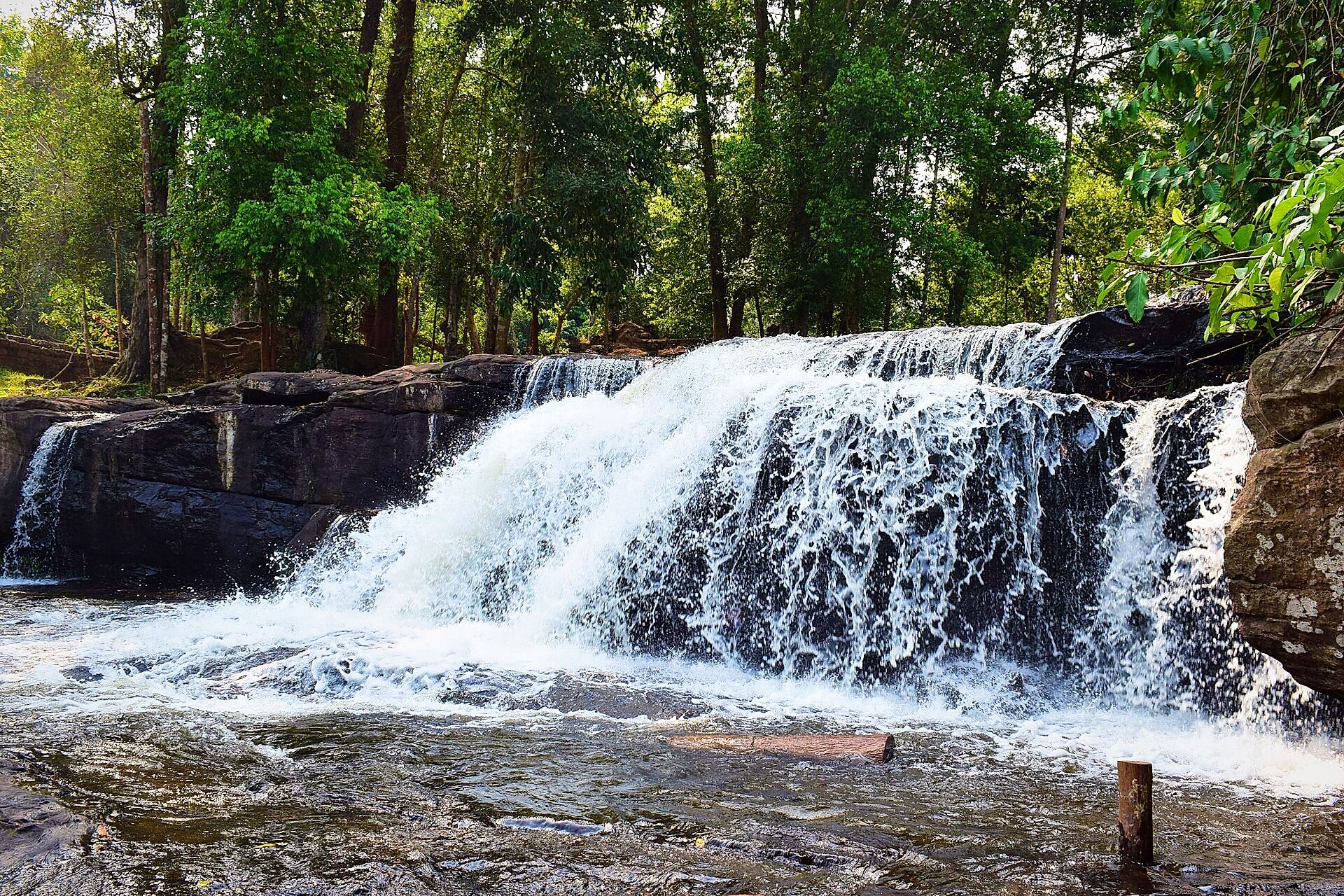
Phnom Kulen National Park, Svay Leu District
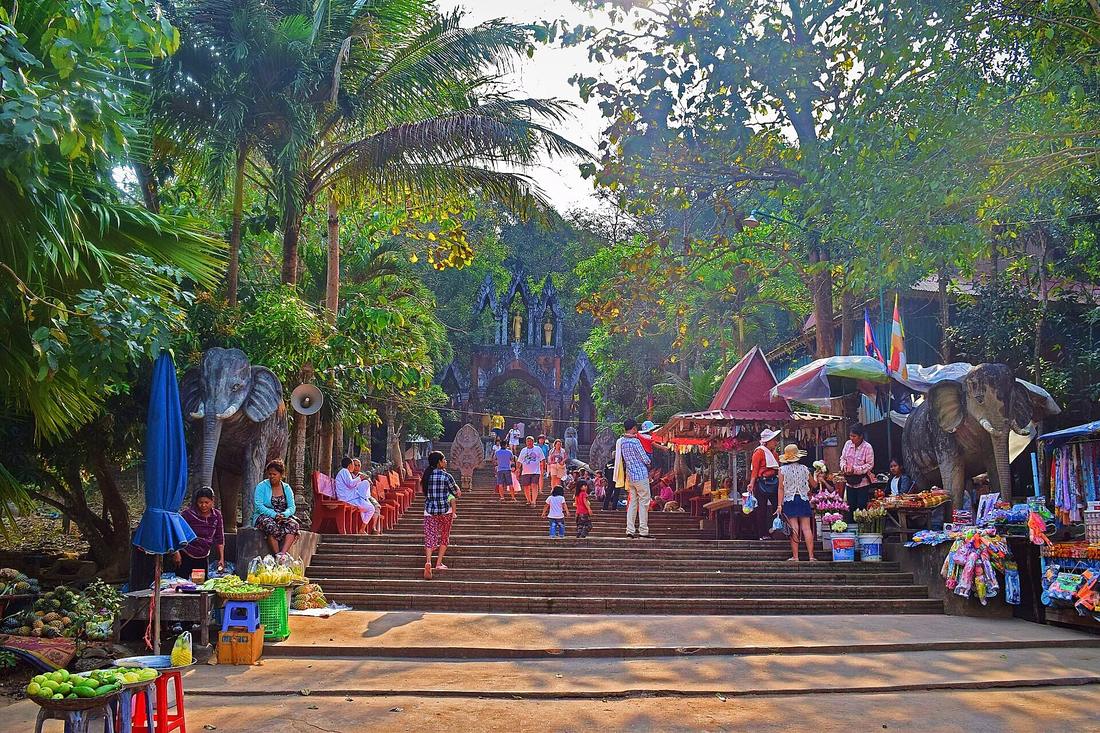
A full day, not a half. An operator puts the mountain 48 to 50 km from Siem Reap, lists entry at US$20 cash at the booth, and says cars go up between 7:00 and 11:00am.
By Laura Brennan · updated
How long
An operator puts the mountain 48 to 50 km out, 1.5 to 2 hours by road. Keep the whole day free.
Getting thereCost
An operator lists this fee, paid in cash at the booth on the mountain. Children pay the same; infants are free.
Entry feeCars
An operator says cars can drive up in that window, so leave town early enough to arrive inside it.
Car windowKulen or temples?
Expect waterfalls, a reclining Buddha and river carvings, not temple towers. The Angkor Pass is not accepted here.
Angkor templesMorning
Reach the booth, pay the fee in cash, then drive up inside the 7:00 to 11:00am car window.
Midday
Waterfall and reclining Buddha. Bring swimwear and a towel if you want the pool.
Rest of the day
An operator says a full day can leave room for Srah Damrei or a Beng Mealea extension.
Swipe or use the arrows.
 1/7
 2/7
 3/7
 4/7
 5/7
 6/7
 7/7
An operator lists US$20 for foreign adults and children, paid in cash at the ticket booth on the mountain. The same operator says the fee is cash only.
Children pay the same fee as adults; infants are free (operator). A 2023 news report adds that Cambodian nationals enter Kulen free.
Cash only
US dollars or riel, handed over at the booth on the mountain. Carry the notes from town.
Not accepted
One operator's page says Kulen needs its own US$20 ticket and the Angkor Pass is not accepted at the national park. Another guide agrees that the pass does not cover it.
A news report in August 2023 says the district introduced a US$20 per day entrance fee for foreign visitors to Kulen Mountain. An operator now gives the same figure.
Plan a full day: an operator puts the mountain 48 to 50 km from Siem Reap and gives 1.5 to 2 hours by road. It says cars can drive up between 7:00 and 11:00am.
The operator says 48 to 50 km; a guide gives about 48 km to Svay Leu District, so read it as a range. The park lies in that district.
The operator says cars can drive up in this window. Count the drive from town, then aim to reach the mountain inside the hours.
An operator advises a 4WD because the roads are steep.
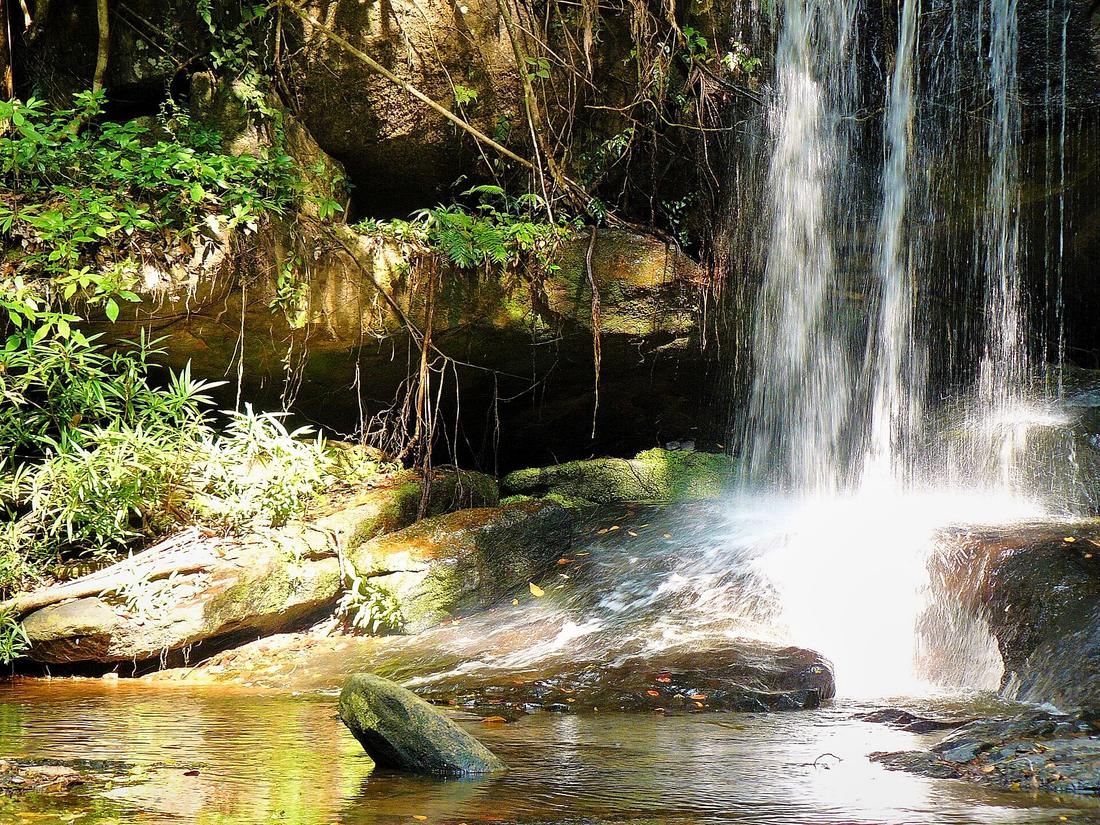
Two waterfalls, a large reclining Buddha and a forested plateau that was once a royal capital.
One guide gives the first fall as 4 to 5 m tall and about 25 m wide in the rainy season, and the second as 15 to 20 m tall and about 15 m wide.
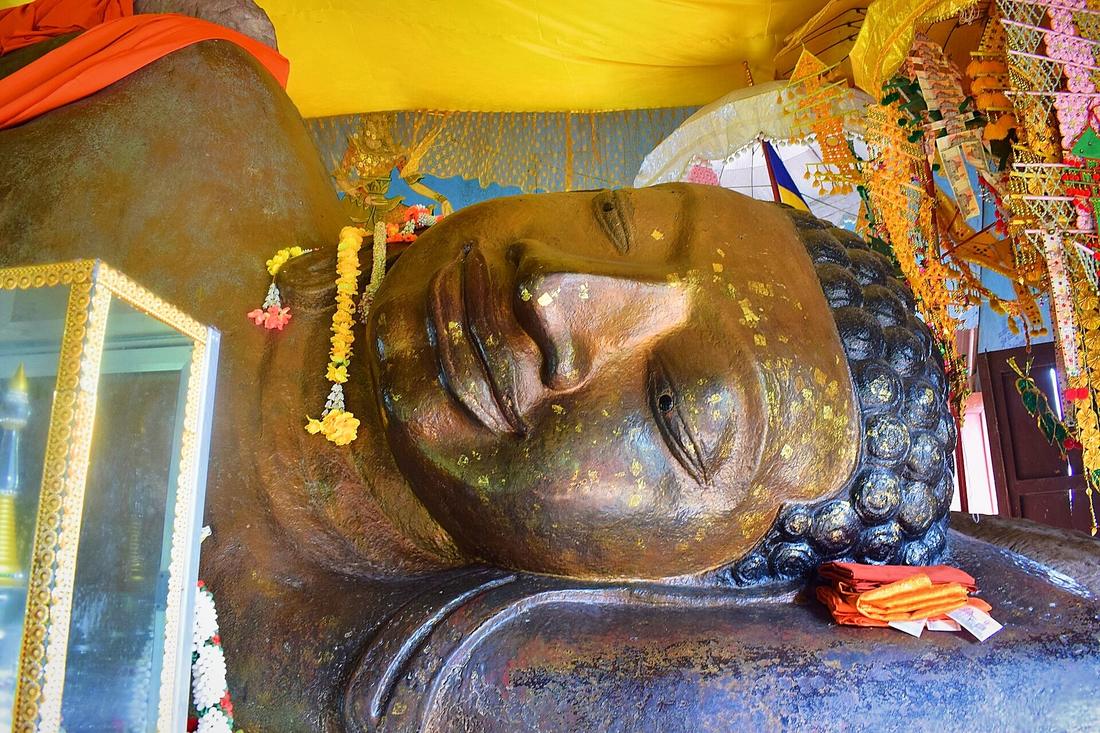
One guide gives the statue's height as 8 m (Wikipedia). An operator calls the Preah Ang Thom reclining Buddha 16 m long. Two measures, so the numbers differ.
One guide says the national park, set up in 1993, spans Svay Leu and Va Rin districts. The highest point is about 500 m; the plateau averages about 400 m.
Travellers report that Kulen has around 85 archaeological places, with the waterfall, the 1000 lingas and the reclining Buddha as the main tourist stops.
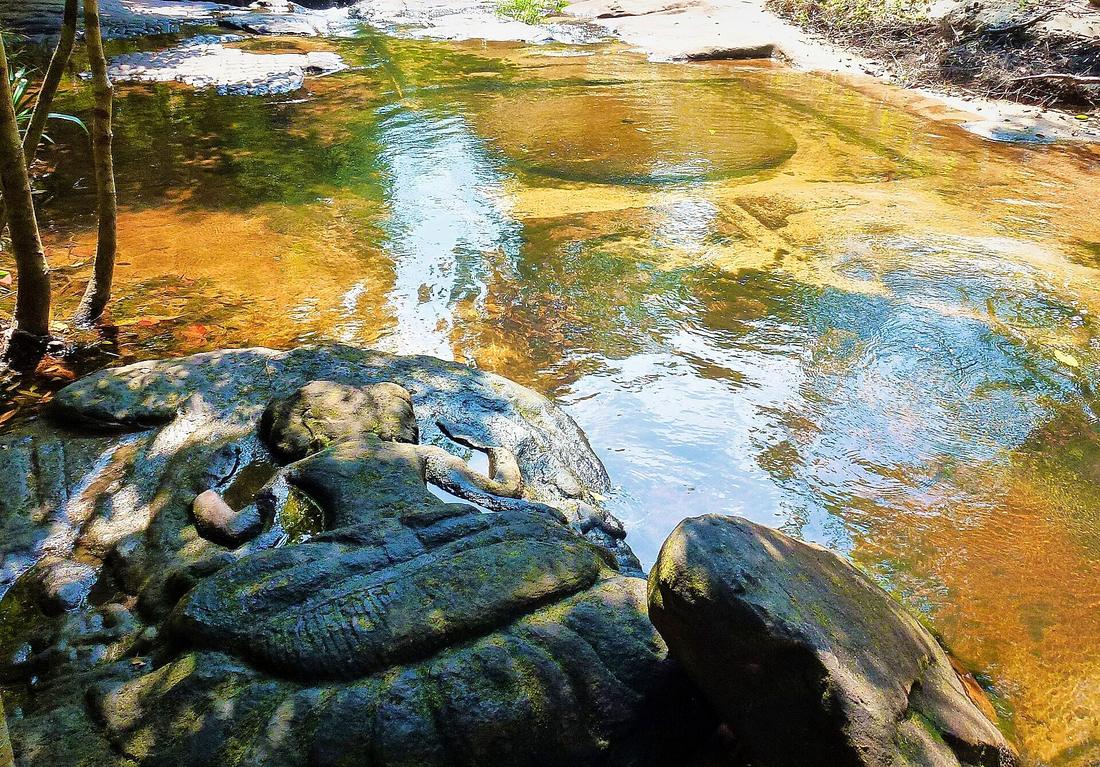
Over 1000 linga carvings sit in the Kbal Spean riverbed.
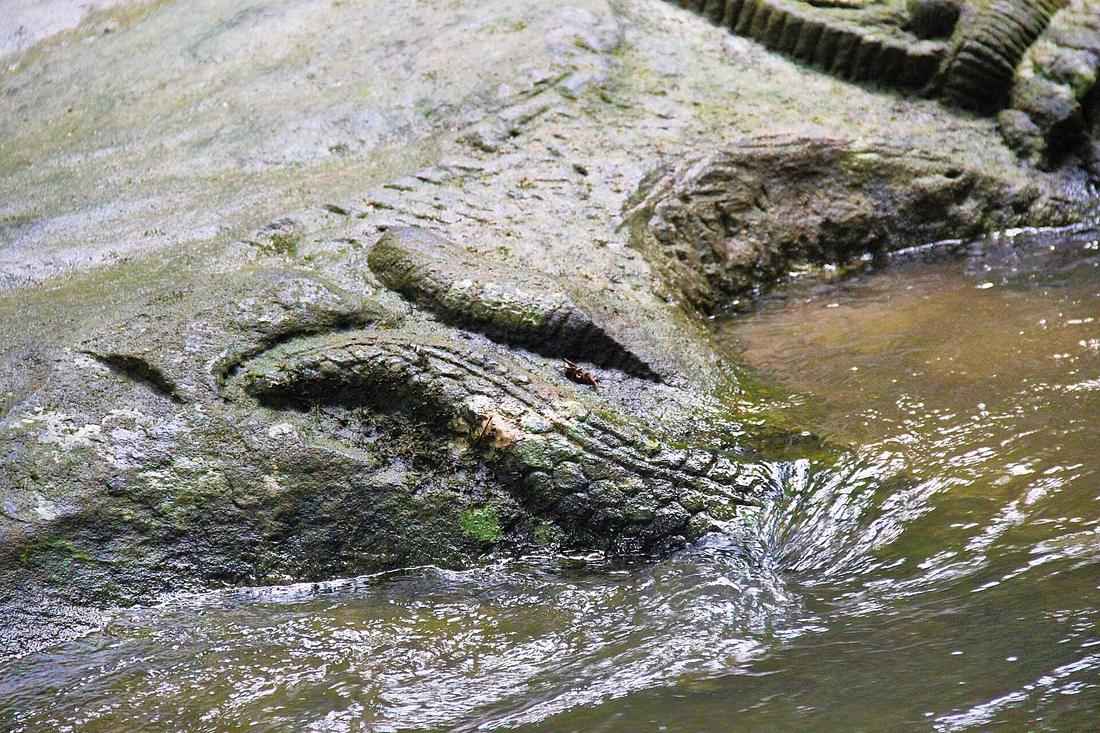
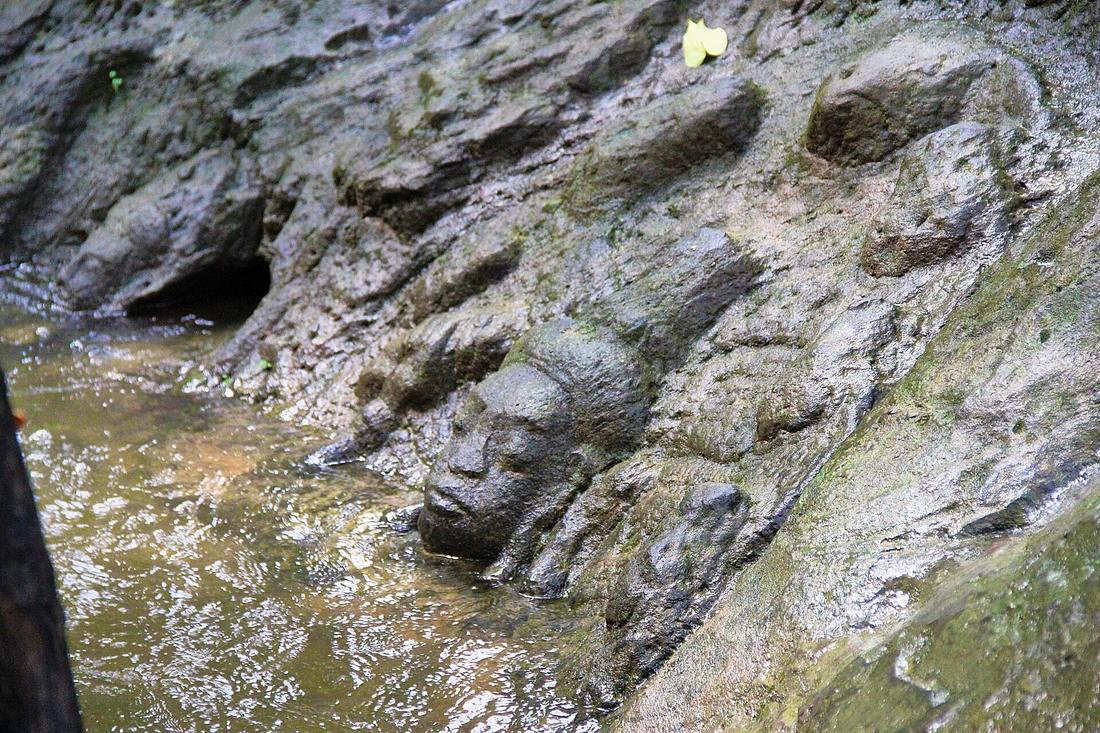
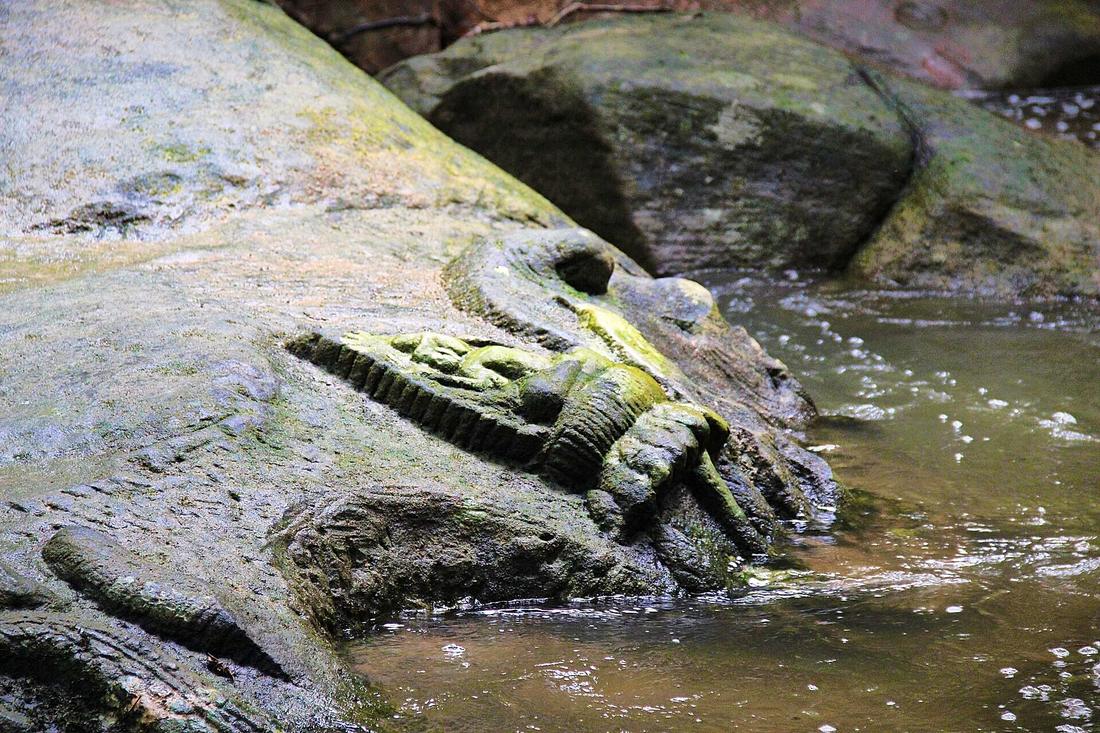
It depends on the sight. November to April is the operator's pick for reading the river carvings; the waterfall figures above are rainy-season ones.
An operator calls the dry season ideal for viewing the river carvings clearly at Kbal Spean.
The guide's fall dimensions describe the rainy season: the first 25 m wide, the second 15 m wide.
An operator says to bring both for the waterfall; the upper fall drops into a natural pool.
In the Angkorian era the massif was Mahendraparvata, the "Mountain of the Great Indra", and a guide calls it the symbolic birthplace of the Khmer Empire.
He held his consecration ritual on Mahendraparvata, now Phnom Kulen, in 802. One guide adds that he proclaimed independence from Java that year.
He ruled from Indrapura, Hariharalaya (Roluos) and Mahendraparvata on Phnom Kulen.
A guide says Angkorian builders took their sandstone from the Kulen mountains; major quarries lie in the southeastern angle of the massif.
An expedition led by Jean-Baptiste Chevance and Damian Evans uncovered Mahendraparvata with airborne laser scanning. The scans confirmed the temple city near Angkor Wat.
News reports say they mapped more than two dozen temples plus canals, dykes and roads laid out in city blocks. About 36 buildings had been recorded before, with no known layout. Archaeologist Charles Higham calls it an early, small-scale version of Greater Angkor.
An operator says a full day on Kulen can leave room for Srah Damrei or a Beng Mealea extension. The temples below sit on the Angkor Pass, which Kulen does not accept.
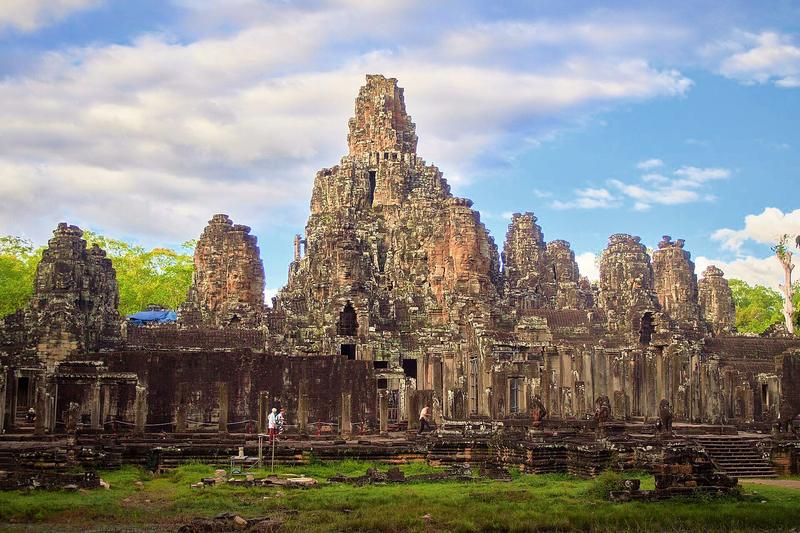 Angkor templesThe 1-day pass costs US$37
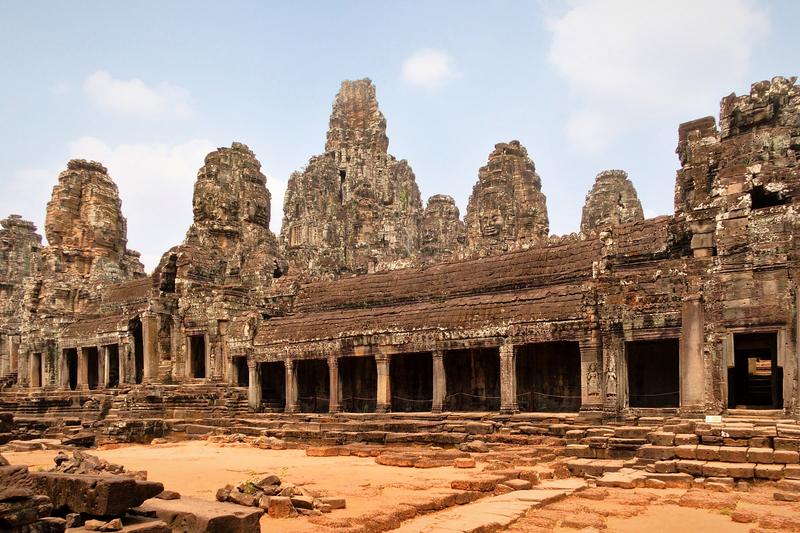 Bayon templeA temple of carved stone faces
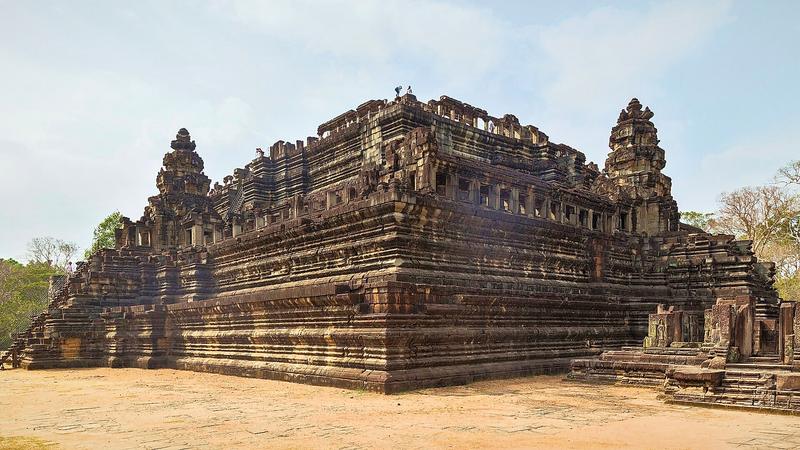 Angkor ThomThe walled city covers 9 km²
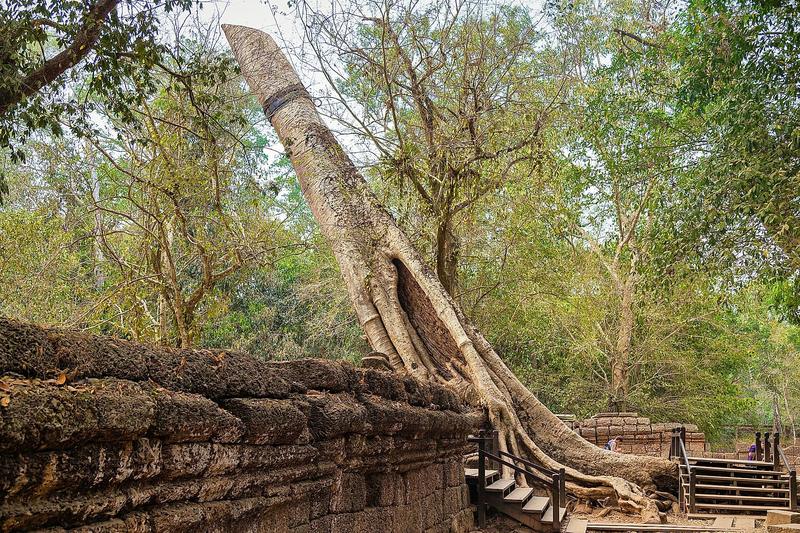 Ta ProhmA ruined temple in the Angkor park
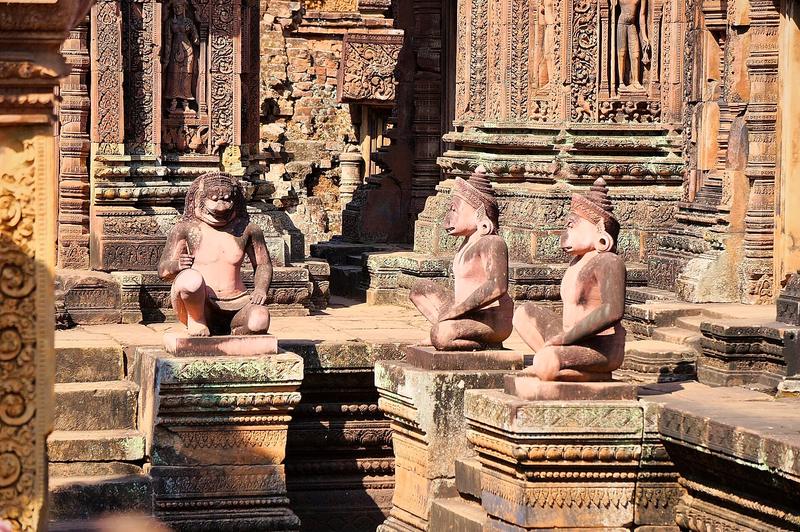 Banteay SreiA carved temple north of Angkor Wat
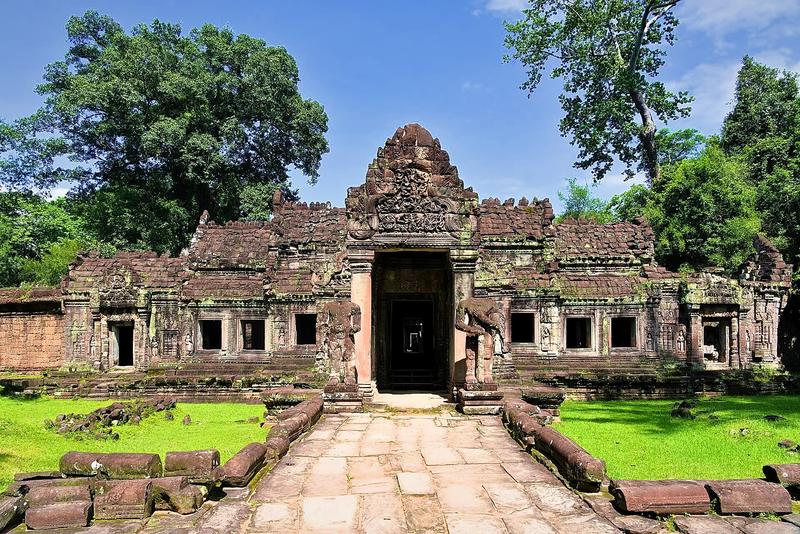 Preah KhanSome 3 km north of Angkor Thom
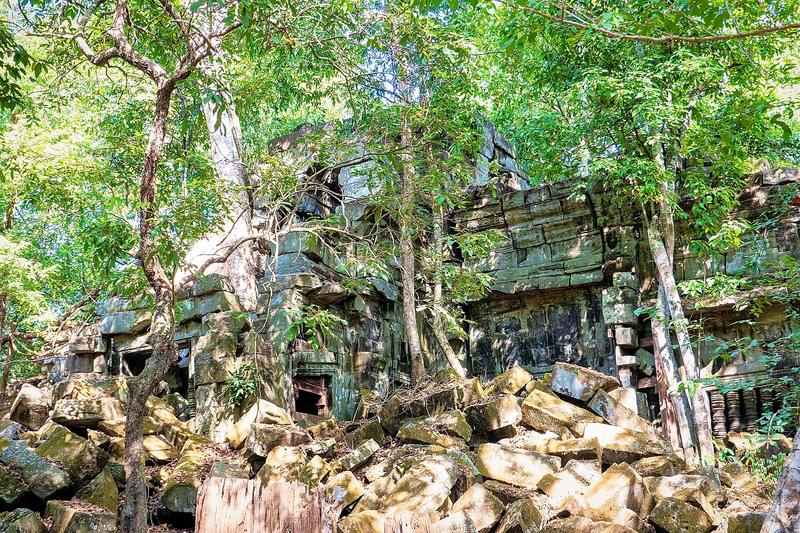 Beng Mealea40 km east of the main Angkor group
Yes, if you want waterfalls, a reclining Buddha and river carvings in place of temple towers. It takes a full day: an operator gives 48 to 50 km from Siem Reap, and cars go up between 7:00 and 11:00am.
An operator gives US$20 for foreign adults and children, paid at the ticket booth at the mountain. Children pay the same as adults; infants are free. A 2023 news report says Cambodian nationals enter free.
The entrance fee is cash only, in US dollars or riel, according to an operator.
No. The Angkor Pass is not accepted at Phnom Kulen National Park, and a separate ticket is required.
An operator gives about 48 to 50 km and 1.5 to 2 hours by road, and advises a 4WD because of steep roads. A guide puts the park about 48 km from Siem Reap town.
Over 1000 small linga carvings are etched into the sandstone riverbed at Kbal Spean, where a river rises in the Kulen mountains. Kbal Spean has its own 1-day ticket at US$5.
One guide gives about 2 km uphill from the road to the first carvings, around 40 minutes.
An operator calls the November to April dry season ideal for seeing the river carvings clearly. One guide's waterfall sizes are rainy-season figures: the first fall 4 to 5 m tall and about 25 m wide, the second 15 to 20 m tall and about 15 m wide.
An operator advises bringing swimwear and a towel, and says the upper fall drops into a natural pool.
The name means "Mountain of the Great Indra", the Angkorian-era name for the Phnom Kulen massif. Lidar scans made in 2012 confirmed a temple city there.