Tuk-tuk
About US$15 return
Wikivoyage prices the trip from town, including the wait and the ride back, at about US$15, and says quotes run from US$10 to US$20. Settle the price and the waiting time before you leave.
Home › Kampong Thom
Kampong Thom province
Yes, if you are already on the Phnom Penh to Siem Reap road. The temples are 25 km north of town.
By Laura Brennan · updated
Detour
The site is 25 km north of town; one guide gives roughly 1 hour by tuk-tuk.
Getting thereCost
One guide puts the tuk-tuk at about US$15 with waiting and return. Entry is US$10 for foreigners per one guide; no official price notice found.
Price detailGo if
This was a 7th-century capital, and brick is its main building material.
Who built itMorning
Get off the bus or taxi in Kampong Thom town and agree a tuk-tuk price for the round trip.
Midday
Walk the temple groups among the trees; the driver waits.
Late afternoon
Ride back to town and stay the night, or move on.
Swipe or use the arrows.
 1/3
 2/3
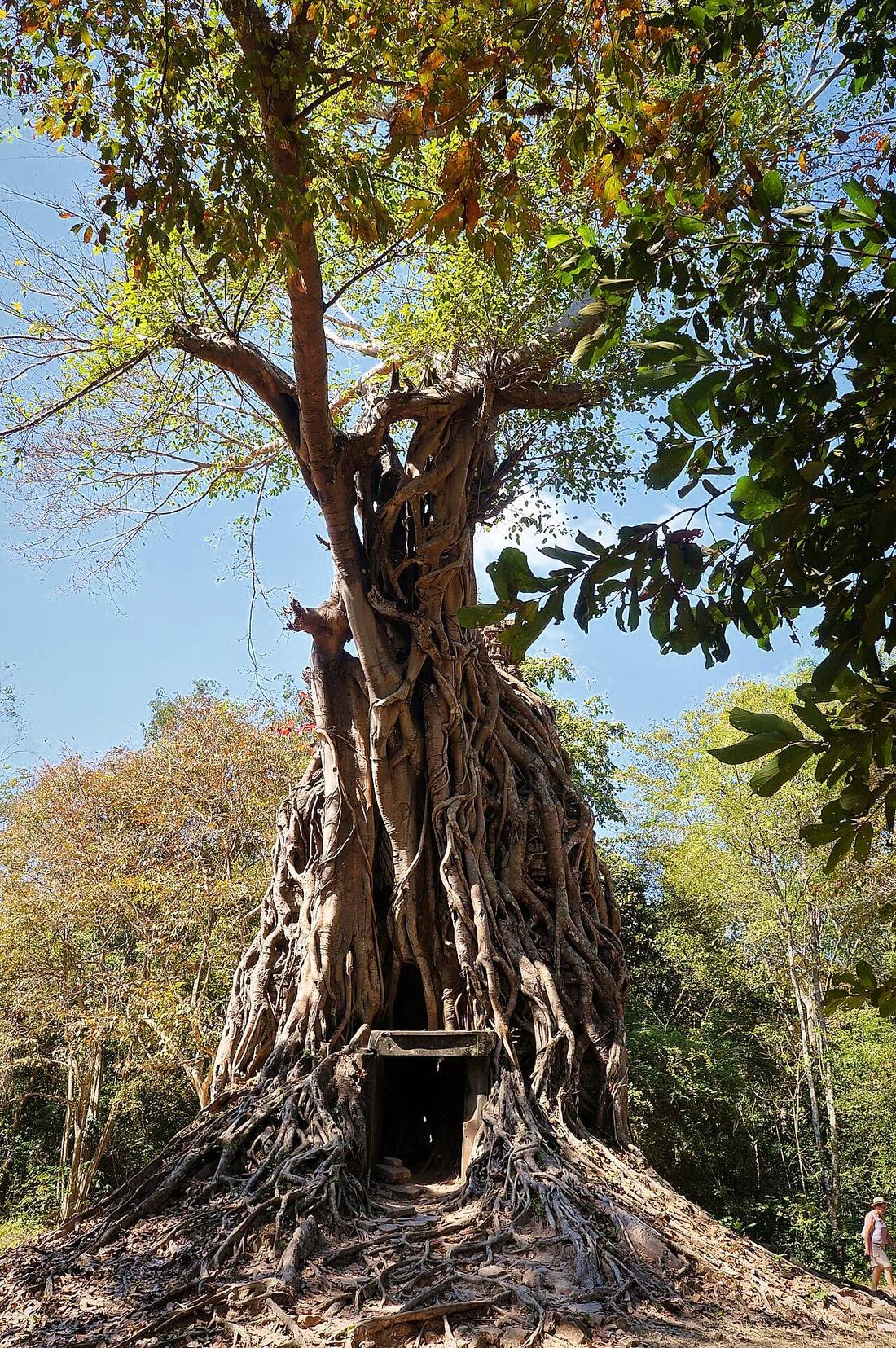 3/3
Hire a tuk-tuk in town. One guide gives a ride of roughly 1 hour over 25 km, and Wikivoyage prices a return tuk-tuk with waiting at about US$15.
About US$15 return
Wikivoyage prices the trip from town, including the wait and the ride back, at about US$15, and says quotes run from US$10 to US$20. Settle the price and the waiting time before you leave.
US$10 for foreigners
One guide gives US$10 for foreign visitors and free entry for Cambodians. No official price notice found; check at the gate.
25 km north of town
The Ministry of Tourism puts Sambor Prei Kuk 25 km north of Kampong Thom town.
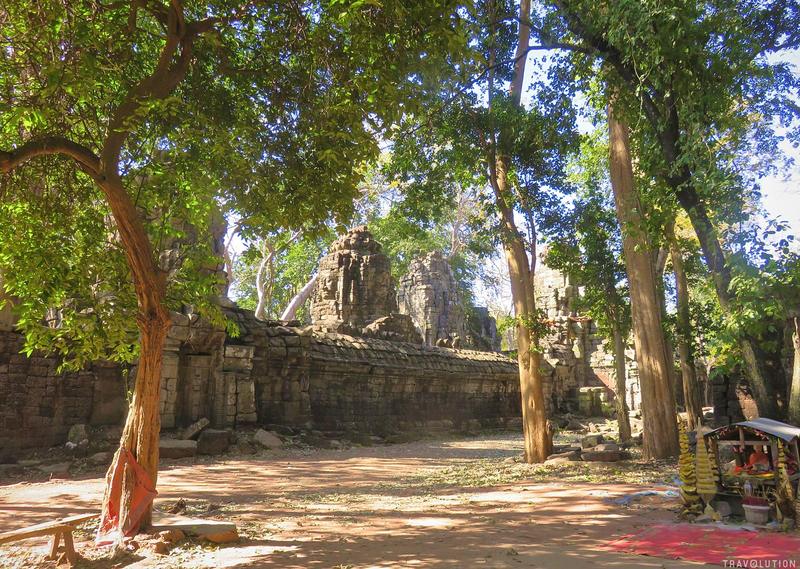
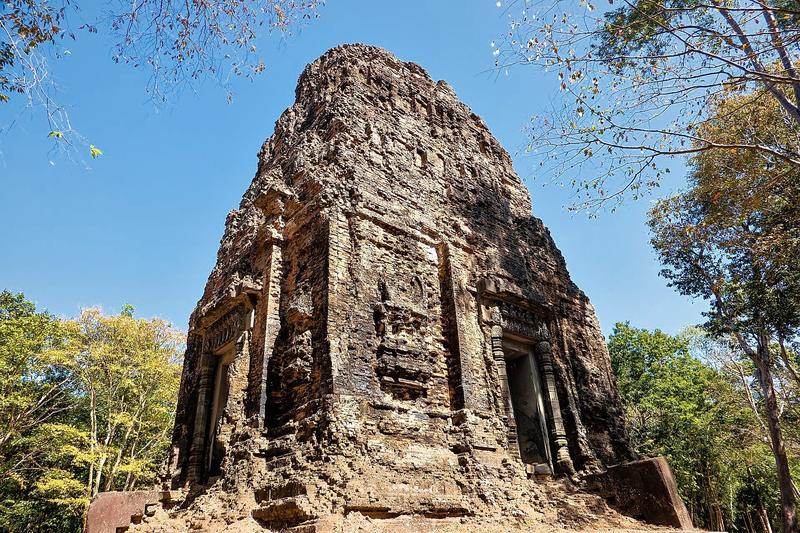
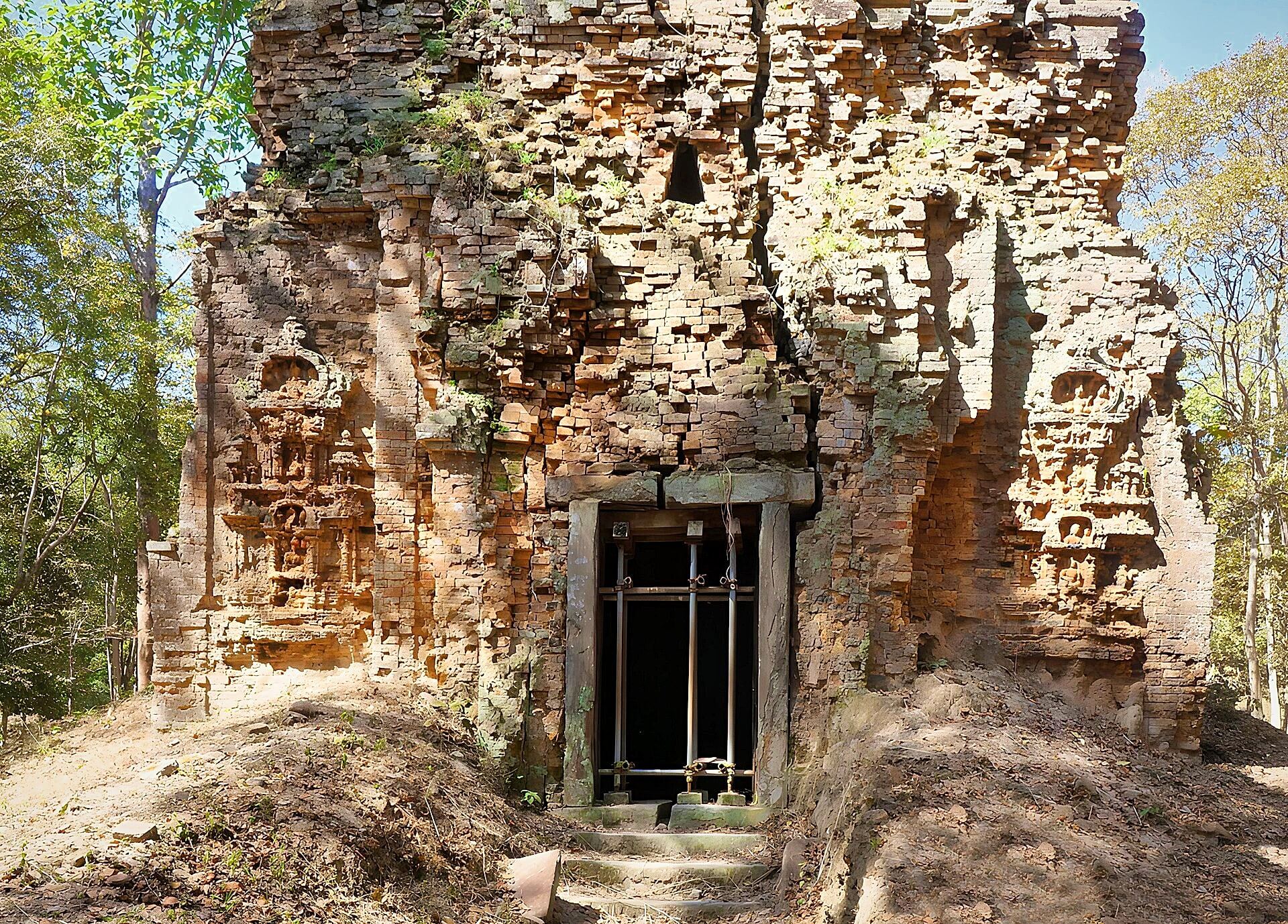
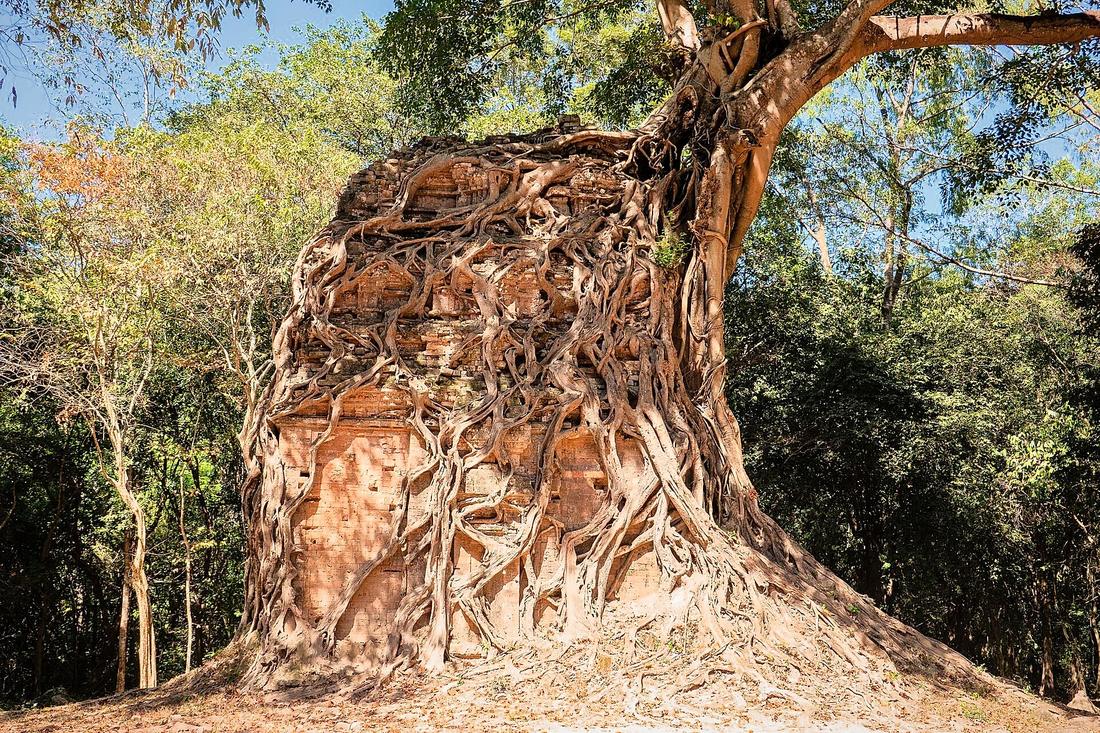
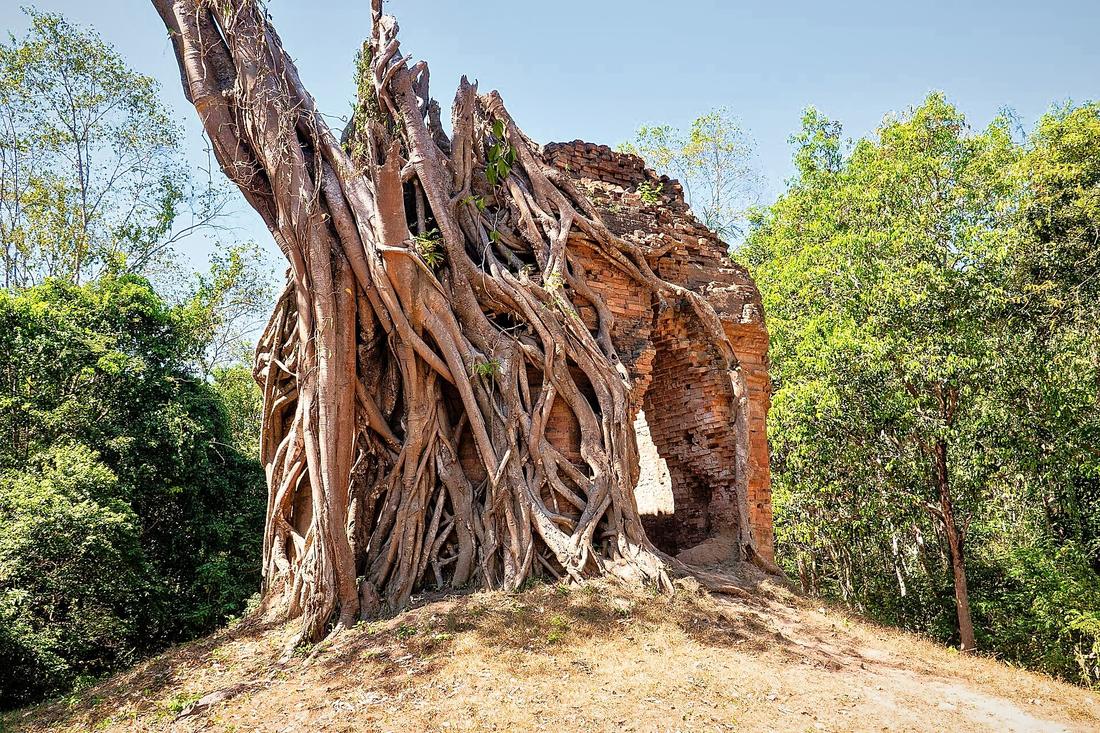
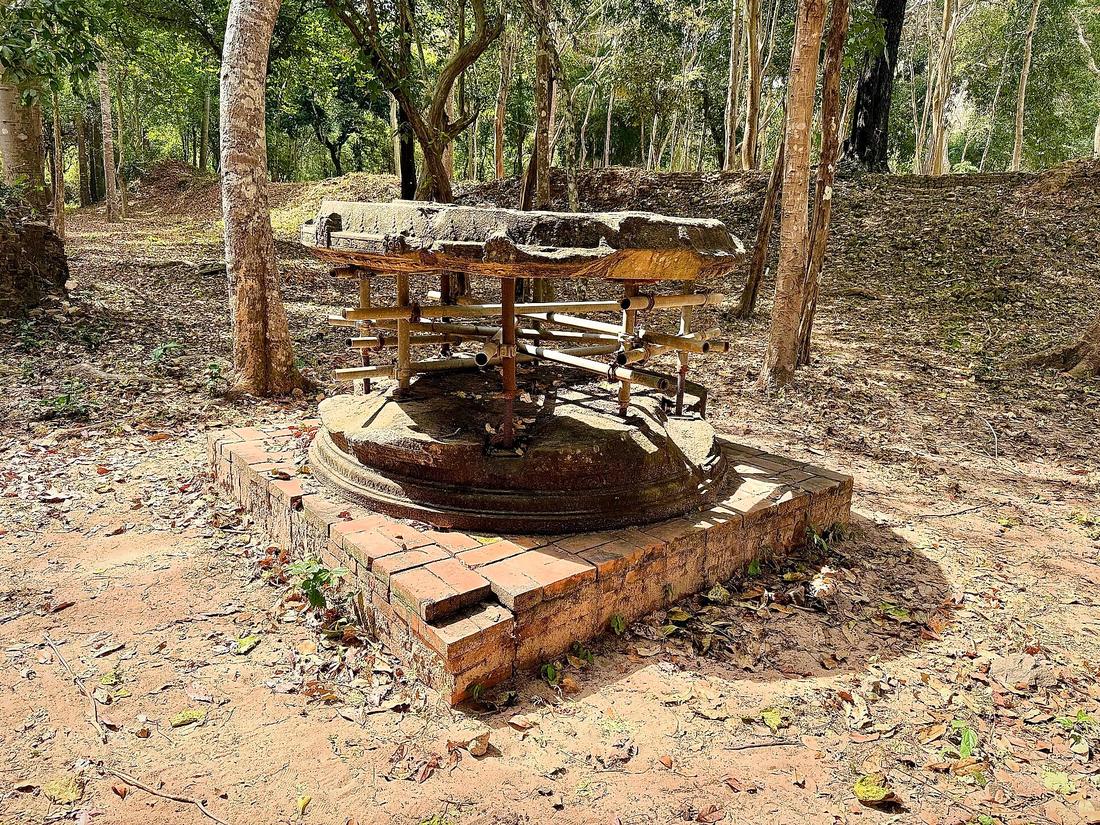
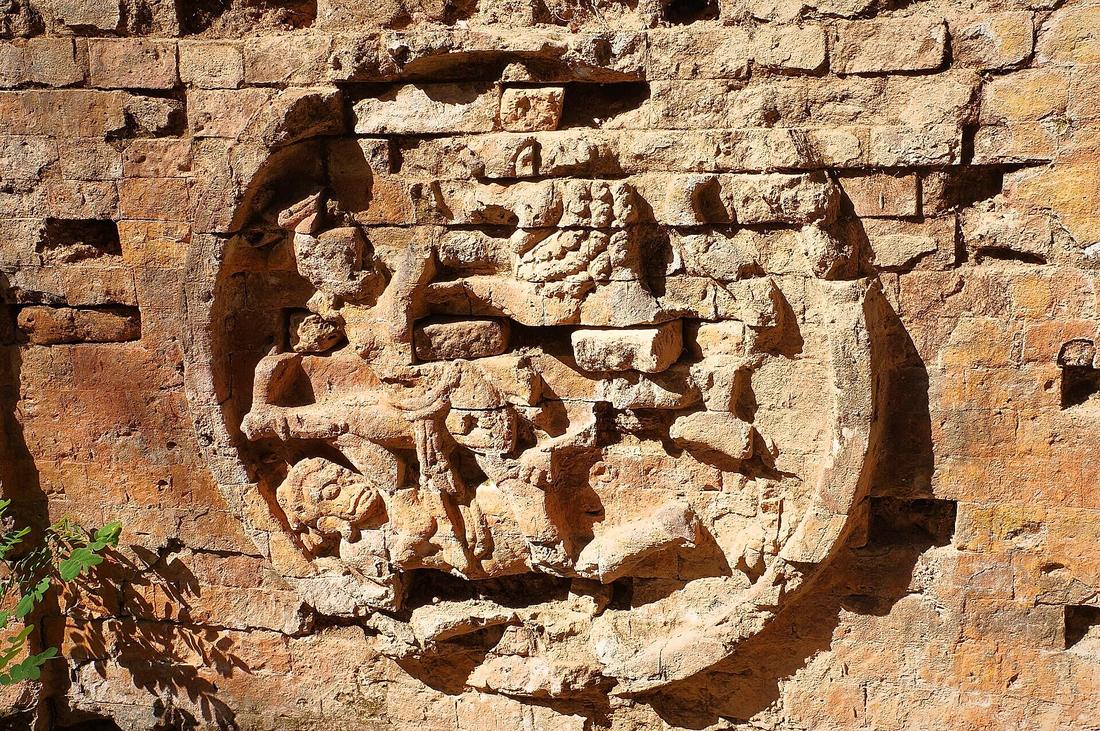
Brick temples in forest. UNESCO counts 186 fired-brick temples with sandstone detailing in the temple zone, and the Ministry of Tourism says about 52 sanctuaries survive in fairly good condition; another 52 have collapsed into mounds.
One guide calls it the main temple. Octagonal towers, shiva lingams and yonis are among the features guides list across the site.
A second large group, with 22 sanctuaries from the same century according to one guide.
The laterite rampart around the Lion Temple group measures 328 m by 310 m, which gives a sense of the scale.
UNESCO counts ten octagonal temples here, unique in Southeast Asia, and describes three earthen causeways of 600-700 m linking the temple zone to the Stung Sen river and a possible harbour.
Brick is the principal building material. UNESCO gives the vestiges of the city as covering 25 square kilometres. One guide notes that US aircraft bombed positions inside the site during the war.
Kampong Thom town sits about halfway between Phnom Penh and Siem Reap, according to one guide, so it breaks the journey well. Bus and shared taxi are the two ways to stop here. The provincial capital is Stung Saen, a town of about 30,000 on the Stung Sen River.
Wikivoyage lists the bus from Phnom Penh to Kampong Thom at about US$4.
One guide lists a shared taxi seat from Phnom Penh at about US$5 and the front seat alone at US$10; Wikivoyage lists about 25,000 riel.
The operator Giant Ibis describes its night bus from Phnom Penh to Siem Reap as a 6-hour transit via Kandal and Kampong Thom. It makes a short stop in Kampong Thom town, about 15 minutes, for a driver swap, with food available. A 15-minute stop does not work for a temple visit.
One guide lists Arunras Guesthouse in town at US$6 for a fan single or double.
King Isanavarman I (reigned 616-637) made it a royal sanctuary and the capital, Isanapura, of Chenla. The Ministry of Tourism dates that capital to the 7th century.
He founded the new capital, Isanapura, north of the Tonle Sap.
A dated inscription at Prasat Sambor is attributed to his reign.
Temples of these years use rounded plain colonettes with bulb capitals.
It joined Angkor (1992) and Preah Vihear (2008) on Cambodia's World Heritage list; Koh Ker followed in 2023. UNESCO identifies the site as Ishanapura.
A news report counts 10,962 foreign tourists and nearly 40,000 domestic visitors in those months.
Kampong Thom is Cambodia's second largest province by area, at 15,061 km2, with more than 200 ancient temples according to a Ministry guide. The Ministry counts 8 districts, 81 communes and 737 villages, and Wikipedia's infobox lists a population of 807,254 (2024).
This hill has a pyramid-shaped sandstone Prasat Touch of three stories, about 3 m high.
A Ministry of Tourism guide gives Boeng Chhmar as 14,560 hectares within the province. One guide calls it a Ramsar wetland of international importance and says much of Kampong Thom lies on the Tonle Sap floodplain.
A boat trip to the village, 80-90 km down the Stung Sen, is listed at US$15 per person.
Other temple stops and background reading for the same trip.
Yes, if you are on the road anyway: it is 25 km north of town, roughly an hour by tuk-tuk per one guide. Skip it if you want Angkor only.
Wikivoyage gives about US$15 including waiting and the return, with quotes from US$10 to US$20.
One guide gives US$10 for foreigners and free entry for Cambodians. No official price notice found; check at the gate.
Wikivoyage lists the bus at about US$4. One guide lists a shared taxi seat at about US$5 and the front seat alone at US$10; Wikivoyage lists about 25,000 riel.
About 52 sanctuaries survive in fairly good condition, and the Lion Temple rampart measures 328 m by 310 m.
The town is on the Stung Sen River, about halfway along the Phnom Penh to Siem Reap road according to one guide, and the temples lie 25 km to the north.
This page has no onward fare or schedule from Kampong Thom. The Giant Ibis night bus stops here for about 15 minutes on its 6-hour Phnom Penh to Siem Reap run.