Chenla is the name Chinese records gave the Khmer state that succeeded Funan. Historians now use it for the late 6th to early 9th century, and some doubt it was one kingdom. UNESCO identifies its capital, Isanapura, as Sambor Prei Kuk, a forest site north of Kampong Thom.
A Khmer state that succeeded Funan. Chenla (also spelled Zhenla) is the name Chinese accounts gave an entity that sent tribute to the Chinese emperors.
When
Modern historians apply the name to the late 6th to early 9th century, the Pre-Angkor period.
Where
The capital, Isanapura, lay north of the Tonle Sap at what is now Sambor Prei Kuk. Water Chenla is associated with the Mekong Delta.
Caveat
Historians doubt whether Chenla was ever one unified kingdom, or a misreading by Chinese chroniclers.
What is left of Chenla
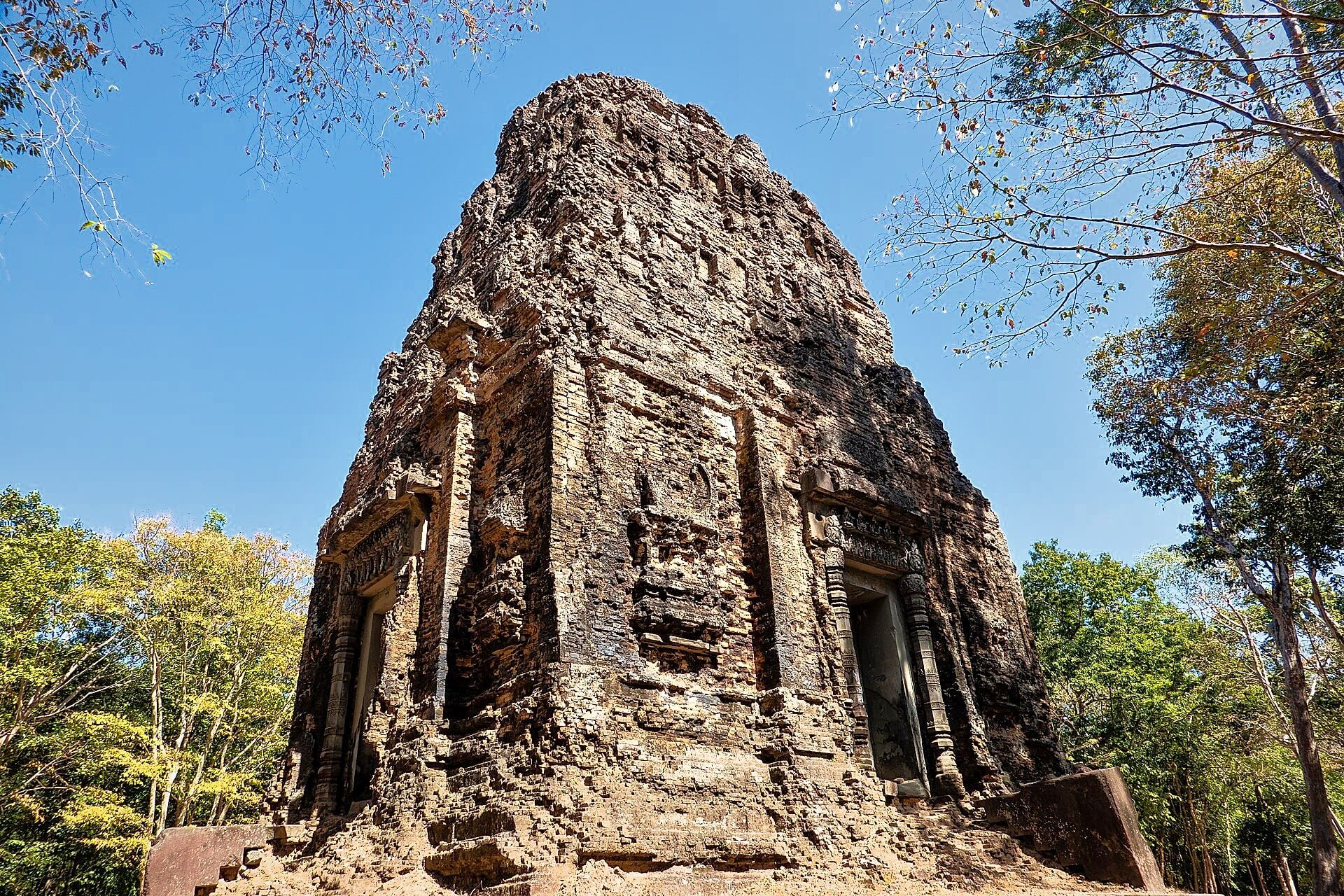
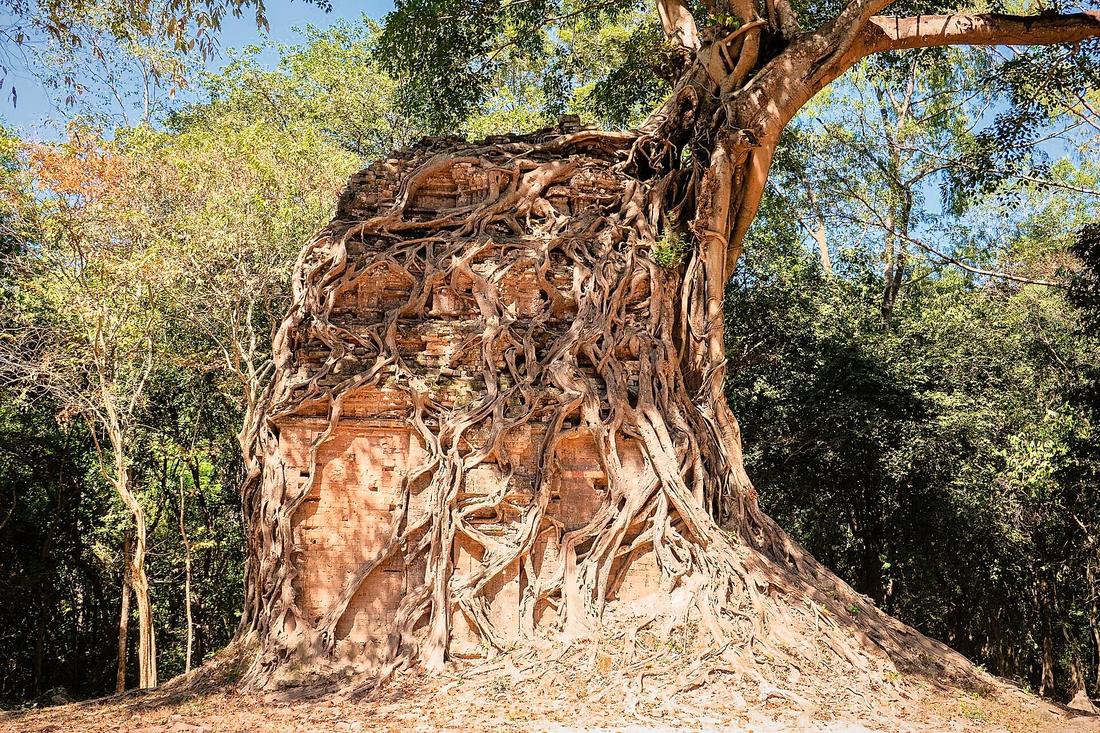
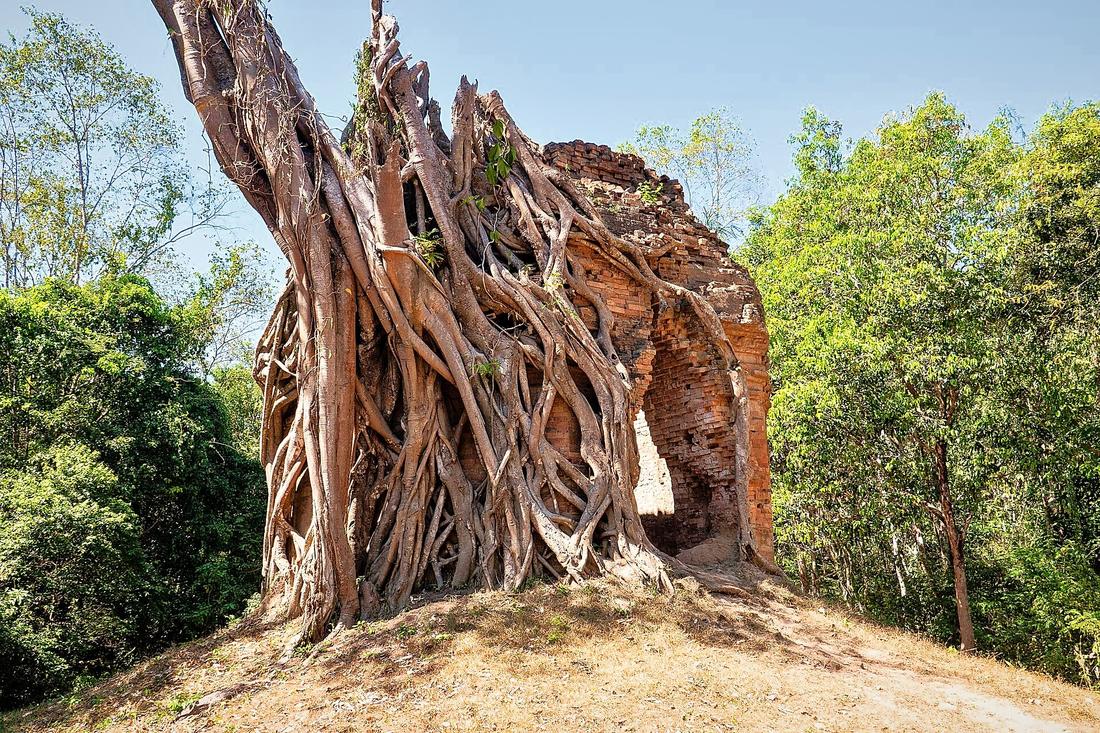
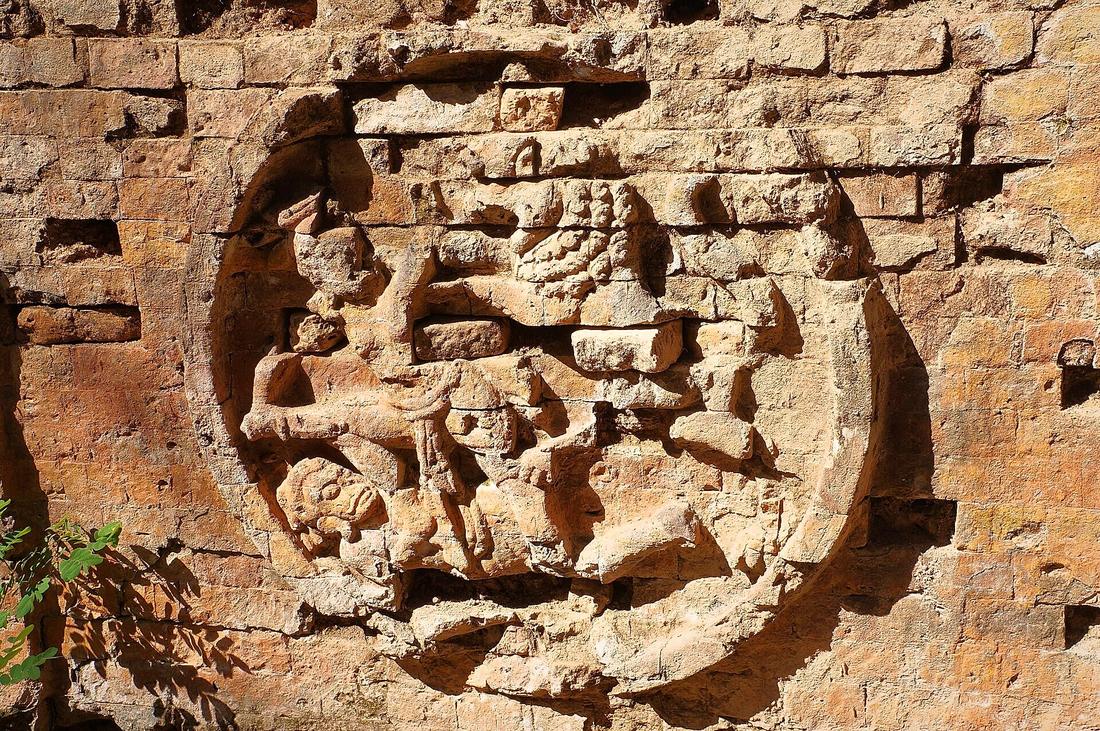
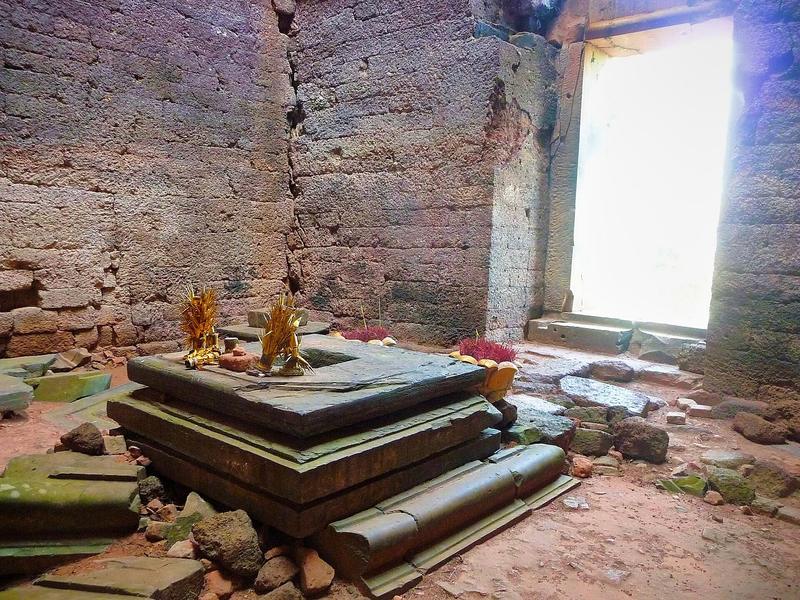
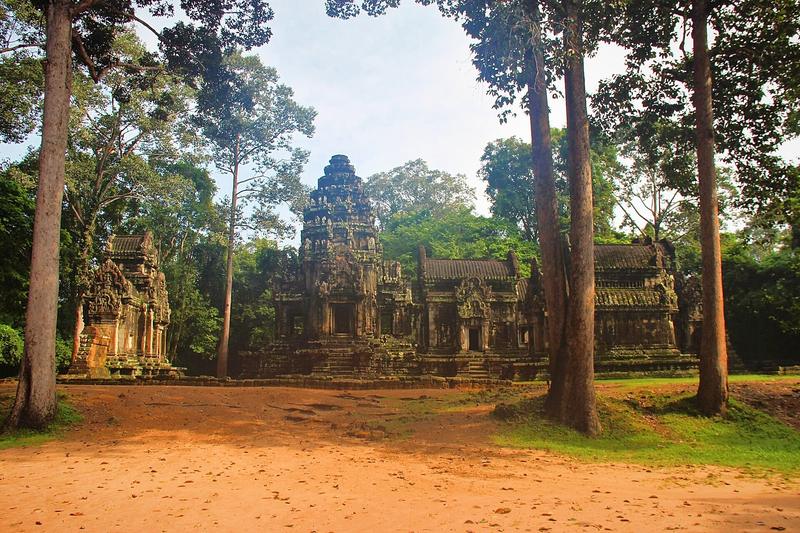
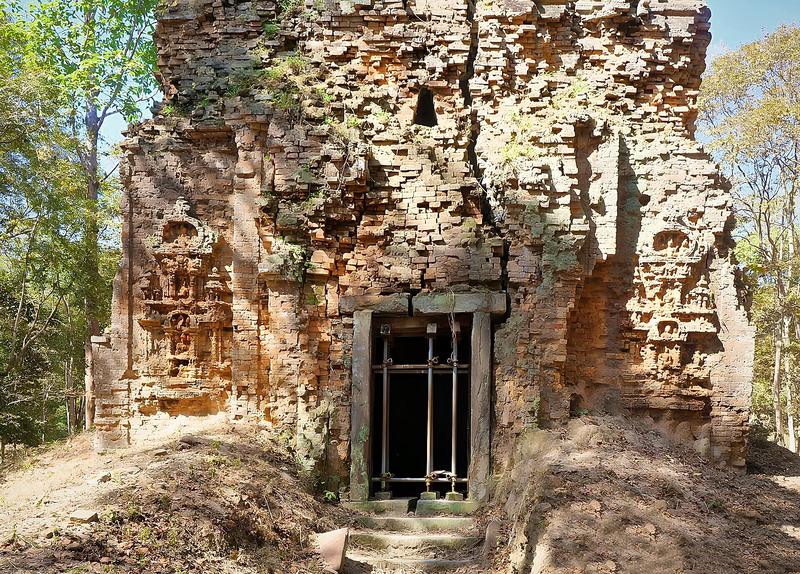
Brick temples at Sambor Prei Kuk, then two statues from Vat Phou in Laos. Swipe or use the arrows.
1/6Roots over brick, Sambor Prei Kuk
2/6Ruin held by roots, Sambor Prei Kuk
3/6Brick relief, Group N, Sambor Prei Kuk
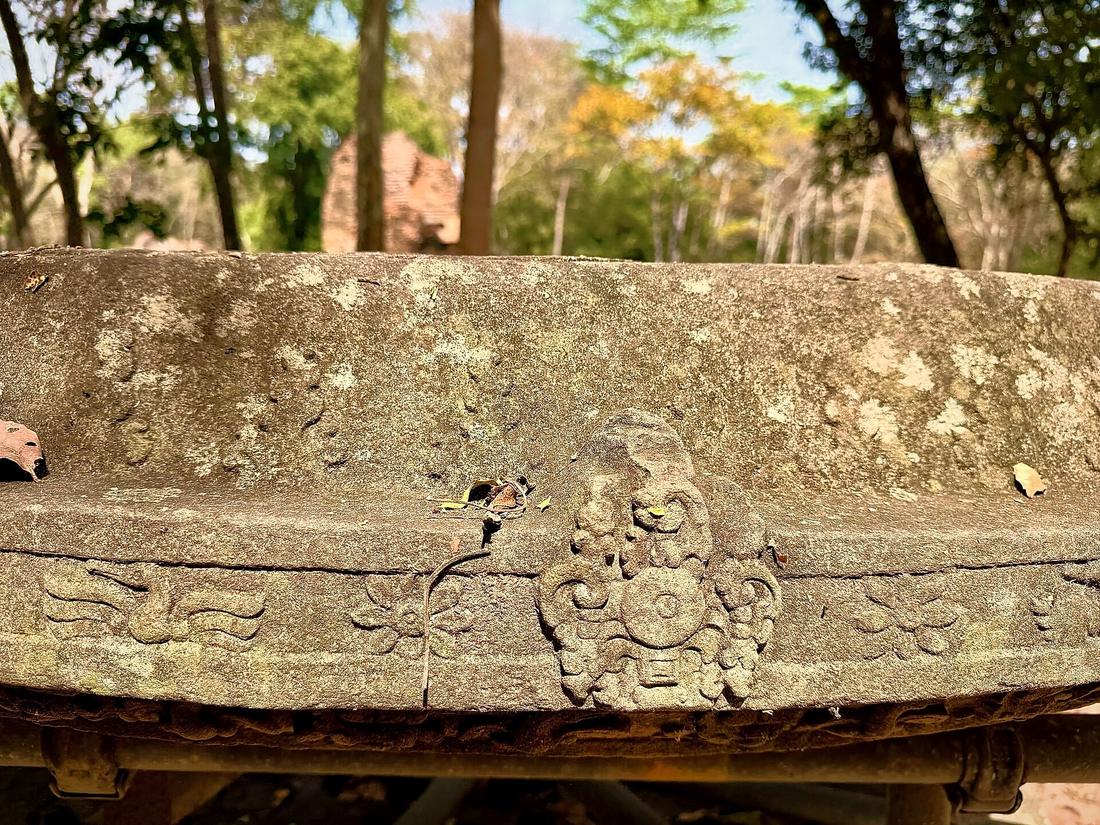
4/6Carved stone, Prasat Yeah Puon
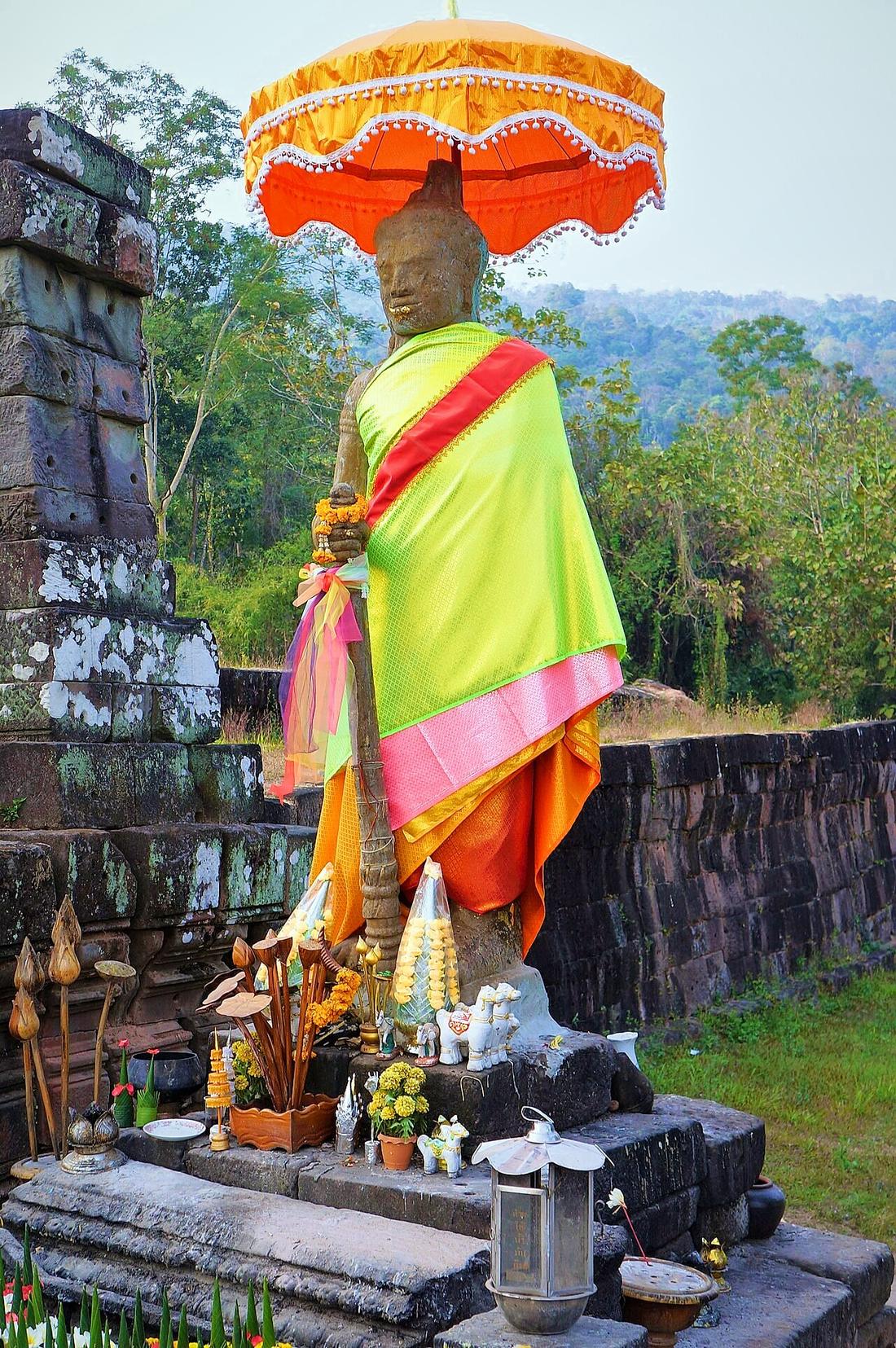
5/6Robed statue, Vat Phou
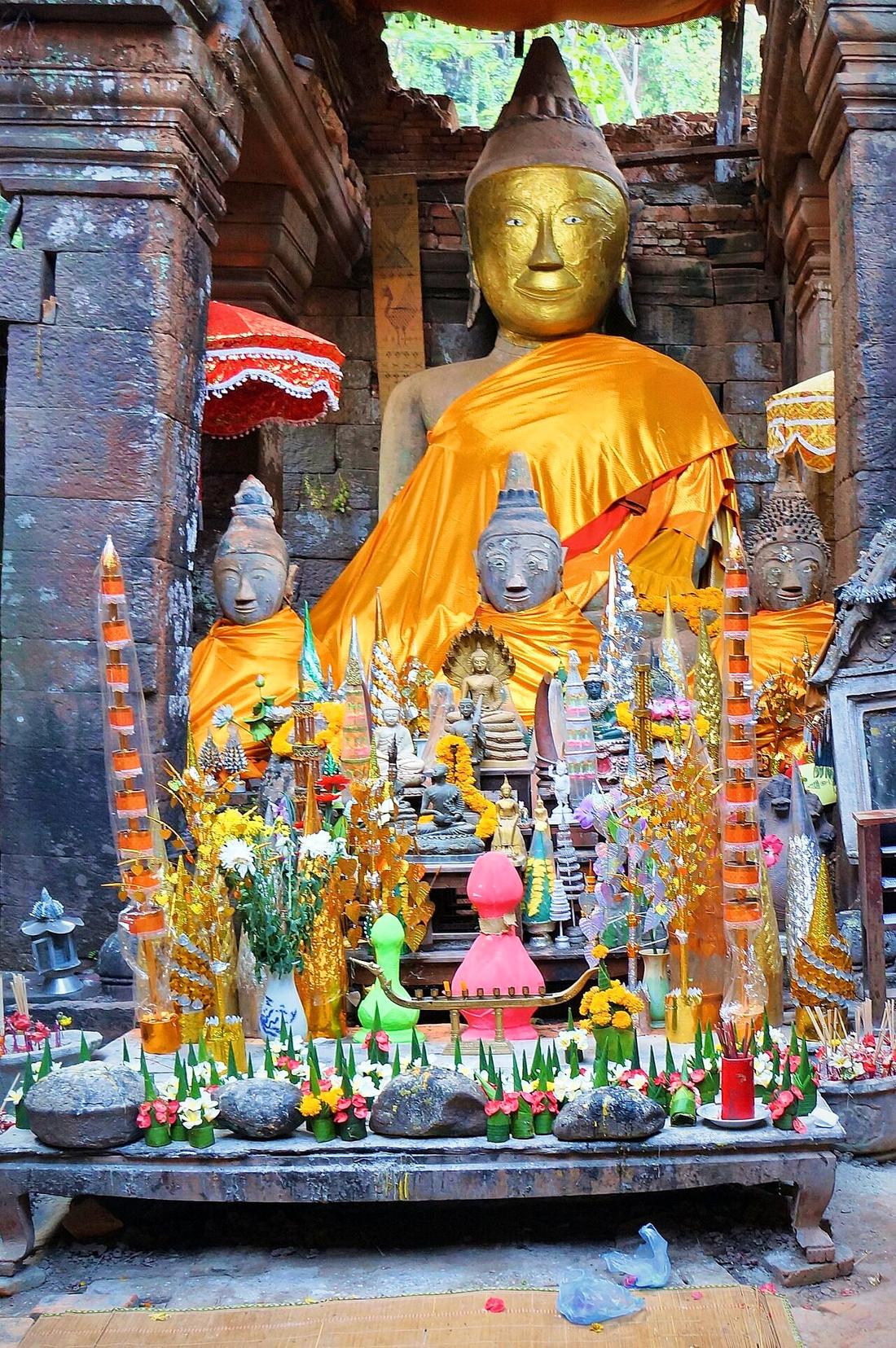
6/6Shrine figure, Vat Phou
Chenla timeline: who ruled, and when did it end?
From Funan's absorption in the 6th century to the Khmer Empire in 802.
Risec. 550–616
Isanavarman616–637
Jayavarman Ic. 657–681
Land and WaterAfter 706 to 802
c. 550
Bhavavarman I reigns around this year; full dates are unknown. His maternal brother Chitrasena, reign name Mahendravarman, follows. Chinese records credit him with conquering Funan.
6th century
Funan is superseded and absorbed by Chenla, and its end is told three ways: Chinese records credit Chitrasena (Mahendravarman) with conquering it, Isanavarman I is said to have absorbed its territories, and the New Book of Tang dates the annexation to 627-649. Sources differ. Rudravarman, who killed his brother Gunavarman for the throne, is Funan's last king.
616 to 637
Isanavarman I, Mahendravarman's son, reigns and makes Sambor Prei Kuk his royal sanctuary and capital, Isanapura. He sends his first embassy to the Sui court in 616-617.
13 September 627
An inscription at Prasat Sambor, attributed to his reign, carries this date.
644
Bhavavarman II appears in a single inscription, dated this year.
c. 657 to 681
Jayavarman I rules from his palace at Purandarapura. He is the last ruler of a united Chenla. One listing gives 690 as the end date, so sources differ.
After 706
The New Book of Tang says the country split into Land Chenla and Water Chenla.
717
Land Zhenla sends an embassy to China.
802
Jayavarman II, whose Land Chenla kept its integrity, proclaims the Khmer Empire.
Why did Chenla split into Land and Water Chenla?
The Chinese record dates the split to after 706. One account links it to Jayavarman I leaving no male heirs.
1
The last united king. Jayavarman I is the last ruler of a united Chenla.
2
No male heirs. One account says his lack of a son led to the division of Cambodia.
3
A daughter ruled. His daughter Jayadevi succeeded him as queen regnant.
4
Two Chenlas. The New Book of Tang names the halves Land Chenla and Water Chenla.
Which was which? Water Chenla is associated with the Mekong Delta. Land Chenla kept its integrity until Jayavarman II proclaimed the Khmer Empire in 802.
What do the Chinese records call Chenla, and what do they record?
They call it Zhenla, and the annals are one of the very few sources.
Zhenla is the name Chinese accounts gave an entity that sent tribute to Chinese emperors. Isanavarman sent his first embassy to the Sui court in 616-617, and Land Zhenla sent one in 717. Chinese records also credit Chitrasena with the conquest of Funan. Scholars can set the Chinese annals beside inscriptions in Sanskrit and Khmer. On where the two halves lay, the facts here give only one pointer: Water Chenla is associated with the Mekong Delta. They do not place Land Chenla.
Is Chenla the same as the Angkor kingdom?
No. The order is Funan, then Chenla, then the Khmer Empire.
The Khmer Empire was the successor state of both earlier kingdoms. Isanavarman I absorbed the ancient territories of Funan, and Chenla's inscriptions are in both Sanskrit and Khmer. Jayavarman II's 802 proclamation is where Chenla ends and the empire begins. Angkor comes after that. For the earlier kingdom, read the Funan kingdom.
What is Sambor Prei Kuk, and is it worth the detour? Checked Nov 2026
UNESCO says it has been identified as Isanapura, capital of the Chenla Empire. It was inscribed on 8 July 2017.
Go if
You want pre-Angkor brick
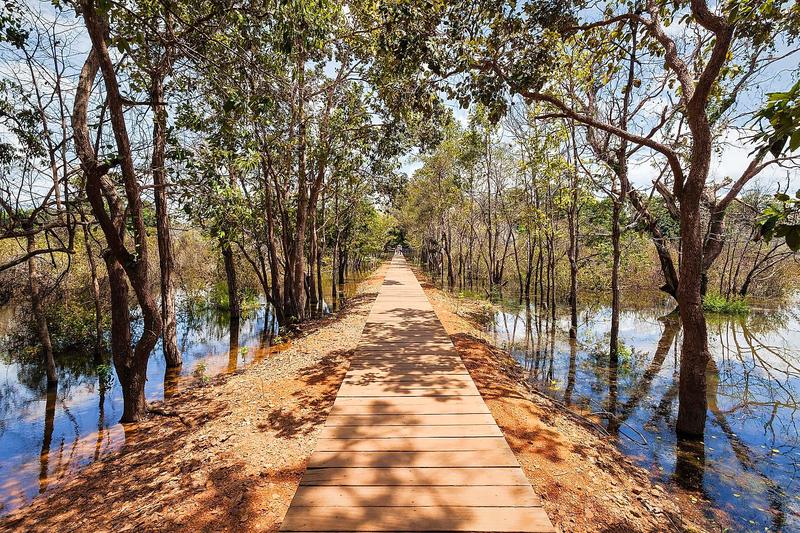
Brick temples in forest, 25 to 30 km north of Kampong Thom town.
Skip if
You want sandstone
Sambor Prei Kuk is built mainly of brick, with sandstone used for certain structures.
Allow
About 1 hour by tuk-tuk
Roughly a 1 hour tuk-tuk ride from Kampong Thom town.
On site
10 octagonal temples, unique in Southeast Asia
Square temple groups inside brick walls
Prasats, lingams and yonis
Three causeways of 600-700 m to the Stung Sen river
City remains cover 25 km²
Prasat Yeah Puon, Sambour S group
Sambor Prei Kuk Temple Zone
US$10 foreign visitors
25-30 km from Kampong Thom
Checked Nov 2026
Ticket
Foreign visitors pay US$10; Cambodians enter free. Sources differ on the exact price.
Getting there
25 km north of Kampong Thom town per the Ministry of Tourism; another guide says 30 km. A tuk-tuk with waiting time and the return costs about US$15, with quotes from US$10 to 20.
Safety
US aircraft bombed positions inside the site and left craters near the temples. The area has been mined and could still hold unexploded ordnance. Keep to cleared paths.
What survives, and who comes
On the ground
About 52 sanctuaries survive in fairly good condition; another 52 collapsed into mounds. The Lion Temple group has a laterite rampart of 328 m by 310 m.
Counts differ
UNESCO gives 186 fired-brick temples in the temple zone and, in a 2021 article, more than a hundred temples on the site. About 52 survive in fairly good condition and another 52 collapsed into mounds, per the Ministry of Tourism. The sources count different things, and this page does not reconcile them.
Visitors
10,962 foreign tourists and nearly 40,000 domestic visitors came in January to September 2025.
UNESCO notes that restoration and conservation led by the Sambor Prei Kuk National Authority continued in the four years after inscription. A lintel from the site is held at the Guimet Museum in Paris.
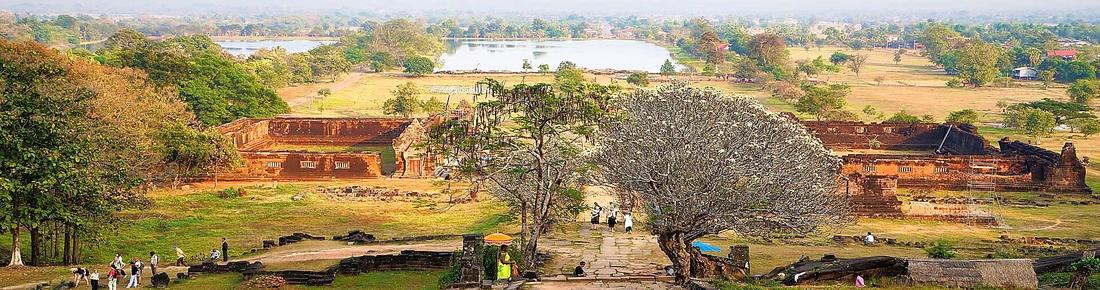
Where does Vat Phou in Laos fit?
It is the other end of the Chenla story, and it lies in Laos, not Cambodia.
Vat Phou, Champassak
By the later part of the 5th century the Wat Phou area was capital of a kingdom linked in texts and inscriptions with Chenla. George Coedes held that Champasak was the origin of Chenla's ruling dynasty and Vat Phou its spiritual centre. UNESCO dates the planned city of Shrestrapura at Champasak to the 5th to 7th century.
Which Chenla facts are disputed?
The name itself: historians doubt Chenla was one kingdom.
Was it one state?
Some historians doubt it, and ask whether it is a misconception of Chinese chroniclers. Chinese annals are one of very few sources scholars can analyse.
What years?
Modern historiography applies the name only to the late 6th to early 9th century.
Who owned Sambor?
It is also claimed as an early capital of Jayavarman II (O'Reilly and Jacques, 1990), not only Isanavarman I's.
Dates
Jayavarman I's reign ends about 681 or 690. A Kdei Ang inscription date of 667 is doubtful.
Chenla FAQ: the kingdom, the split and Sambor Prei Kuk
The kingdom
What was Chenla?
Chenla (Zhenla) is the name Chinese accounts gave a state that sent tribute to the Chinese emperors. It succeeded Funan, which was absorbed in the 6th century. Modern historians apply the name to the late 6th to early 9th century and call the era the Pre-Angkor period.
What is the difference between Land Chenla and Water Chenla?
The New Book of Tang says that shortly after 706 the country split into Land Chenla and Water Chenla. Water Chenla is associated with the Mekong Delta. Land Chenla kept its integrity until Jayavarman II proclaimed the Khmer Empire in 802.
Was Chenla a real kingdom?
Historians doubt whether Chenla ever existed as one unified kingdom, or whether that is a misconception of Chinese chroniclers. Chinese annals are one of the very few sources scholars can analyse, alongside inscriptions in Sanskrit and Khmer.
Is Chenla the same as the Angkor kingdom?
No. The Khmer Empire was the successor state of Funan and Chenla. Jayavarman II proclaimed it in 802.
Is Vat Phou in Laos part of Chenla?
By the later part of the 5th century the Wat Phou area was capital of a kingdom linked in texts and inscriptions with Chenla. George Coedes held that Champasak was the origin of Chenla's ruling dynasty and Vat Phou its spiritual centre. It lies in southern Laos, outside Cambodia.
Visiting Sambor Prei Kuk
Is Sambor Prei Kuk Chenla?
UNESCO's 2017 inscription news says Sambor Prei Kuk has been identified as Isanapura, capital of the Chenla Empire. Cambodia's Ministry of Tourism calls it the 7th-century capital of Chenla. One source also says it was an early capital of Jayavarman II.
How do I get to Sambor Prei Kuk?
It is 25 to 30 km north of Kampong Thom town (sources differ), roughly a 1 hour tuk-tuk ride. A tuk-tuk including waiting time and the return costs about US$15, with quotes from US$10 to 20. Checked November 2026.
How much does Sambor Prei Kuk cost?
Foreign visitors pay US$10 and Cambodians enter free; sources differ on the exact price. Checked November 2026.
Is Sambor Prei Kuk safe to walk around?
US aircraft bombed positions inside the site, leaving craters near the temples, and the area has been mined, so it could still contain unexploded ordnance. Keep to cleared paths.
More detail
Isanavarman I: family, name and inscriptions
Isanavarman I was the son and successor of Mahendravarman, and took Isanapura as his capital after his father's death. The name derives from the word Siva. His second son Shivadatta was governor of Jyesthapura, besides the future king Bhavavarman II. The latest inscription attributed to him is dated 627 (549 Saka).
Inscriptions of his reign are listed at Kdei Ang, Roban Romas, Kuk Prah Kot, Wat Chakret and Wat Po. The Kdei Ang date of AD 667 is doubtful.
Building style at Sambor Prei Kuk
Temples dated 610-650 use rounded plain colonettes with bulb capitals. Each temple group has a square layout surrounded by a brick wall. The site sits amid mature sub-tropical forest with limited undergrowth.
Sources (25), checked November 2026
cik.efeo.frofficialThe EFEO-led Corpus des inscriptions khmères (CIK) project was conceiv
tourismcambodia.comofficialAbout 90-95 percent of Cambodia's people are ethnic Khmer
tourismcambodia.comofficialMinistry of Tourism identifies Isanapura (Sambor Prei Kuk) as the 7th-; Ministry of Tourism: Sambor Prei Kuk is 25 km north of Kampong Thom to
unesco.orgofficialUNESCO's 2021 anniversary article says the Sambor Prei Kuk site compri; UNESCO reports that the Sambor Prei Kuk National Authority led restora
whc.unesco.orgofficialUNESCO counts 186 fired-brick temples with sandstone detailing in the ; Three earthen causeways of 600-700 m link the Sambor Prei Kuk Temple Z
whc.unesco.orgofficialUNESCO dates the planned city Shrestrapura at Champasak to the 5th-7th
whc.unesco.orgofficialUNESCO says the vestiges of the Sambor Prei Kuk city cover 25 square k; UNESCO counts ten octagonal temples at Sambor Prei Kuk, unique in Sout
aseanangkorguide.comguideForeign visitors pay US$10 to enter Sambor Prei Kuk; Cambodians enter
britannica.comguidePol Pot died on 15 April 1998 near Anlong Veng
britannica.comguideChenla was an ancient state in Indochina that succeeded Funan
britannica.comguideThe Khmer Empire was the successor state of the earlier kingdoms of Fu
en.wikipedia.orgguideAngkor Wat sits on a site of 162.6 hectares (1.6 km2)
en.wikipedia.orgguideBhavavarman I reigned around the year 550; full reign dates are unknow; Bhavavarman I was succeeded by his maternal brother Chitrasena, who to
en.wikipedia.orgguideThe New Book of Tang says that shortly after 706 the country split int; Isanavarman founded a new capital, Isanapura, north of the Tonle Sap a
en.wikipedia.orgguideFunan was superseded and absorbed in the 6th century by the Khmer poli; Funan reached the apex of its power under the 3rd-century king Fan Shi
en.wikipedia.orgguideIsanavarman I was the son and successor of Mahendravarman; After Mahendravarman's death Isanavarman took Isanapura as his capital
en.wikipedia.orgguideJayavarman I ruled from about 657 until about 681 (the same article's ; Jayavarman I's daughter Jayadevi succeeded him as queen regnant
en.wikipedia.orgguideIn 1177 Champa King Jaya Indravarman IV launched the Battle of Tonle S
en.wikipedia.orgguideSambor Prei Kuk temples (610-650) use rounded plain colonettes with bu
en.wikipedia.orgguideAn inscription at Prasat Sambor, attributed to Isanavarman I's reign, ; Isanavarman is also known for sending his first embassy to the Sui cou
en.wikipedia.orgguideBy the latter part of the fifth century the Wat Phou area was capital
en.wikipedia.orgguideVat Phou in southern Laos was designated a World Heritage Site in 2001
en.wikivoyage.orgguideSambor Prei Kuk is roughly a 1 hour tuk-tuk ride from Kampong Thom tow; Wikivoyage: tuk-tuk from Kampong Thom to Sambor Prei Kuk including wai
tourismcambodia.comguideVimean Chan mountain cave lies about 150 m south of the temple