Breakfast first
Wikivoyage describes it as a noodle soup generally served for breakfast.
Home › Cambodian food › Kuy teav
Breakfast noodle soup
Kuy teav is a Cambodian noodle soup of rice noodles with pork stock and toppings. It is primarily a breakfast dish. One guide says vendors usually sell out before midday, so go early.
By Laura Brennan · updated
The word kuyteav derives from a Teochew Chinese word, and you will see it spelled several ways.
Early. It is a breakfast dish, and the bowls run out before the day gets going.
Wikivoyage describes it as a noodle soup generally served for breakfast.
One guide says it is a popular breakfast across all of Cambodia.
One guide says vendors usually sell it out before midday, so a late lunch is the wrong time to look.
One Phnom Penh account has the last of the broth ladled out around 8 am. A typical Cambodian breakfast otherwise is rice porridge with dried salted fish, per one guide.
Four parts: stock, noodles, toppings and the garnishes you add at the table.
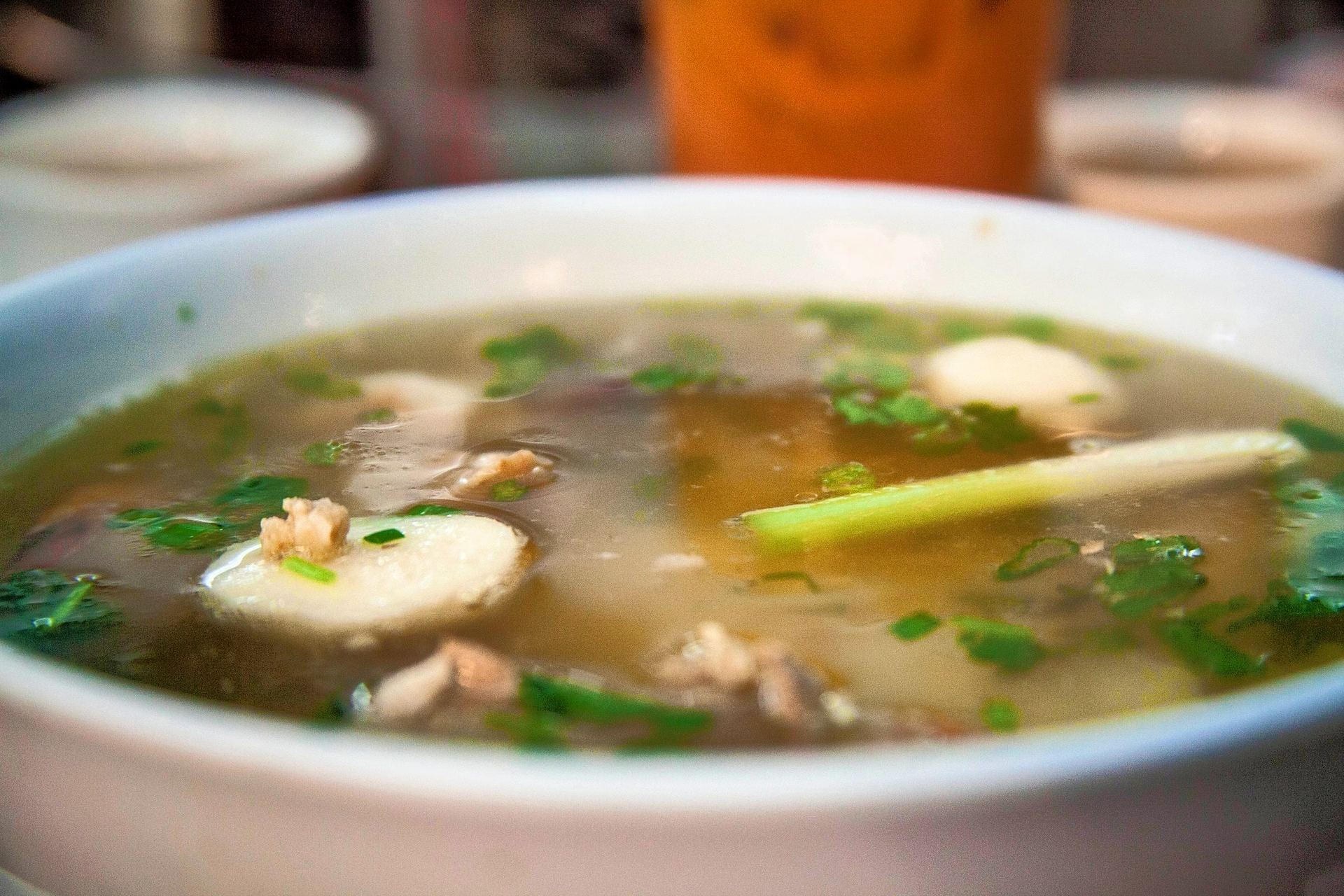
One guide describes pork bones simmered for hours, with dried squid and radishes added. The result is a clear broth, intended to be subtle.
Thin, partly dried, squarish rice noodles, cooked by a quick dip in boiling water so they stay just firm, then moistened with a nutty caramelised garlic oil.
One guide lists common ones as pork loin slices, minced pork and offal such as liver, heart or blood cubes. What ends up in the bowl varies, because availability is the main factor.
Per one guide, standard garnishes are bean sprouts, garlic chives and a squeeze of lime, with lettuce leaves alongside. Heat is up to you: fermented chilli paste or pickled green chillies sit on the table.
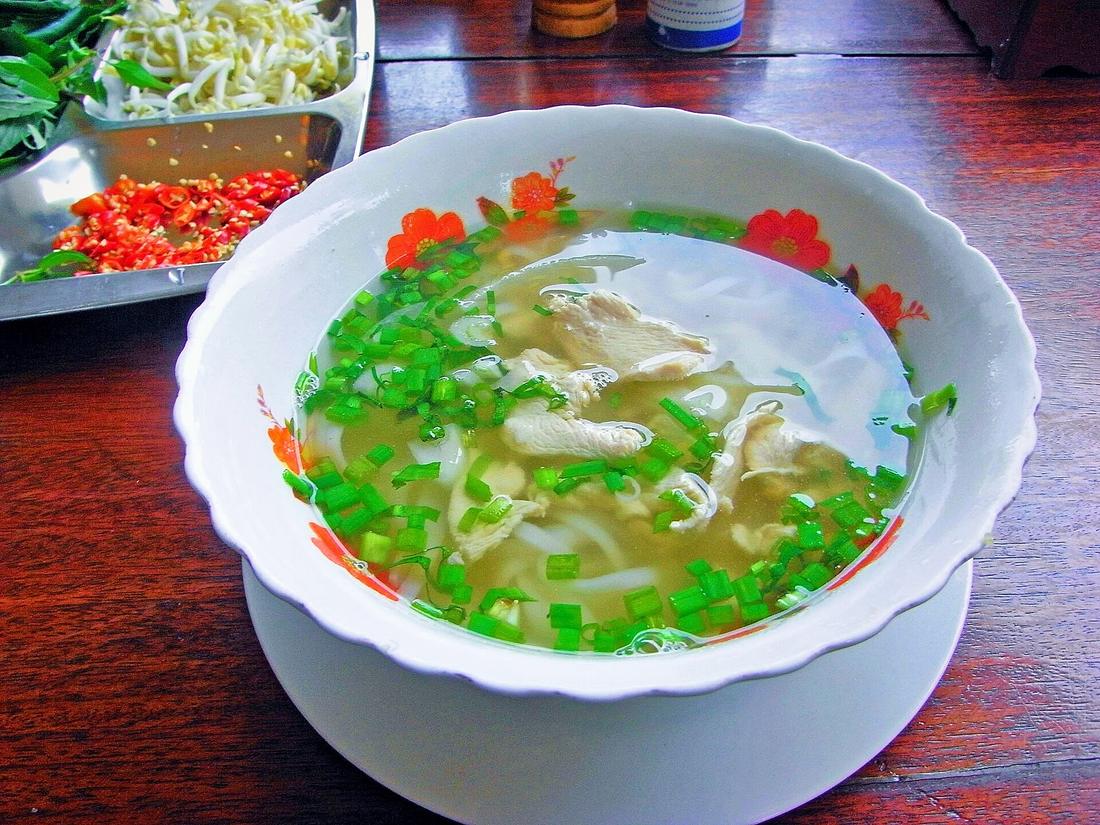
Wikipedia calls garlic, limes and pepper a common flavour trio in Cambodian cuisine, and kuy teav uses them as garnish.
Same soup, different dressing. Phnom Penh adds the most toppings; Kampot style is garnished with black Kampot pepper, lime and garlic oil, per one guide.
Prices vary by place; the figures below are single reports, not a price list.
Local-style breakfast
5,000-8,000 rielabout USD 2
One traveller reported this for a Phnom Penh breakfast.
Checked Nov 2026Popular noodle house
USD 4-6big bowl
A traveller reported this at a well-known Phnom Penh noodle house.
Checked Nov 2026Simple street rice dish
1-2 USDfor comparison
One guide gives this for a simple street rice dish.
Checked Nov 2026Different places, not a conflict: the low figures are local stalls, the high one a popular noodle house.
Travellers report 5,000-8,000 riel for a local-style Phnom Penh breakfast, about USD 2, and about USD 4-6 for a big bowl at a well-known Phnom Penh noodle house.
Look for the glass cabinet, then reach for the spoon.
One guide says a stall is recognisable by glass cabinets of pre-blanched noodles and hanging cuts of meat.
One guide says street stalls with plastic stools seat officials and tuk tuk drivers side by side.
A Chinese introduction, used only for noodle dishes.
Introduced by the French and used for rice and soup-based dishes.
Not the same as pho, but related to hu tieu Nam Vang. The Khmer broth skips the flavours pho is known for.
Noodles are among the staples of the Khmer diet, with curries, stir-fried vegetables, rice and soups.
The CDC's general advice is to avoid eating food from street vendors, and to follow normal food-safety rules if you do eat it.
Steaming hot. Lukewarm food lets food-poisoning germs grow, so prefer food served steaming hot.
Wash your hands. Soap and water, before you eat.
A bowl of broth brought to you steaming ticks the first box at once; if yours arrives lukewarm, send it back or pick another stall. Cambodian street food guide
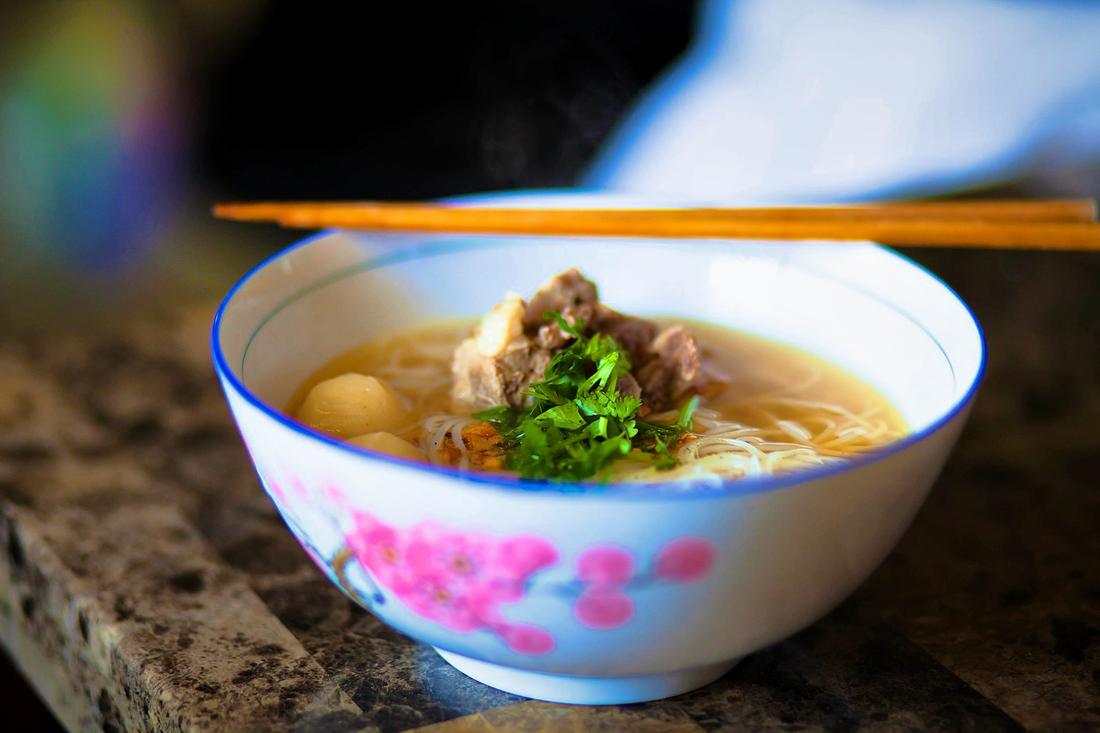
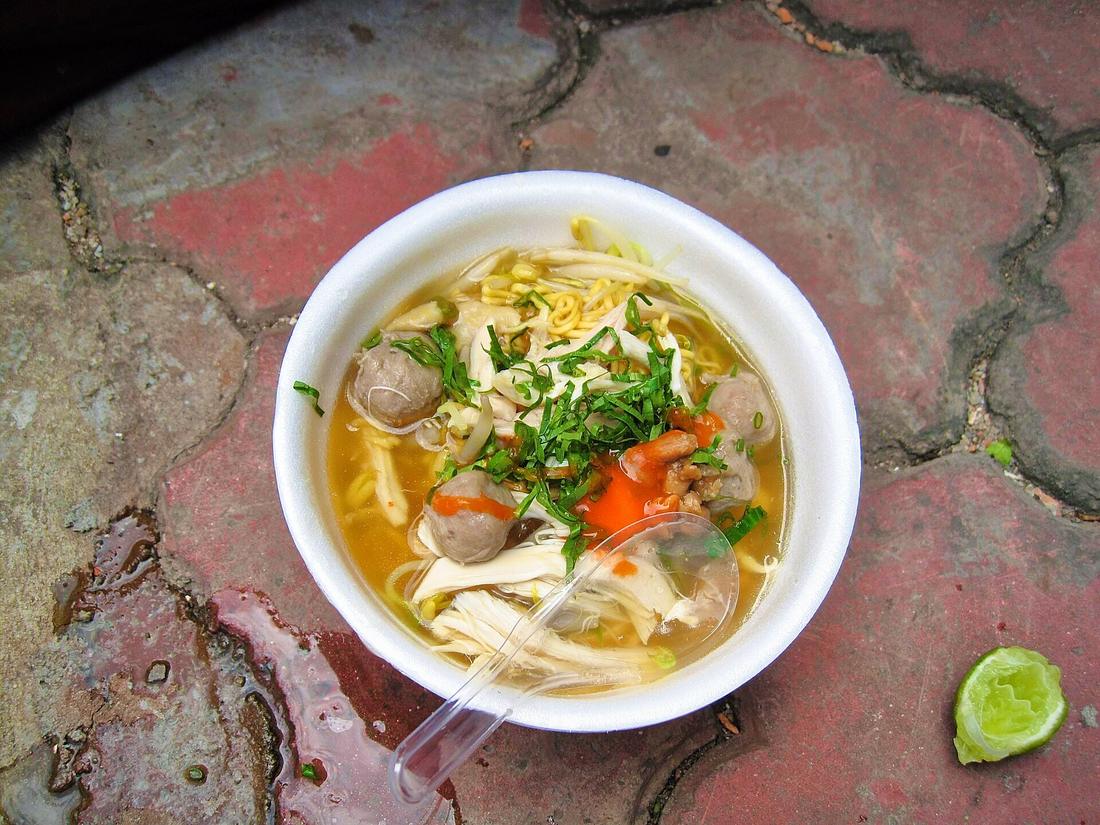
Bowls with different toppings. Swipe or use the arrows.
 1/5
 2/5
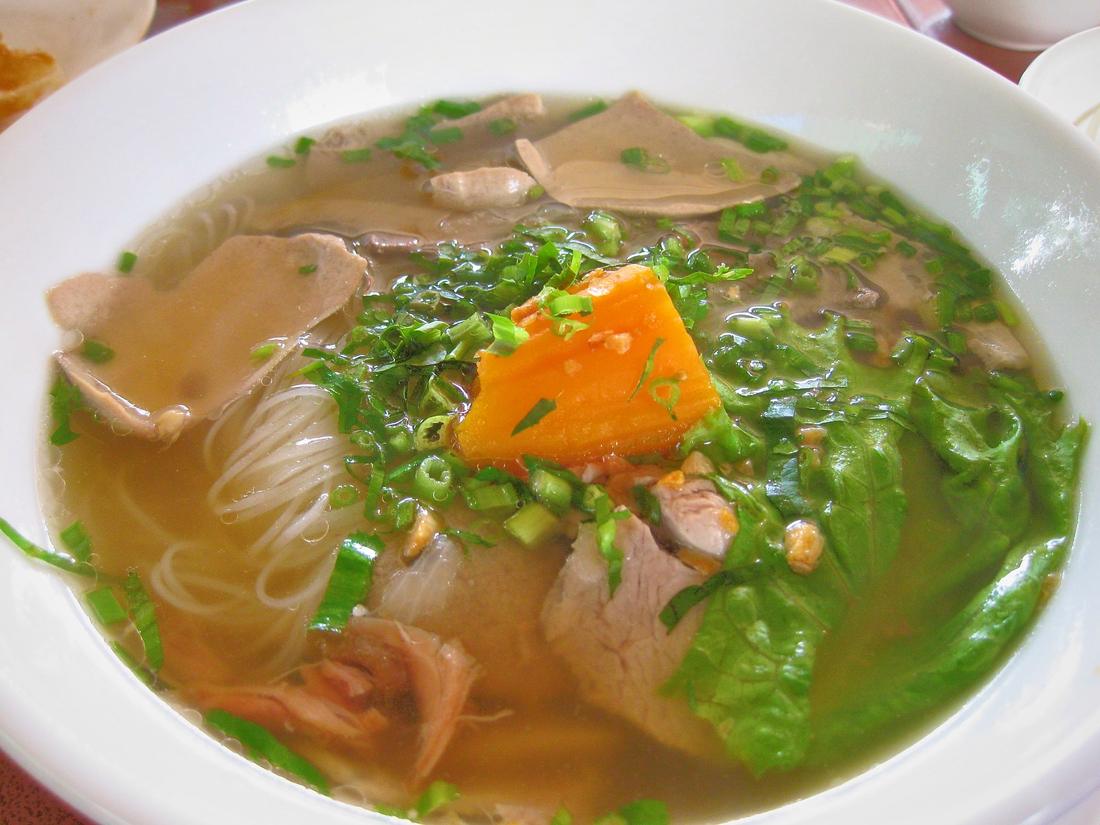 3/5
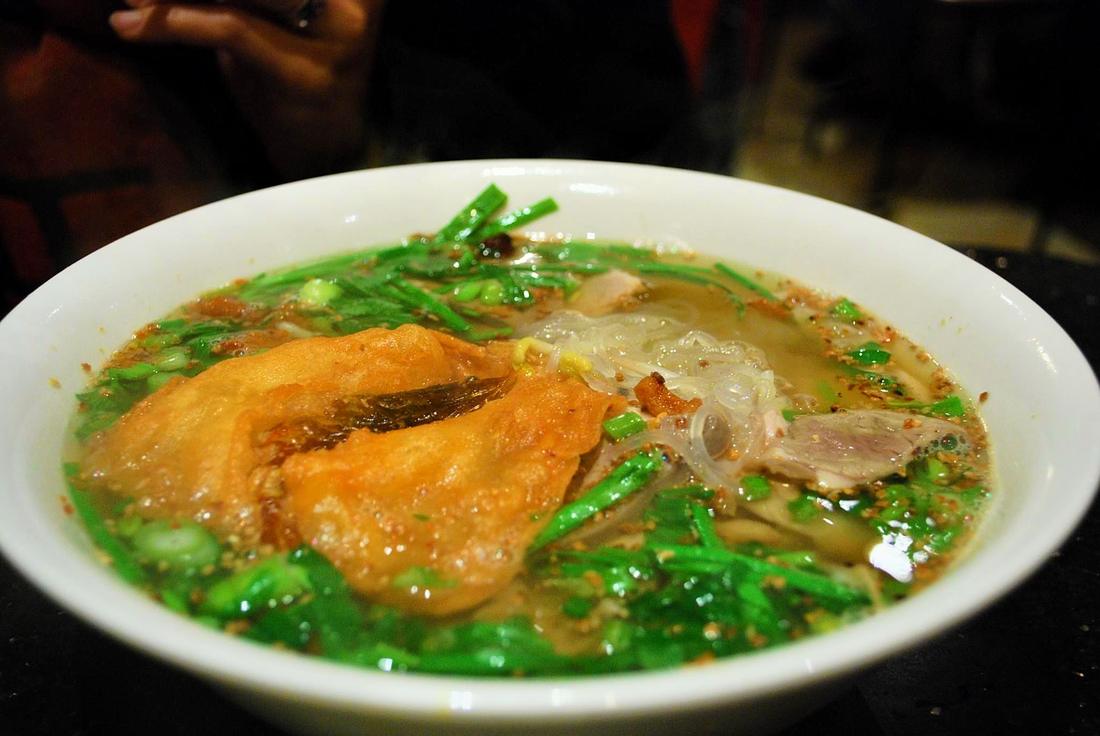 4/5
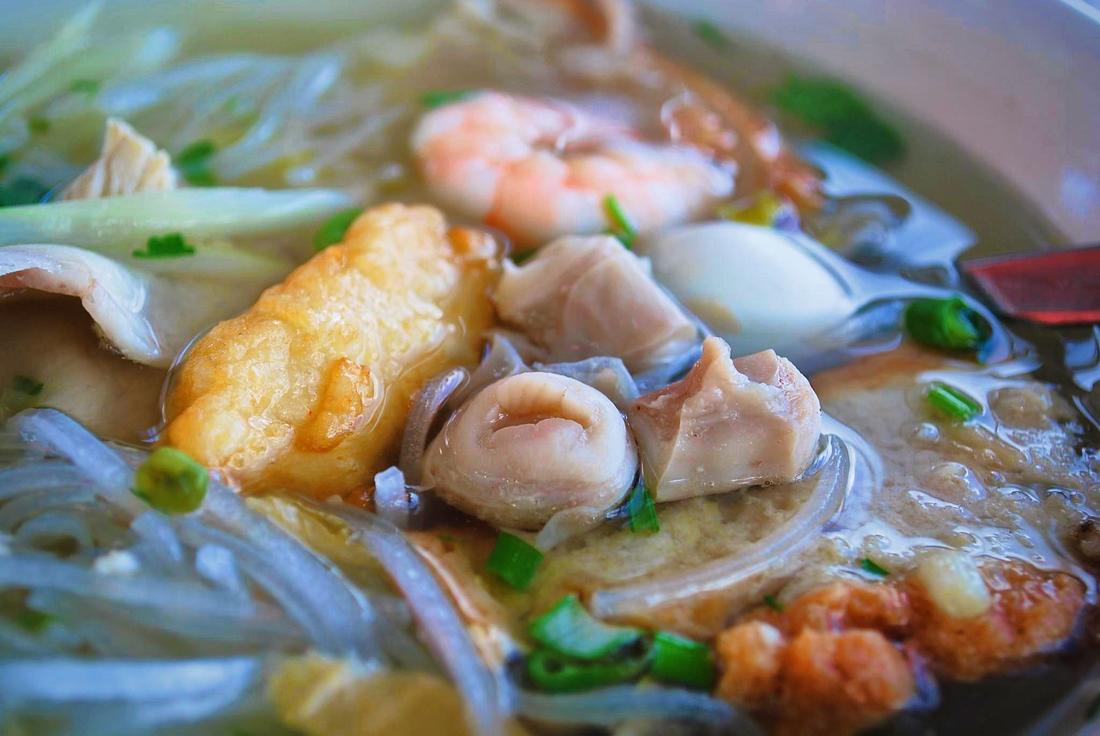 5/5
Start with the city guide for where you are eating, then widen out to the other dishes.
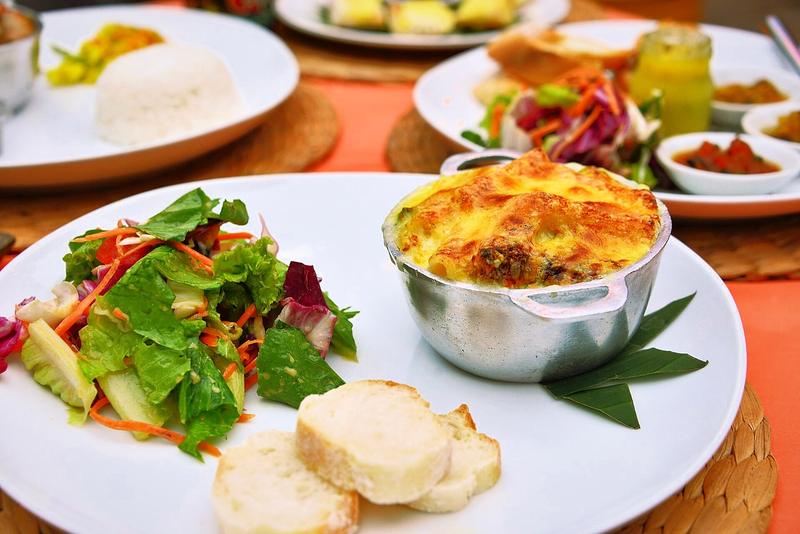 Siem Reap foodWhere to eat and what to look for in Siem Reap
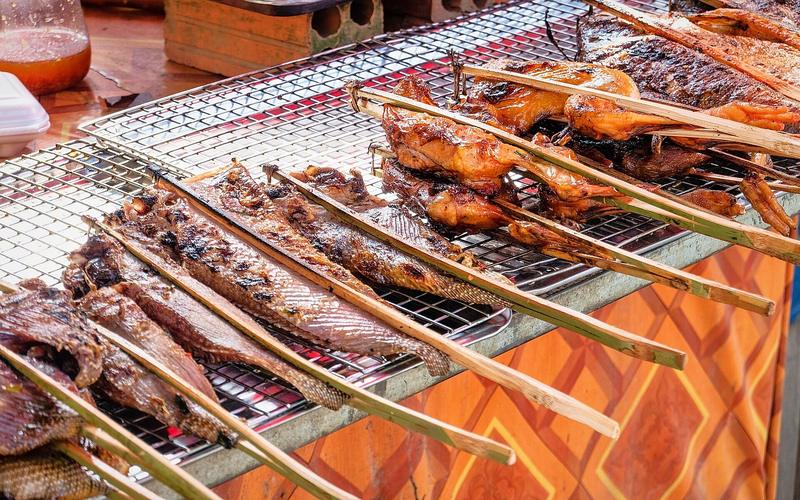 Phnom Penh foodWhere to eat and what to look for in Phnom Penh
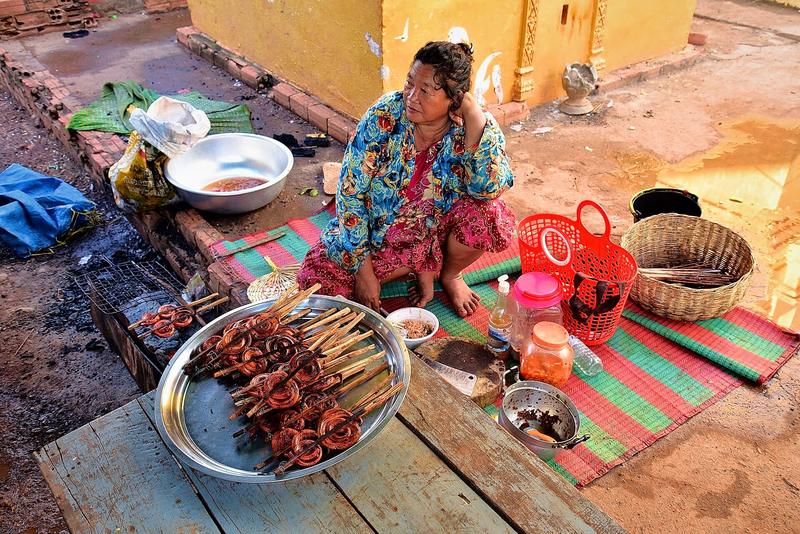 Cambodian street foodWhat the stalls sell besides noodles
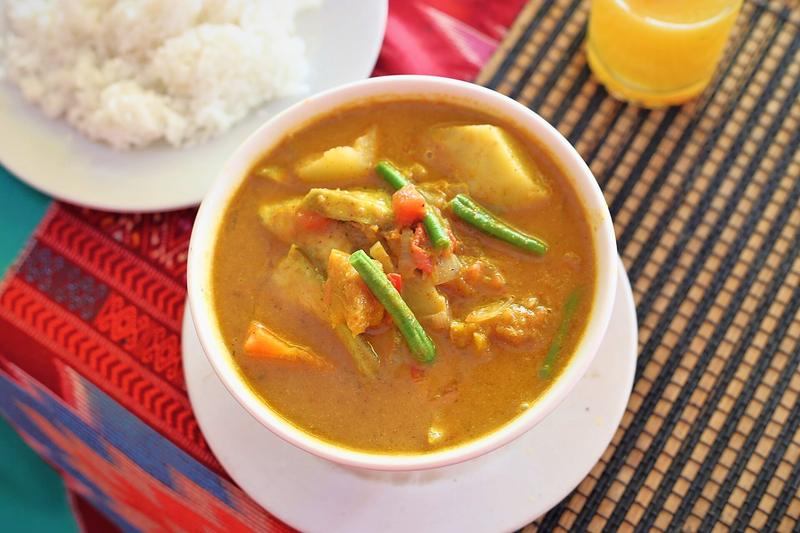 Cambodian curryKhmer curries and stews explained
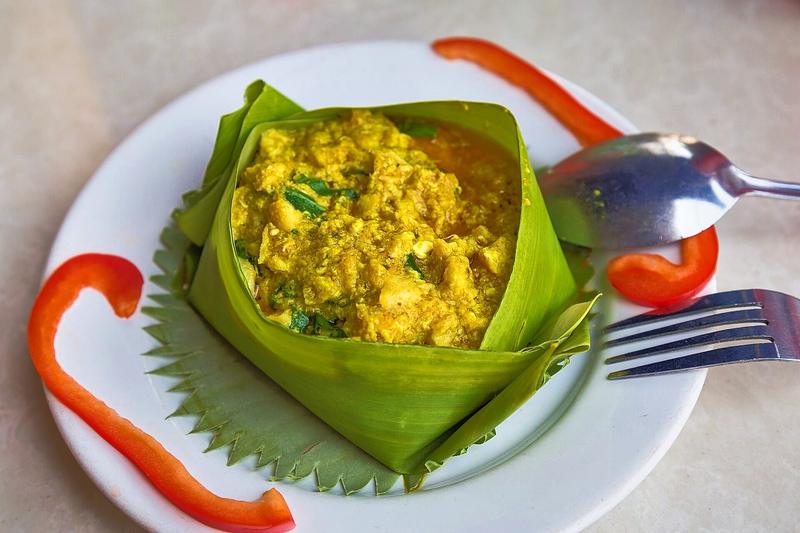 Fish amokThe steamed fish curry
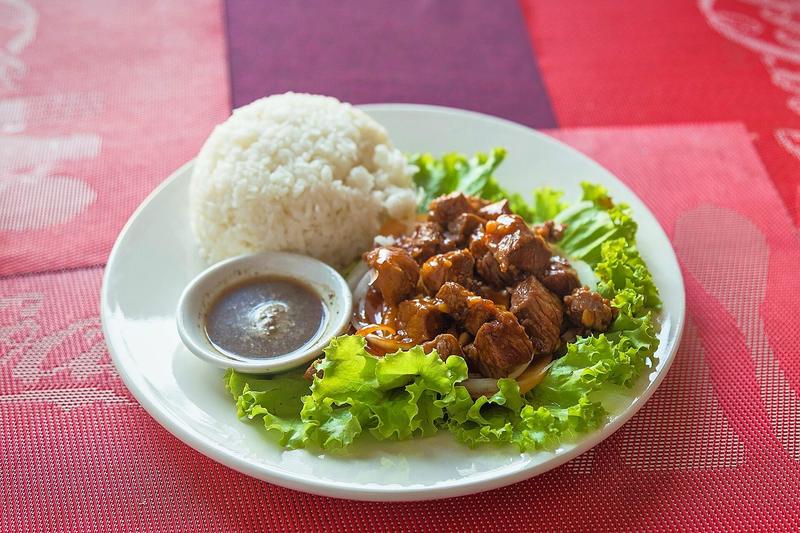 Lok LakPepper-marinated beef with rice
 Cambodian drinksCoffee, juices and what to sip with a meal
Num banh chok →The fermented rice noodles and fish gravy in full
 Cambodian foodThe full overview of Khmer cooking
A Cambodian noodle soup of rice noodles with pork stock and toppings. The broth is clear, made from pork bones and dried squid, and the word kuyteav derives from a Teochew Chinese word.
Mostly at breakfast. One guide says vendors usually sell it out before midday, and Wikivoyage describes it as a noodle soup generally served for breakfast.
Travellers report 5,000-8,000 riel for a local-style Phnom Penh breakfast, about USD 2, and USD 4-6 for a big bowl at a popular Phnom Penh noodle house. Prices change, so treat them as a guide.
Yes. One guide says kuy teav can be served dry, taking on the appearance of a noodle salad.
Not by default. One guide says the pork broth is meant to be subtle rather than spicy, and flavour comes from garnishes and condiments such as fermented chilli paste or pickled green chillies.
Chopsticks, introduced by the Chinese, are used only for noodle dishes in Cambodia, while forks and spoons, introduced by the French, are used for rice and soup-based dishes.
No. One source says the Khmer broth differs from Vietnamese pho, which leans on charred ginger and star anise.
The CDC's general advice is to avoid eating food from street vendors, and to follow normal food-safety rules if you do eat it. It also says to prefer food served steaming hot, because lukewarm food lets food-poisoning germs grow.