Marinade
Guides list fish sauce, soy sauce and oyster sauce.
Home › Cambodian food › Lok lak
Khmer dish guide
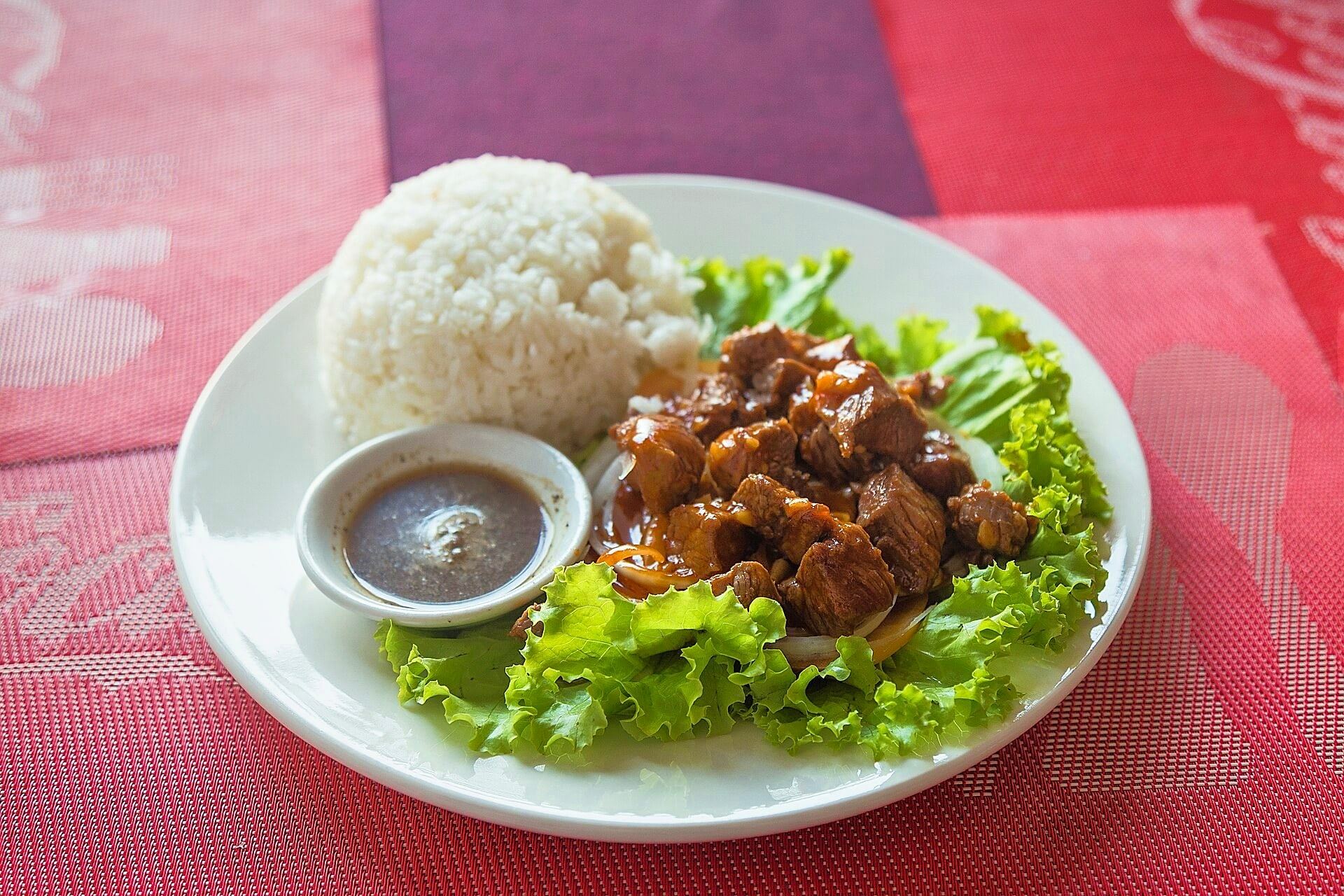
Lok lak is marinated beef quick-cooked in a wok and served on lettuce or watercress with tomato and cucumber. Guides give the marinade as fish, soy and oyster sauce, and a pepper-lime dip comes alongside. It builds on bo luc lac, a Vietnamese dish that one guide traces to Saigon's sidewalk eateries.
By Laura Brennan · updated
Same idea, different cut. Lok lak takes its name and its method from the Vietnamese dish, then goes its own way.
Vietnam
Small cubes of marinated beef, a shape one guide says resembles playing dice. Luc lac means shaken and bo means beef.
Cambodia
Guides describe the Cambodian beef as strips rather than small cubes, though one Cambodian cookbook recipe cuts 2-3 cm cubes. The names lok lak and loc lac are loanwords from Vietnamese lúc lắc, and you may also see it as lok lak sach ko.
One guide traces shaking beef to Saigon's sidewalk eateries. Guides then describe a Cambodian version cut into strips.
One guide says beef was a luxury ingredient in Vietnam before French colonisation. Cows were rarely slaughtered for food and were kept as working animals.
In Vietnam the dish was mostly reserved for formal events such as wedding banquets and anniversaries, per the same guide. One guide says the dish used ingredients brought over by the French.
The Cambodian names lok lak and loc lac are loanwords from Vietnamese lúc lắc. A Cambodian chef describes lok lak as one of Cambodia's classic French-influenced dishes.
Wikipedia says lok lak has come to be considered one of Cambodia's national dishes.
More than one recipe is in circulation. One guide describes an early version, a simpler later one and a variation.
The early version
One guide describes an early Cambodian version as high-quality steak pan-seared in French butter.
The later version
The same guide describes a later, simpler Cambodian version with cheaper beef cuts and Chinese oyster sauce.
A variation
One guide says fried potatoes feature in the so-called English version of lok lak.
Home cooking
One Cambodian cookbook recipe uses beef tenderloin and finishes the plate with a fried egg.
The usual plate
Wikivoyage's description is chopped-up beef cooked quickly, served with lettuce or watercress, tomato and cucumber.
Grouped by version, not ranked.
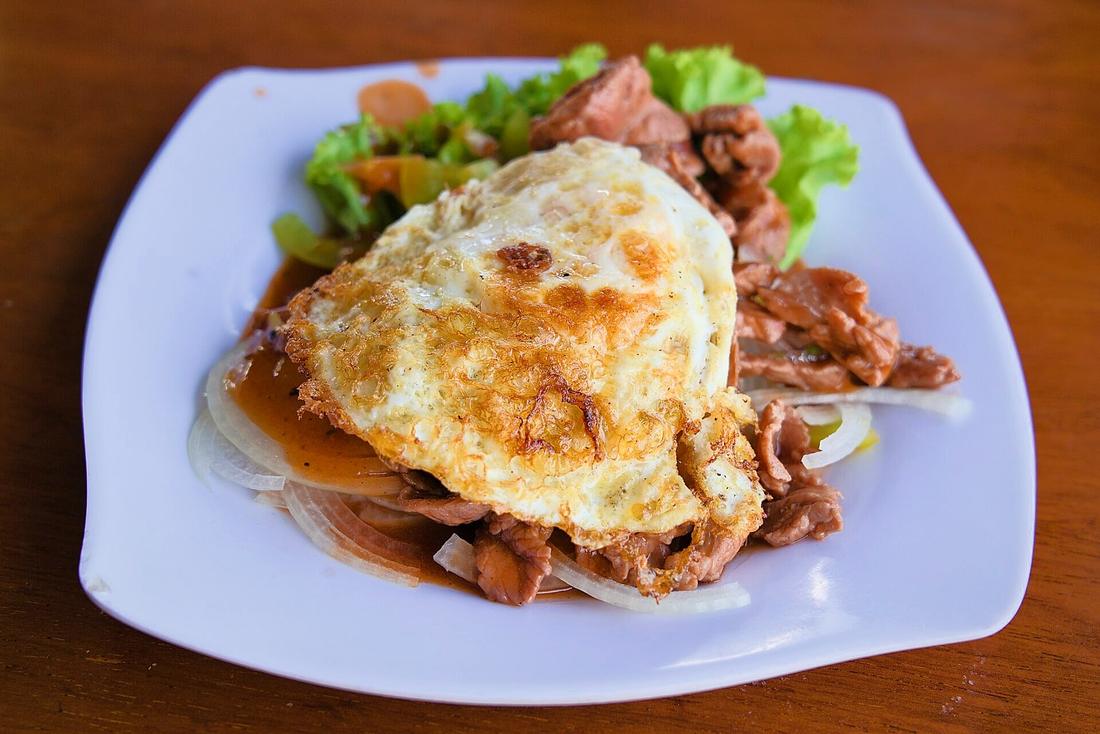
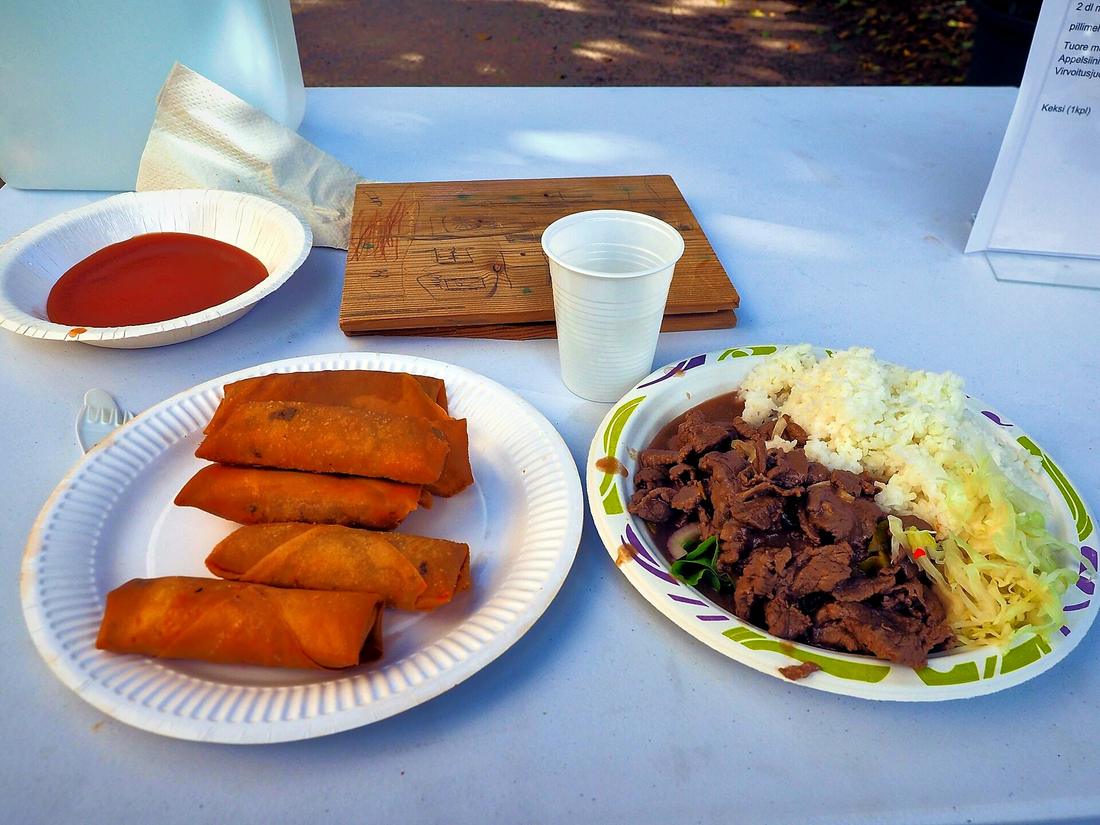
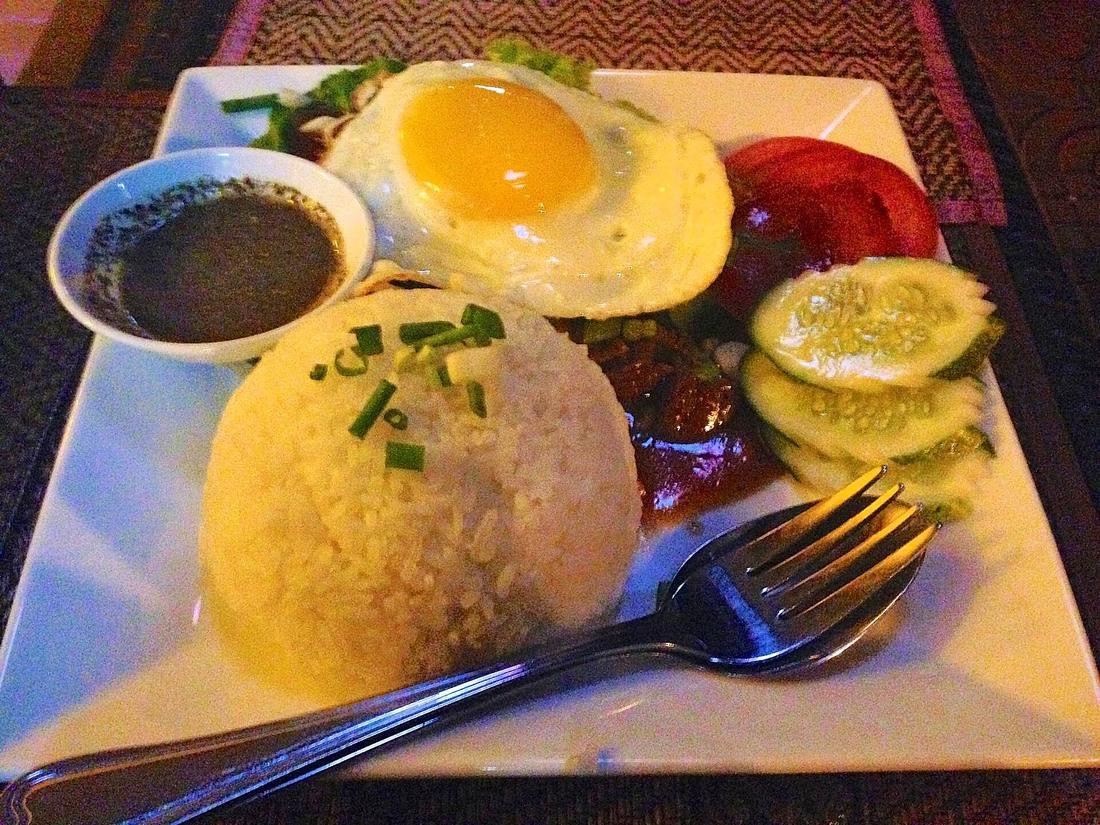
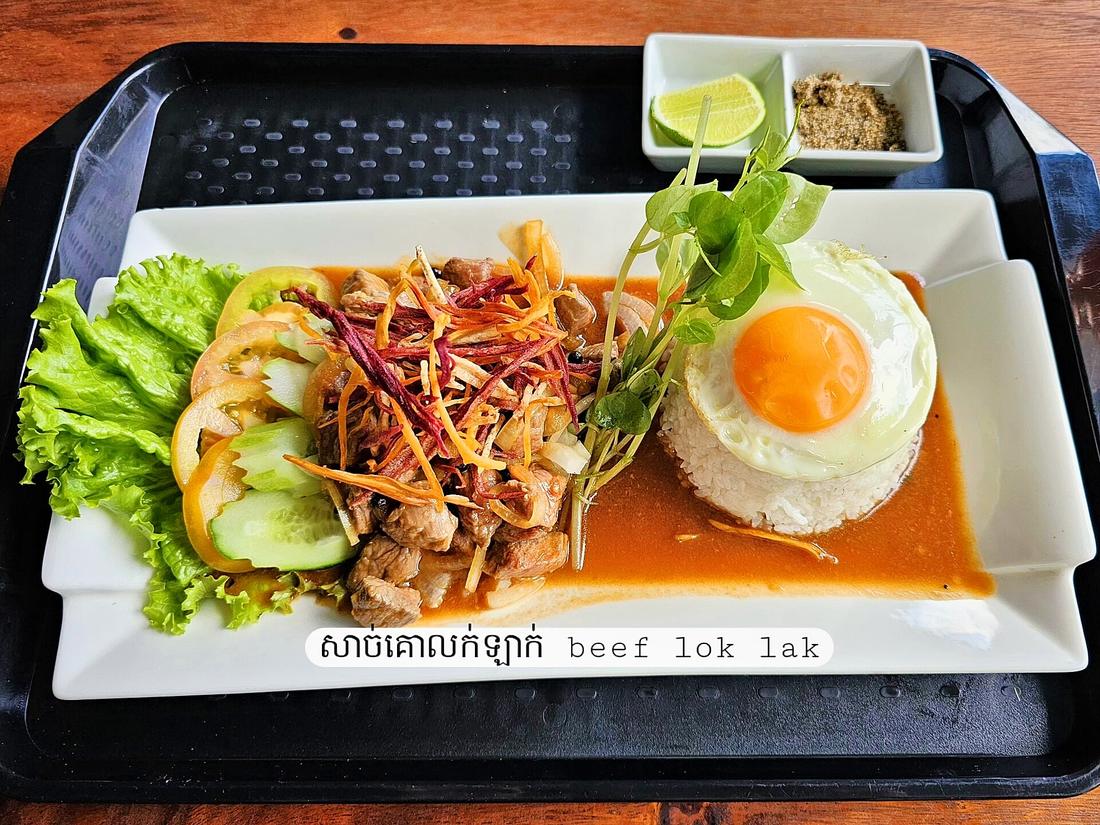
Plates of beef lok lak. Swipe or use the arrows.
 1/4
 2/4
 3/4
 4/4
Marinated beef, a hot wok, a cool garnish. Each plate follows that pattern, with toppings that vary.
Guides list fish sauce, soy sauce and oyster sauce.
Sautéed with red onion and bell pepper. One guide says constant shaking of the wok sears every piece evenly.
Lettuce or watercress, with tomato and cucumber slices.
One Cambodian cookbook recipe tops the dish with a fried egg.
The recipe cuts beef tenderloin into 2-3 cm cubes and sears it 5-7 minutes, depending on how rare you want it. It is a home-cooking recipe from one Cambodian cookbook, so cube size differs from the strips you may be served.
Four ingredients, per Milk Street: coarse black pepper, lime juice, sugar and salt. Wikipedia calls garlic, limes and pepper a common flavour trio in Cambodian cooking.
One recipe dry-roasts black Kampot peppercorns for 2-3 minutes before grinding them for the dip.
A protected-origin pepper from two provinces. It is the pepper named in the dip recipe above.
Where
One guide says it is grown in seven districts or cities across two southwestern provinces, Kampot and Kep. The EU registered it as a Protected Geographical Indication (PGI), a label that ties a product's name to its region.
Buying
One operator advises choosing bags that show the PGI label and the producer's identification number.
One guide lists blue crab seared with freshly crushed Kampot green pepper as a signature dish.
Kampot pepper is sold green, black, white and red, all from the same plant. One guide says cultivation was first described in the 13th century, in the Angkorian era, and that modern intensive production began under French colonial rule in the 1870s. Quartz in the soil of the Elephant Mountains foothills is credited with its terroir. Cambodia's official tourism portal describes it as a renowned pepper.
Ripe bunches are hand-harvested from March or April, over about three months, and the beans are sun-dried 2-3 days on nets, per an operator. FAO says the growing area rose from 1 hectare in 2010 to 264 hectares, and producer membership from 118 to 386. Production has stabilised at about 100 tonnes since 2019.
Eat it steaming hot. The CDC's general advice is to avoid food from street vendors, and to follow normal food-safety rules if you do eat it.
Steaming hot. Lukewarm food lets food-poisoning germs grow, so the CDC advises food cooked and served steaming hot.
Normal food-safety rules. That is the CDC's condition for eating from a street vendor at all. Street food guide
Guides to neighbouring Khmer dishes and the overview they belong to.
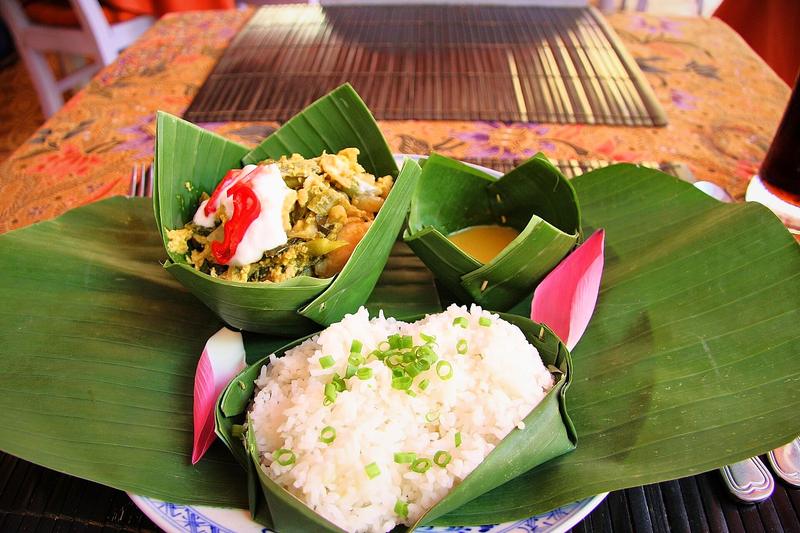 Cambodian foodThe overview of Khmer dishes and flavours
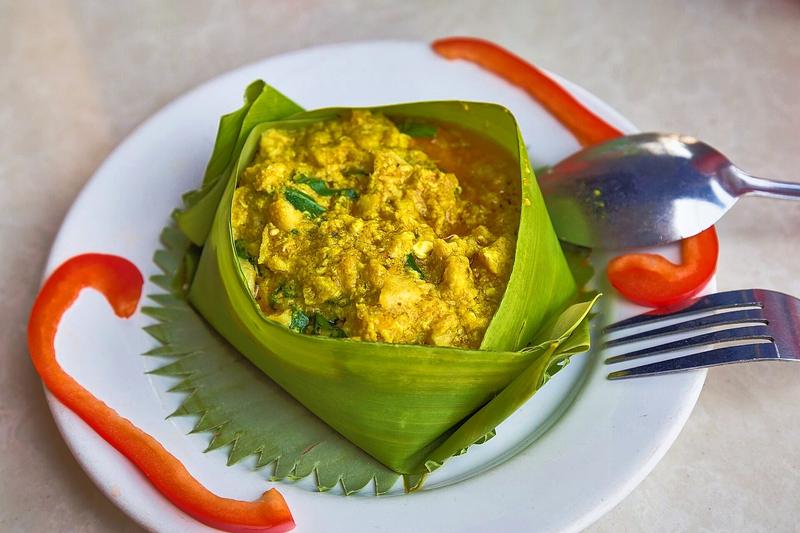 Fish amokThe steamed fish curry, explained
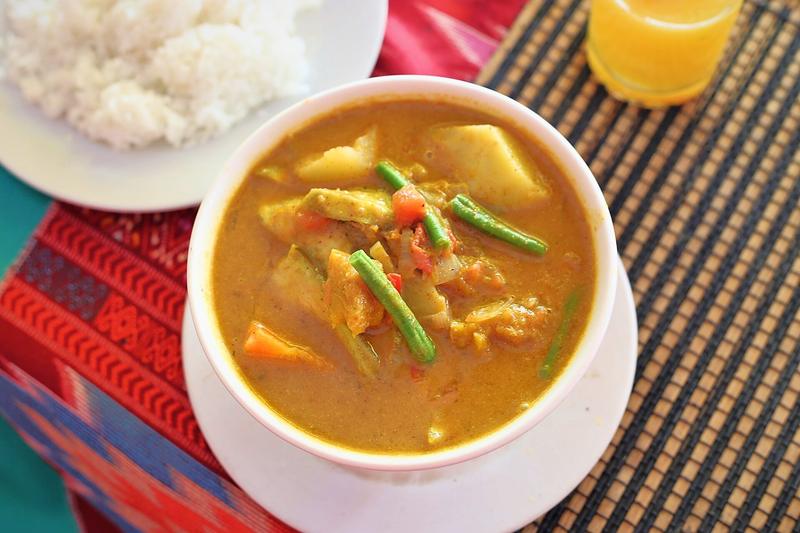 Cambodian curryKhmer curries and stews
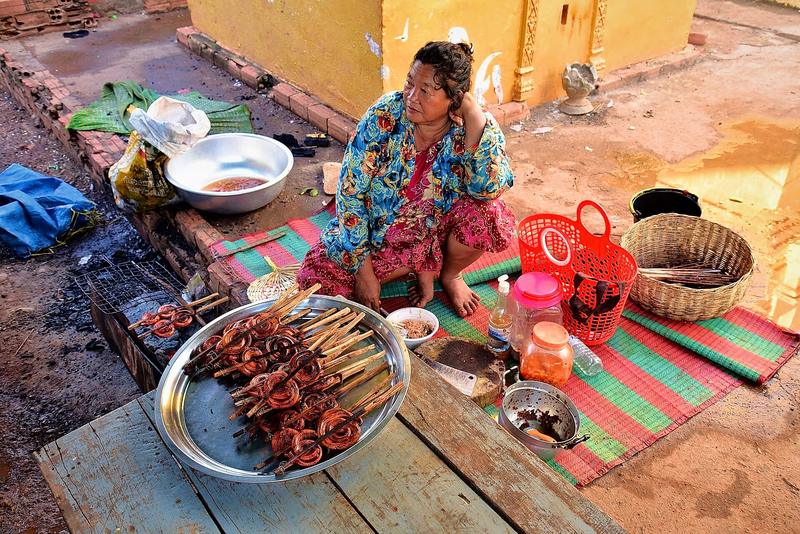 Cambodian street foodWhat to know before you eat at a stall
Num banh chok →The fermented rice noodles and fish gravy in full
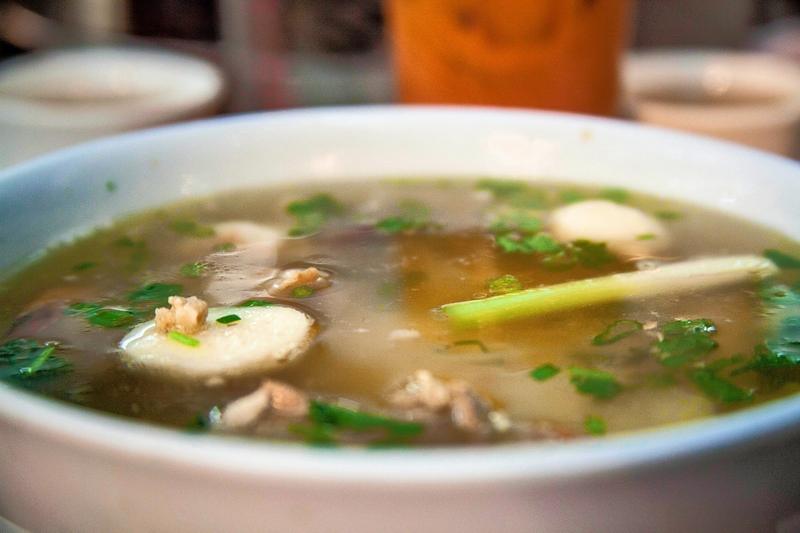 Khmer noodle soupKuy teav and other noodle bowls
City food guides, plus the drinks page for the rest of the meal.
Close cousins: guides describe the Cambodian beef as strips and the Vietnamese as small cubes. Compare them.
It is a loanword from Vietnamese lúc lắc, meaning shaken or shaking.
Marinated beef sautéed with red onion and bell pepper, served on lettuce or watercress. How it is made.
Milk Street describes four ingredients: coarse black pepper, lime juice, sugar and salt. The dip.
Wikipedia says it is considered one of Cambodia's national dishes.
One guide traces bo luc lac to Saigon's sidewalk eateries. Origins.
The CDC advises food cooked and served steaming hot. Safety.
One operator advises bags showing the PGI label and the producer's identification number. Kampot pepper.