Hepatitis A
It is transmitted through contaminated food and water.
Home › Cambodian food › Street food
Street food guide
Eat it, and choose food cooked and steaming hot, which is the CDC's advice. Hepatitis A and typhoid spread through contaminated food and water, so choose food and drinks with care. One guide puts a simple street rice dish at about 1-2 USD Checked Nov 2026.
By Laura Brennan · updated
Hot, cooked food first. UK TravelHealthPro asks all travellers to take care with personal, food and water hygiene; here are four habits from the CDC.
Steaming hot. The CDC advises eating food cooked and steaming hot.
Soap and water. Wash your hands before eating and before preparing food, says the CDC.
Peel it yourself. The CDC says fruit or vegetables may be safer if you can peel them.
Sealed drinks. Unopened, factory-sealed bottles or cans are safer than tap water, per the CDC.
Official advice
The CDC warns that untreated water can carry germs that make you sick. Its advice on ice: do not use it in destinations with limited access to clean water.
Guide advice
Wikivoyage says to assume tap water is not potable outside Phnom Penh. It adds that factory ice cannot be regarded as safe, and that ice cubes are safer than chipped block ice.
Travellers report that street food is safe when it is fresh and cooked instantly, with sickness more likely in quiet restaurants. One traveller notes illness comes from unsanitary food or bad water, not from organ meat or blood soup. These are opinions, and they do not replace the CDC advice above.
Ask a doctor or travel clinic. The CDC recommends the hepatitis A vaccine for unvaccinated travellers aged one or older going to Cambodia.
It is transmitted through contaminated food and water.
A bacterial infection, also transmitted through contaminated food and water.
The CDC notes the typhoid vaccine is not 100% effective.
The CDC says safe food and water habits, including handwashing, help prevent typhoid fever.
Match the food to the moment: breakfast, a quick sandwich or a snack by the coast. The groups are not ranked.
Breakfast
Pork and rice; the name means rice and pork, and it is a common breakfast in Cambodia. One guide says the thin-cut pork is marinated in palm sugar, garlic, coconut milk and fish sauce, then normally prepared and kept warm over a grill or bed of coals. It comes with steamed rice and a bowl of chicken broth garnished with radishes and fried onions.
A quick sandwich
A short baguette with a thin, crisp crust and soft airy texture, adopted from the French. One guide says it is stuffed with meat and/or pate and herbs, like the Vietnamese banh mi; variants include pickled carrots and daikon.
By the sea
One guide calls boiled or fried cockles with salt, chilli and garlic a popular street food.
In Kep
A guide says it is pounded or grilled over a wood fire and served with pickled papaya and cucumbers.
In Siem Reap
One guide says ground pork or beef is made into spicy or sweet-and-savoury sausages.
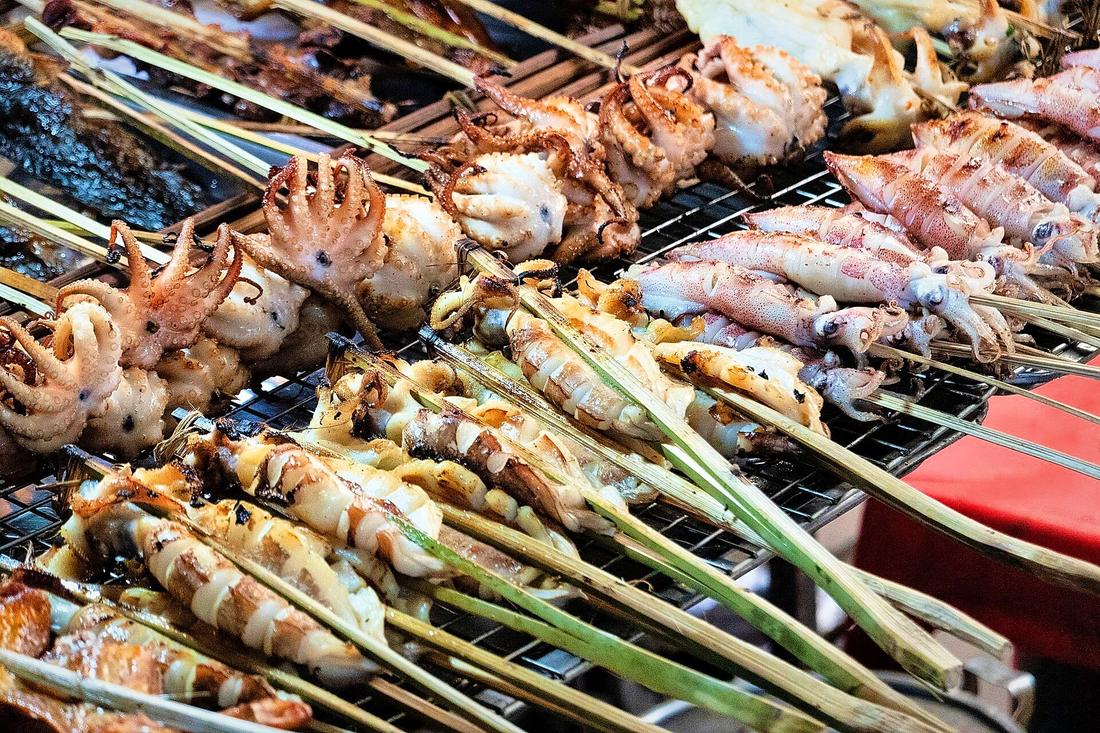
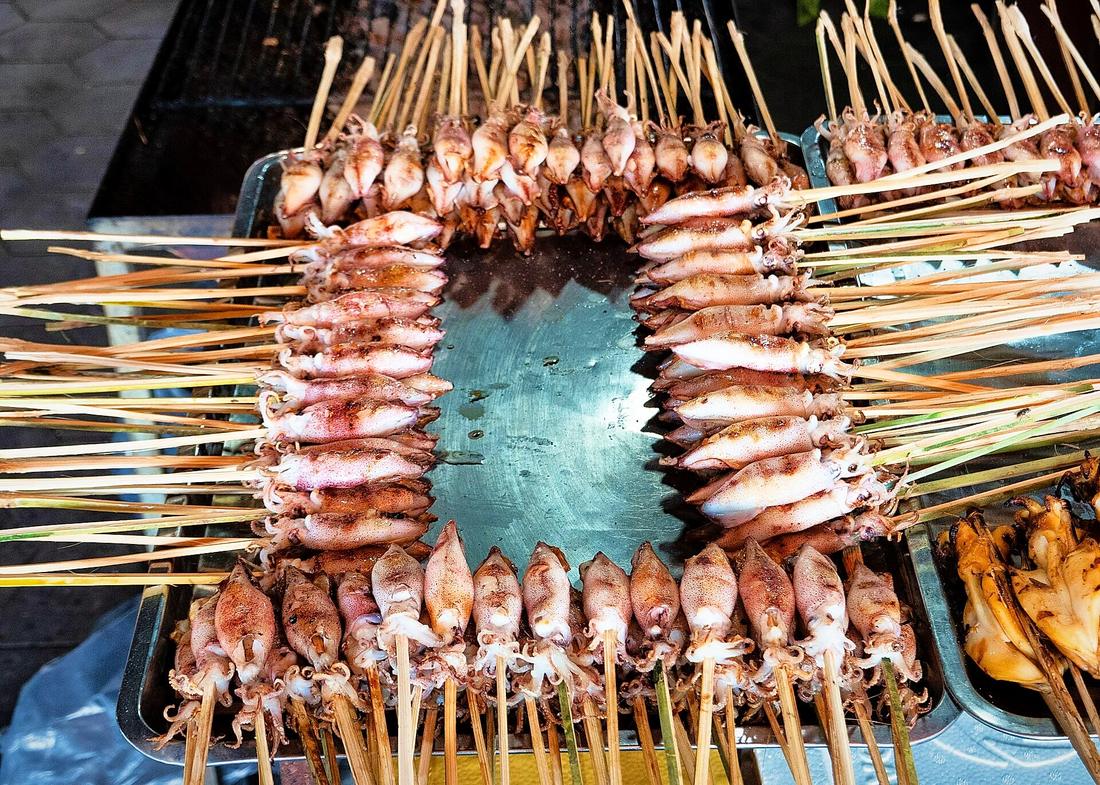
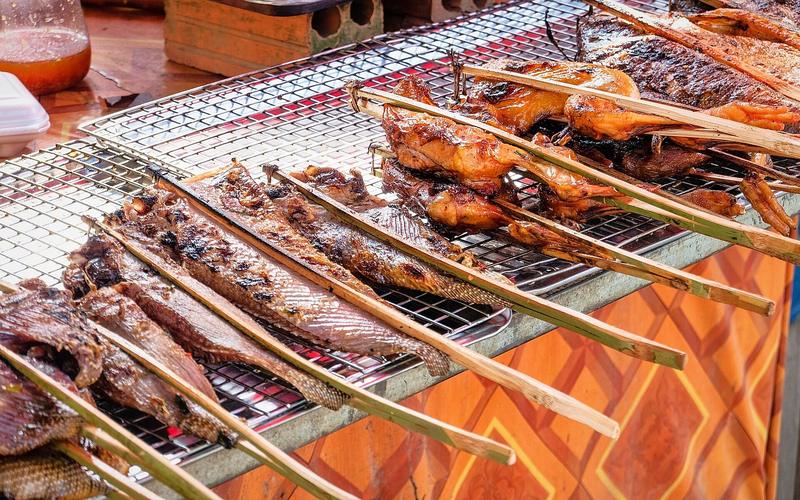
Hot from the grill, per the CDC rule above.
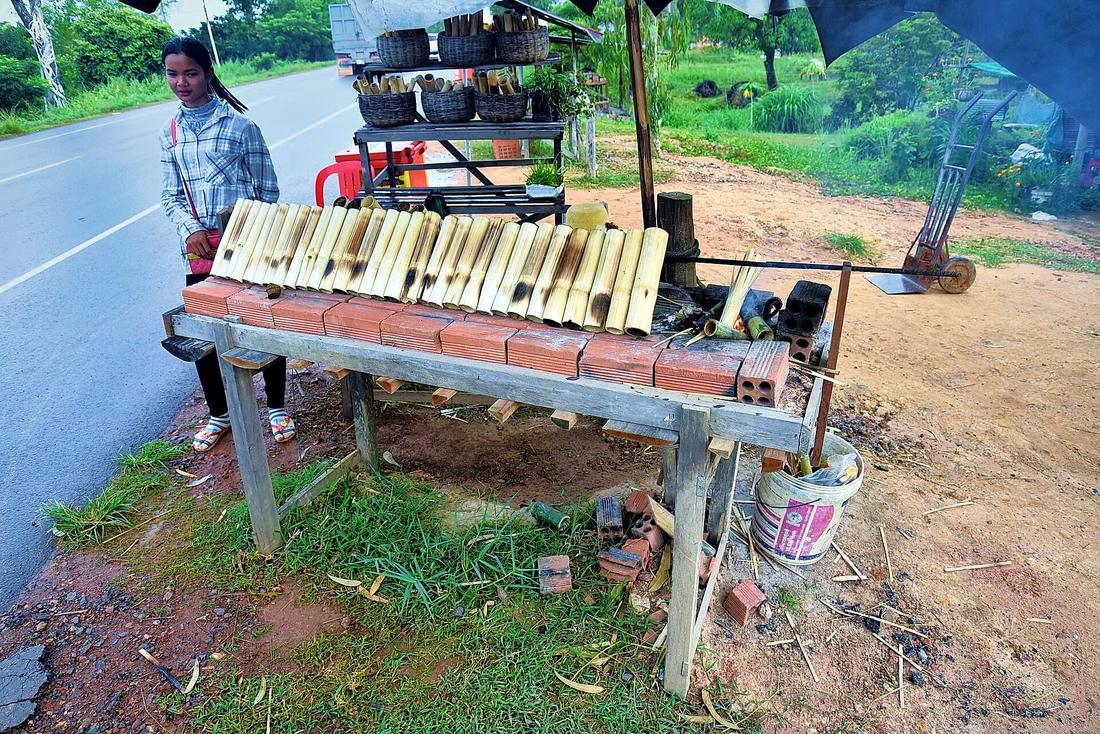
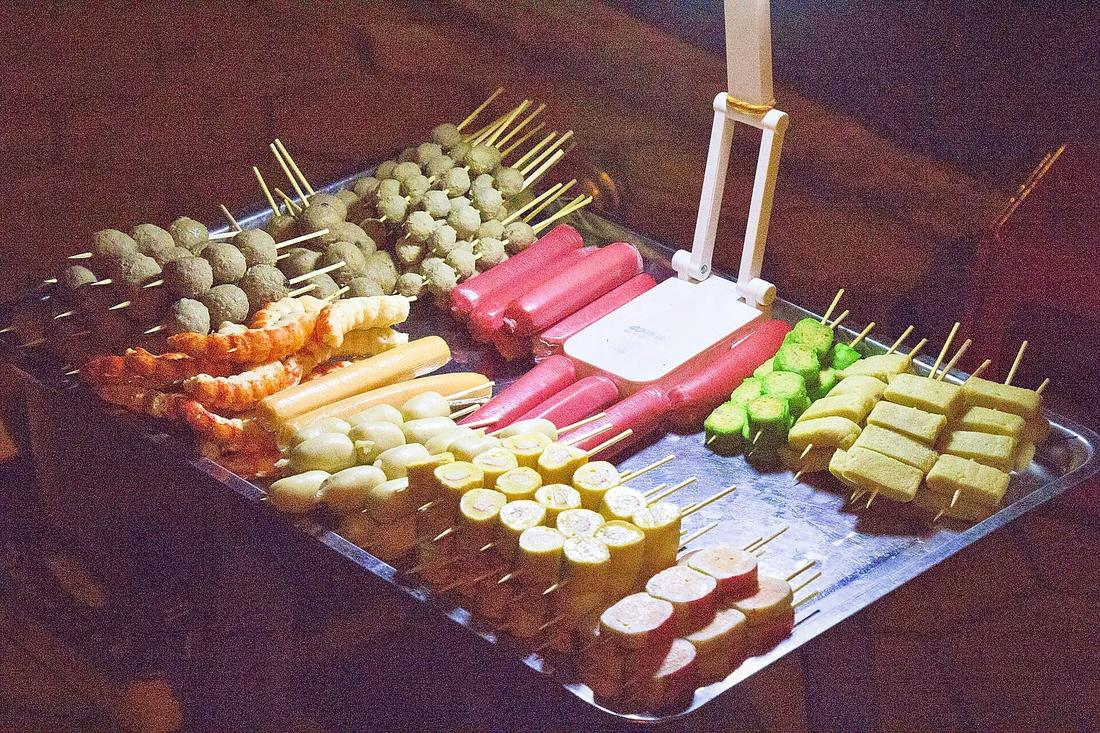
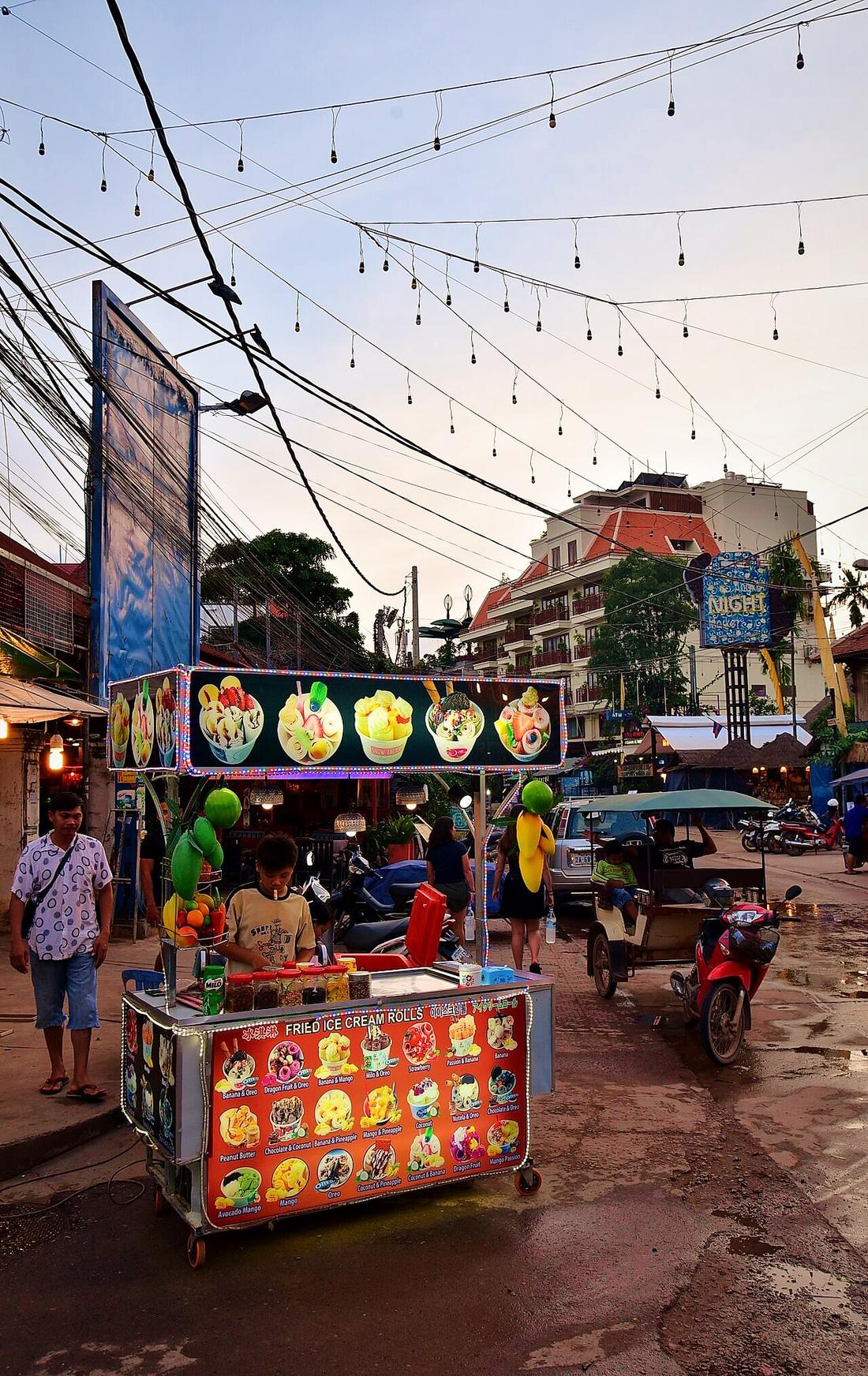
Roadside grills, skewer trays and a food cart. Swipe or use the arrows.
 1/5
 2/5
 3/5
 4/5
 5/5
Yes, as a snack. Crickets, water bugs and tarantulas are seasoned, deep-fried and sold as street food; curries, rice, noodles and soups are the staples.
Where. One guide says Skuon is famous with international visitors for its fried spiders. It is about 75 km north of Phnom Penh, in Kampong Cham Province, and the district capital of Cheung Prey District. Skun is sometimes known locally as Spiderville.
What is sold. According to Mongabay (2020), a Skuon-area vendor fries tarantulas and tops them with stir-fried garlic, and vendors also sell fried crickets, mealworms, grasshoppers, ants and water bugs. Mongabay, citing FAO, says insects are part of the traditional diets of at least two billion people.
Why. Wikipedia links the start of insect, frog and snake eating to people being forced to catch them during hunger. Another guide calls fried spiders (a-ping) a lingering remnant of the Khmer Rouge era, when people were forced to eat insects and small animals.
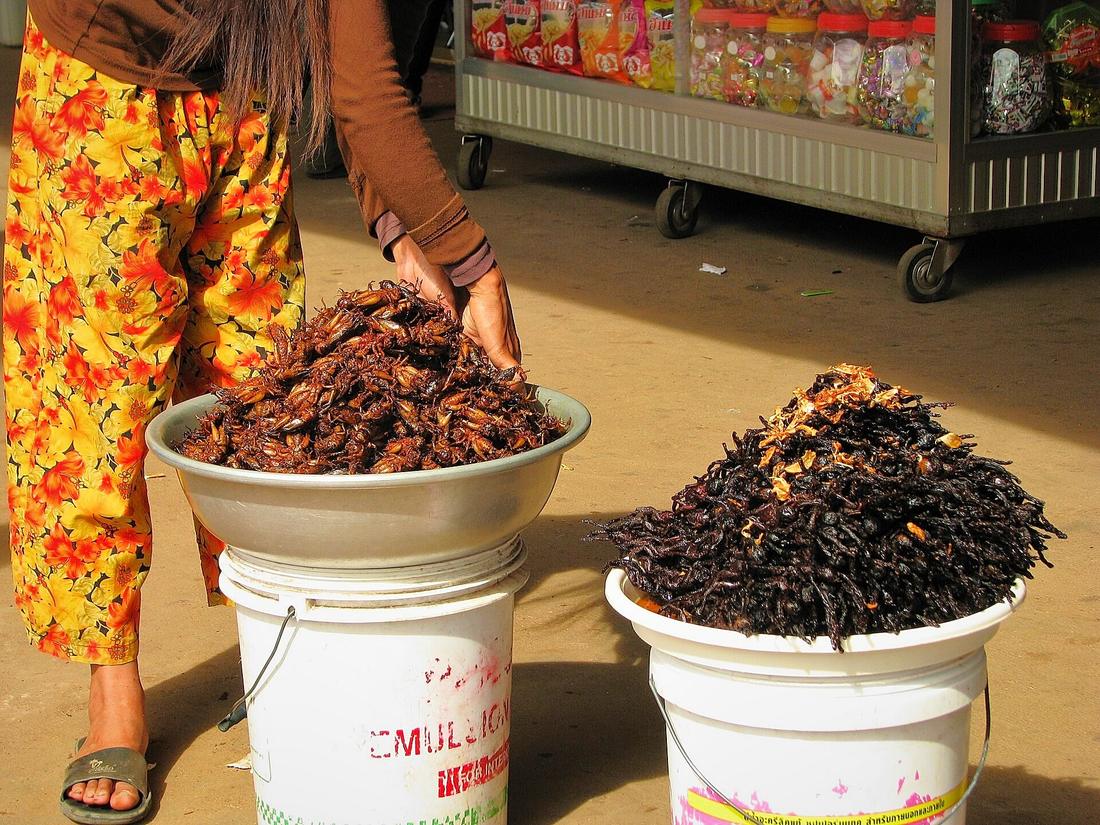
Another guide says Skuon is about 49 km west of Kampong Cham city and is a busy market town that grew up around the intersection of National Highway 6 and another national highway.
Sealed bottles are safer, says the CDC. Wikivoyage says cane juice pressed in front of you is a safe way to rehydrate. Sugarcane juice is a popular street drink, pressed from stalks with a special machine.
Wikivoyage says sugarcane juice carts crush the cane while you watch, a safe way to rehydrate. For bottles, ice and tap water, see the rules in the stall section above.
About 1-2 USD for a simple street rice dish, according to one guide.
Wikivoyage says Siem Reap street food vendors may give a 20-30% discount if you haggle. Quoted prices are a guide, not a fixed rate.
A traveller reported sugarcane juice at 3,000 riel (USD 0.75) in Phnom Penh in 2026. Another traveller's trick for riel: double the dollar price twice and add 000, which works out at about 4,000 per USD.
Street stalls sell the dishes below; each guide goes deeper.
 Cambodian foodOverview of Khmer cooking and its dishes
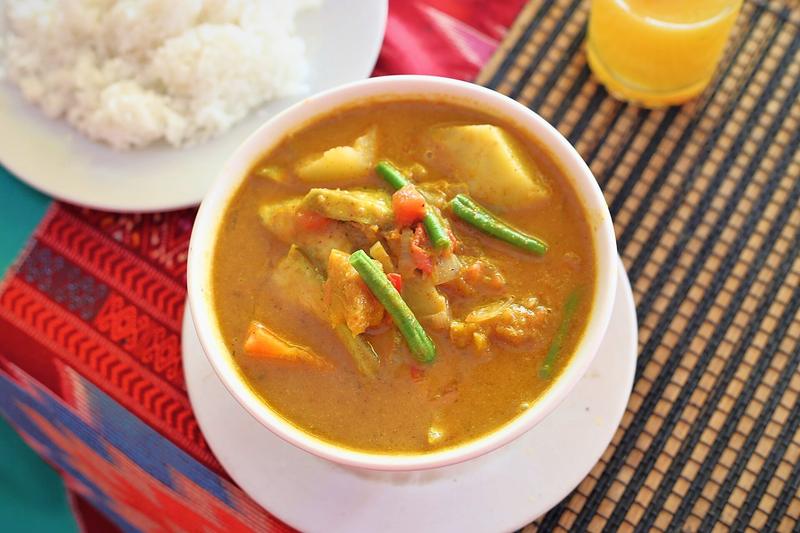 Cambodian curryDish guide to Khmer curry
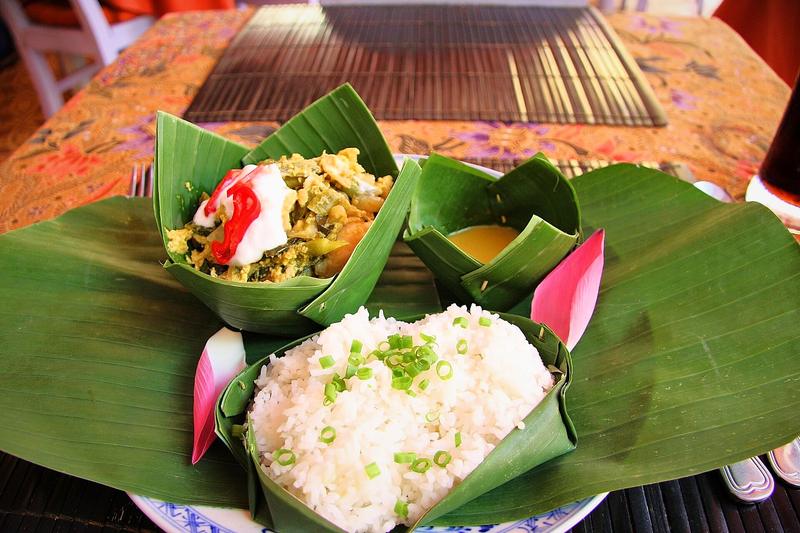
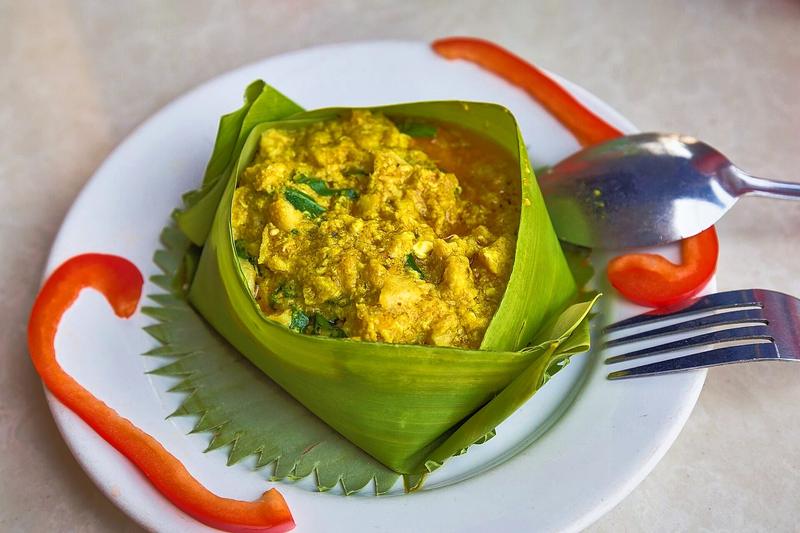 Fish amokDish guide to the steamed fish curry
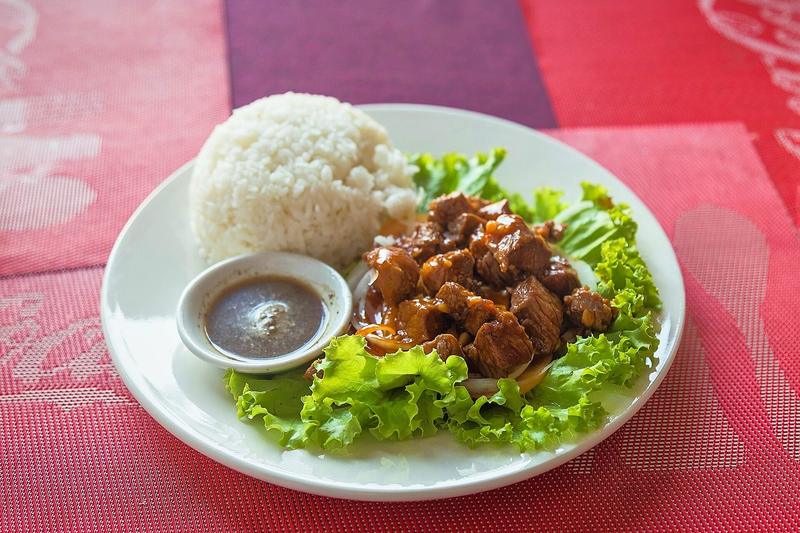 Lok lakDish guide to a beef plate with rice
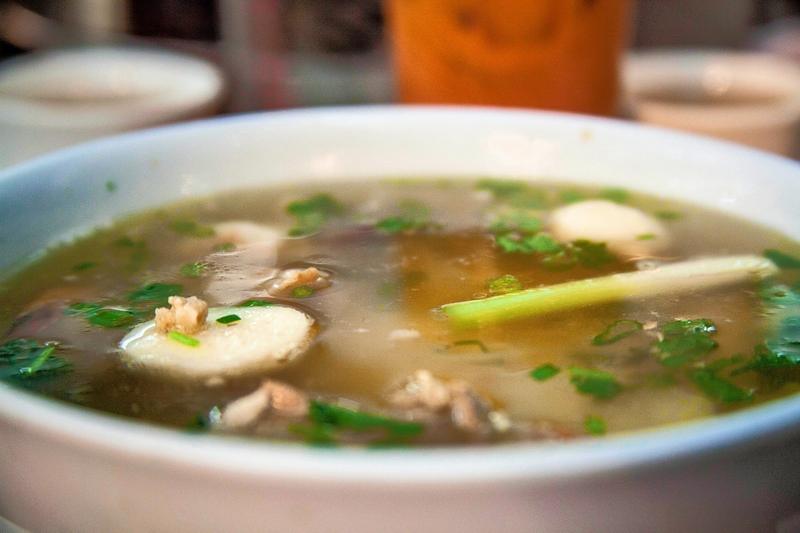 Khmer noodle soupGuide to Khmer noodle soup
 Cambodian drinksGuide to what to drink
 Siem Reap foodCity food guide to Siem Reap
 Phnom Penh foodCity food guide to Phnom Penh
Num banh chok →Guide to the Khmer rice noodle breakfast dish
Safer with habits. The CDC advises eating food cooked and steaming hot, and washing hands with soap and water before eating. Hepatitis A and typhoid spread through contaminated food and water, so ask a doctor or travel clinic about your own case.
The CDC recommends the hepatitis A vaccine for unvaccinated travellers aged one or older going to Cambodia. It notes the typhoid vaccine is not 100% effective. Confirm what applies to you with a doctor or travel clinic.
A short baguette with a thin, crisp crust and soft airy texture. One guide says it is stuffed with meat and/or pate and herbs, similar to the Vietnamese banh mi, and variants include pickled carrots and daikon.
Yes, as a snack. Crickets, water bugs and tarantulas are seasoned, deep-fried and sold as street food. One guide says Skuon is famous with international visitors for its fried spiders.
One guide puts Skuon about 75 km north of Phnom Penh, in Kampong Cham Province. Another says it is about 49 km west of Kampong Cham city, in a busy market town on National Highway 6.
Wikivoyage says factory ice cannot be regarded as safe, and ice cubes are safer than chipped block ice. The CDC says not to use ice in destinations with limited access to clean water.
Wikivoyage says to assume tap water is not potable outside Phnom Penh. The CDC warns that untreated water can carry germs that make you sick, and says drinks from unopened, factory-sealed bottles or cans are safer than tap water.
Wikivoyage describes balut as duck eggs with the embryo still inside.