One guide suggests waking at 4:30 AM for sunrise at Angkor Wat.
Next
Ta Prohm is on the 17 km Small Circuit, which one guide lists after Angkor Wat, Angkor Thom, Thommanon, Chau Say Tevoda and Ta Keo.
After
Banteay Kdei and Srah Srang follow on the same loop; the same guide suggests Pre Rup, on the Grand Circuit, for sunset.
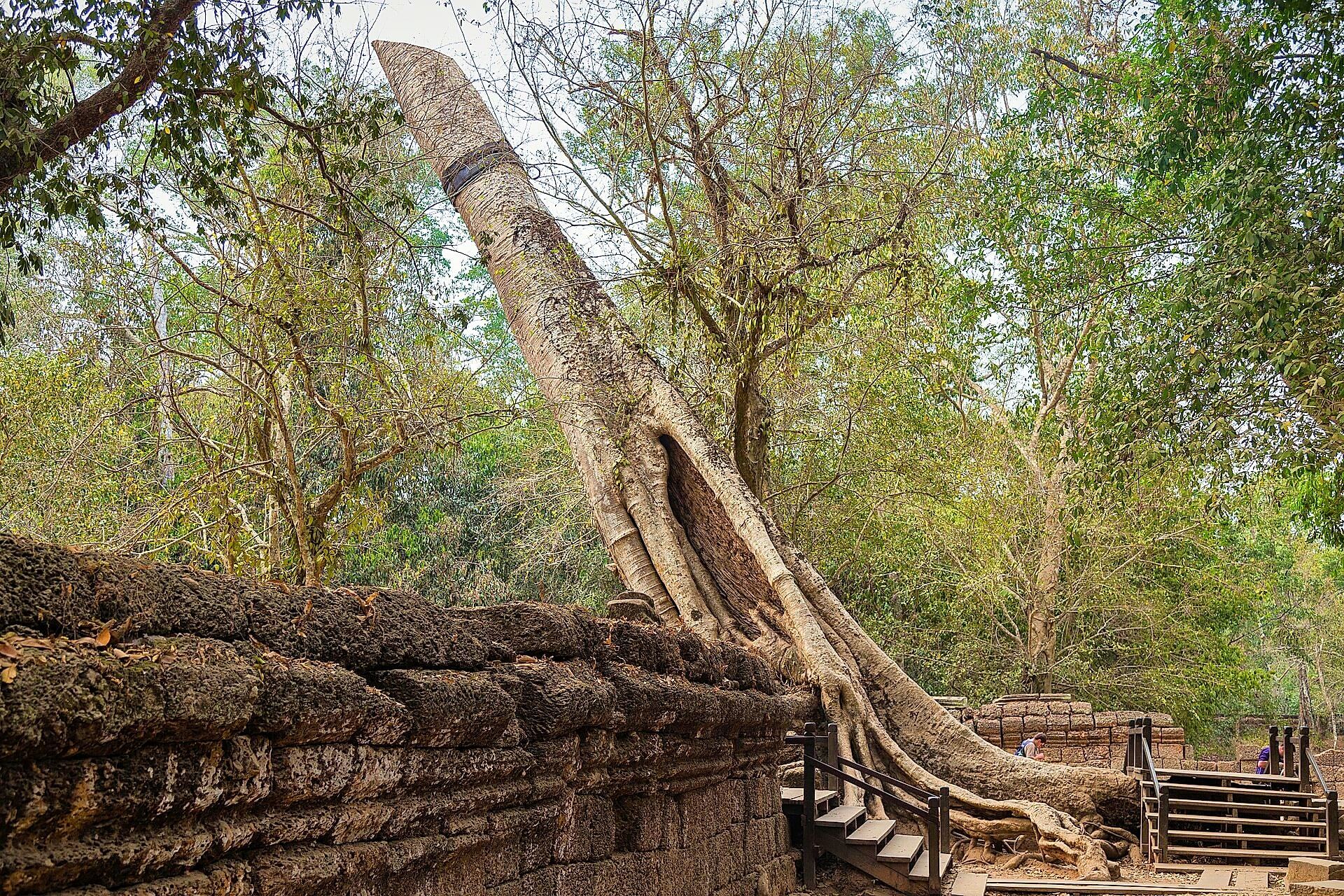
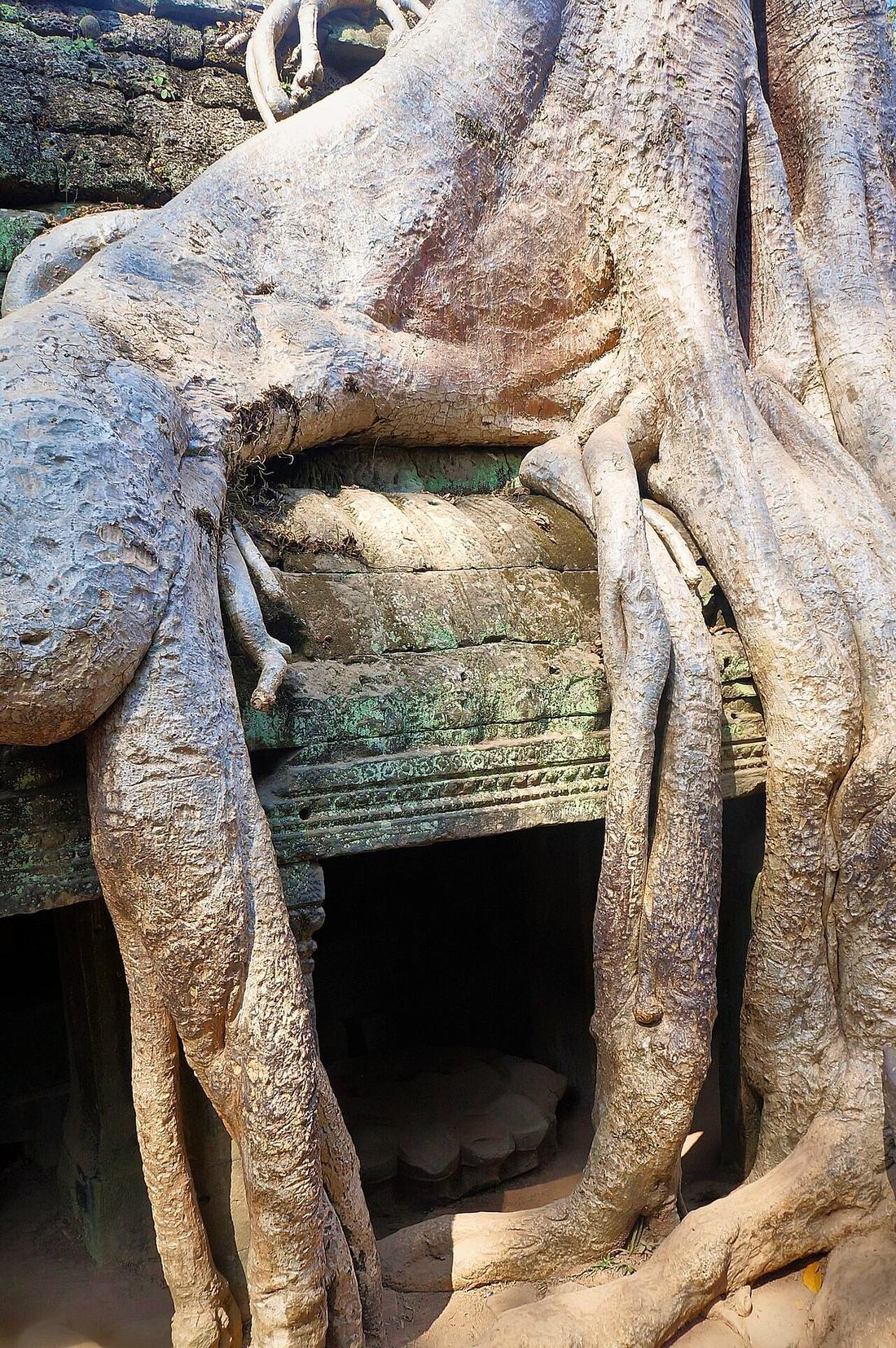
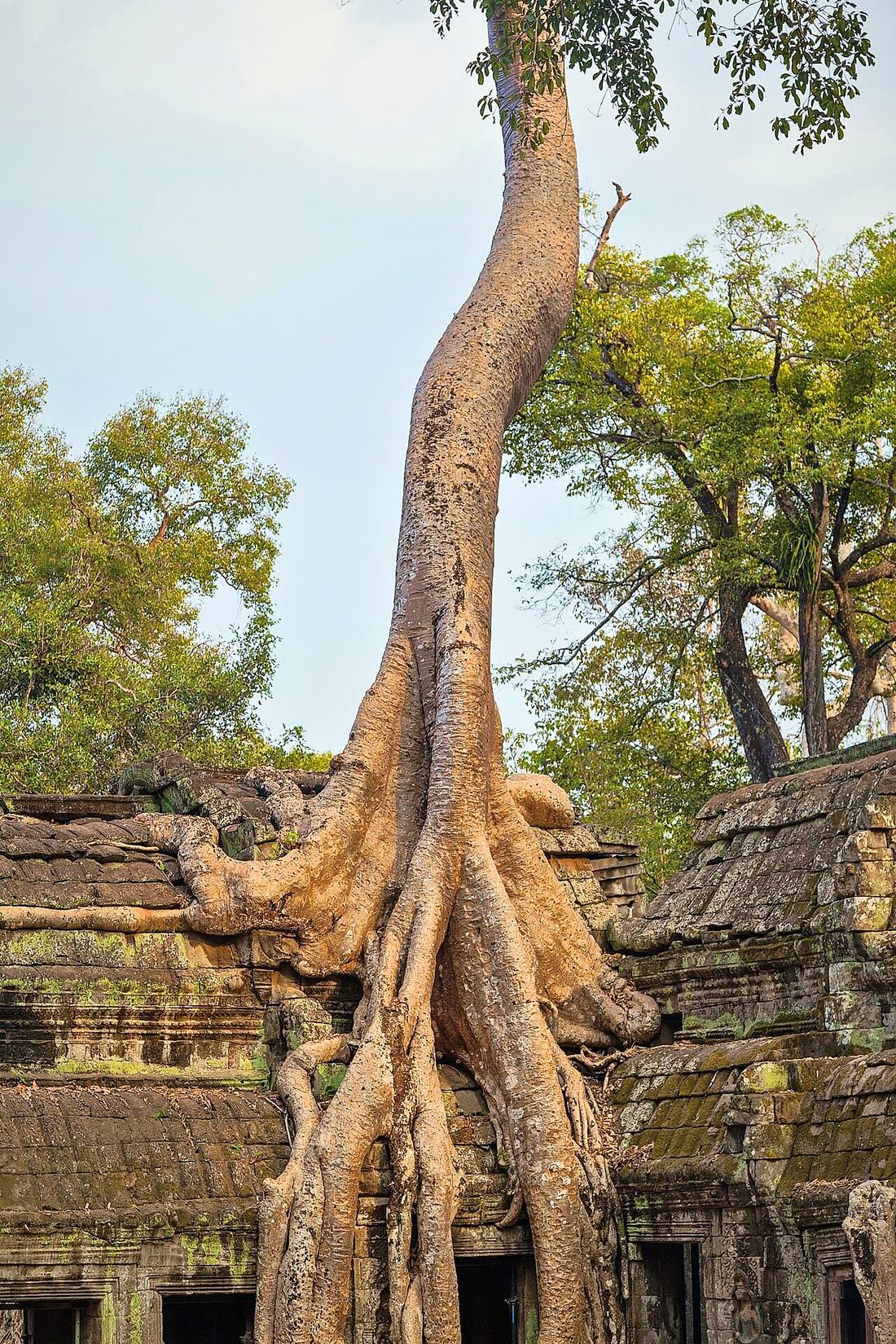
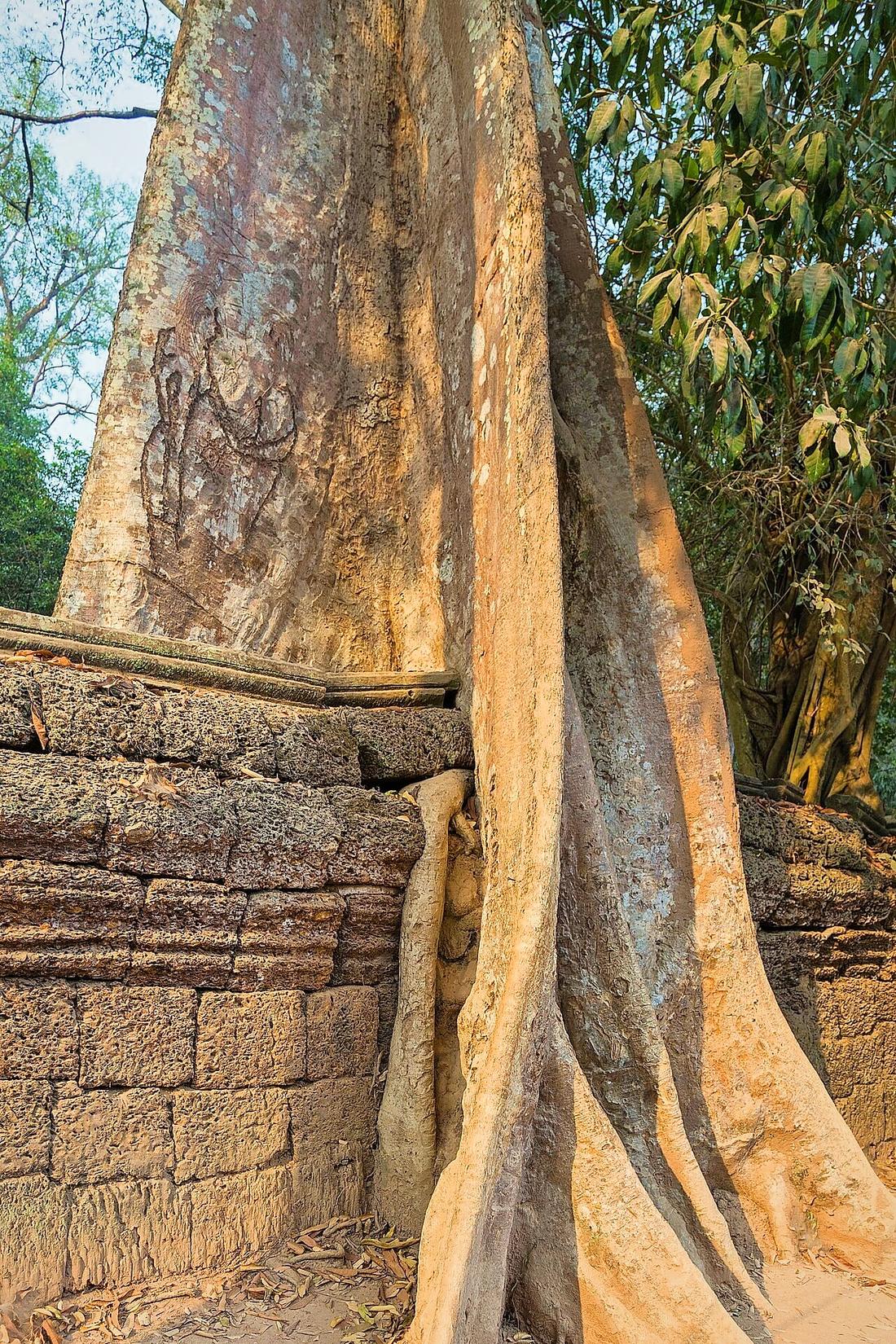
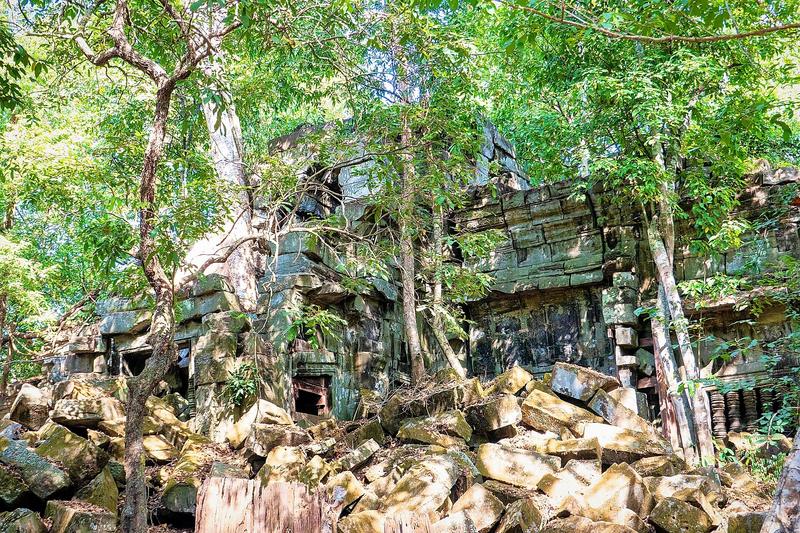
Why are there trees growing out of Ta Prohm?
One guide says the French scholars of the EFEO decided to leave it largely as it had been found, roots and all; one guide calls this a concession to picturesque taste.
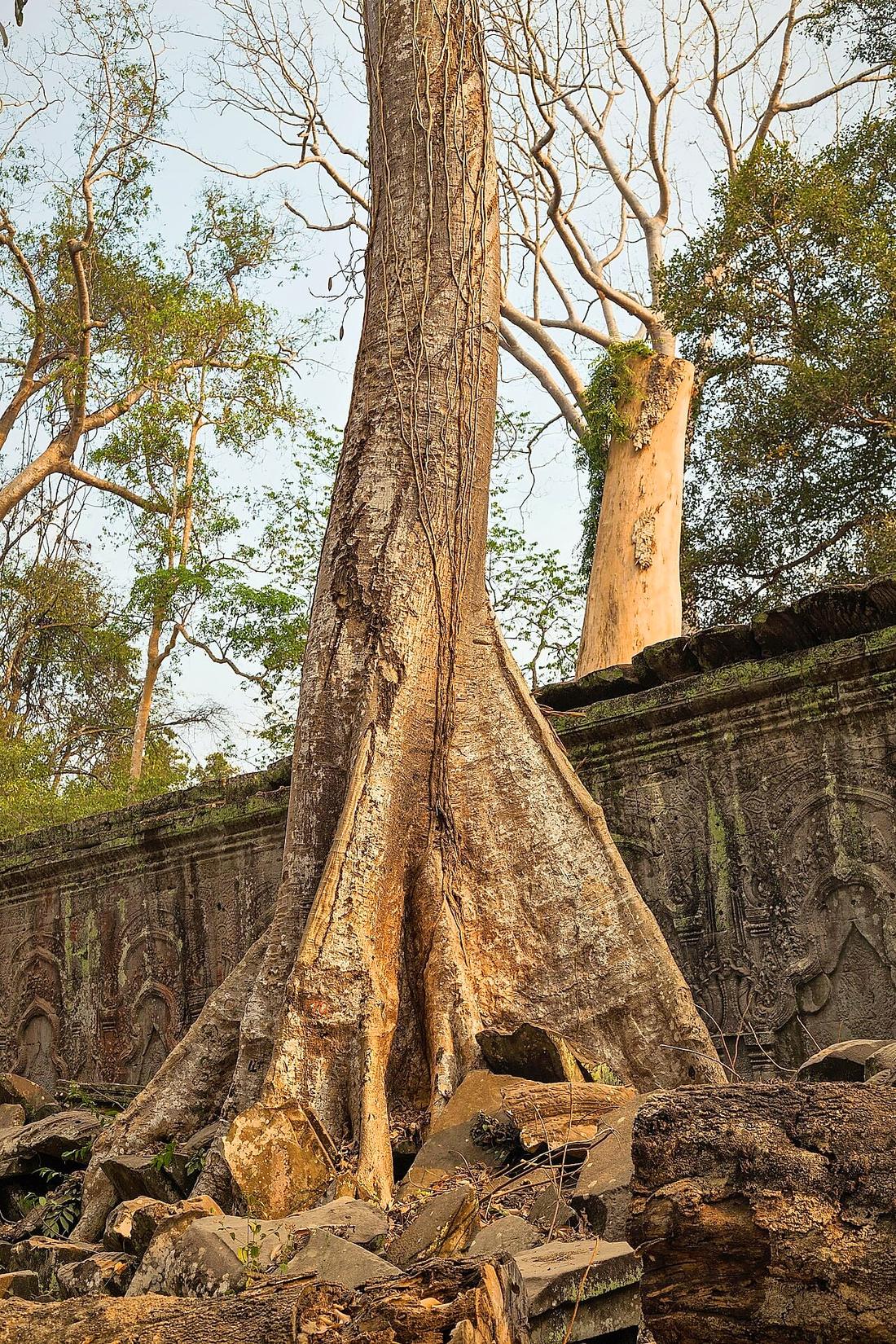
BigSilk-cotton treesThe larger trees are silk-cotton (thitpok) or similar giants.
SmallStrangler figsThe smaller trees are strangler figs or gold apple trees.
ThenKept as foundThe EFEO chose not to clear it, so you see the ruin and the forest together.
NowConservation todayConservation is a partnership of the Archaeological Survey of India and APSARA.
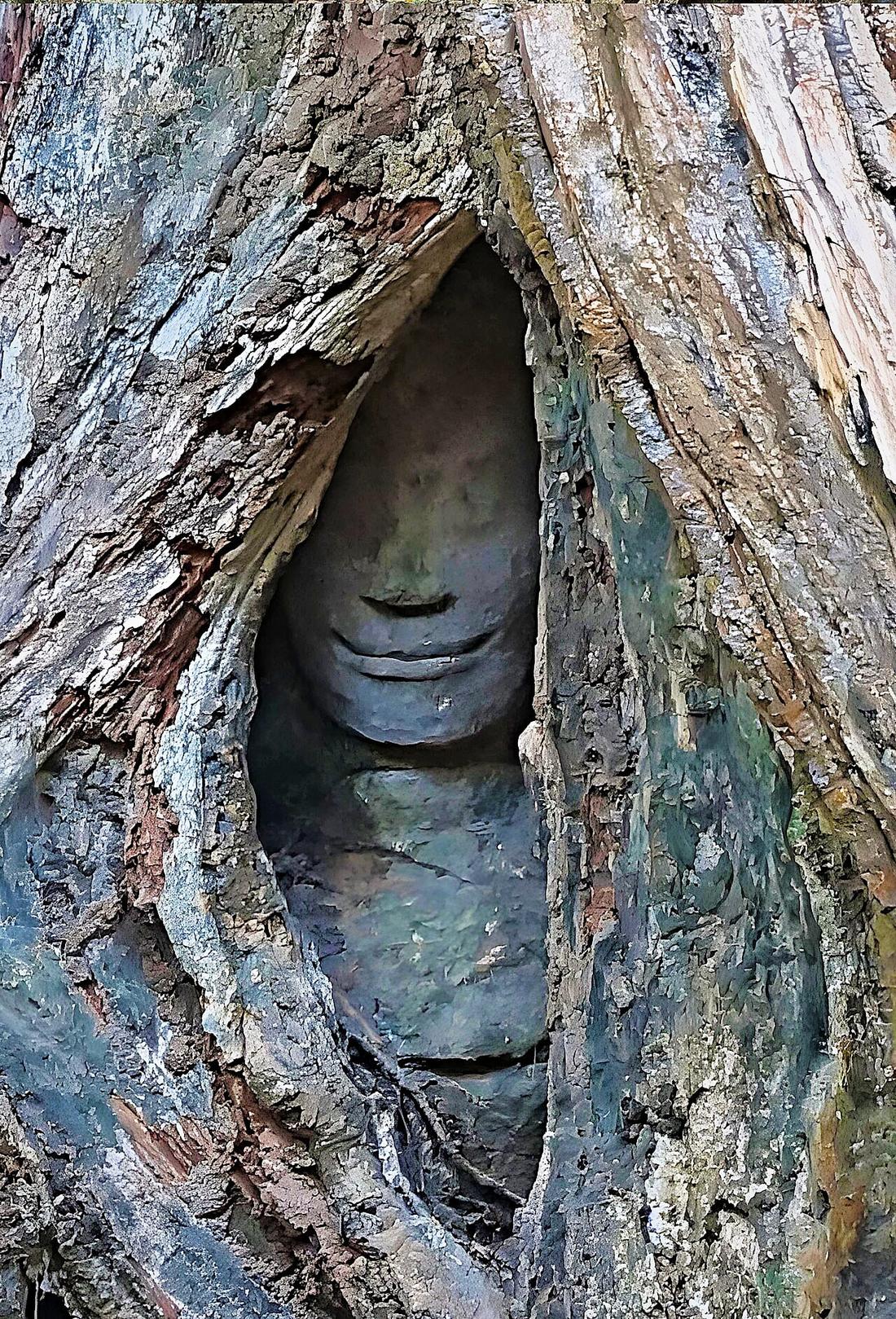
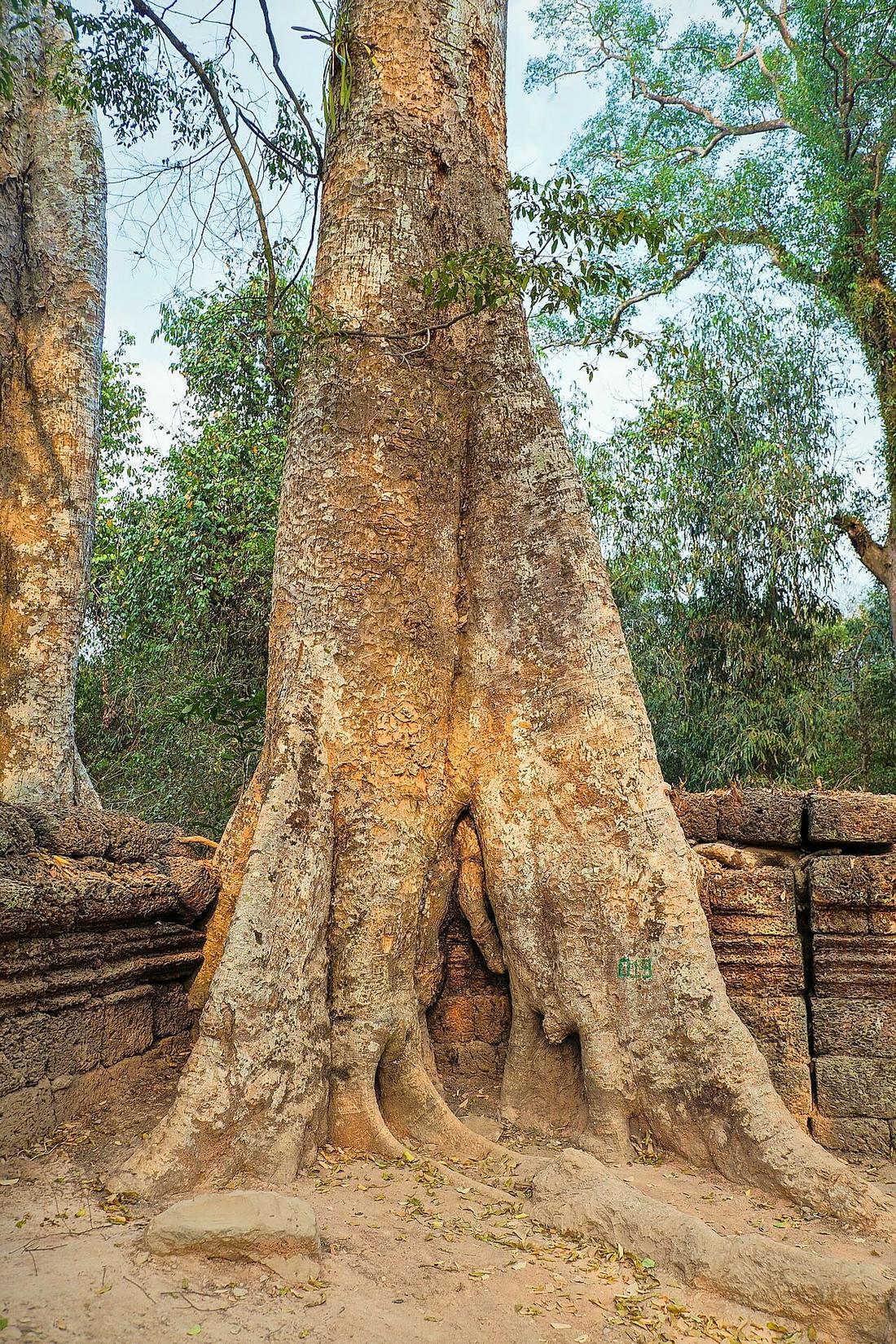
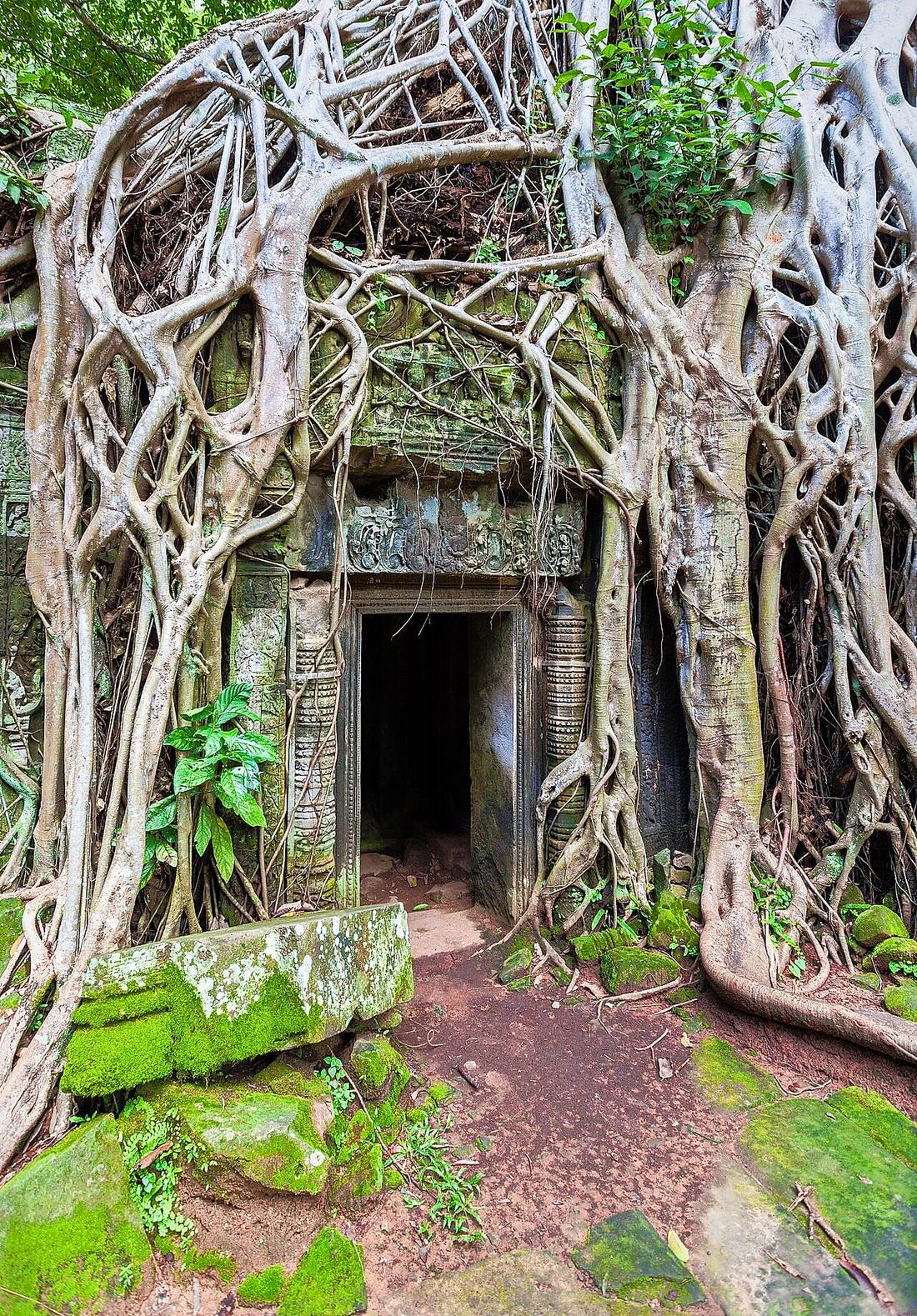
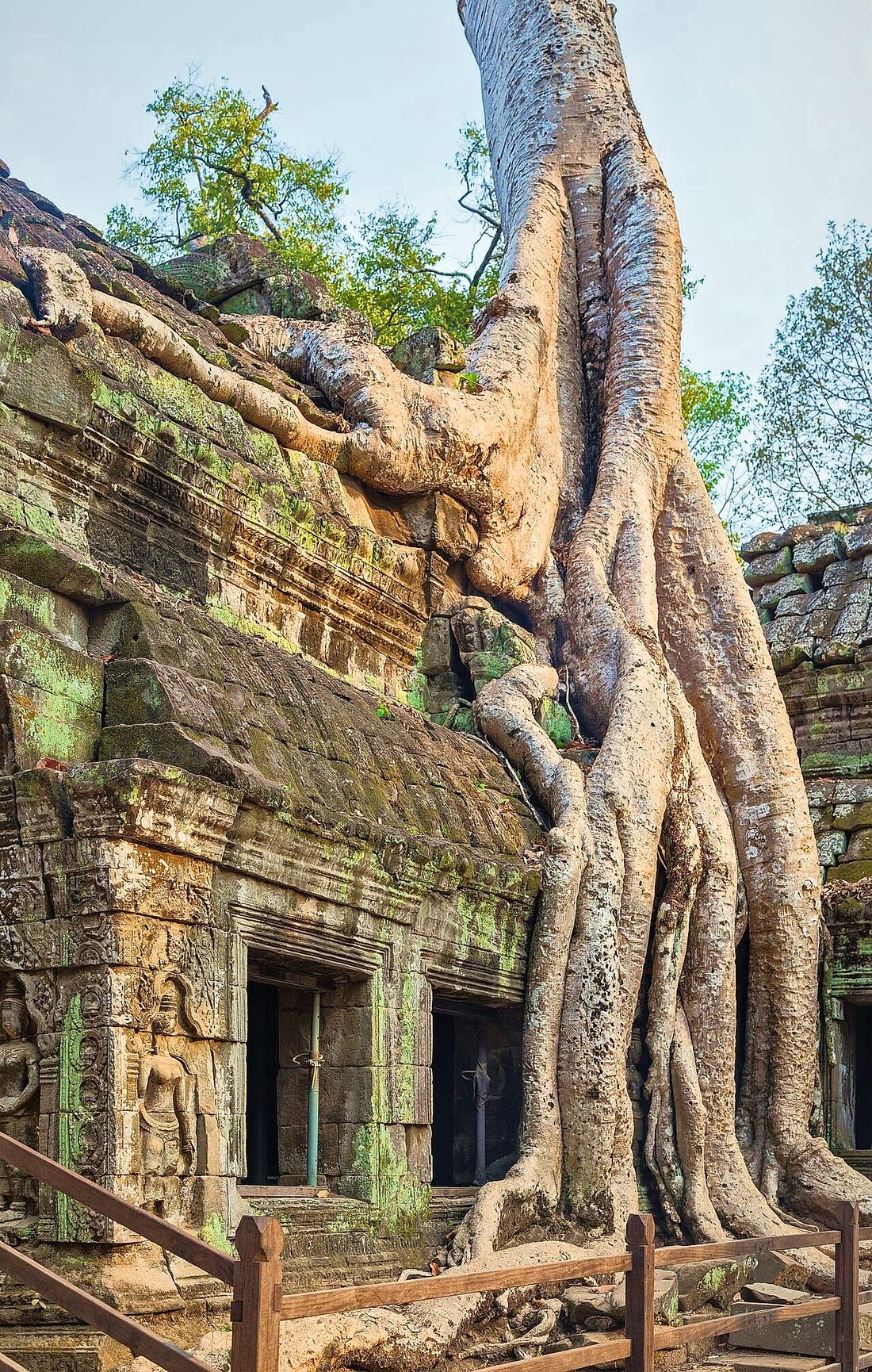
Roots poured over a doorwayA trunk rising from a roofA trunk pressed to the wallA Buddha face inside a treeThe bark has grown round the carvingRoots astride an enclosure wallButtress roots over the blocks
What does the Tomb Raider temple look like inside?
Swipe or use the arrows.
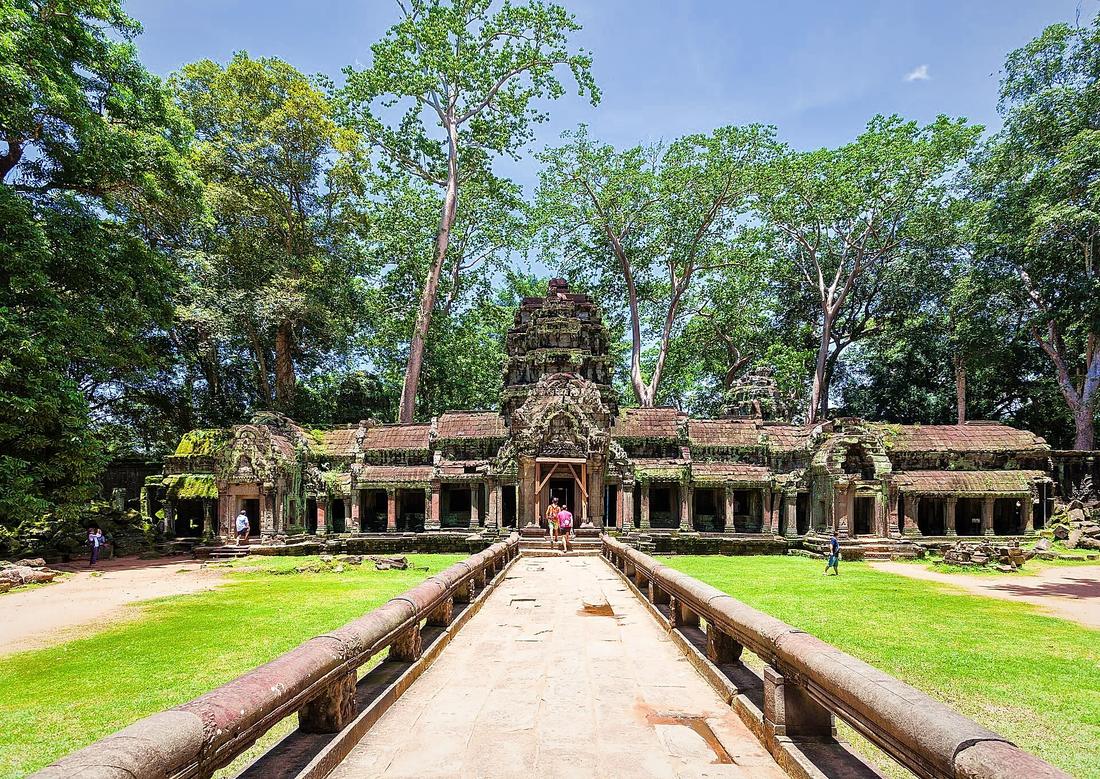
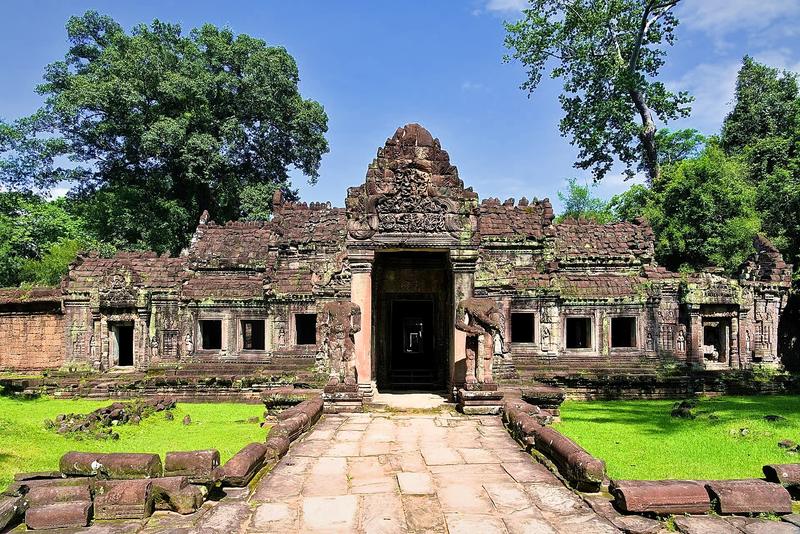
1/4A doorway wrapped in roots
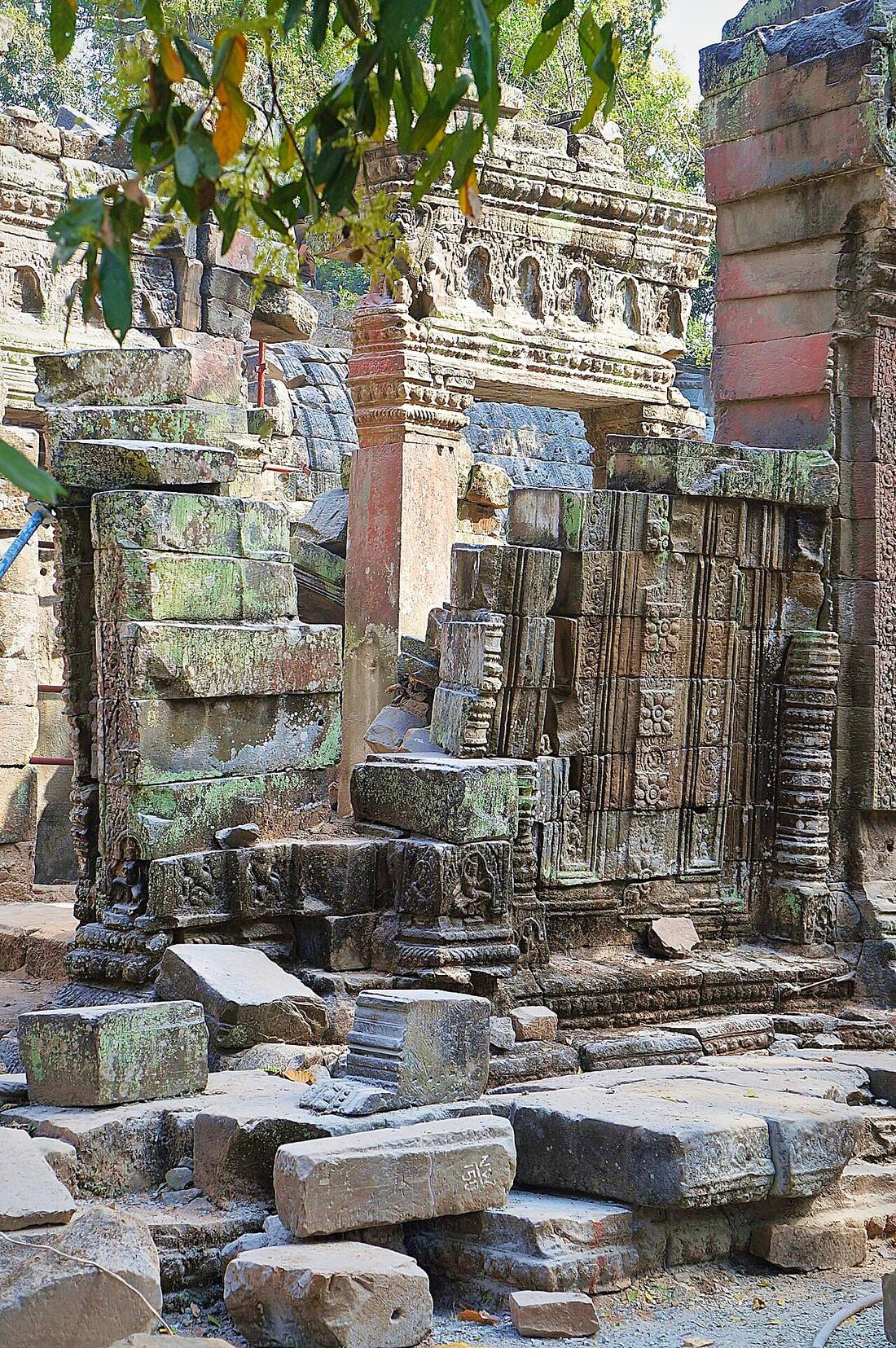
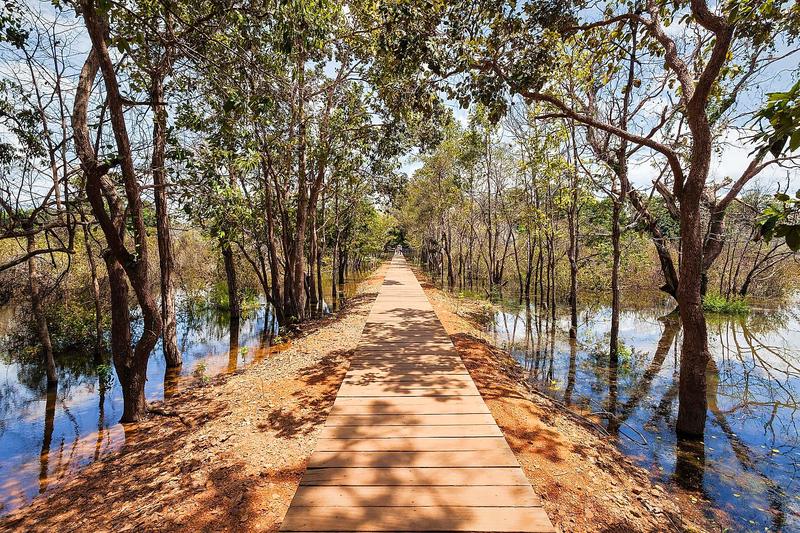
2/4A gallery under a tree, seen from the boardwalk
3/4Fallen blocks in a courtyard
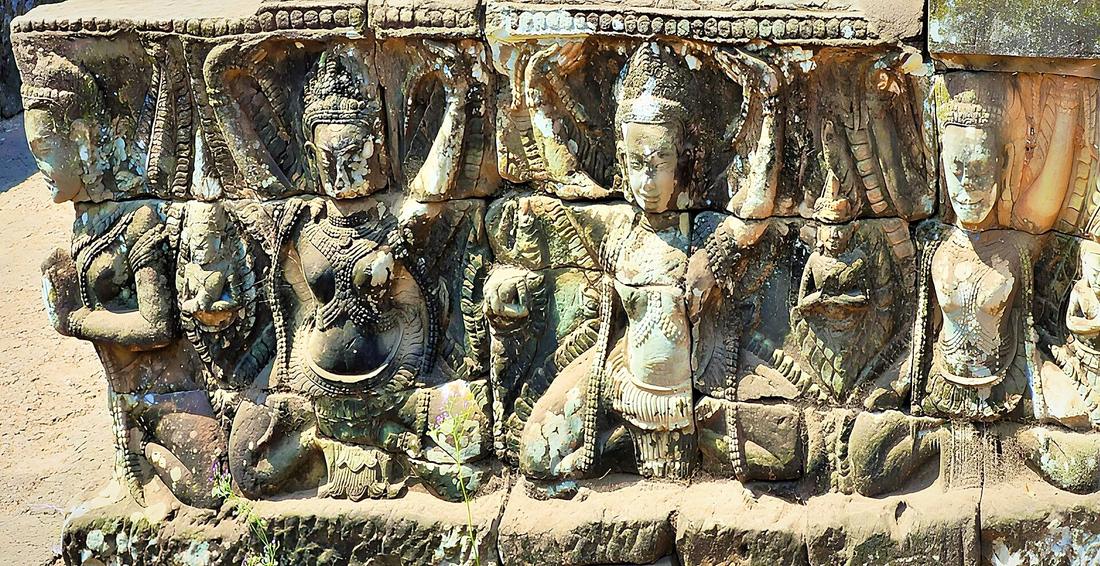
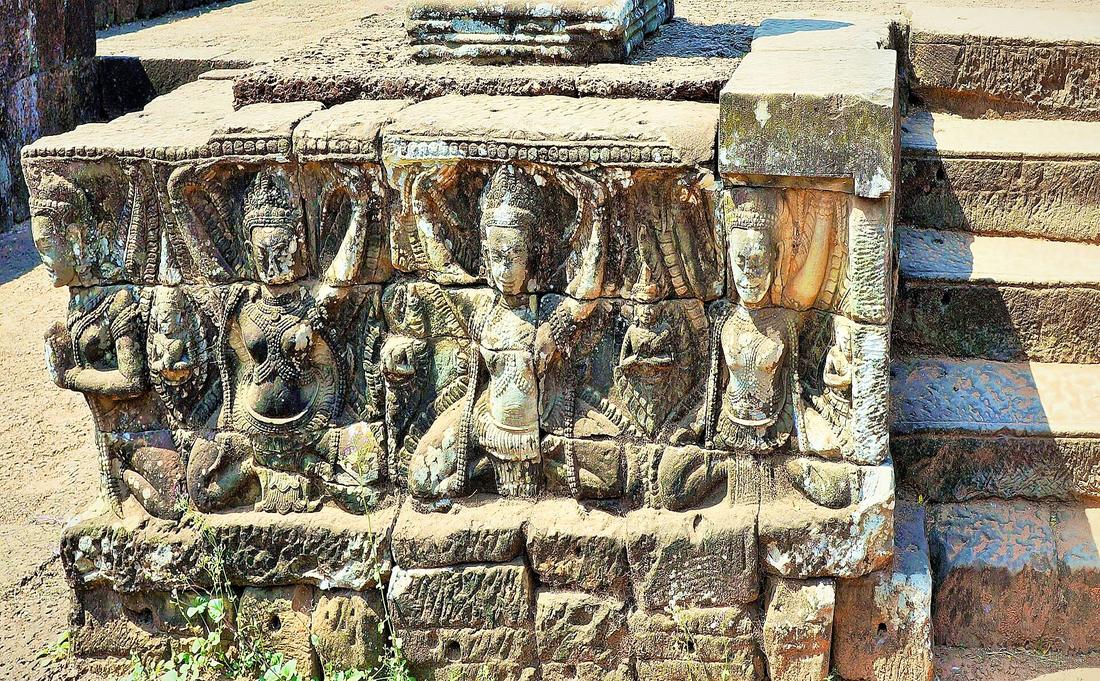
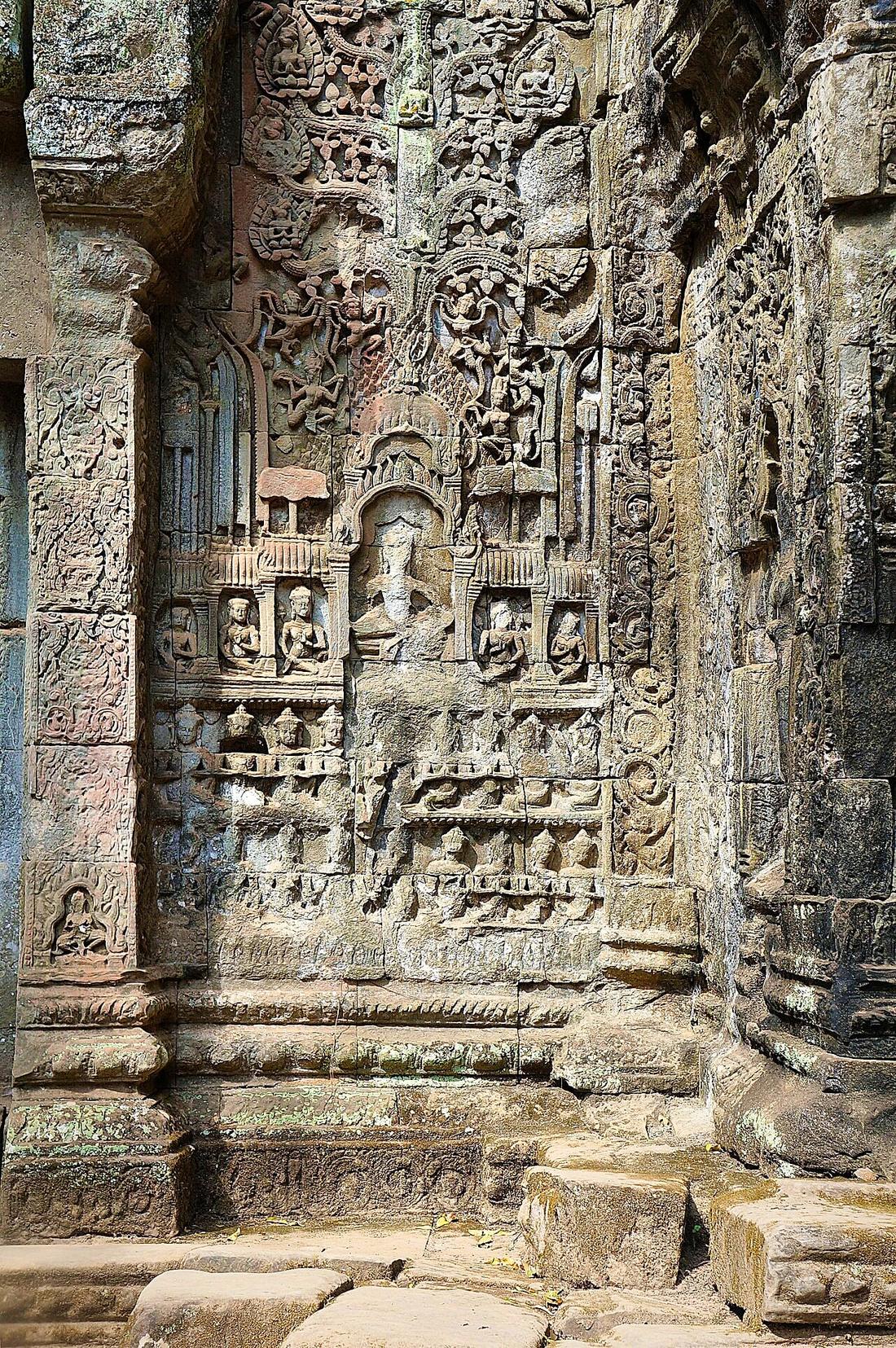
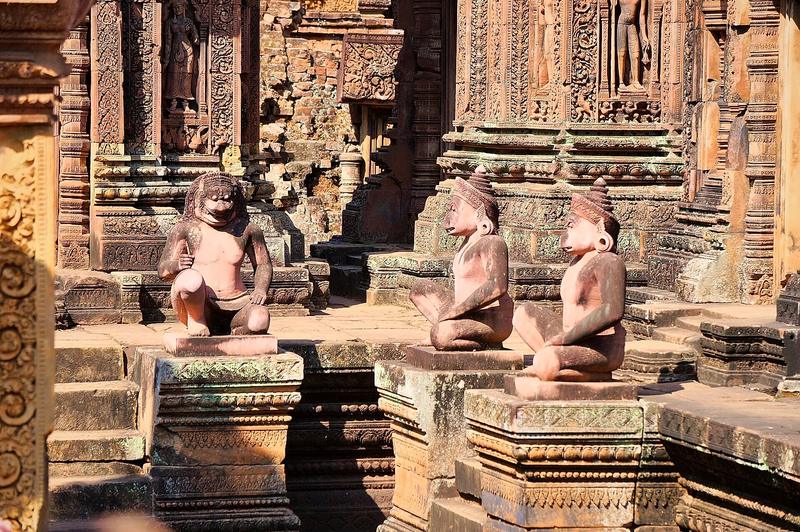
4/4Worn figures in relief
Timing
When is Ta Prohm quiet, and what are the opening hours? Checked Nov 2026
Step off the main path. Wikivoyage notes most visitors follow a central route, so the sides can be surprisingly quiet.
Opening hours
Park 5:00 AM to 6:30 PM
Park vs temples
The official ticket page lists park hours of 5:00 AM to 6:30 PM. Wikivoyage says temples open at sunrise. One guide gives 6:00 AM to 6:30 PM for most Small and Grand Circuit temples. None of these gives a Ta Prohm-specific opening time.
Leave the central route
Quieter sides
The crowd moves along one line through the enclosures. Walk the side galleries for calmer corners.
Same circuit
Early start
Small Circuit
One guide suggests waking at 4:30 AM for sunrise at Angkor Wat; Ta Prohm is on the same Small Circuit.
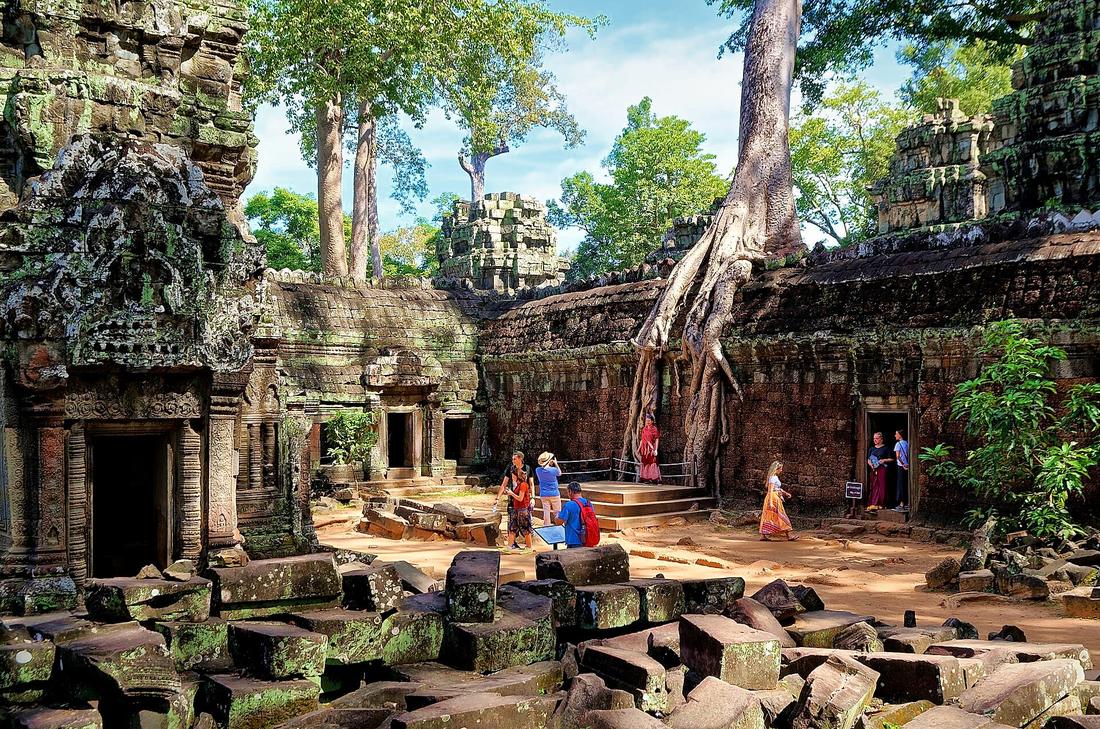
A courtyard with a handful of visitorsThe walkway to a gateway
Crowds and timing in more detail
One traveller reports going from Angkor Wat sunrise straight to Ta Prohm, arriving by 7 AM and having it nearly to themselves.
Hours: the official ticket page gives 5:00 AM to 6:30 PM for the park. Wikivoyage separates the two: park entry from 05:00, temples open at sunrise.
Where is Ta Prohm, and how do I get there?
One guide places it about one kilometre east of Angkor Thom, on the 17 km Small Circuit.
One guide lists the loop as Angkor Wat, Angkor Thom, Thommanon, Chau Say Tevoda, Ta Keo, Ta Prohm, Banteay Kdei, Srah Srang and Prasat Kravan.
One guide says that, like most Khmer temples, Ta Prohm is oriented to the east.
Is Ta Prohm included in the Angkor pass, and what should I wear? Checked Nov 2026
Yes: it is a Small Circuit temple, and the official FAQ says the 3-day and 7-day passes cover both circuits. Cover your legs and shoulders.
Angkor pass
US$371 day
US$623 days
US$727 days
Prices from the official Angkor Enterprise ticket page; one pass opens 50+ temples. One older guide says passes are non-transferable and non-refundable.
Below-the-knee trousers or skirts and shirts that cover the shoulders are the rule APSARA announced in 2016. Wikivoyage says a scarf over bare shoulders is not accepted at the strictly policed areas.
Carved figures on a sandstone block
Dress rule and pass detail
APSARA announced the rule in July 2016, effective from 4 August that year: trousers or skirts below the knee, shirts covering the shoulders. According to news reports, APSARA spokesman Long Kosal said then that visitors in revealing clothes would not be allowed to buy a temple pass.
The official FAQ says the 3-day and 7-day passes cover both the Small Circuit and the Grand Circuit tours.
Do I need a guide for Ta Prohm? Checked Nov 2026
The temple's story is the part that needs interpretation.
Central route
Story
Wikivoyage notes most visitors follow a central route and the sides can be surprisingly quiet. What the stones do not show is the temple's life: a royal monastery and centre of learning, with an inscription recording more than 12,500 people living there. The history below fills that gap.
Who built Ta Prohm, and why was it never fully restored?
King Jayavarman VII founded it in 1186 as Rajavihara, the Royal Monastery: a Mahayana Buddhist monastery and centre of learning dedicated to his mother.
A new king 1181
Jayavarman VII takes the throne after leading Khmer forces against the Chams; he reigns until 1218.
Rajavihara founded 1186
The foundation stele gives the date; the king dedicates the temple to his mother.
A city of monks inscription
An inscription records more than 12,500 people living at the temple, including 18 high priests and 615 dancers.
Conservation d'Angkor 1908
The EFEO sets it up for early clearance; at Ta Prohm it decides to leave the ruin largely as found.
World Heritage 1992
UNESCO lists the wider Angkor area; from 1993 work is coordinated through the ICC.
On film 2001
Lara Croft: Tomb Raider uses Ta Prohm as a location.
Restoration and the temple's people in more detail
Who restored what: the EFEO decided Ta Prohm would be left largely as it had been found. Conservation today is a partnership project of the Archaeological Survey of India with APSARA, and one guide says the Archaeological Survey of India restored most parts of the temple. UNESCO lists the EFEO, the Archaeological Survey of India, the Polish PKZ and the World Monuments Fund among earlier restorers at Angkor (1907 to 1992).
Beyond the 12,500 people living at the temple, one guide adds a further 80,000 inhabitants in the surrounding villages. Jayavarman VII was a Mahayana Buddhist whose stated aim was to alleviate his people's suffering.
What is near Ta Prohm? Checked Nov 2026
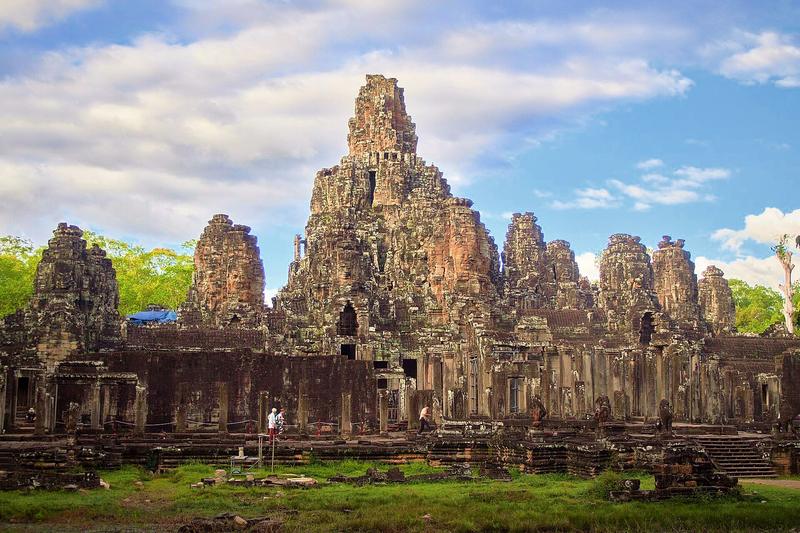
Angkor Thom lies about 1 km west of Ta Prohm, per one guide, and Just Siem Reap lists the Bayon 5.0 km away. Preah Khan is some 3 km north of Angkor Thom, per Wikivoyage. Banteay Srei, Beng Mealea and Phnom Kulen are much farther out.
Ta Prohm FAQ: Tomb Raider, trees, history and pass
Is Ta Prohm the Tomb Raider temple?
It was a location in the 2001 film Lara Croft: Tomb Raider, which is where the nickname comes from.
Why is Ta Prohm covered in trees?
The EFEO chose to leave it largely as found rather than clear it. The larger trees are silk-cotton (thitpok) or similar giants; the smaller ones are strangler figs or gold apple trees.
When was Ta Prohm built, and by whom?
Jayavarman VII founded it; the foundation stele gives 1186 AD. It was originally called Rajavihara and was dedicated to the king's mother.
Is Ta Prohm included in the Angkor pass?
Yes. It is on the Small Circuit, and the official FAQ says the 3-day and 7-day passes cover both circuits. Passes cost US$37 for 1 day, US$62 for 3 days and US$72 for 7 days on the official ticket page (checked November 2026).
What time does Ta Prohm open?
The official ticket page lists park hours of 5:00 AM to 6:30 PM; Wikivoyage says temples open at sunrise; one guide gives 6:00 AM to 6:30 PM for most circuit temples. None gives a Ta Prohm-specific time.
How big is Ta Prohm?
One guide says five walls surround the central sanctuary, and that the outer wall measures 1000 by 650 m and encloses 650,000 square metres.
How many people lived at Ta Prohm?
An inscription records more than 12,500 people living at the temple, including 18 high priests and 615 dancers. One guide adds a further 80,000 inhabitants in surrounding villages.
Has Ta Prohm been restored?
Partly. The EFEO left it largely as found; conservation is now a partnership of the Archaeological Survey of India and APSARA, and one guide says the Indian team restored most parts.
Sources (18), checked November 2026
angkorenterprise.gov.khofficialThe 1-day Angkor Temples Park pass costs US$37 on the official Angkor ; The 3-day pass costs US$62 on the official ticket page
angkorenterprise.gov.khofficialOfficial FAQ: 3-day and 7-day passes cover both the Small Circuit and
whc.unesco.orgofficialUNESCO lists earlier restorers at Angkor (1907-1992): EFEO, Archaeolog
nationthailand.comnewsAPSARA announced in July 2016 that trousers or skirts must extend belo; APSARA spokesman Long Kosal said in 2016 that visitors in revealing cl
en.wikipedia.orgguideAngkor work coordinated since 1993 by India, Germany, Japan and UNESCO
en.wikipedia.orgguideUNESCO designated the wider Angkor area a World Heritage Site in 1992; Conservation d'Angkor was established by the EFEO in 1908 and led earl
en.wikipedia.orgguideThe Bayon city-temple area of 9 square kilometres is much larger than
en.wikipedia.orgguideBeng Mealea is 40 km east of the main Angkor temple group
en.wikipedia.orgguideJayavarman VII was a Mahayana Buddhist whose stated aim was to allevia; Jayavarman VII became king in 1181 after leading Khmer forces against
en.wikipedia.orgguideKings of Cambodia list: Jayavarman II reigned 802-850 and Suryavarman
en.wikipedia.orgguideTa Prohm dates from 1186 under Jayavarman VII and was originally calle; Ta Prohm lies about one kilometre east of Angkor Thom
en.wikivoyage.orgguideWikivoyage places Banteay Srei 37 km north of Angkor Wat; Wikivoyage: park entry from 05:00, temples open at sunrise
justsiemreap.comguideTickets sold at the Angkor Ticket Centre on the corner of Road 60 and
justsiemreap.comguideJust Siem Reap lists Bayon 5.0 km from Ta Prohm
siemreap.netguideMost Small and Grand Circuit temples are open 6:00 AM to 6:30 PM
siemreap.netguideThe Small Circuit is 17 km: Angkor Wat, Angkor Thom, Thommanon, Chau S; A guide suggests waking at 4.30am to catch sunrise at Angkor Wat, and