The reign
1181-1218
He became king after leading Khmer forces against the Chams. His conquest of Champa then made it a dependency of the Khmer Empire for 30 years.
Home › Cambodian history › Jayavarman VII
Cambodian history, 1181-1218
Jayavarman VII reigned 1181-1218. His building programme included the Bayon, Angkor Thom, rest houses and hospitals, and a 2026 study describes his network of 102 hospitals as possibly the world's earliest state healthcare network.
By Laura Brennan · updated
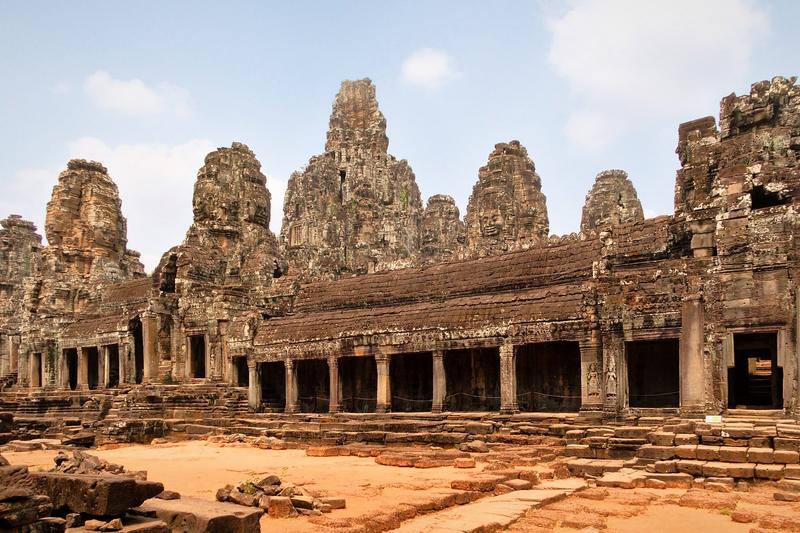
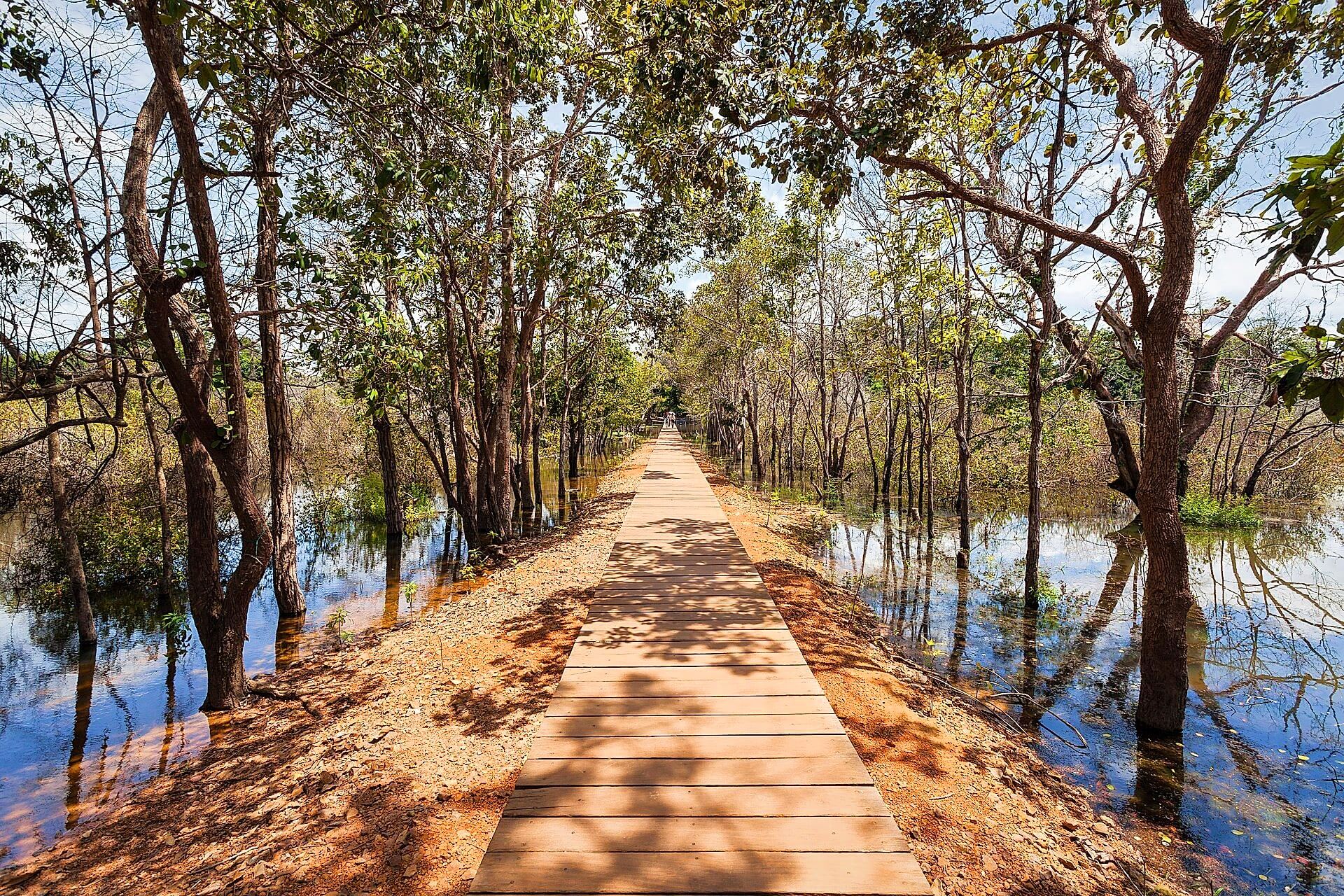
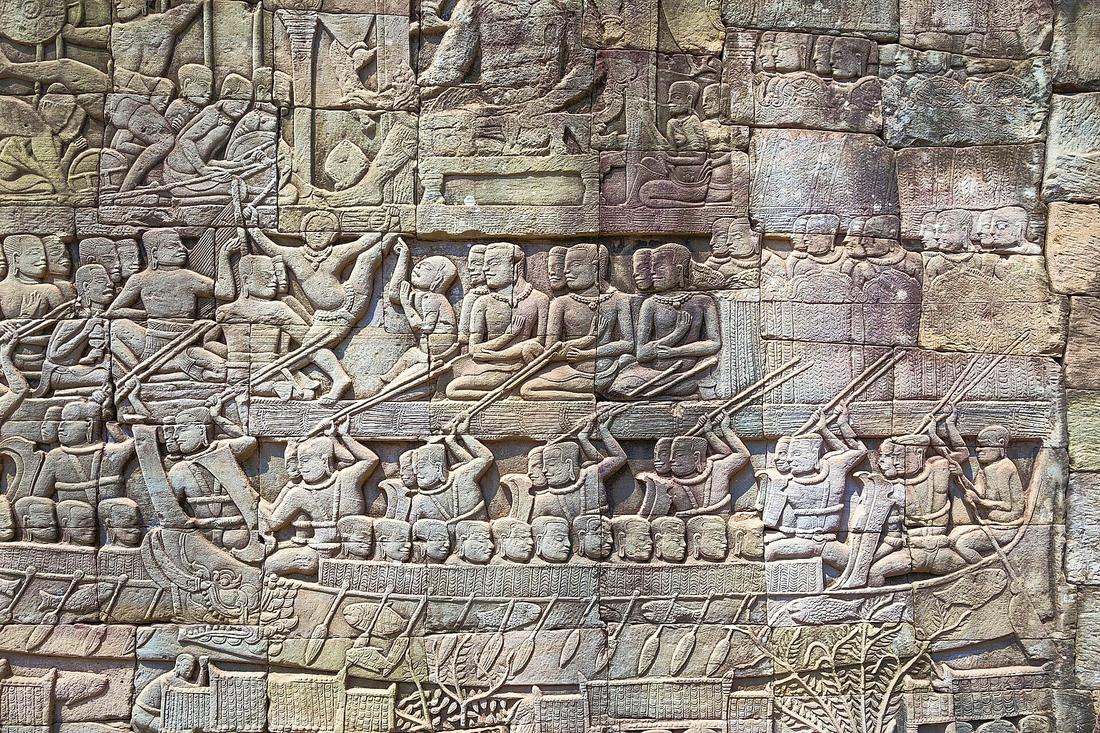
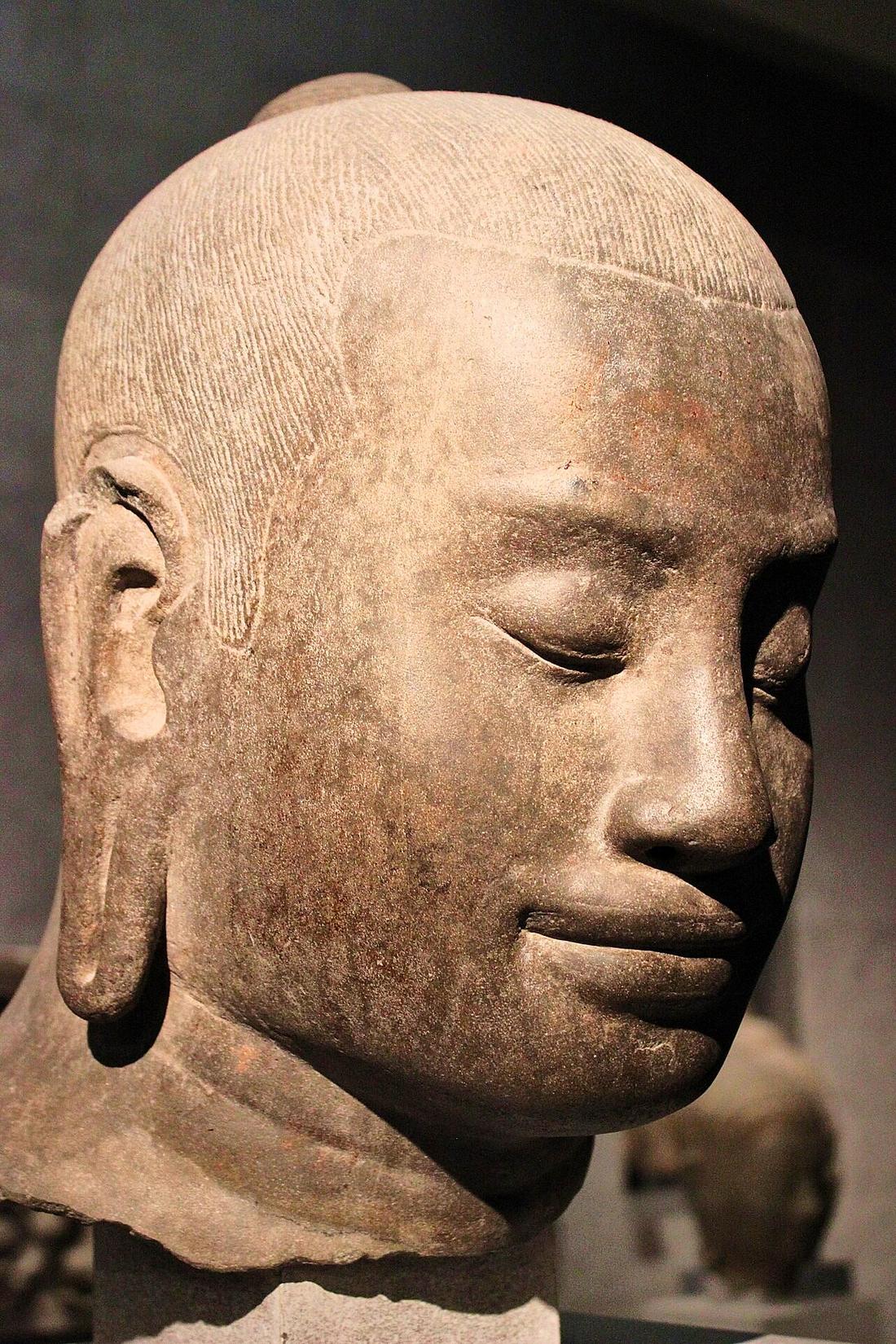
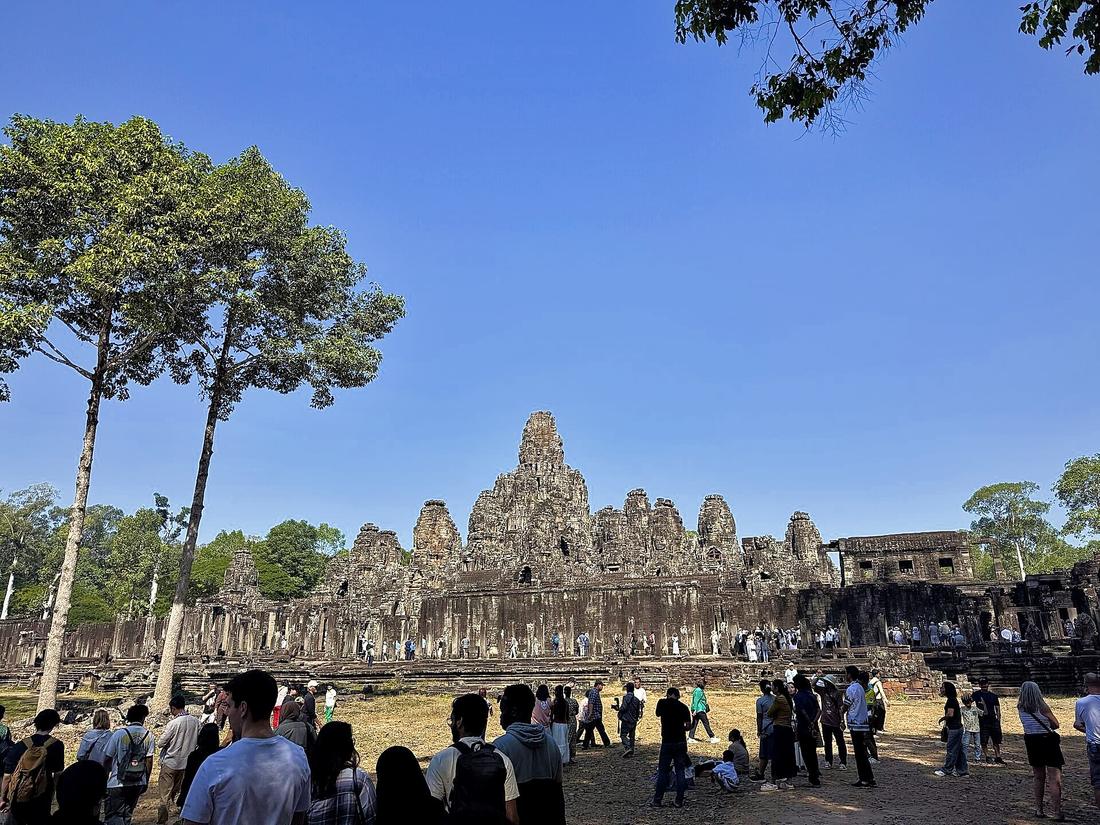
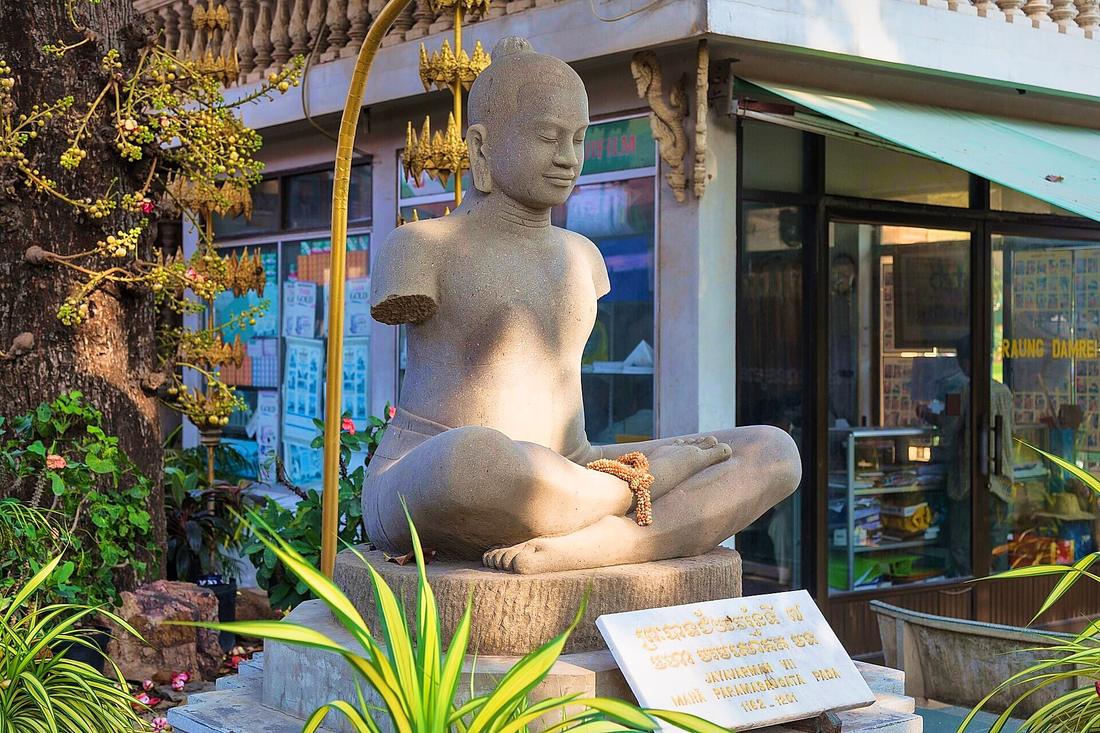
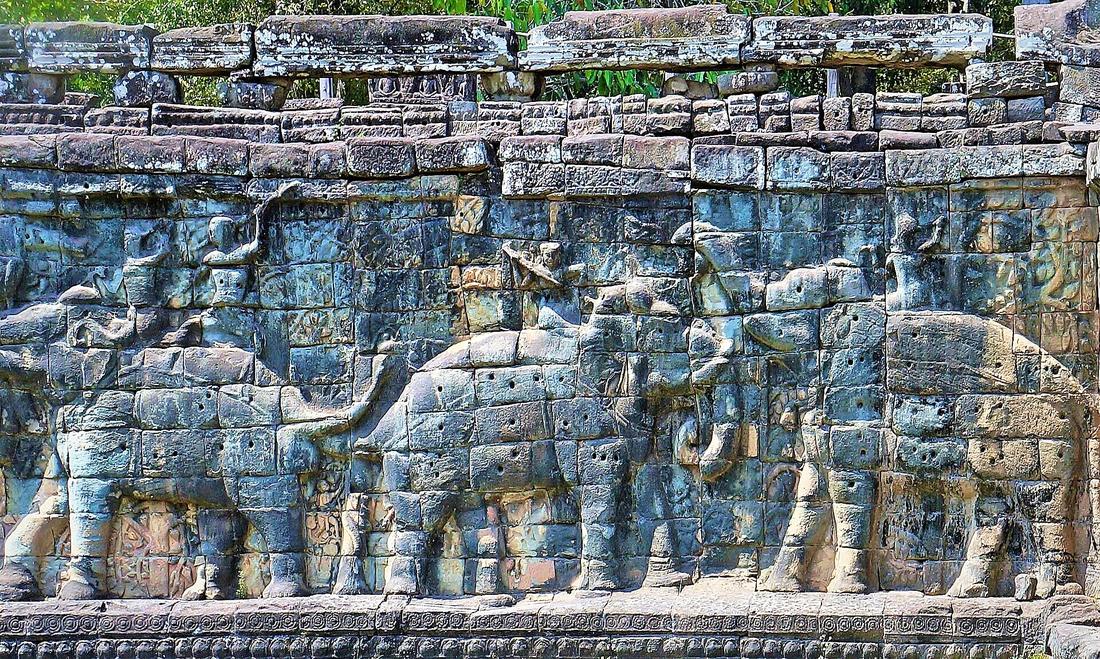
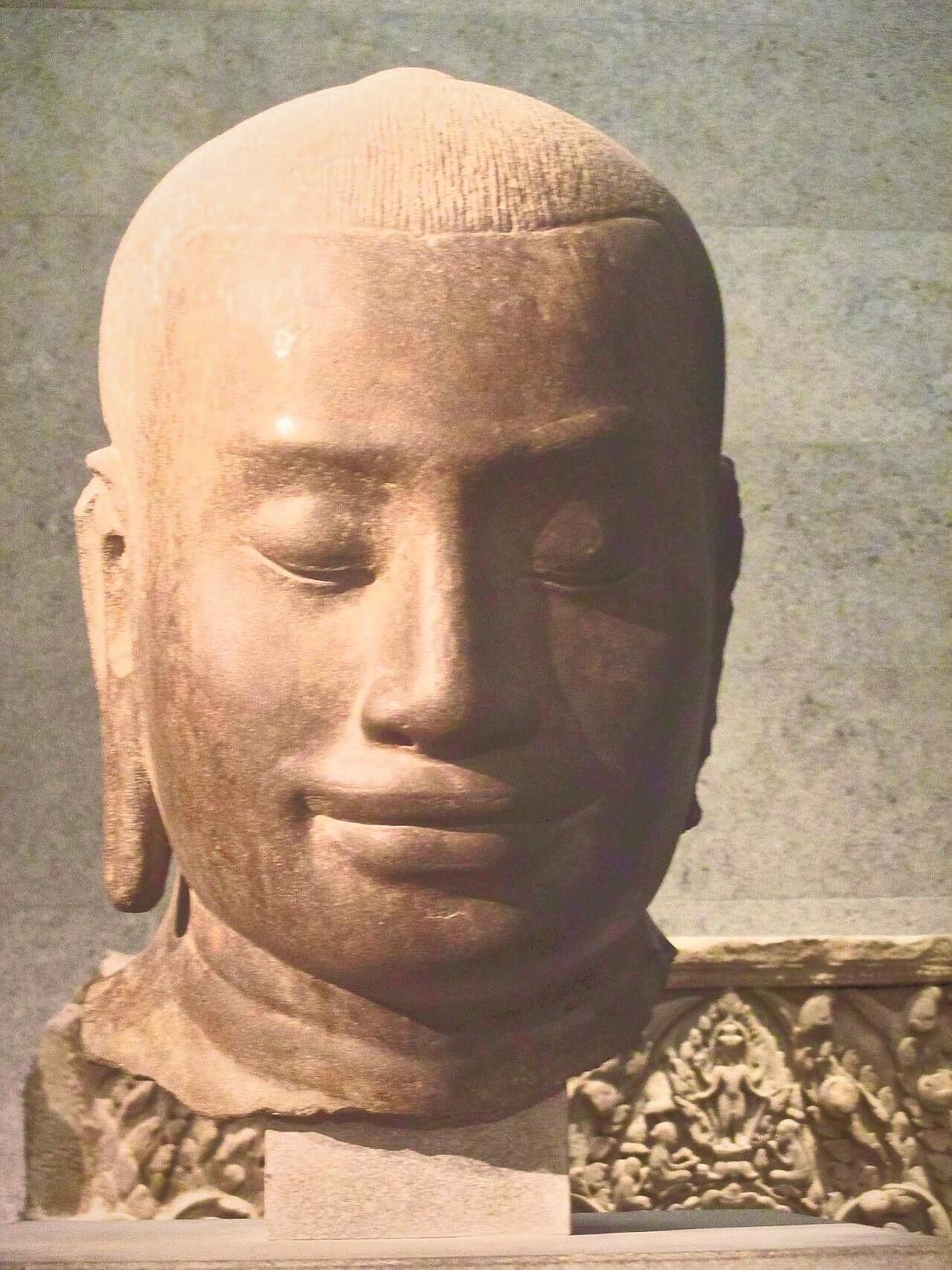
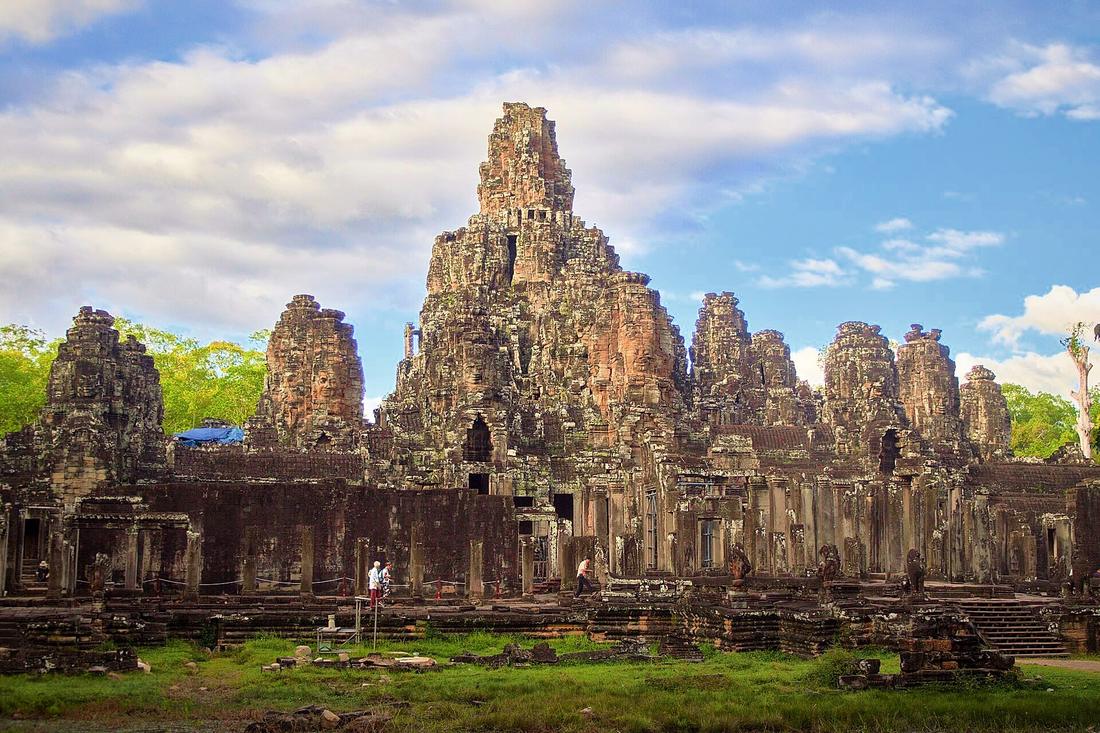
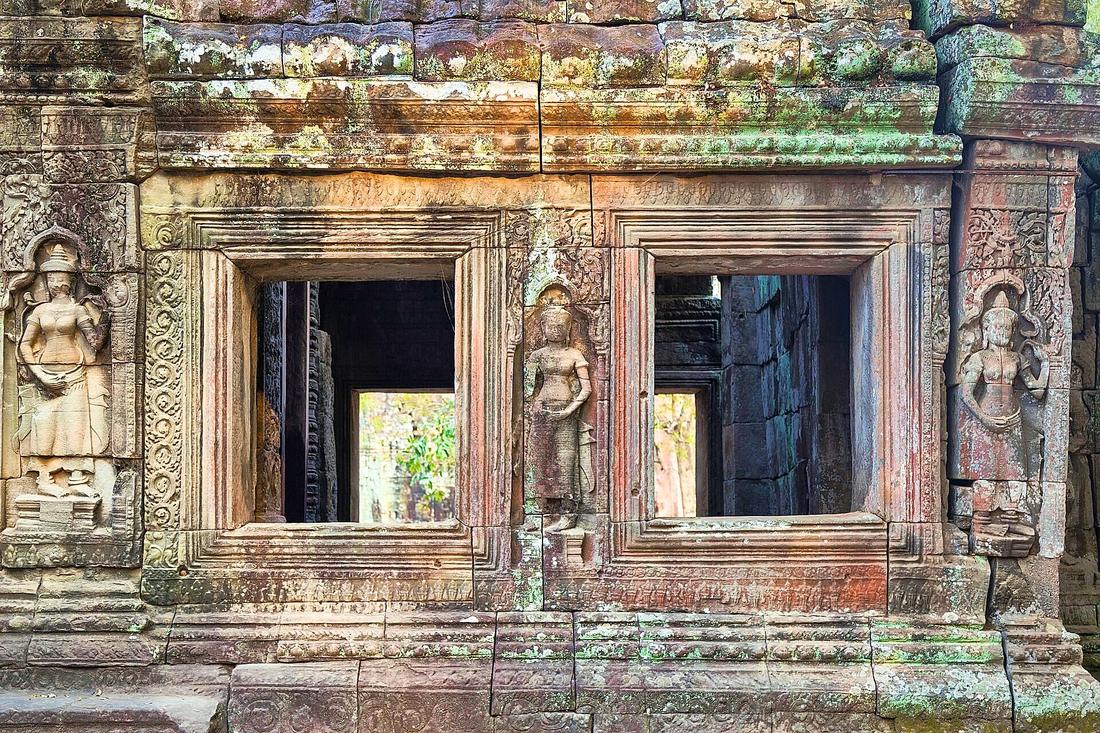
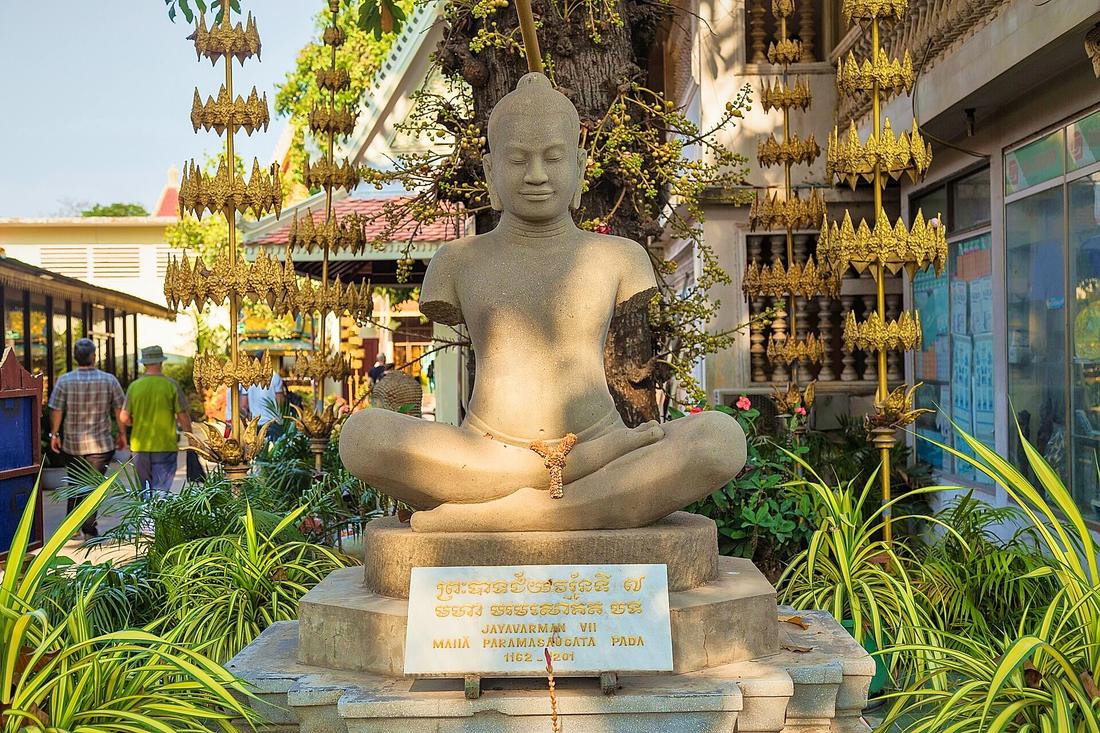
Bayon reliefs and towers at Angkor Thom, portrait statues of the king and a relief at Angkor Thom. Swipe or use the arrows.
 1/7
 2/7
 3/7
 4/7
 5/7
 6/7
 7/7
He reigned 1181-1218, after a Cham attack on the capital in 1177.
Champa King Jaya Indravarman IV launches the Battle of Tonle Sap on the Khmer capital.
After the attack, the Chams occupy Cambodia for four years.
Jayavarman VII becomes king after leading Khmer forces against the Chams.
He dedicates Ta Prohm to his mother.
He dies. His successor, Indravarman II, dies by 1243.
Zhou Daguan sets sail from Mingzhou for the Khmer court.
He is at Angkor, then leaves after eleven months.
A king shaped by war, family and Buddhism.
1181-1218
He became king after leading Khmer forces against the Chams. His conquest of Champa then made it a dependency of the Khmer Empire for 30 years.
Angkor Thom
He rebuilt the city of Angkor, now known as Angkor Thom. An inscription calls him the groom and the city his bride.
Son of King Dharanindravarman II, who reigned 1150-1160.
After his first wife died, he married her sister Indradevi.
A Mahayana Buddhist who aimed to alleviate his people's suffering.
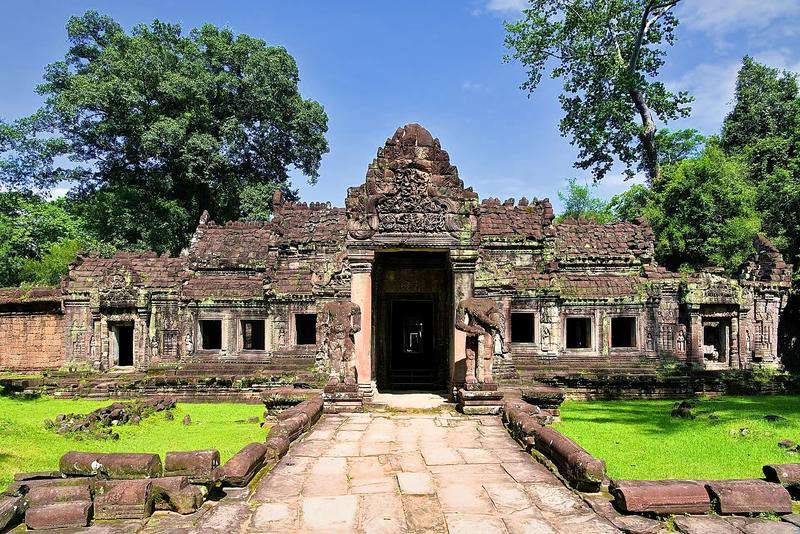
Ta Prohm honours his mother and Preah Khan his father.
A 2026 study counts 102 hospitals, and guides add rest houses on raised highways.
It is the state temple, and its towers carry gigantic smiling faces.
The Bayon stands at the centre of Angkor Thom, the city he rebuilt. Britannica lists both in the programme he left behind, alongside rest houses and hospitals. Walk it as a monument to one king's reign rather than as a single design.
Purpose
Built in the late 12th or early 13th century as Jayavarman VII's state temple, at the centre of Angkor Thom. Its iconography mixes Buddhist and Hindu themes.
Faces
There is no definitive count. Scholars theorise the faces represent Avalokitesvara.
Build
One guide says Bayon-style temples (1181-1243) show hurried construction that contrasts with Angkor Wat's perfection.
He was a Mahayana Buddhist, but his monuments and his successors tell a mixed story.
The short answer is Buddhism for the king, a blend in the stone and, according to one guide, a swing back to Hinduism after his death. The list below follows that order.
His own faith. He was a Mahayana Buddhist, and Tourism Cambodia calls him a fervent Buddhist.
Mixed stone. The Bayon mixes Buddhist and Hindu iconography.
After him. One guide says the empire reverted to Hinduism and the Bayon was altered to match.
A first. One guide says he was the first Khmer king devoted to Buddhism, and only one other had been a Buddhist.
Tolerance. Britannica says religious toleration was a consistent feature of Angkorean civilization, unmatched in medieval Europe.
A Chinese envoy whose account is the longest, most detailed description of the Khmer capital.
The big claims rest on guides and one study, so read them as attributed, not settled.
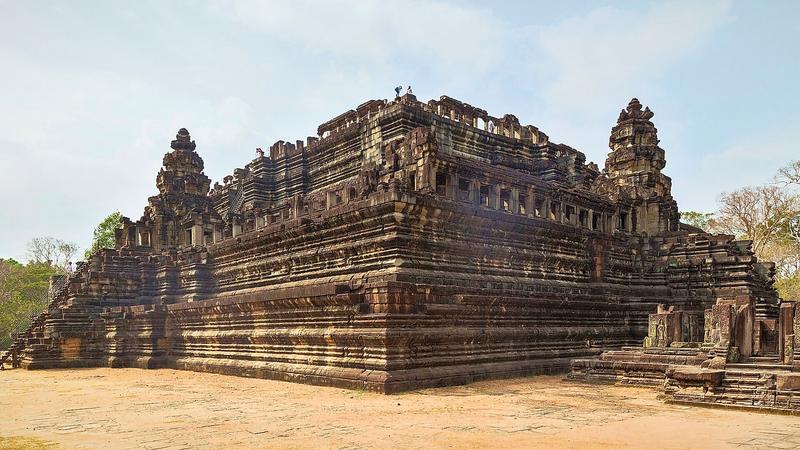
Start with the Bayon inside Angkor Thom, then add the temples he dedicated to his parents.
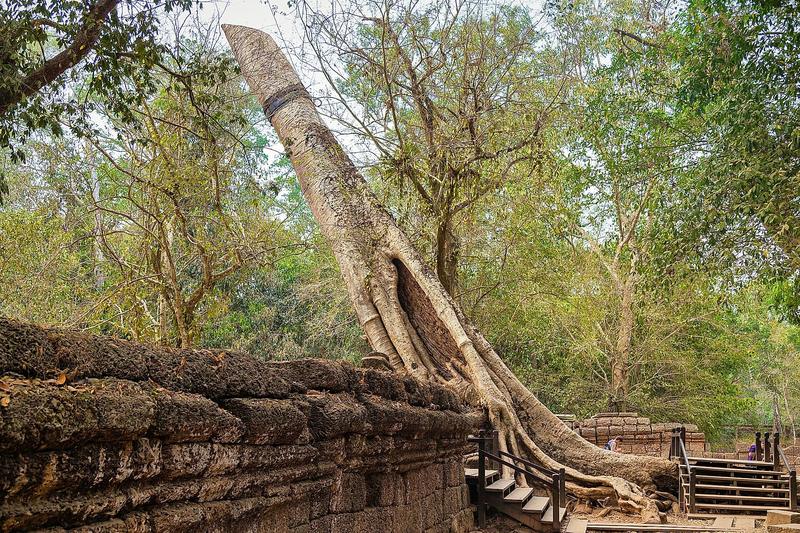
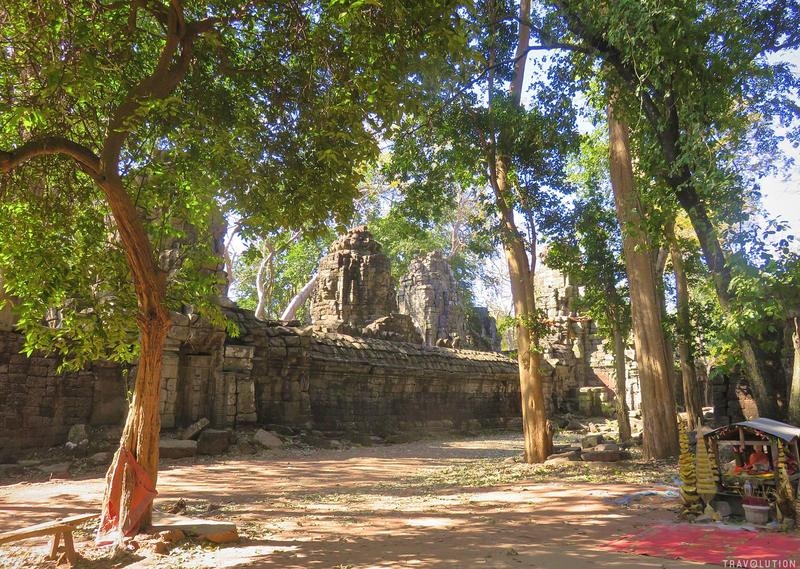
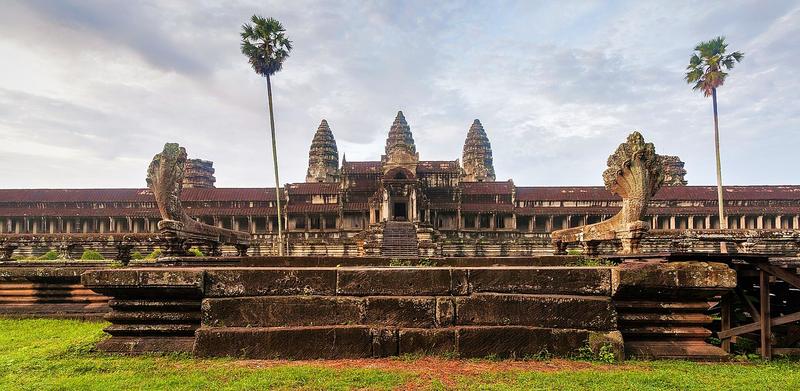
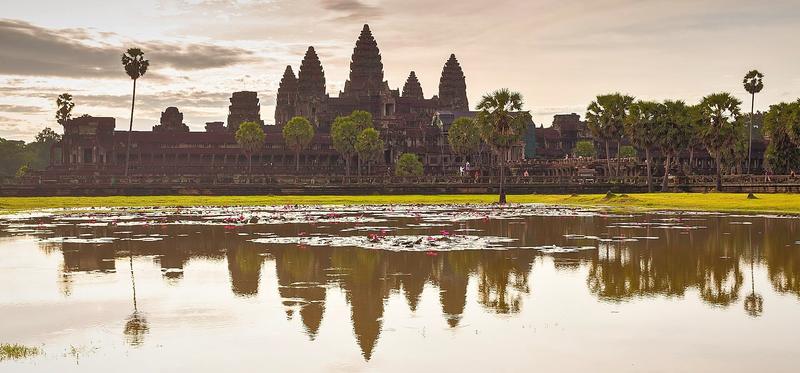
Three sites have medical links. UNESCO says Preah Khan is considered to have been a university of medicine. It also calls Neak Poan, reached by a boardwalk like the one in the top photo, an ancient hospital. A news report says Ta Prohm trained doctors and nurses for the king's hospital network. Each page below says what stands at the site today.
 Khmer civilizationThe wider story of the empire
 History of CambodiaThe Angkor period began in 802
 Khmer peopleWho the Khmer are today
 Angkor Wat historyHow Angkor Wat was built
 Funan kingdomAn early kingdom, 1st to 7th century
 ChenlaLand Chenla under Jayavarman II
Khmer inscriptions →Inscriptions after the 15th century reflect Middle Khmer
A Khmer king who reigned 1181-1218 and died around 1218. He became king in 1181 after leading Khmer forces against the Chams, who had launched the Battle of Tonle Sap on the capital in 1177.
A 2026 study describes his network of 102 hospitals as possibly the world's earliest state healthcare network. Guides also credit him with rest houses for travellers.
Britannica lists the Bayon, Angkor Thom, rest houses and hospitals in his building programme. Other guides call the Bayon his state temple, built in the late 12th or early 13th century.
A Chinese envoy who visited Angkor with a diplomatic mission in 1296 and set sail from Mingzhou on 20 February 1296. He arrived in August 1296 and left in July 1297 after eleven months.
He was a Mahayana Buddhist. The Bayon mixes Buddhist and Hindu iconography, and one guide says the empire reverted to Hinduism after him.