South gate: the classic way in
- 7.2 km from town
- Bayon about 1 km, one guide
The approach from town. Its causeway carries rows of devas and asuras, and the face on the tower is 23 m tall according to one guide.
Angkor Archaeological Park
A walled royal city, not a single temple. Its walls enclose 9 km², and the same US$37 1-day pass gets you in.
By Laura Brennan · updated
Yes, if you have a 1-day pass: Angkor Thom is on the Small Circuit, the same pass covers it, and it holds the Bayon, described as the second most popular temple after Angkor Wat.
What it is
Jayavarman VII's walled capital from the late twelfth century, with the Bayon at its centre and older temples and terraces around it.
How old it isBayon or more
The Bayon is described as the second most popular temple after Angkor Wat. Carry on to the Baphuon, Phimeanakas and the two terraces: they sit inside the same walls.
The walkWhich pass
It is part of the 17 km Small Circuit. A 1-day pass is US$37; the 3-day (US$62) and 7-day passes cover both circuits.
Pass and dress codeThe full loop
Wikivoyage puts a walk along all four walls at around 13 km, about 3.5 hours.
Gates and wallsEarly
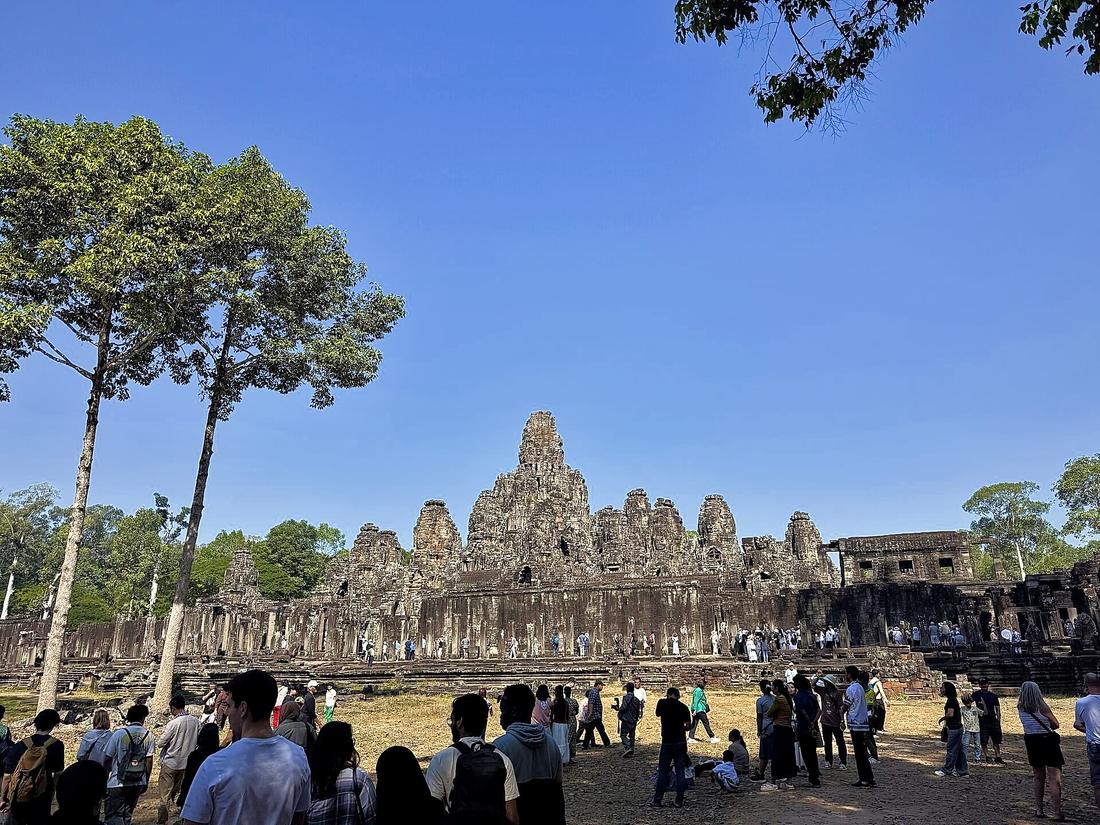
Be at the Bayon around park opening, before the coach groups arrive mid-morning.
Mid-morning
Walk north-west to the Baphuon and Phimeanakas while the Bayon fills up.
Late
Terraces, then out by the Victory Gate; or save the Bayon for the last visit of the afternoon.
Enter by the south gate, ride or walk about 1 km north to the Bayon, then head north-west on foot. The Baphuon stands north-west of the Bayon; Phimeanakas lies in the old Royal Palace enclosure.
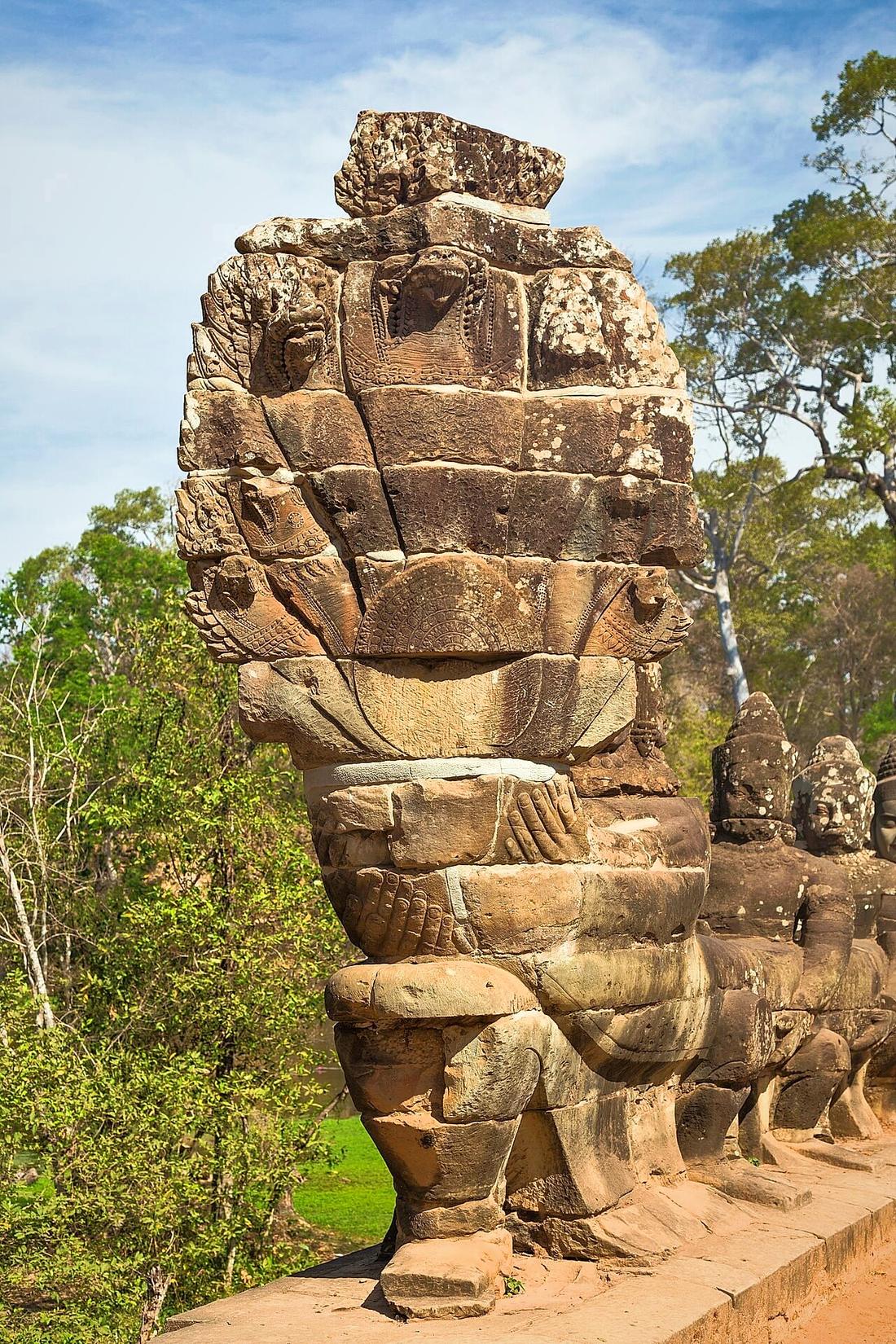
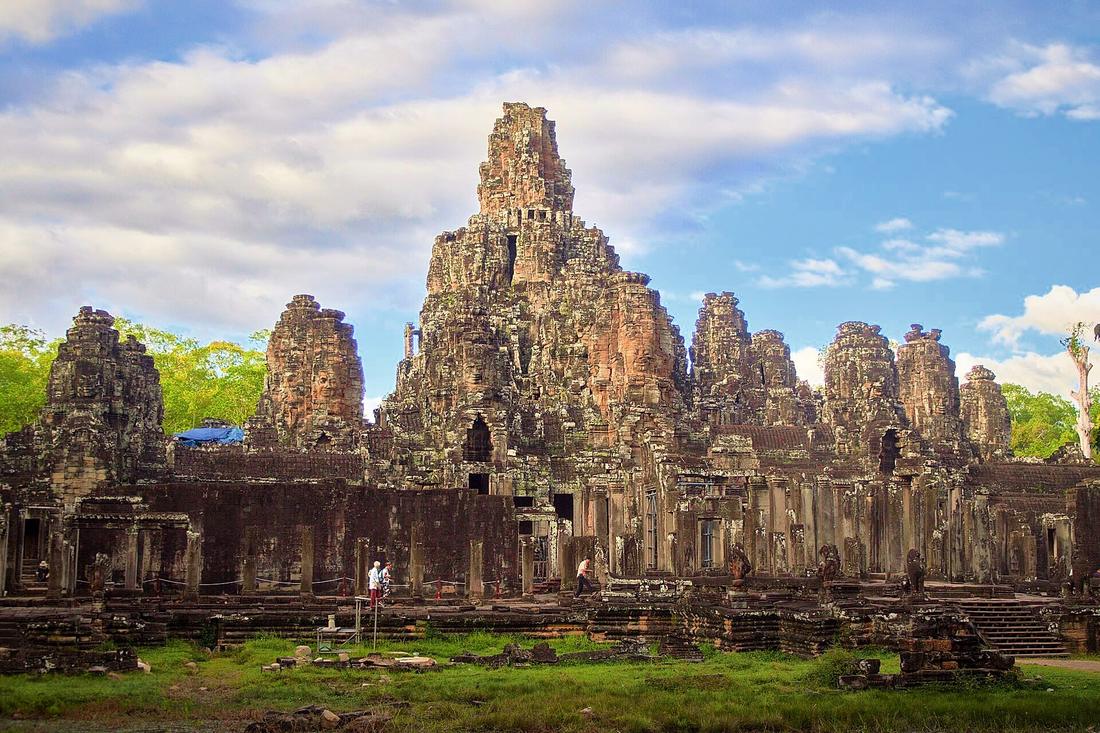
The face of Avalokitesvara tops the tower. On the causeway, devas line the left and asuras the right, one guide notes.
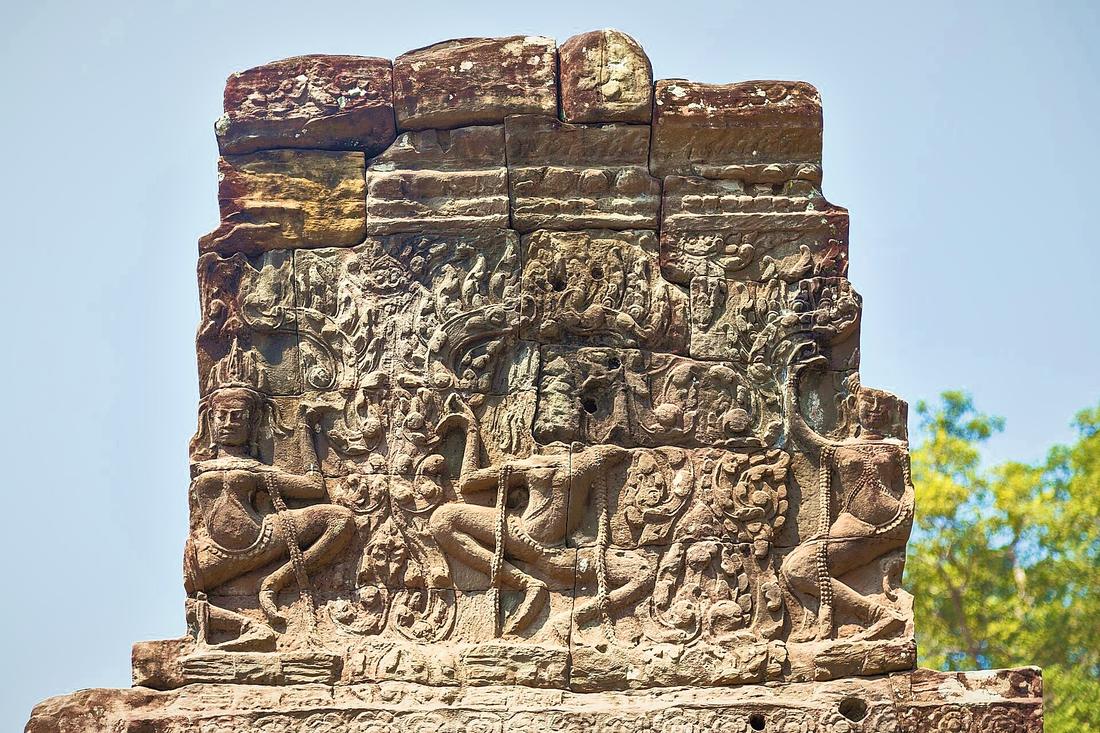
The last state temple built at Angkor, with no wall or moat of its own: the city walls do that job. Of 49 towers, 37 remain.
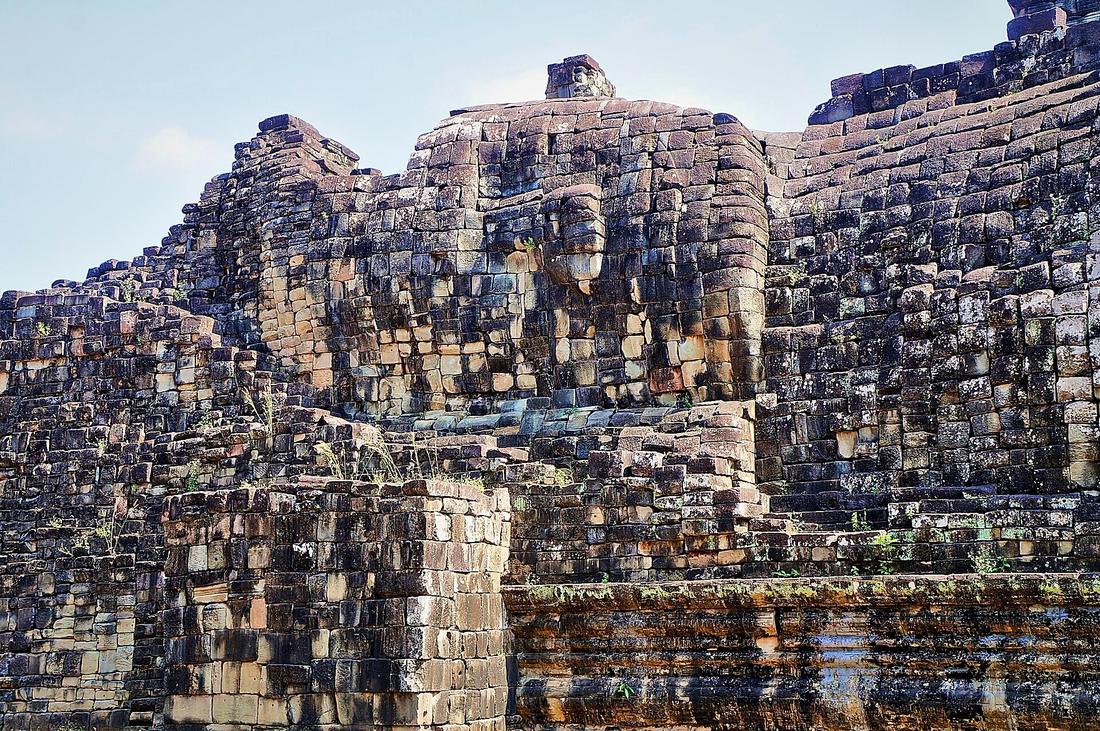
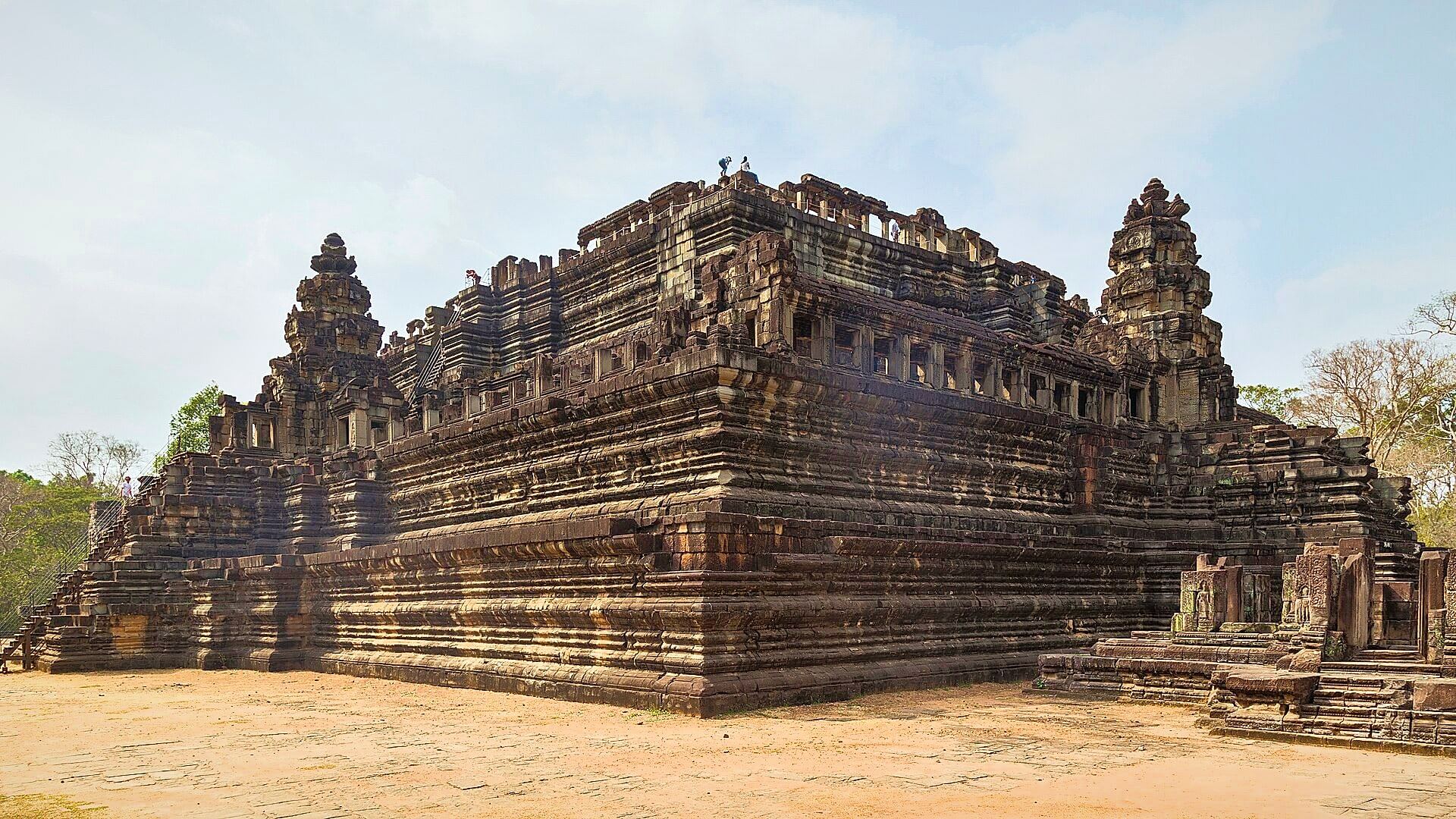
A three-tiered temple mountain of the mid-11th century, 34 m tall without its tower. Look at the west side: a reclining Buddha 9 m tall and 70 m long was built onto its second level.
A Hindu temple shaped as a three-tier pyramid inside the Royal Palace enclosure. Zhou Daguan described a golden pinnacle on its tower.
The south gate is the one facing Siem Reap, 7.2 km north of town, according to one guide. For calm, one guide says the west and north gates are free from tourists; the city has 5 gates in all.
The approach from town. Its causeway carries rows of devas and asuras, and the face on the tower is 23 m tall according to one guide.
The Victory Gate stands 500 m north of the East Gate, which also goes by the name Gate of the Dead.
One guide reports both free from tourists. The West Baray lies just west of the walled city.
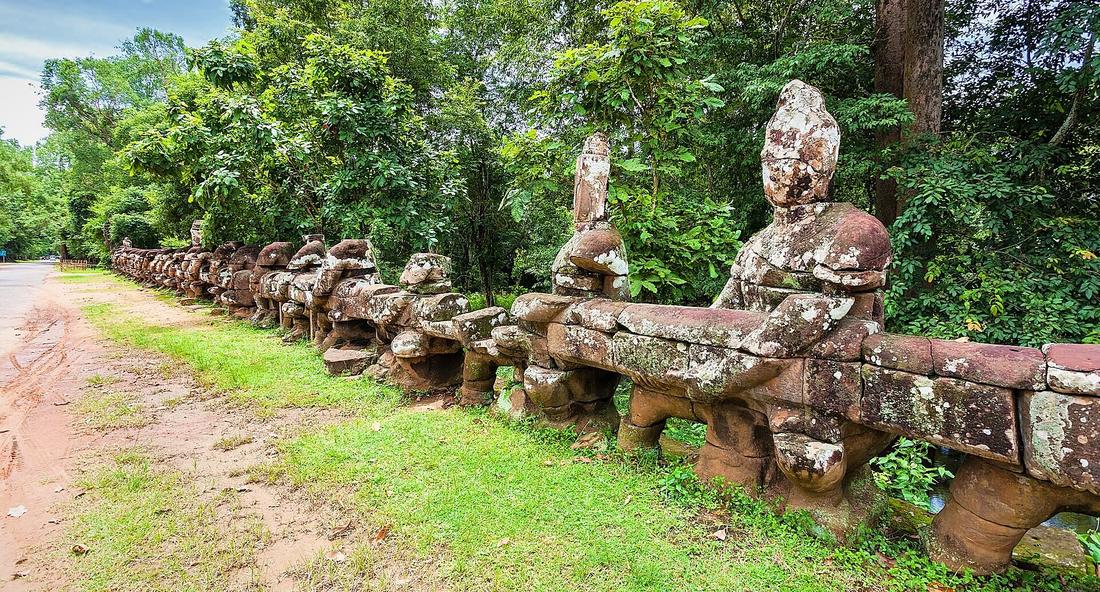
Each wall is 3 km long and 8 m high, with a moat outside. Wikivoyage gives the walk along the walls as around 13 km, about 3.5 hours. There is a gate at each cardinal point, plus the Victory Gate, and each gate is topped by the face of Avalokitesvara.
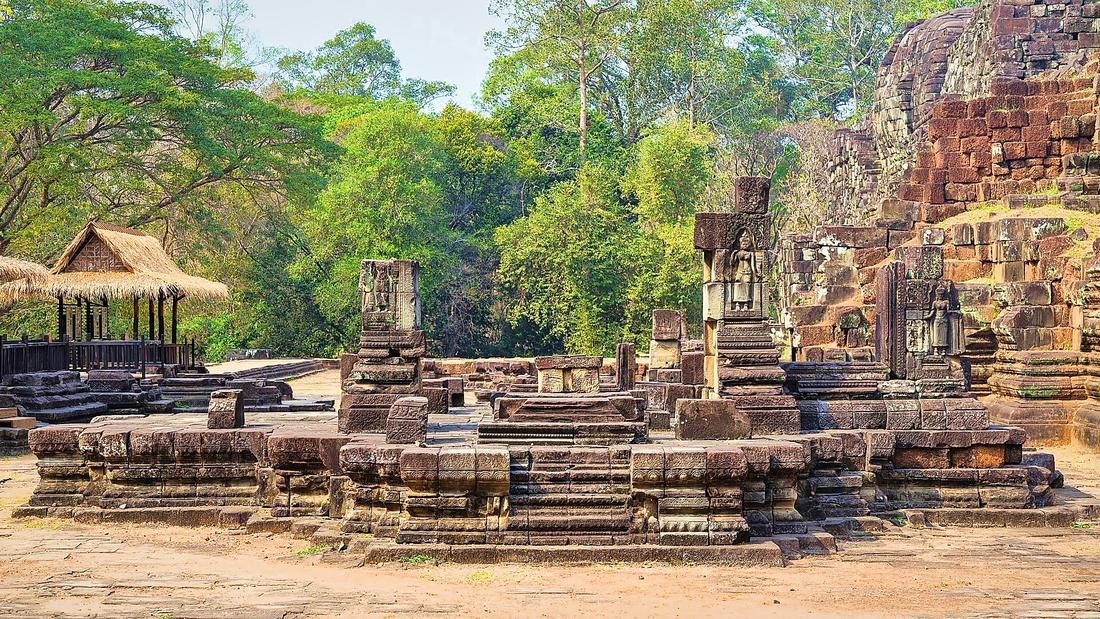
The Terrace of the Elephants runs 350 m; the king watched his returning army from it. Walk its length, then the smaller Leper King terrace, then cross the Royal Square.
Named for the elephant carvings on its eastern face. The middle section of the retaining wall carries life-size garuda and lions.
Built under Jayavarman VII. The statue that named it is a replica now; moss and discolouration on the original looked like leprosy. It may have been a cremation site.
Twelve towers line the square's east side, with the Khleang storehouses behind them. What both were for is unknown; one old story has a high wire strung between the towers for festival acrobats.
The terrace's modern name comes from a sculpture found at the site, not from the terrace itself; one guide dates that sculpture to the 8th century. A 14th-15th century inscription identifies the statue with Dharmaraja, an epithet of Yama, god of death, whom the terrace depicts.
The Khleangs date to around the end of the 10th century and may have been reception halls or lodging for visiting noblemen and ambassadors. Prasat Suor Prat was possibly built under Indravarman II in the late 12th century.
Swipe or use the arrows.
 1/7
 2/7
 3/7
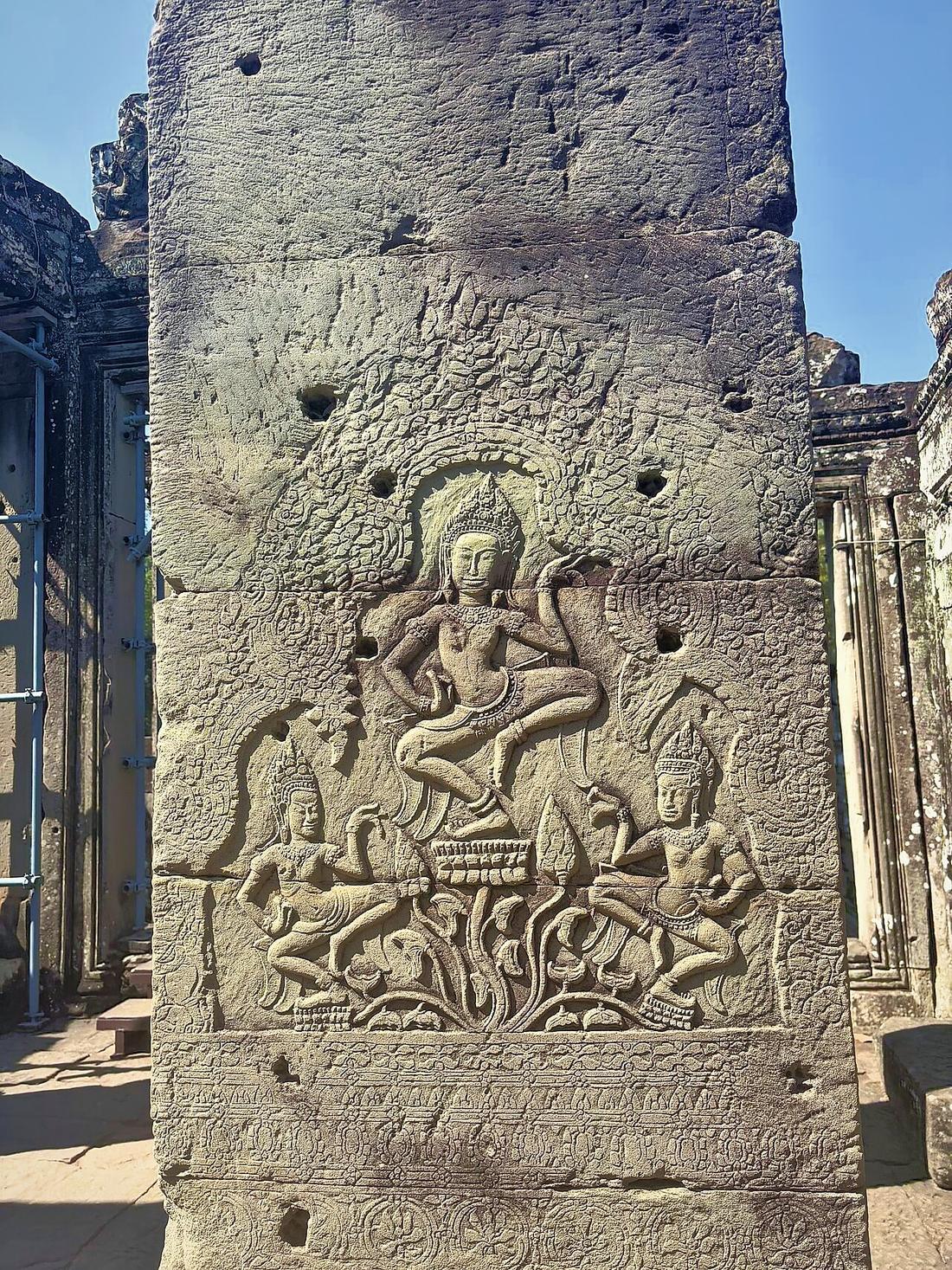 4/7
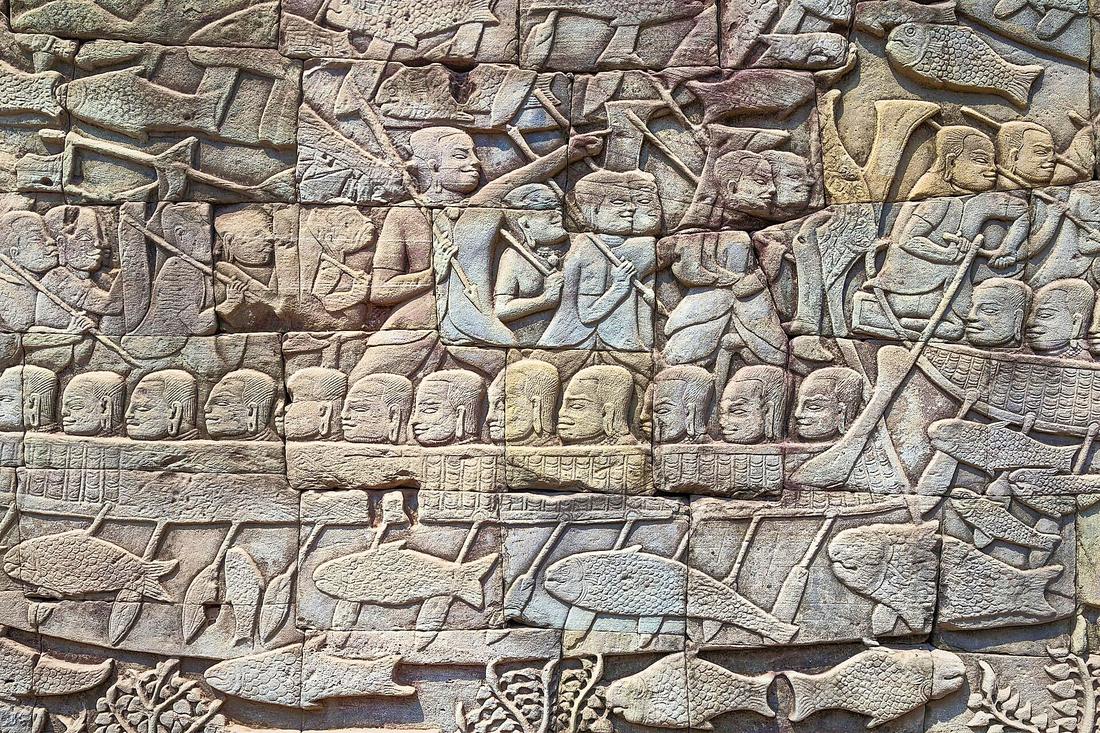 5/7
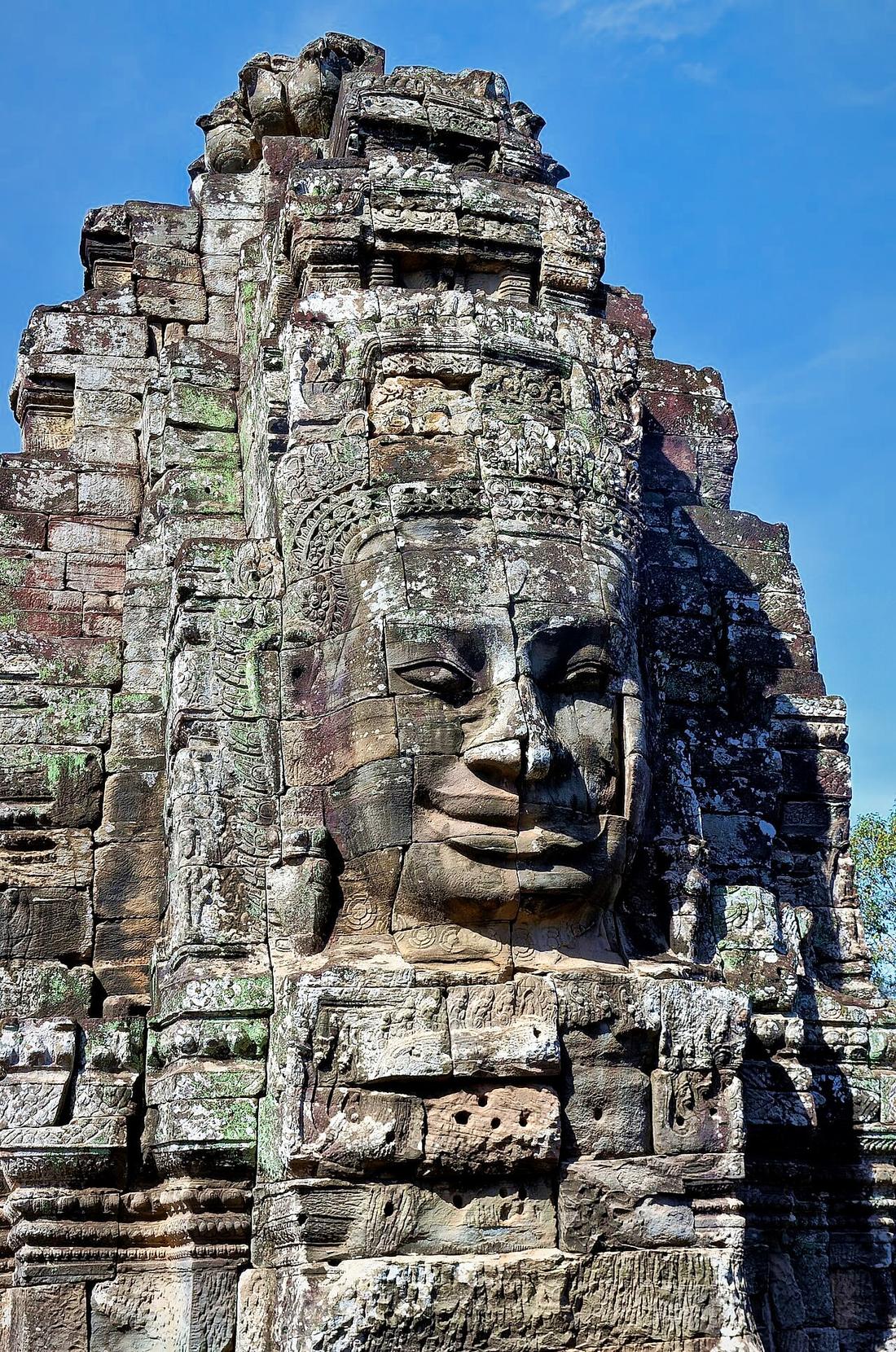 6/7
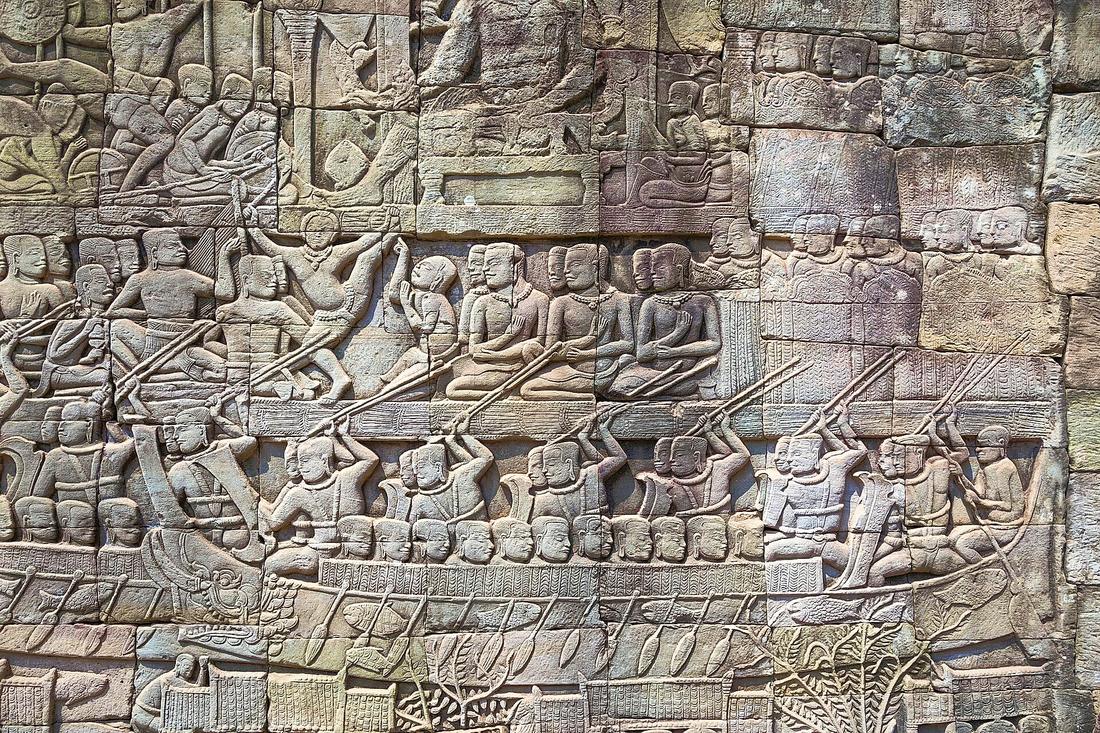 7/7
Timing
Early. The park opens at 5:00 AM and large coach groups reach the Bayon mid-morning, so start there and leave the quieter sights for later.
The official ticket page lists Angkor Temples Park entry from 5:00 AM and closing at 6:30 PM. For the temples themselves, one guide says most Small and Grand Circuit temples open from 6:00 AM to 6:30 PM, while Wikivoyage says the temples open at sunrise. Treat 5:00 AM as gate time, not necessarily temple time.
Yes: one Angkor pass covers it, and the dress rule is covered shoulders and knees.
Prices from the official Angkor Enterprise ticket page; the pass opens 50+ temples. The official FAQ says the 3-day and 7-day passes cover both the Small and Grand Circuits.
Angkor temples and passesLong trousers or skirt, shoulders covered
APSARA's rule, in force since 4 August 2016, asks for trousers or skirts below the knee and shirts that cover the shoulders. Wikivoyage says a scarf over bare shoulders is not accepted at the strictly policed areas.
Angkor Ticket Centre
Passes are sold at the Angkor Ticket Centre; an older guide, not re-checked, places it on the corner of Road 60 and the Apsara Road and says passes are non-transferable and non-refundable. In 2016 APSARA said visitors in revealing clothes would not be sold one.
Jayavarman VII founded it in the late twelfth century. One guide puts its population at 80,000-150,000 people. It was abandoned sometime before 1609.
Begun under Rajendravarman, finished by Suryavarman I: older than the city around it.
A three-tiered temple mountain, now inside the city walls.
He became king after leading Khmer forces against the Chams, then built the walled city and the Bayon.
The Chinese envoy saw the towers and called the faces heads of the Buddha. The year before, in 1295, Mangalartha, the last known temple in the city, was dedicated.
The same guide says Ayutthaya sacked the city and that the Khmers under Ponhea Yat moved their capital. It gives no year for either.
The EFEO set it up for early clearance and restoration.
UNESCO listed the wider Angkor area.
Work stopped in 1970 with about 300,000 labelled blocks across 10 hectares, and the plans were lost in the war years. A second project began in 1996 under EFEO architect Pascal Royere; the temple reopened in April 2011.
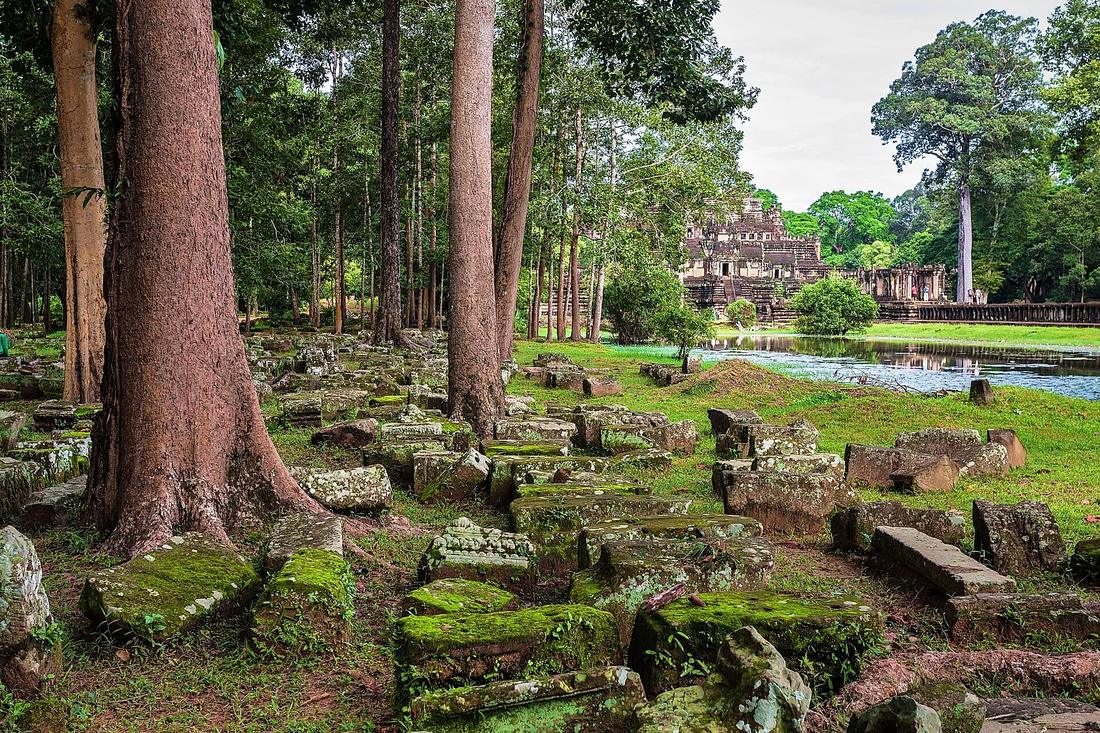
Preah Khan lies some 3 km north of Angkor Thom, per Wikivoyage. Ta Prohm is on the 17 km Small Circuit, as is Angkor Thom.
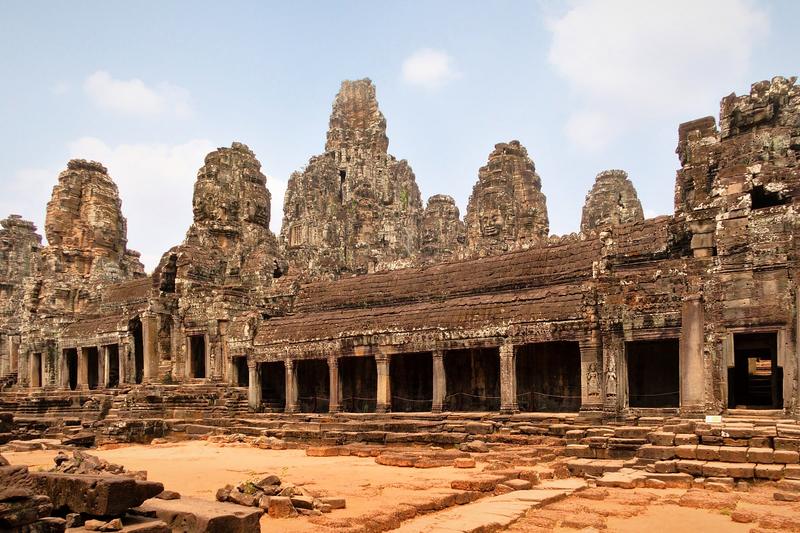 Bayon templeThe face-tower temple at the centre of the city
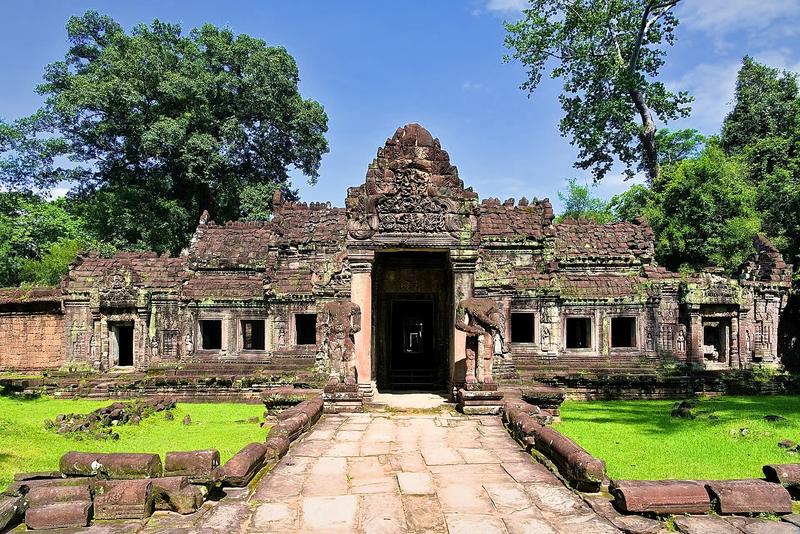 Preah KhanSome 3 km north, per Wikivoyage
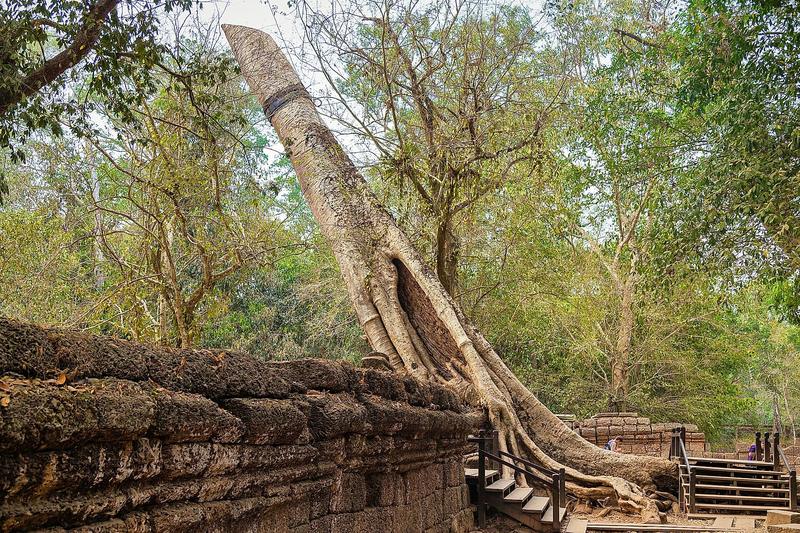 Ta ProhmAnother Small Circuit temple
 Jayavarman VIIThe king who built the walled city
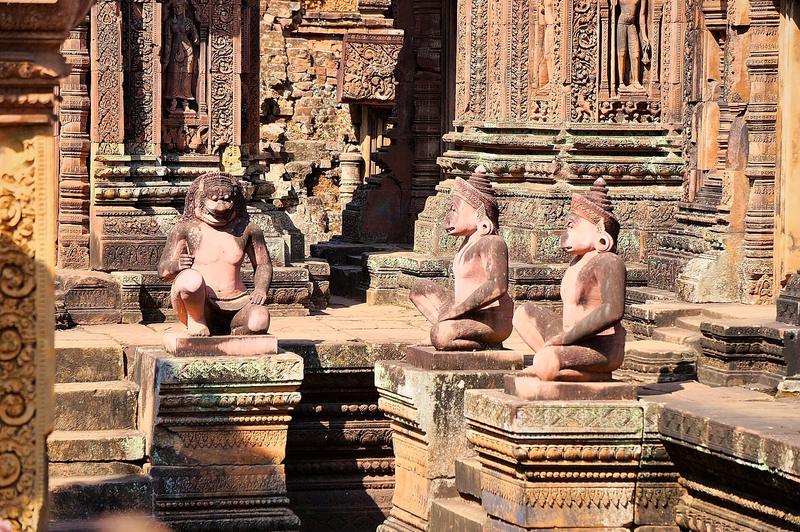 Banteay Srei37 km north of Angkor Wat, per Wikivoyage
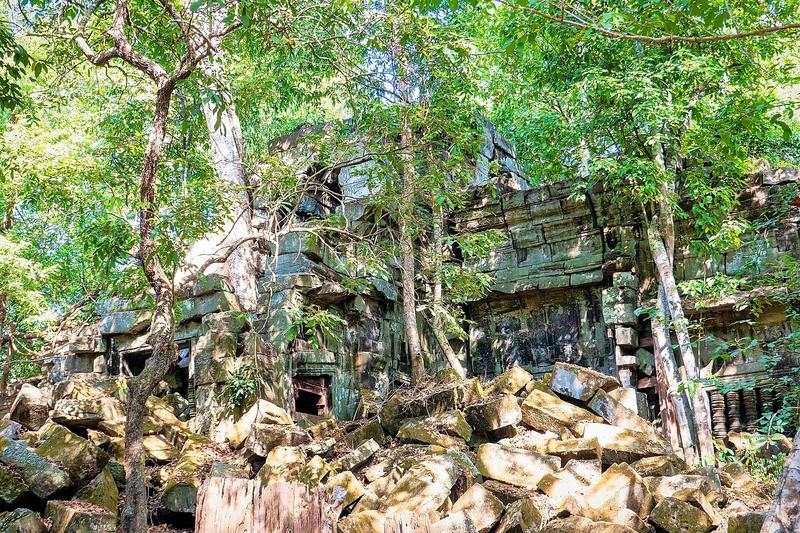 Beng Mealea40 km east of the main temples
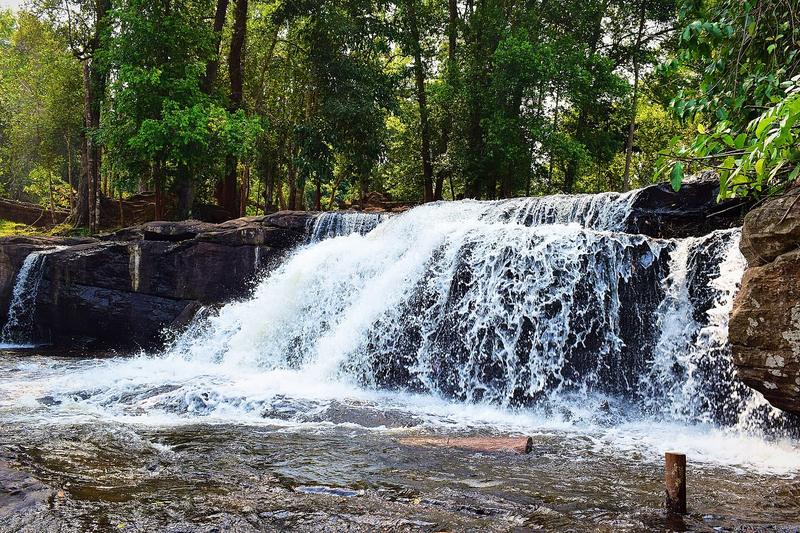 Phnom KulenHills rising to about 500 m
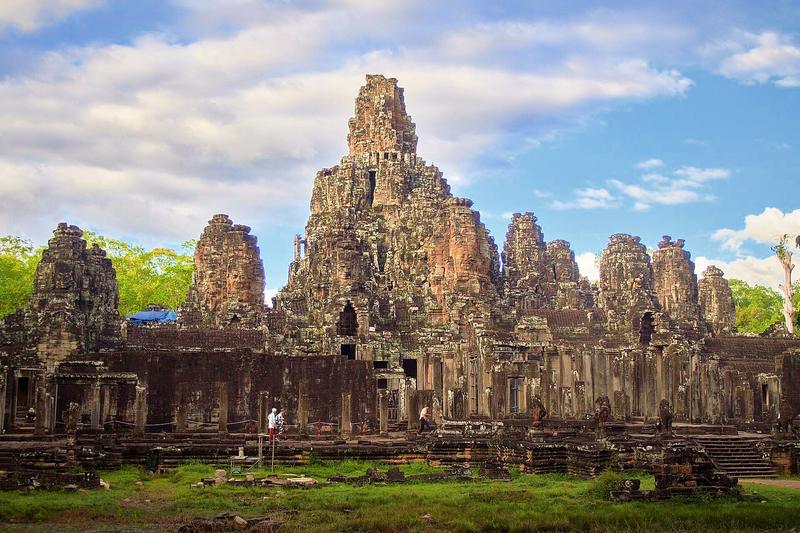 Angkor templesPasses, circuits and every temple
Yes. Angkor Thom is on the 17 km Small Circuit, and the official FAQ says the 3-day and 7-day passes cover the Small and Grand Circuits. The 1-day pass (US$37) opens 50+ temples on the official ticket page.
Angkor Wat is a single temple; Angkor Thom is the walled royal city of Jayavarman VII, founded in the late twelfth century, with the Bayon at its centre and several older temples and terraces inside its walls. One guide sets its 9 square kilometres against Angkor Wat's 2 km2.
The official ticket page lists Angkor Temples Park entry from 5:00 AM to 6:30 PM. For individual temples, one guide gives 6:00 AM to 6:30 PM and Wikivoyage says they open at sunrise, so sources differ on temple opening.
One guide puts the south gate 7.2 km north of Siem Reap, and the Bayon about 1 km further north of that gate.
Yes. Wikivoyage gives the walk along the walls as around 13 km, about 3.5 hours. Each wall is 3 km long.
The name comes from a sculpture found at the site; discolouration and moss on it looked like leprosy. A 14th-15th century inscription links the statue to Dharmaraja, an epithet of Yama, god of death. The figure on the terrace today is a replica.
Long trousers or a skirt and covered shoulders. APSARA's 2016 rule asks for trousers or skirts below the knee and shirts that cover the shoulders, and Wikivoyage says a scarf over the shoulders is not accepted at the strictly policed areas.