All at once
Dishes are served and eaten together rather than in courses.
Home › Cambodian food
Khmer food primer
Khmer food is rice with shared dishes of fish, curry, soup and noodles, seasoned with kroeung herb paste, prahok and fish sauce, and lighter on chili than its neighbours. Fish amok is one of the national dishes; one traveller puts a local breakfast at about USD 2.
By Laura Brennan · updated
Start with fish amok or a bowl of kuy teav. Amok is one of the national dishes, and kuy teav broth is meant to be subtle, not spicy. Then match the dish to the moment.
Your first Khmer meal
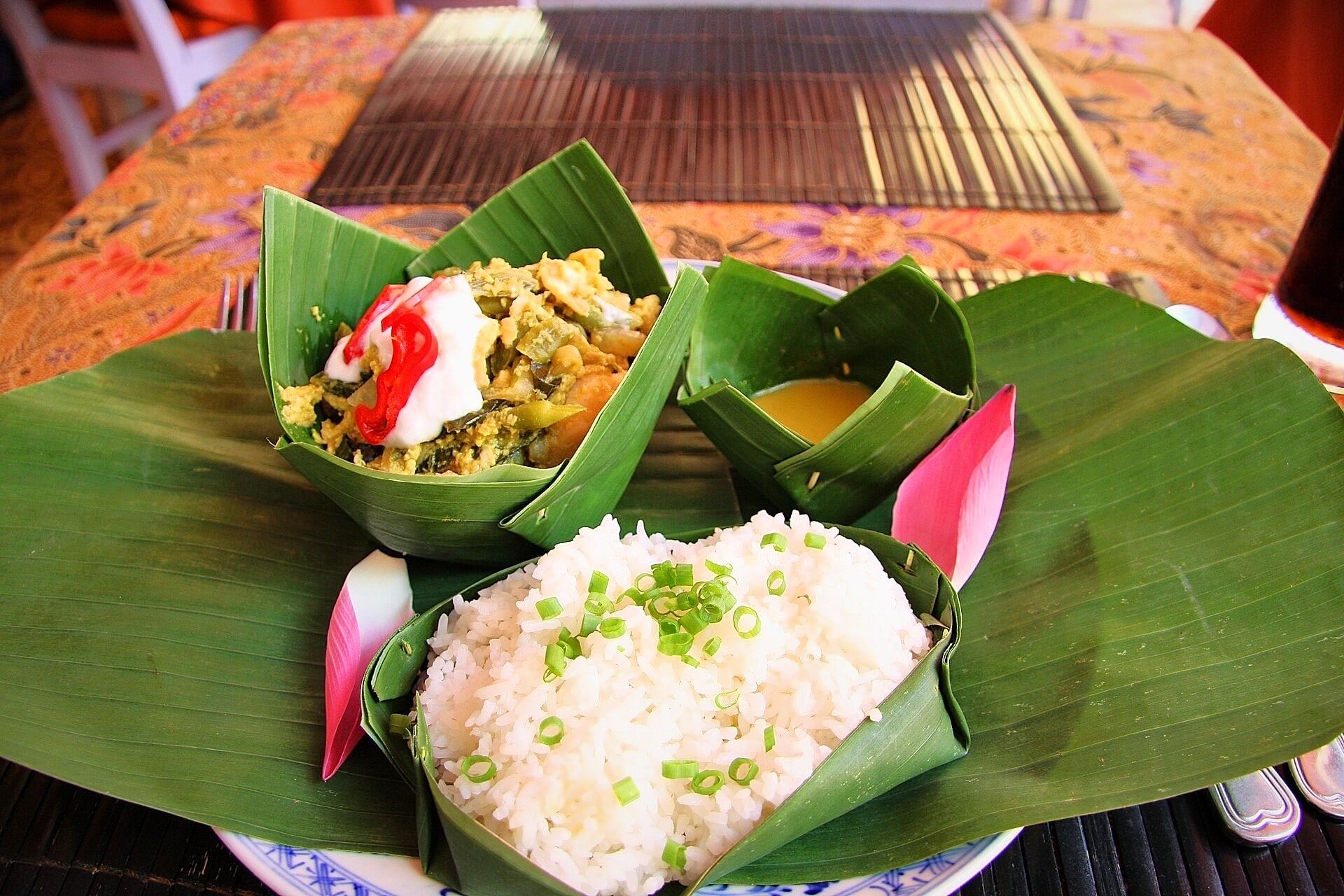
A steamed fish curry that sets to a mousse-like texture, made with fresh kroeung and coconut cream. It is considered one of Cambodia's national dishes.
Fish amok guideYou want it mild
Rice noodles in a clear broth of pork bones and dried squid, meant to be subtle. Heat comes from the condiments you add.
Noodle soup guideBreakfast
Pork and rice, a common Cambodian breakfast. Num banh chok, lightly fermented rice noodles, is the other morning classic.
You are vegetarian
Fish sauce, oyster sauce and chicken powder go into many vegetable dishes. Samlor kako can be made with coconut cream and vegetable stock instead.
At a street stall
Pick food cooked in front of you and served steaming hot, which is the CDC's first rule for eating out.
Street food safetyGrouped by situation, not ranked.
Six dishes and food groups, each with its own guide. Tap a photo to read on.
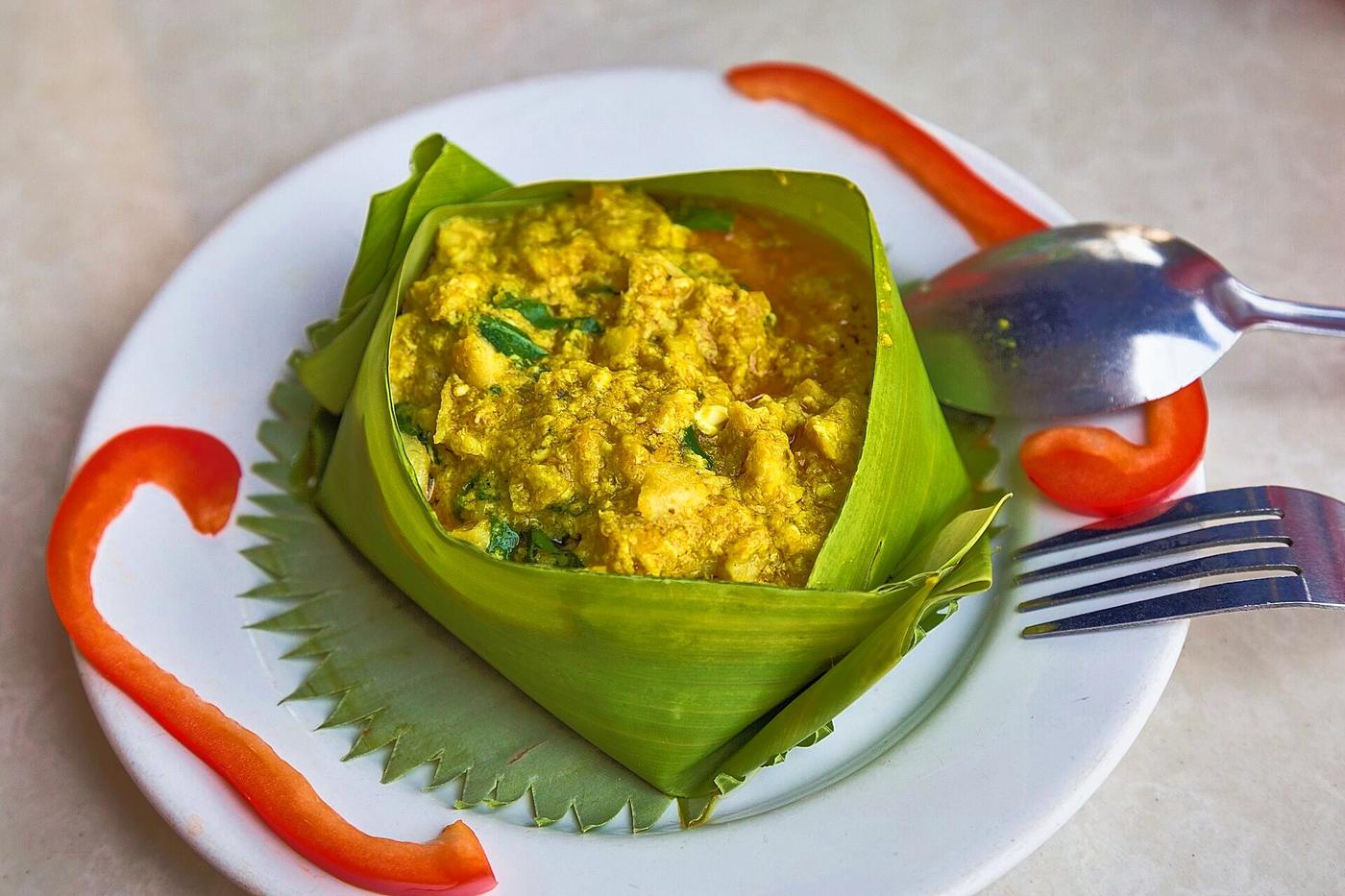 CurryFish amokServed hot in a banana-leaf cup; also spelled amok trei or amok trey
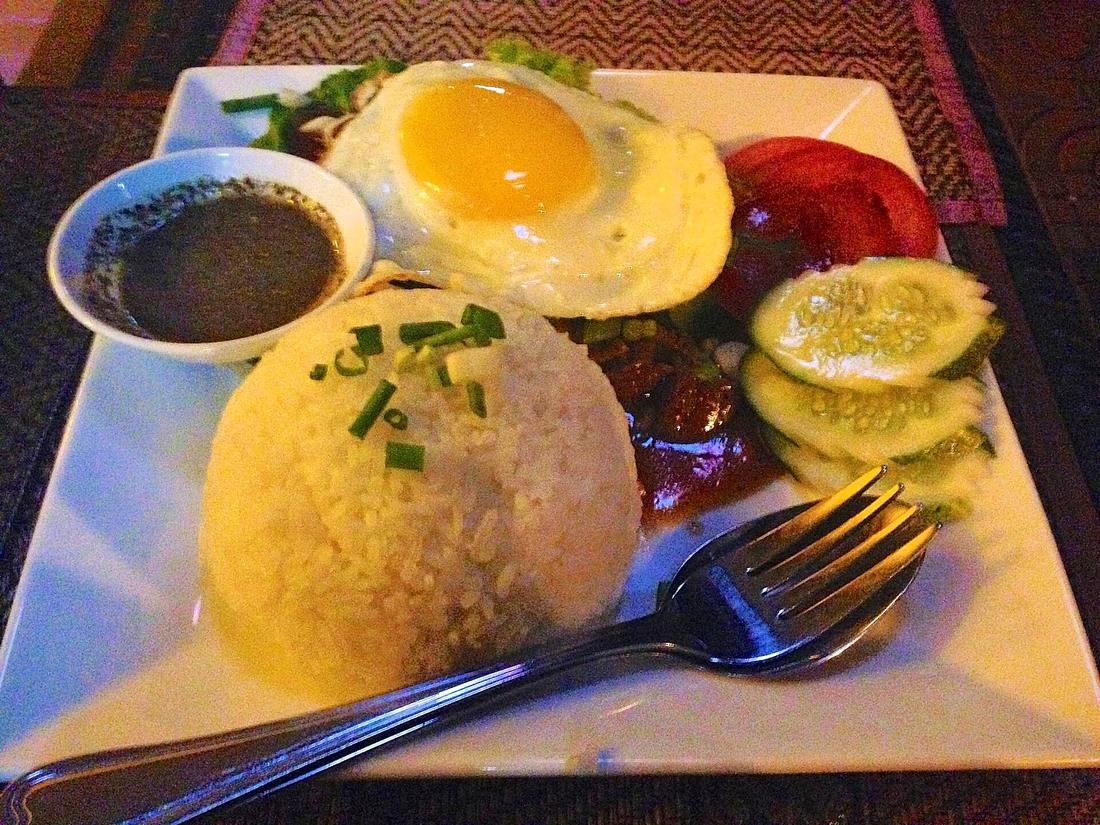 Lok lakPepper-marinated beef with rice and a fried egg
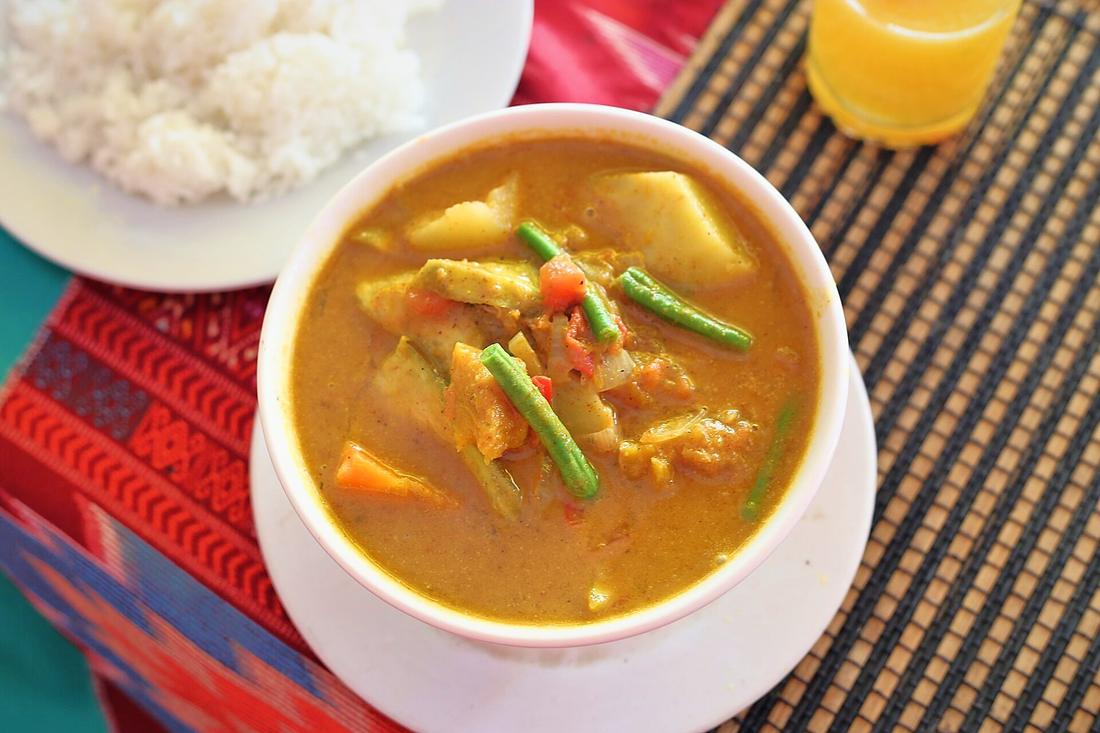 Khmer currySamlor covers the stews and curries
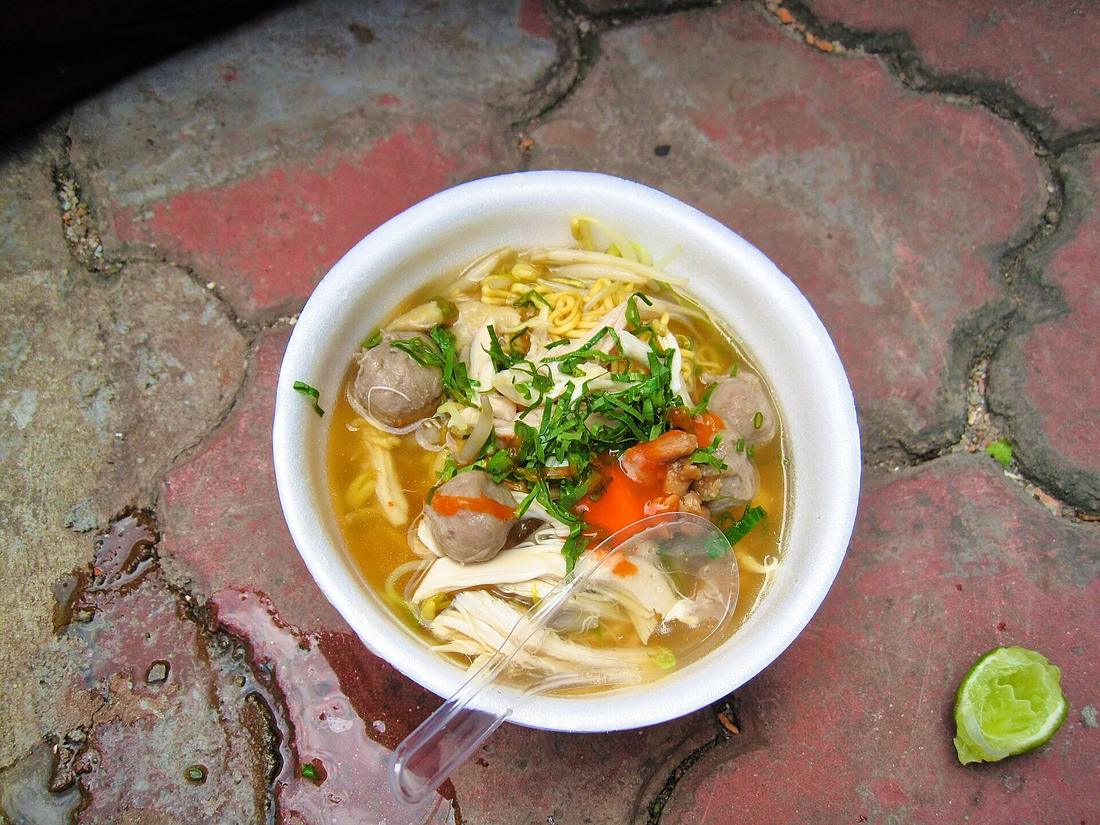 Kuy teavThe name comes from Teochew Chinese
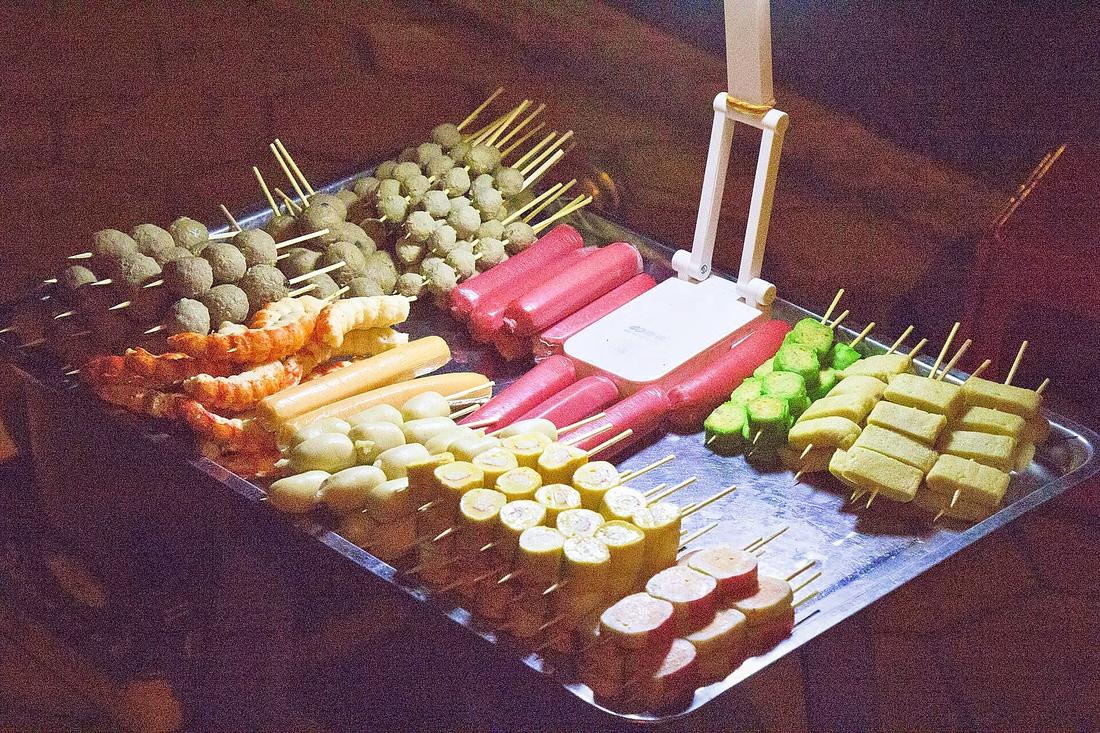 Street foodSugarcane juice and fried insects
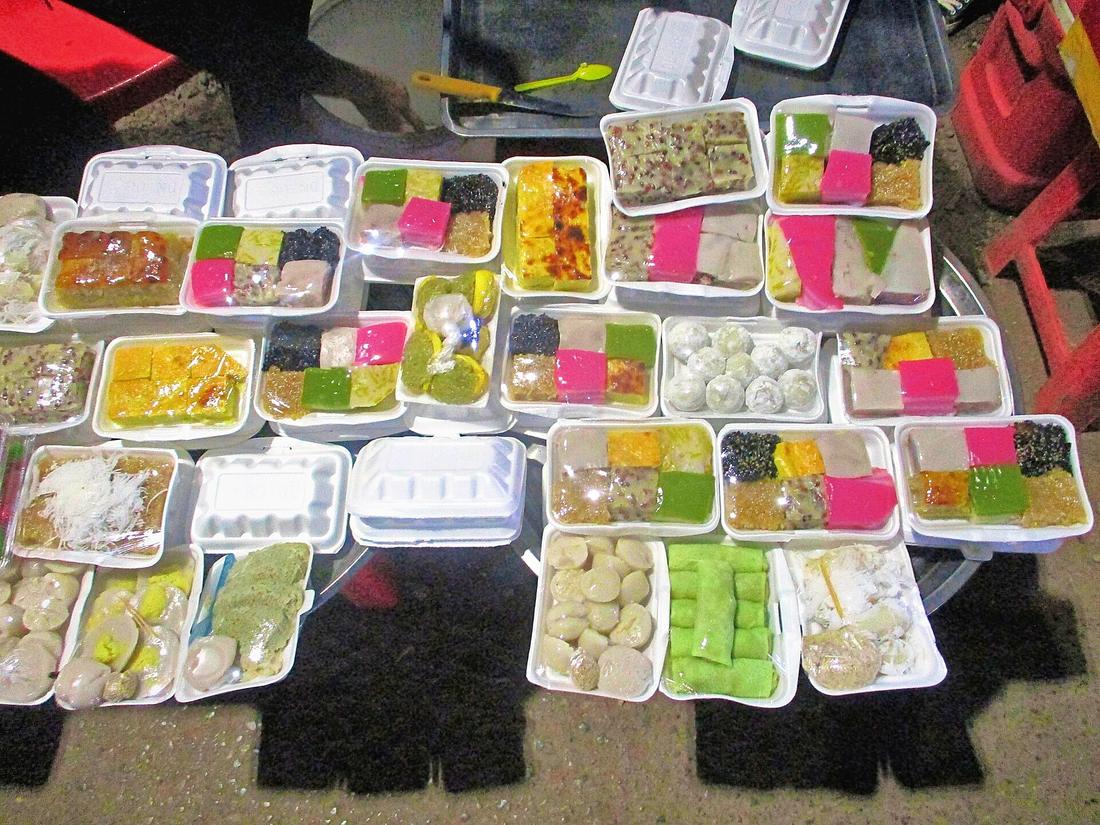 DessertsSticky rice cakes made for festivals
 Cambodia travel infoPractical basics before you go
Amok. The curry is mixed with coconut cream or milk and eggs, and sits in a banana-leaf container lined with great morinda leaves. It is usually made with goby, snakehead or catfish and steamed for about 20 to 30 minutes. Many restaurants also serve less traditional versions with chicken, tofu or beef. Phnom Penh restaurants often serve it in banana-leaf boats.
Kuy teav. Rice noodles in pork stock, topped with whatever is available, with lettuce and bean sprouts on the side. The Phnom Penh version carries the most toppings, from ground pork to pork belly; the Kampot style adds crushed black Kampot pepper, lime juice and caramelised garlic oil. It can also come dry, like a noodle salad. Vendors often sell out before midday.
Num banh chok. The gravy uses freshwater fish, usually snakehead; some versions have a red curry base of red kroeung and coconut milk instead. The Kampot version is typically eaten cold. Wikipedia says the name translates as "to feed".
Breakfast breads. Num pang is a short baguette with a thin, crisp crust, a French adoption; fillings include pickled carrot and daikon.
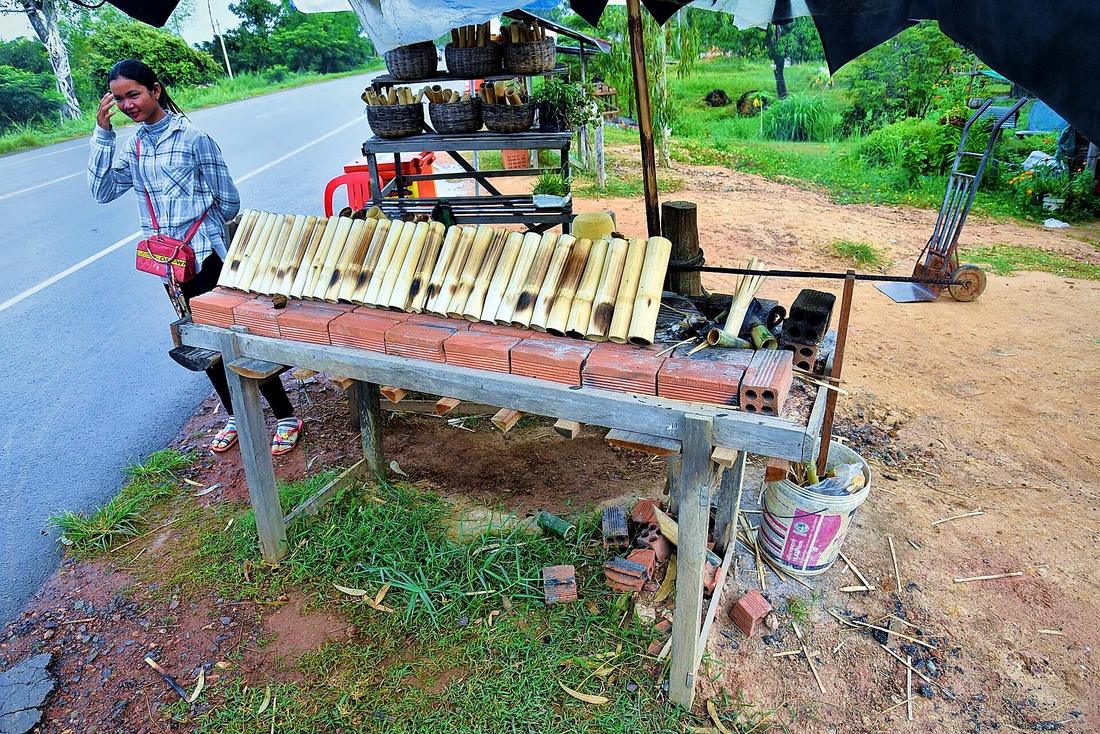
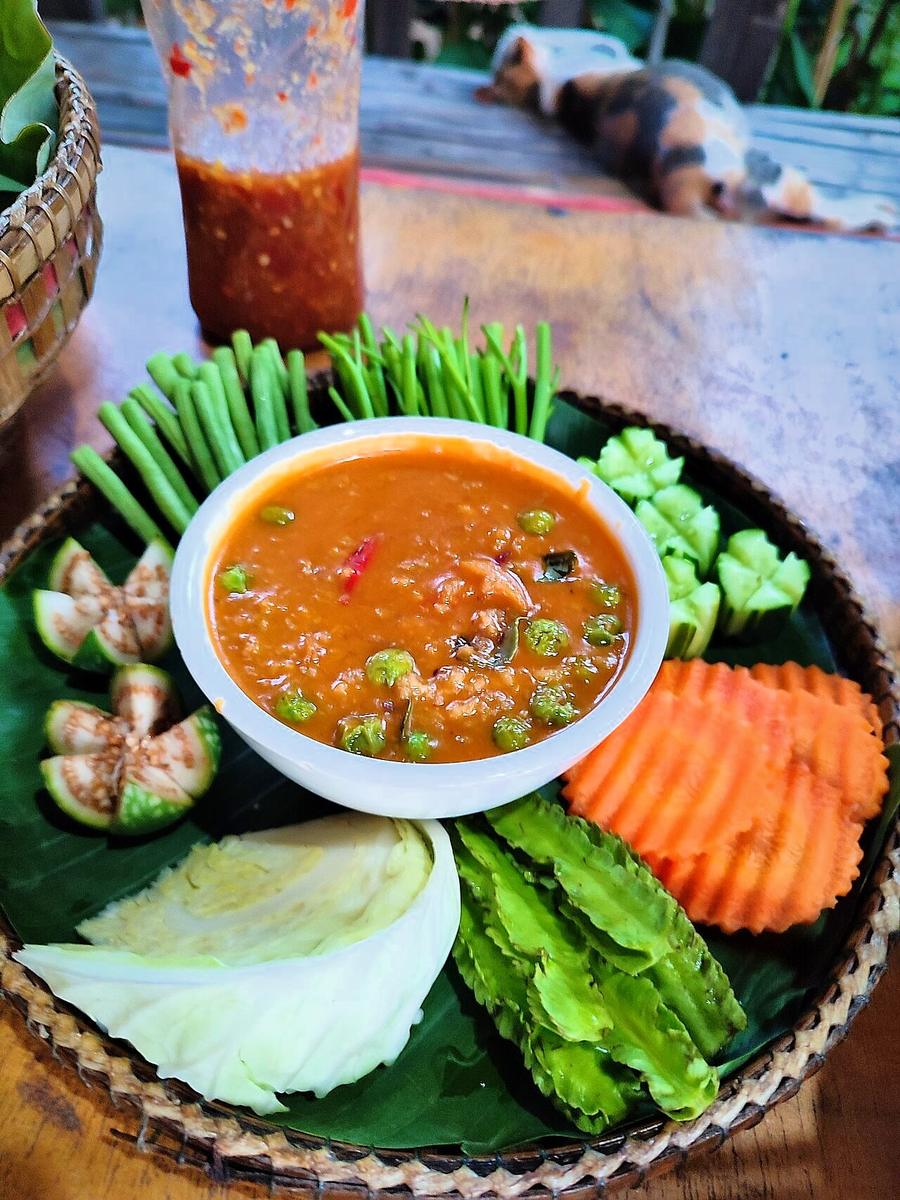
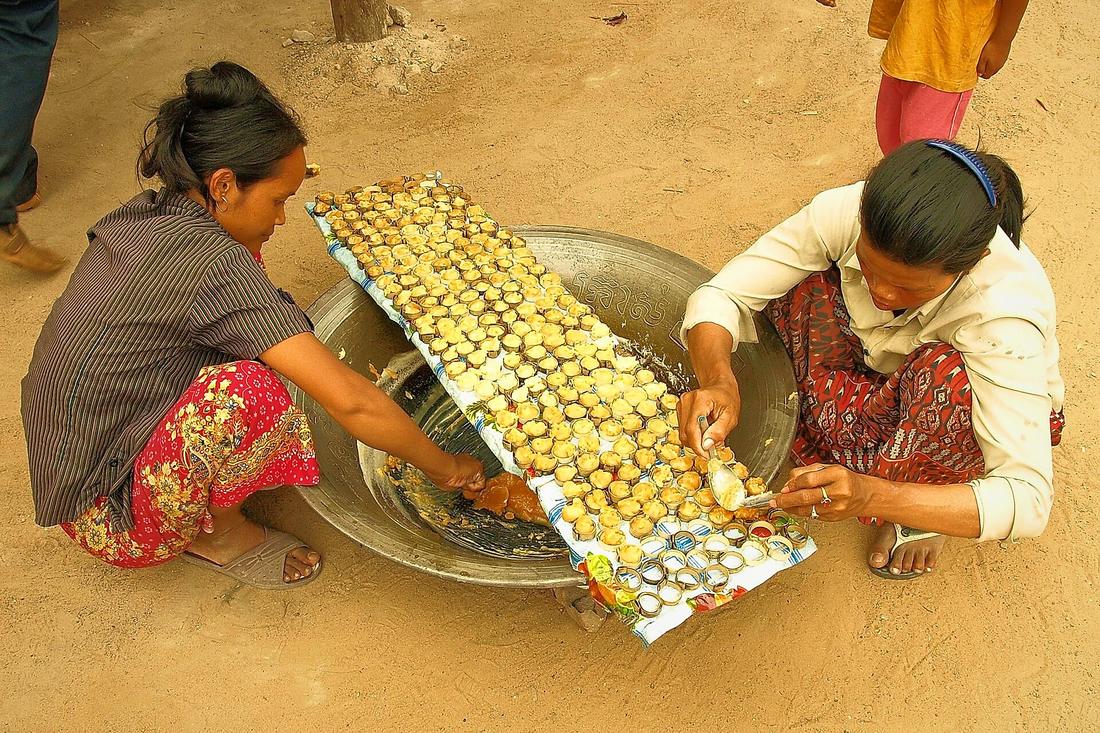
Markets, stalls and street snacks. Swipe or use the arrows.
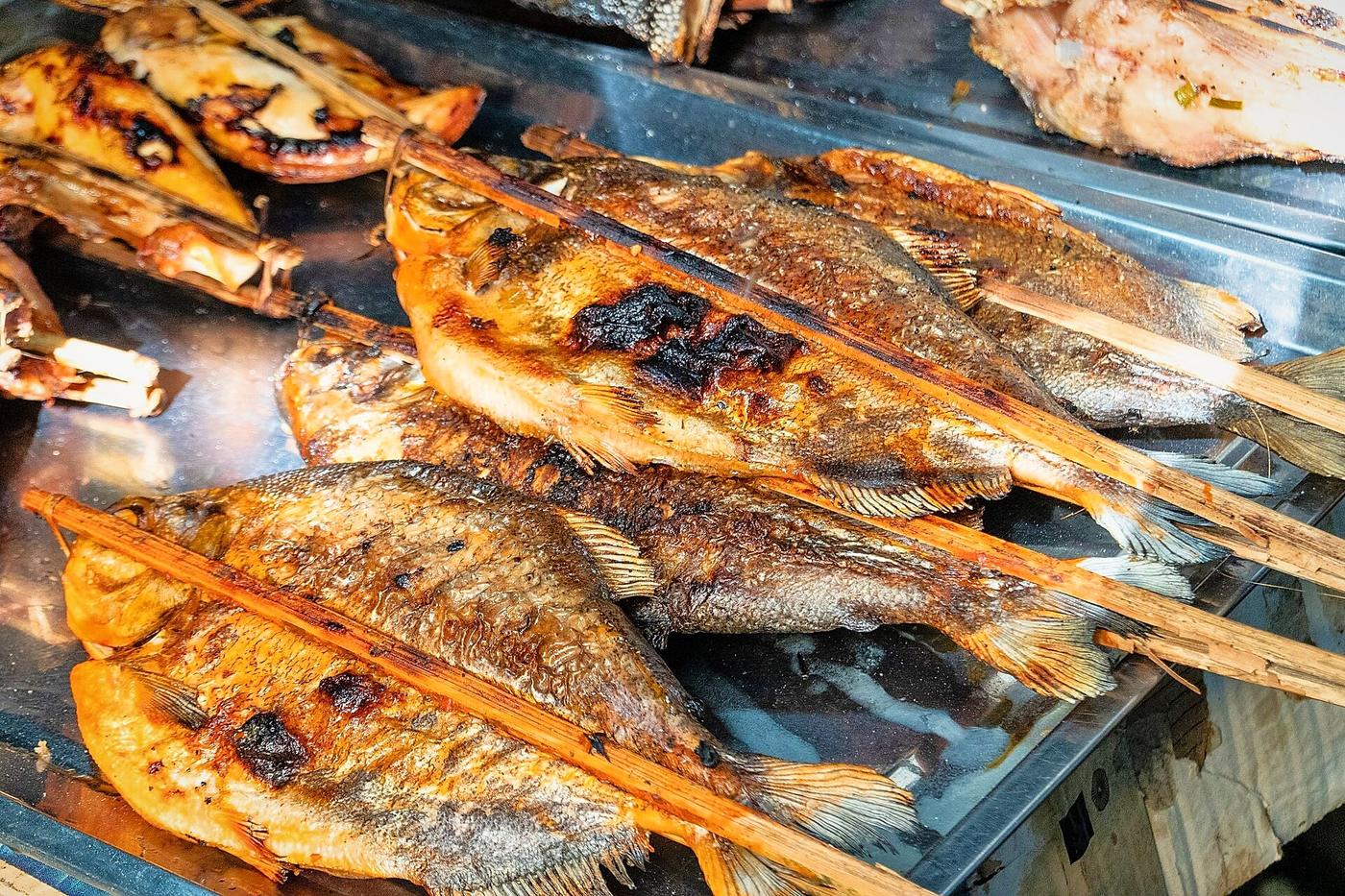 1/5
 2/5
 3/5
 4/5
 5/5
Four building blocks run through most Khmer dishes. Know them and a menu gets much easier to read.
A family of pounded herb and spice pastes that forms the base of many dishes. Lemongrass, makrut lime zest and leaves, galangal and turmeric are the usual core. One guide counts five common types, traditionally chopped fine and ground in a heavy mortar and pestle.
Salted, fermented fish paste, usually mudfish, left to ferment for about a month. The tourism ministry calls it strong; it goes into many traditional dishes, mixed into rice or served as a dip. One guide quotes the saying "No prahok, no salt".
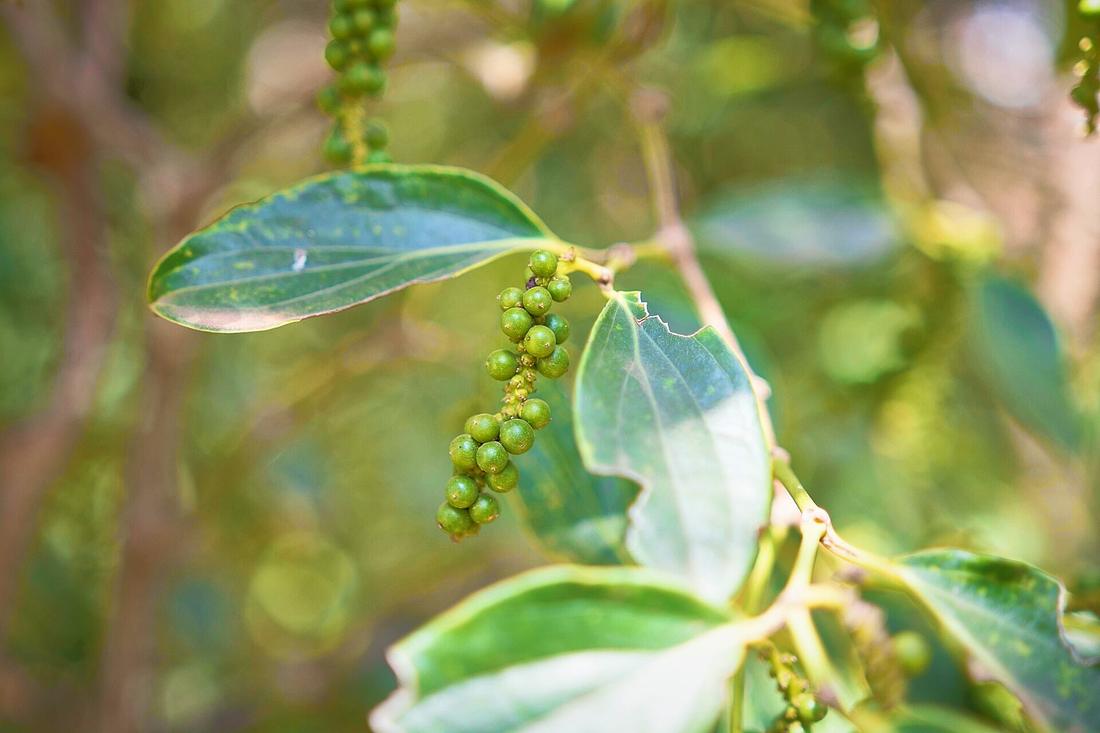
An EU-protected geographical indication since 2016, sold green, black, white and red, all from the same plant. Lok lak is marinated with it. Visit the pepper farms
Rice is the principal staple, per the tourism ministry, and fish sauce is an important seasoning in Khmer cooking. Rice is generally eaten at every meal.
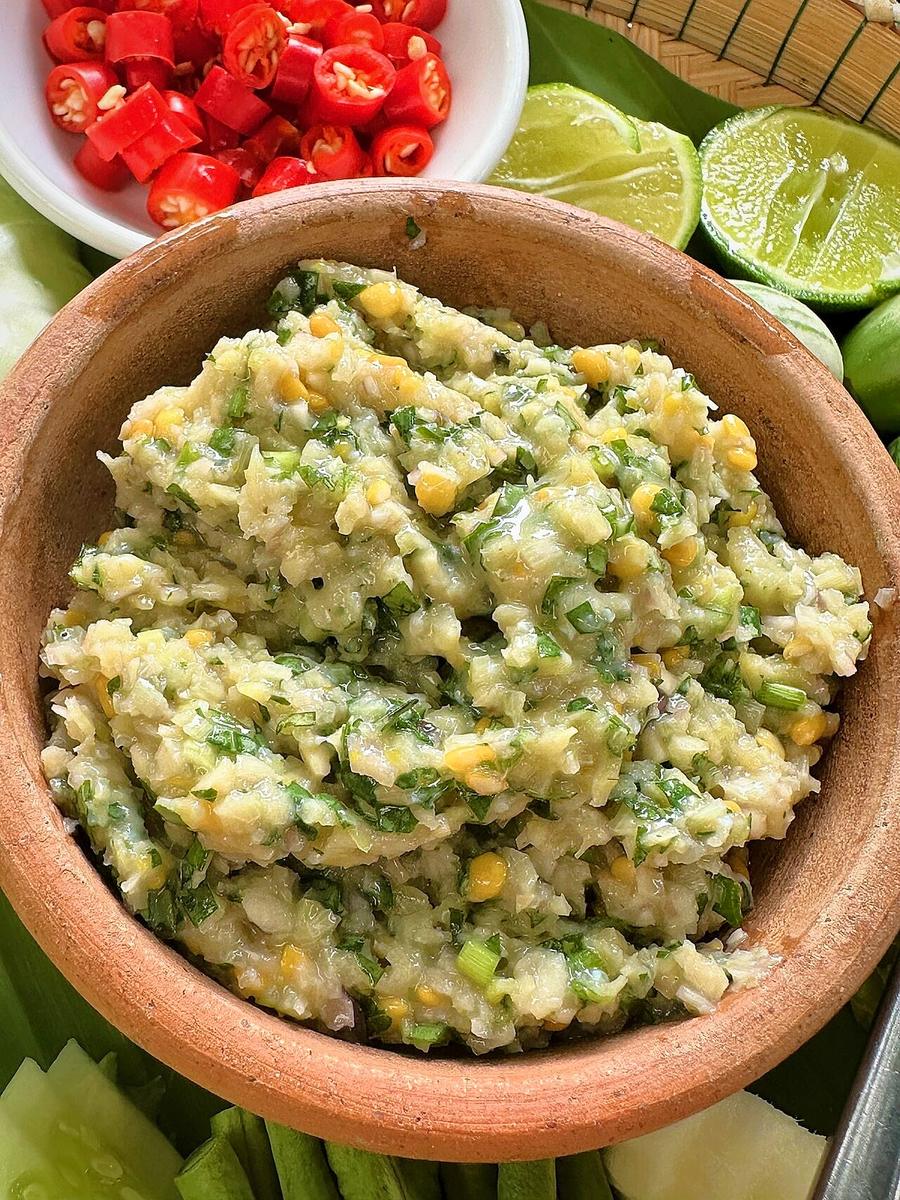
Kroeung colours. Turmeric is the main colouring ingredient of yellow kroeung, which goes into common everyday dishes. Red kroeung gets its deep colour from dehydrated chili pods that add very little flavour. Colour kroeungs are used for stuffings, soups and stir-fries. Royal kroeung is fairly standardised, unlike the individual pastes made for particular dishes. A version with prahok, called teuk kroeung, is a dip for fresh or blanched vegetables.
Samlor kako. A traditional soup with green kroeung, prahok, roasted ground rice, catfish, pork or chicken, vegetables, fruits and herbs.
Prahok. It began as a way of preserving fish. One method uses snakehead and other larger fish. In rural Cambodia plain prahok is commonly eaten with steamed rice.
Order a few dishes for the table and share them; spoon and fork do most of the work.
Dishes are served and eaten together rather than in courses.
Introduced by the French and used for rice and soup-based dishes.
A Chinese introduction, used only for noodle dishes; one tour operator says they are not the general etiquette.
The same operator describes eating with the hands as the original Khmer custom. Desserts close a meal or fill a snack break.
Hot, freshly cooked food is the safer pick at any stall, and a local breakfast runs about USD 2. Each price below is one traveller's report from Phnom Penh, so read it as a guide.
Local breakfast
5,000-8,000 rielabout USD 2
One traveller, Phnom Penh. Another paid 8,000 riel for num banh chok in April 2026.
Checked Nov 2026Popular noodle house
USD 4-6big bowl
One traveller, a well-known Phnom Penh noodle house.
Checked Nov 2026Sugarcane juice
3,000 rielabout USD 0.75
One traveller, Phnom Penh, 2026. Pressed fresh from the stalk by machine.
Checked Nov 2026Different places, not a conflict: the low figures are local stalls and shops, the high one a popular noodle house. Sit-down dinner prices are not covered here.
Official advice
Its general advice is to skip food from street vendors, and to follow normal food-safety rules if you do eat it.
Travellers' view
Some travellers argue street food is safe when it is fresh and cooked on the spot, and that quiet restaurants are the bigger risk.
Steaming hot. Lukewarm food lets food-poisoning germs grow.
Wash your hands. Soap and water before you eat.
Peel it yourself. Fruit you peel is safer than fruit sold cut.
Sealed drinks. Factory-sealed bottles and cans beat tap water.
Skip the ice where clean water is hard to come by.
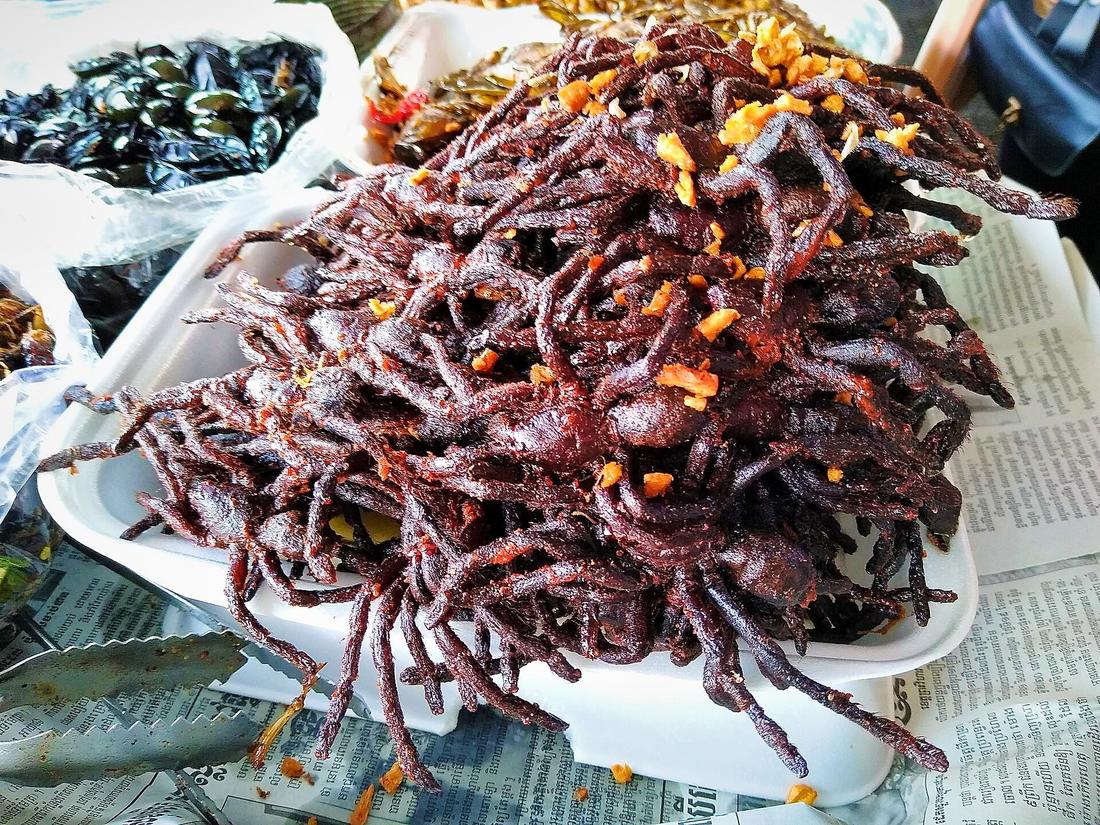
Insects are a snack, not the staple. Crickets, water bugs and tarantulas are seasoned, deep-fried and sold as street food, and the town of Skun is sometimes called Spiderville; one vendor there tops fried tarantulas with stir-fried garlic (Mongabay, 2020). Everyday meals are curries, stir-fried vegetables, rice, noodles and soups. Cambodian street food guide
Hepatitis A and typhoid both spread through contaminated food and water. The CDC recommends the hepatitis A vaccine for unvaccinated travellers aged one or older going to Cambodia, and lists the typhoid vaccine as recommended for most travellers, while noting it is not 100% effective. Safe food and water habits, including handwashing, help too.
This is not medical advice: ask a doctor or travel clinic before you go. Health in Cambodia
Less chili, plenty of borrowing. Khmer cooking borrows from four cuisines and keeps the heat down.
Start in the two cities most first trips include; each guide covers where to eat and what to look for.
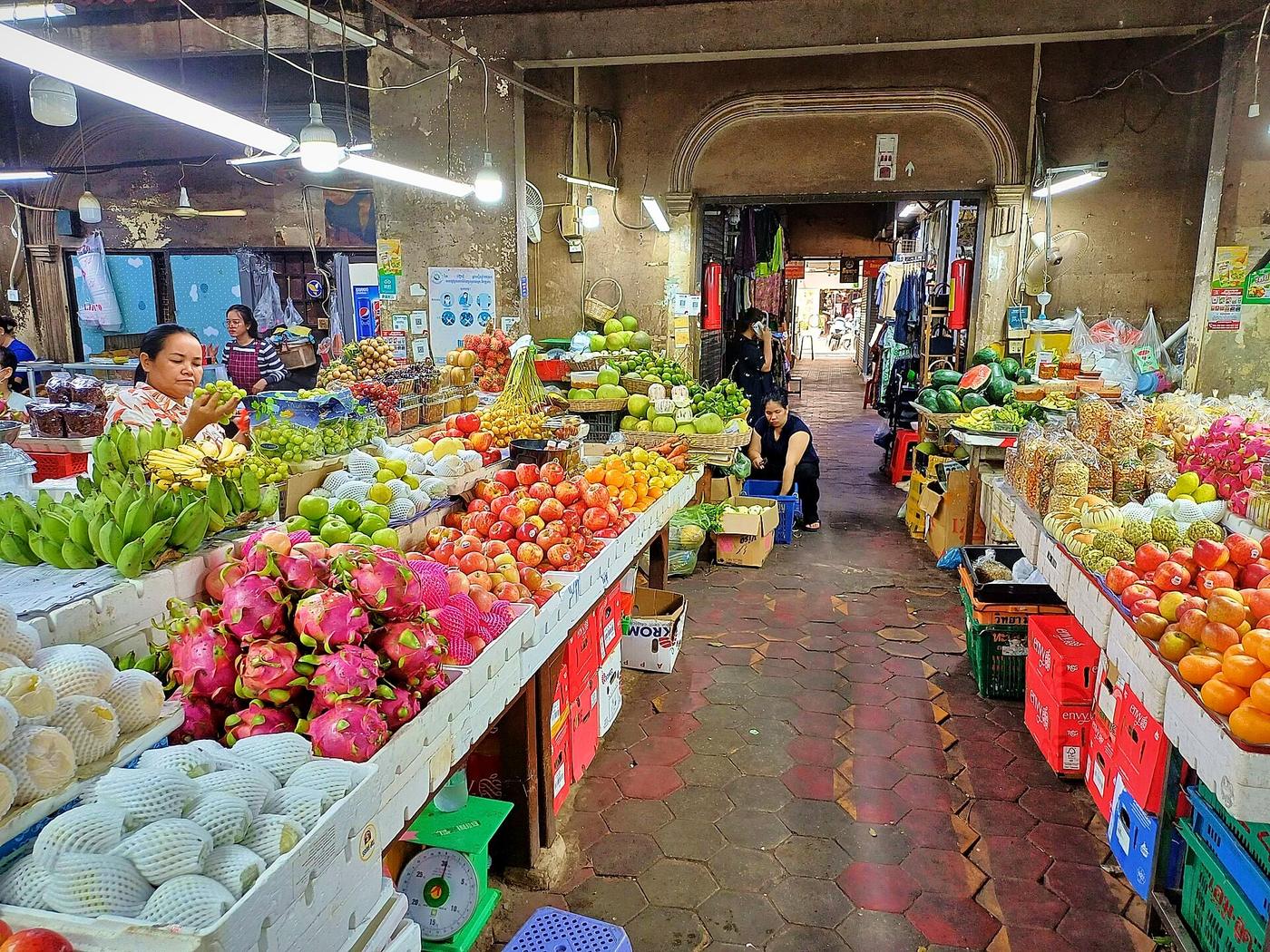 Siem Reap foodAmok trei, the fish curry steamed in banana leaves
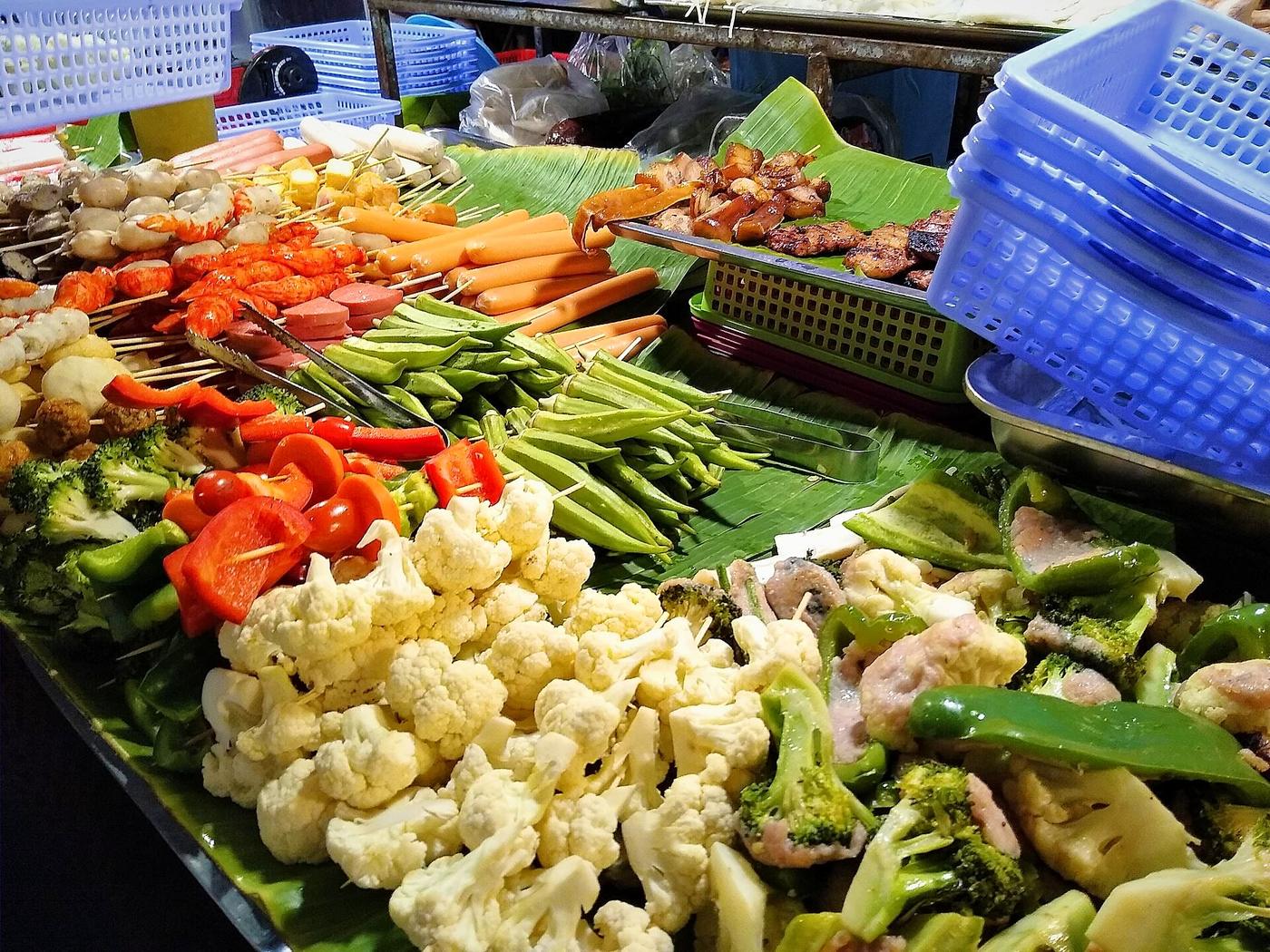 Phnom Penh foodAmok served in banana-leaf boats
Cambodian drinksSugarcane juice, and coffee with sweetened condensed milk
Num banh chok →The rice noodle dish with fish gravy and fresh herbs
Cambodian breakfast →Typical morning dishes eaten around the country
 Khmer civilizationThe empire behind the cuisine
Fish amok, a fish curry steamed until it sets like a mousse, is considered one of Cambodia's national dishes. The tourism ministry's site also lists samlor kako, a traditional soup, as a national dish.
A salted, fermented fish paste, usually made from mudfish and fermented for about a month. It began as a way to preserve fish. The tourism ministry describes it as strong, and it seasons many traditional dishes.
Bai sach chrouk, pork and rice served with a bowl of broth, is a common breakfast. Kuy teav noodle soup and num banh chok rice noodles are morning dishes too, and one guide names rice porridge with dried salted fish as typical.
It builds on bo luc lac, the Vietnamese shaking-beef dish that began in Saigon sidewalk eateries. One guide describes Phnom Penh's lok lak as beef marinated in Kampot pepper, tomato and fish sauce, served with rice or fries and a fried egg.
The CDC's general advice is to avoid street vendors, and to follow food-safety rules if you do eat there: food cooked and steaming hot, washed hands, fruit you peel yourself and sealed drinks. Some travellers argue fresh, cooked-to-order stall food is safe.
One traveller puts a local-style Phnom Penh breakfast at 5,000 to 8,000 riel, about USD 2; another paid 8,000 riel for num banh chok in April 2026. A big bowl at a popular Phnom Penh noodle house costs about USD 4 to 6, per one traveller.
The CDC recommends the hepatitis A vaccine for unvaccinated travellers aged one or older going to Cambodia, because it spreads through contaminated food and water. Ask a doctor or travel clinic about your own case.
Usually not very. Cambodian dishes tend to use less chili and sugar than neighbouring cuisines, and kuy teav broth is meant to be subtle, with heat added from the condiments.
Yes, with care. Fish sauce, oyster sauce and chicken powder flavour many vegetable dishes, and many kitchens use the same pans for meat. Specialist vegetarian restaurants keep food apart. Samlor kako can be made with coconut cream and vegetable stock, and num ansom has a mung bean version. One guide gives "aht chak" for no meat.
Some do, as a snack. Crickets, water bugs and tarantulas are seasoned, deep-fried and sold as street food; the town of Skun is sometimes called Spiderville. The staples are curries, stir-fried vegetables, rice, noodles and soups.
Only for noodle dishes. Spoon and fork, introduced by the French, are used for rice and soups.