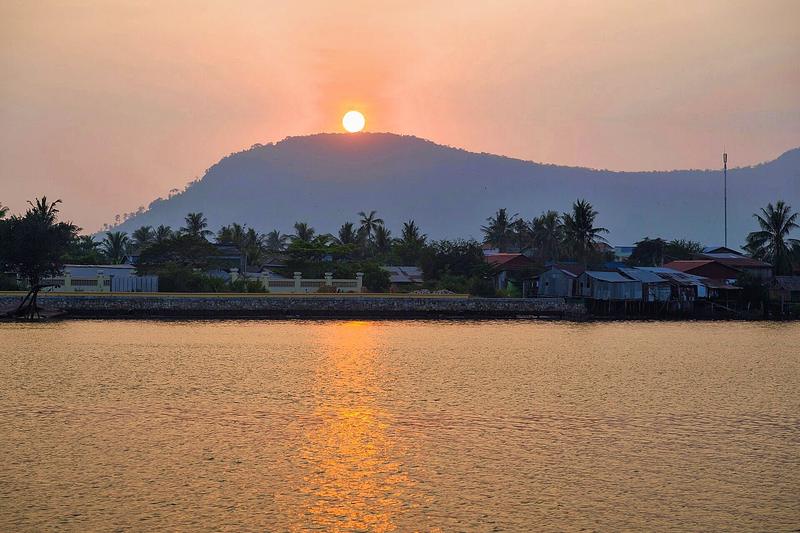
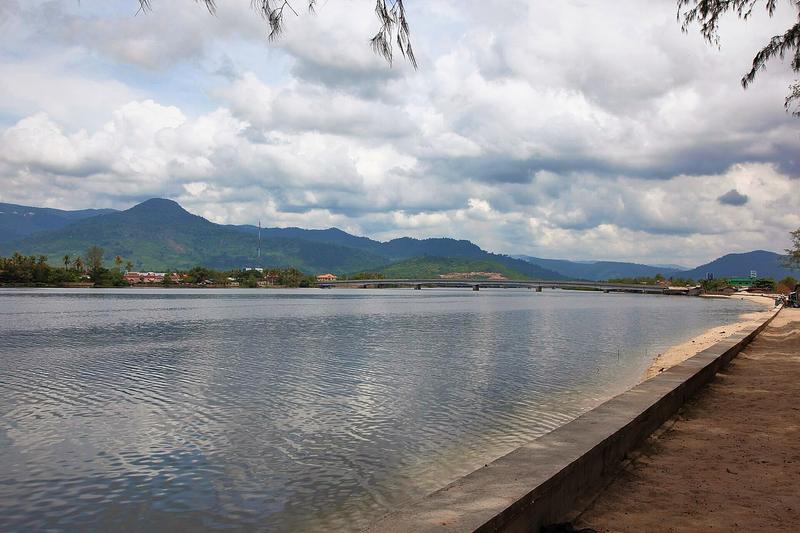
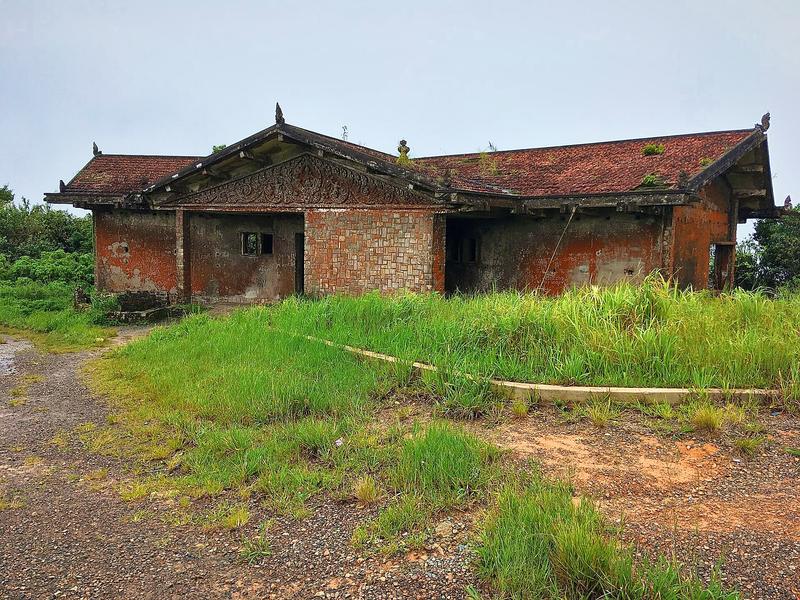
Two provinces
The Kampot Pepper GI area covers the provinces of Kampot and Kep.
Kampot pepper · buying and farm visits
An operator advises choosing bags that show the PGI (Protected Geographical Indication) label and the producer's identification number. Kampot pepper has been an EU geographical indication since February 2016. A visit to La Plantation is optional: it adds the growing story, and its entry ticket becomes shopping credit.
By Laura Brennan · updated
Look for the PGI label and the producer's identification number before you pay.
Checked Nov 2026Buying in a shop, not at a farm? An operator suggests registered local shops or traditional market vendors for Kampot pepper, and the same label check applies.
Bringing home a gift
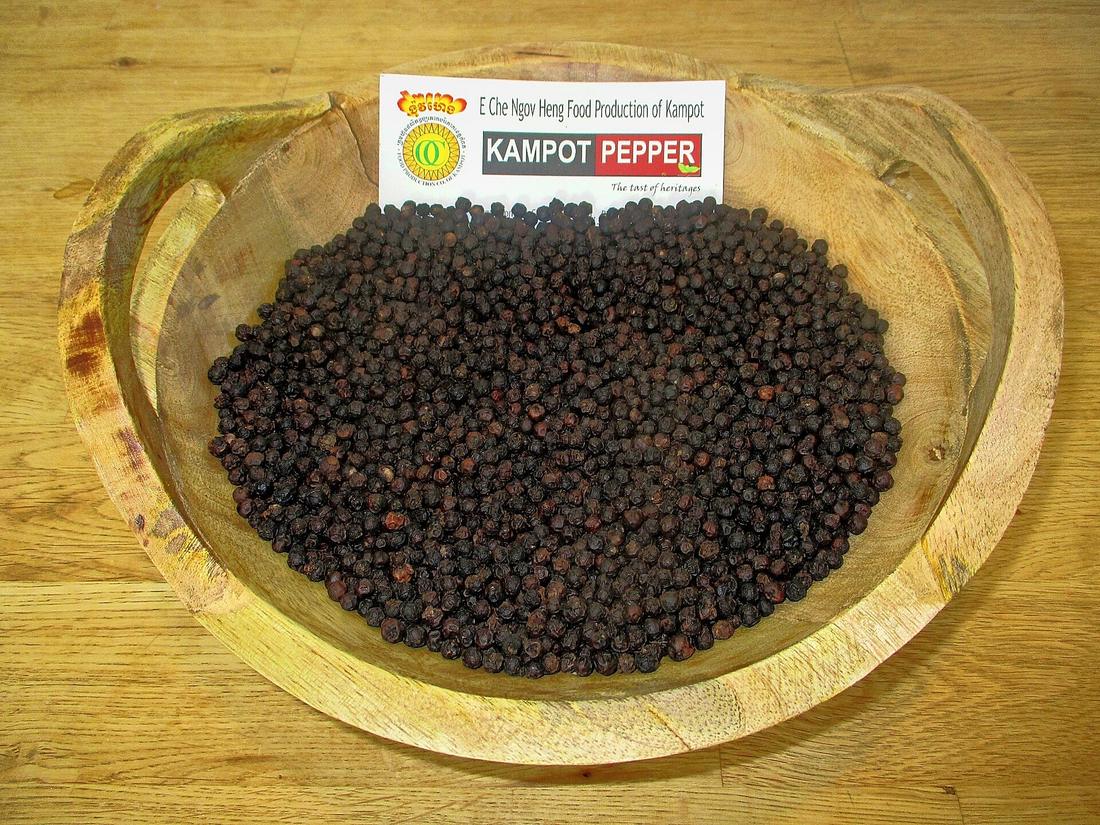
Green, black, white and red pepper are all sold, one guide says, and all come from the same plant.
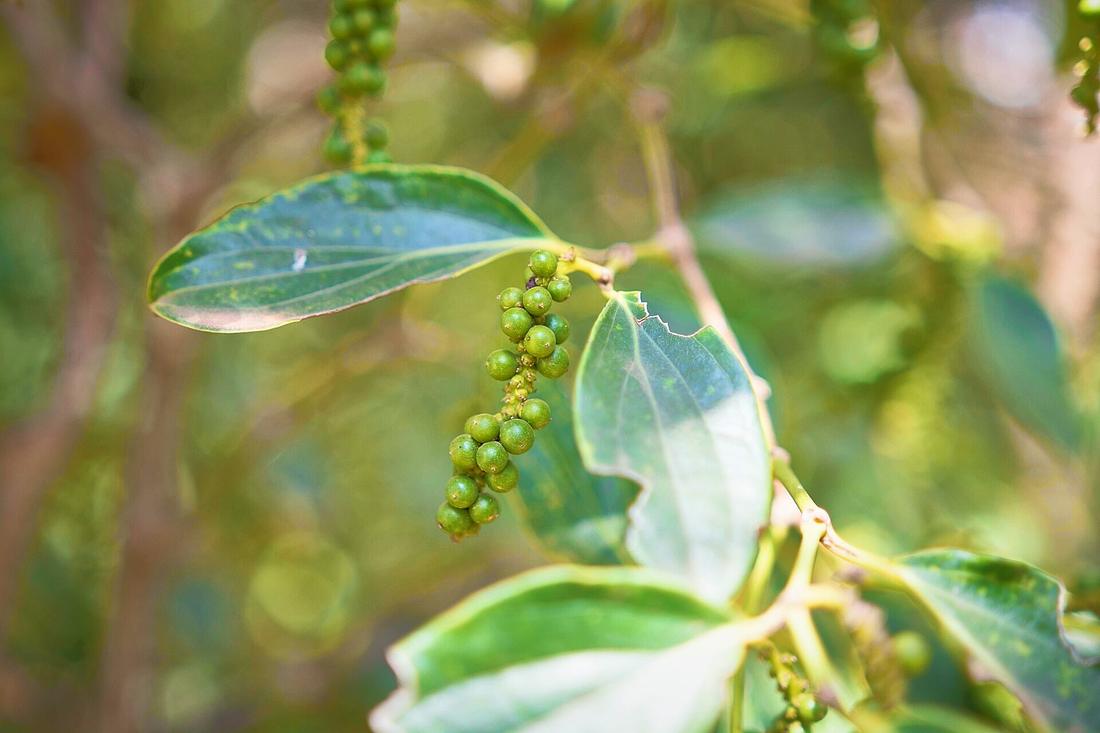
Curious how it grows
Entry is USD 2.50 per adult and counts as a shopping voucher for its full value, an operator says.
Here for the food
One guide names blue crab seared with freshly crushed Kampot green pepper as the signature dish.
Only from the provinces of Kampot and Kep. The Kampot Pepper GI area covers both, so a bag that names another origin is not what you came for.
The Kampot Pepper GI area covers the provinces of Kampot and Kep.
One guide says the pepper is grown in seven districts or cities in two southwestern provinces, Kampot and Kep.
Quartz in the soil of the Elephant Mountains foothills is credited with Kampot pepper's terroir.
Cambodia's official tourism portal calls Kampot pepper renowned.
An operator advises choosing bags that show both the PGI label and the producer's identification number.
Wikivoyage lists retail Kampot pepper at USD 12–25/kg, depending on colour. What producers receive is a separate, lower figure.
$12–18per kg
$13–20per kg
$18–25per kg
$10per kg, 2020
The retail range comes from one guide's list, and the farm-gate figure is from 2020. Treat both as a yardstick, then run the bag check.
It suits shoppers: the ticket counts as a shopping voucher for its full value, so entry is credit against a bag. It is open daily, 9am to 6pm, with the last visit at 4pm.
$2.50per adult
9am–6pmlast visit 4pm
Nov–Marbook a slot ahead
2 hoursfrom 3pm
La Plantation's restaurant is open 7am to 3pm without reservation.
La Plantation has shops in Kampot city centre, Phnom Penh and Siem Reap.
La Plantation states it is Fair Trade certified.
Accommodation on the plantation is offered at La Villa de La Plantation.
Another route: Wikivoyage suggests a guided pepper tour at The Vine Retreat in Chamcar Bei village. Rough Guides' 7-day sample itinerary gives Kampot day 6 a pepper-farm visit.
By hand, in passes, then in the sun. An operator describes three steps that decide what ends up in your bag.
Ripe pepper bunches are hand-harvested from March or April, over about three months.
Pickers make several passes over each plant during the 3-month harvest.
Pepper beans are sun-dried 2 to 3 days on nets.
A 13th-century start, a colonial boom, and a recent revival. WIPO says Kampot pepper dates back to the 13th century.
One guide says modern intensive production began under French colonial rule in the 1870s. An operator adds that the pepper reached Europe as 'Indochina Pepper' and that production rose from 1,350 to 3,500 tonnes between 1899 and 1902.
Annual output was around 20 tonnes in 2013, before GI certification.
The EU regulation registering Poivre de Kampot is dated 5 February 2016.
Kampot Pepper was the first geographical indication registered via the Geneva Act of the Lisbon System, WIPO news reported.
FAO: membership grew from 118 producers in 2010 to 386 (figure as of the FAO page).
FAO: area grew from 1 hectare in 2010 to 264 hectares (as of the FAO page).
FAO: production has stabilised at about 100 tonnes since 2019.
About 70% of Kampot pepper production goes to the international market.
Production was worth over USD 1 million in 2019, versus USD 70,000 in 2009.
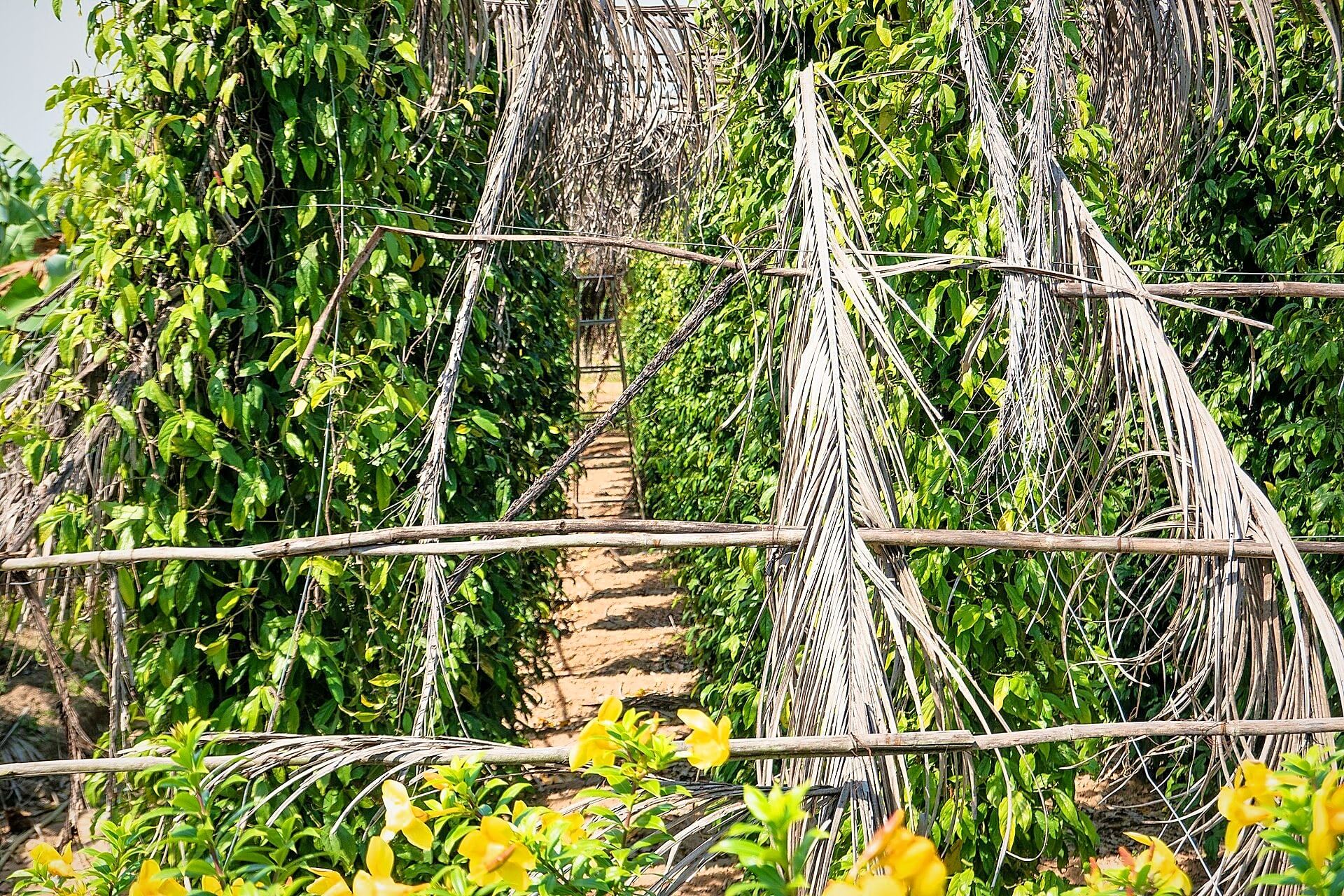
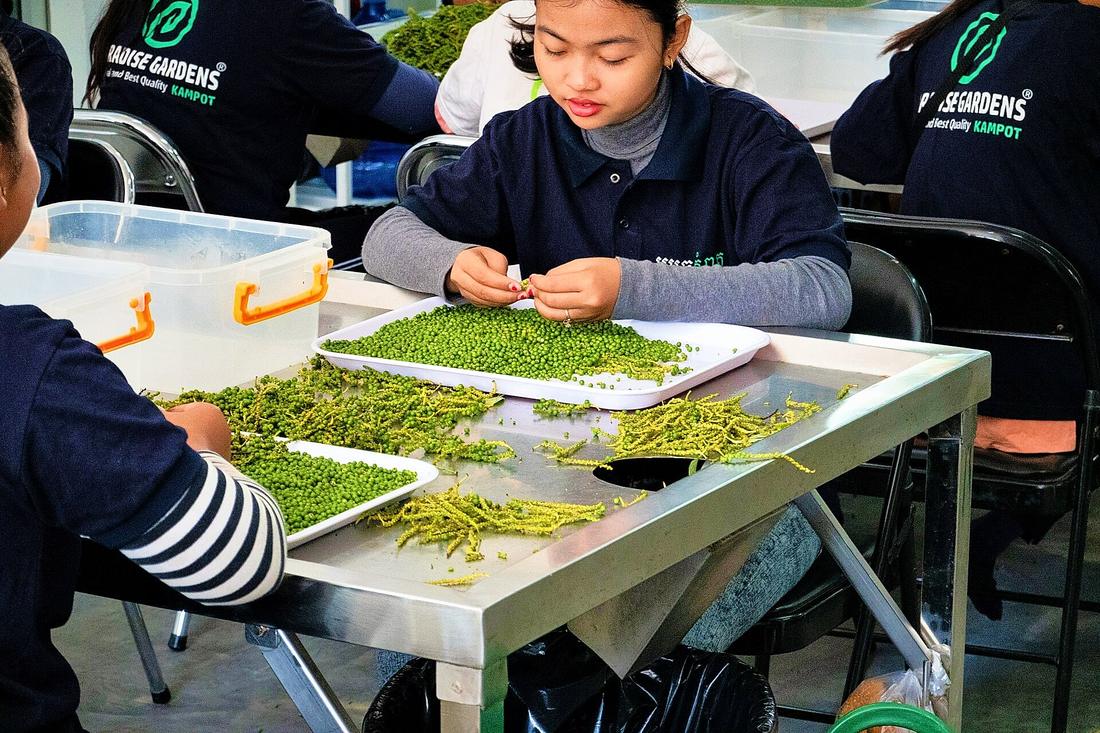
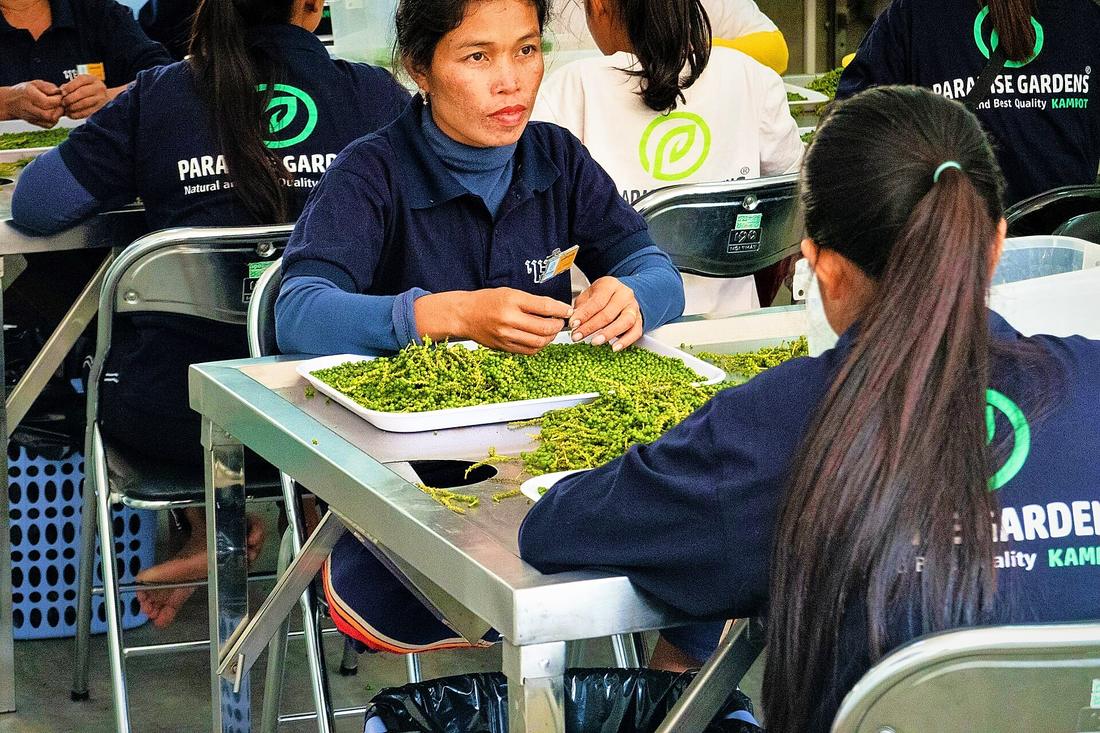
Vines, shade and sorting tables in Kampot Province. Swipe or use the arrows.
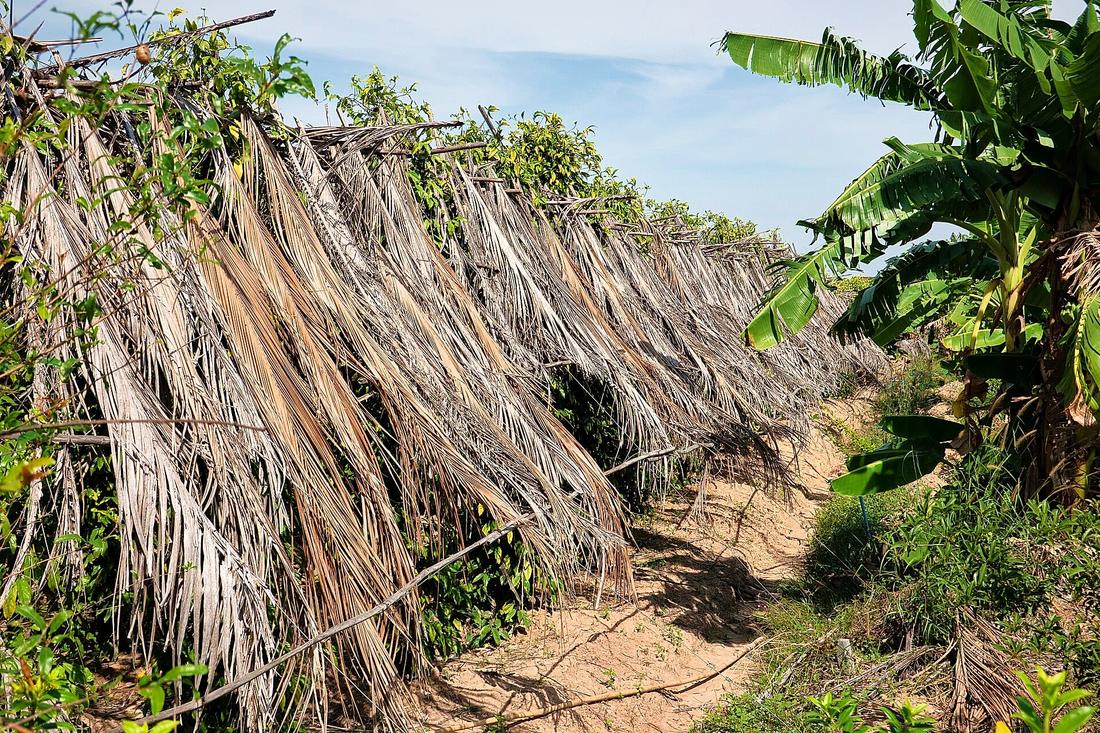 1/4
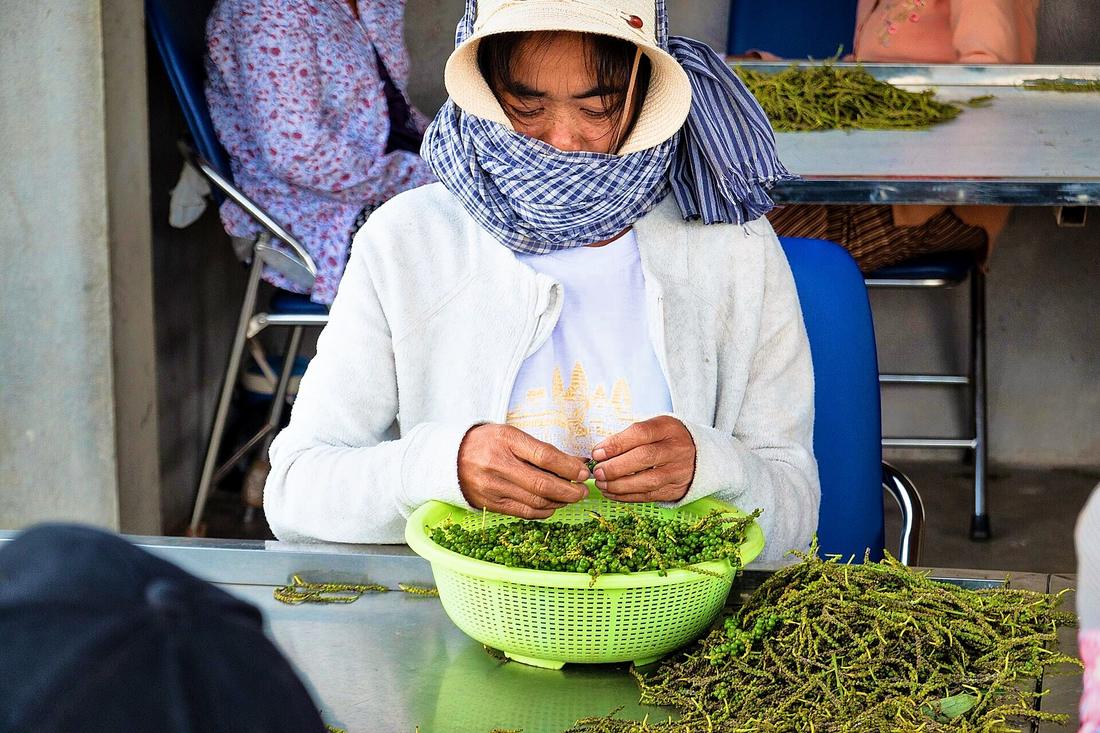 2/4
 3/4
 4/4
Choose bags showing the PGI label and the producer's identification number, an operator advises. Kampot pepper has been an EU geographical indication since 2016.
An operator suggests registered local shops or traditional market vendors. La Plantation has shops in Kampot city centre, Phnom Penh and Siem Reap.
Wikivoyage lists retail black at USD 12-18/kg, white at USD 13-20/kg and red at USD 18-25/kg. The farm-gate price of black pepper rose from USD 5.75/kg to USD 10/kg in 2020, and that is a producer price, not retail.
It is sold green, black, white and red, one guide says, all from the same plant.
Entry is USD 2.50 per adult and USD 1.25 per child, and the ticket counts as a shopping voucher for its full value. Hours are 9am to 6pm daily, last visit 4pm.
From November to March it asks visitors to book a visit slot in advance. From April to October no booking is needed; turn up at reception.
Wikivoyage suggests a guided pepper tour at The Vine Retreat in Chamcar Bei village.
One guide names blue crab seared with freshly crushed Kampot green pepper as the signature dish. La Plantation's own restaurant is open 7am to 3pm without reservation.
Ripe bunches are hand-harvested from March or April, over about three months, in several passes per plant. The beans are then sun-dried 2 to 3 days on nets.
WIPO says it dates back to the 13th century. One guide says modern intensive production began under French colonial rule in the 1870s.
FAO says production has stabilised at about 100 tonnes since 2019. About 70% goes to the international market.