Hands and bow
One guide traces the sampeah to the Indian Anjali Mudra used in namaste. The higher the hands and the lower the bow, the more respect you show.
Home › Cambodia travel tips › Etiquette
Cambodian culture · customs
Cover your shoulders and knees at temples, take your shoes and hat off at pagodas and homes, and keep your hands off heads and monks. Each rule below comes with its reason, so you can work out the cases we do not list.
By Laura Brennan · updated
Use the sampeah: palms together at chest level with a slight bow. An operator guide describes it as the traditional greeting.
One guide traces the sampeah to the Indian Anjali Mudra used in namaste. The higher the hands and the lower the bow, the more respect you show.
An operator guide advises learning Sua s'dei (hello) and Arkun (thank you), while Tourism Cambodia gives the spoken greeting as Chum Reap Suor. Sources differ on the hello, so pair either with a sampeah.
A sampeah also says thanks or sorry, one guide notes. For goodbye, Chumreab lea is spoken with a sampeah.
Official guidance says handshakes are increasingly acceptable, usually with men. If unsure, return a sampeah.
One guide says Cambodians are addressed with a hierarchical title that matches seniority, placed before the name.
One guide says men say baht for yes and women say jah. The same guide calls direct eye contact with an elder or superior impolite.
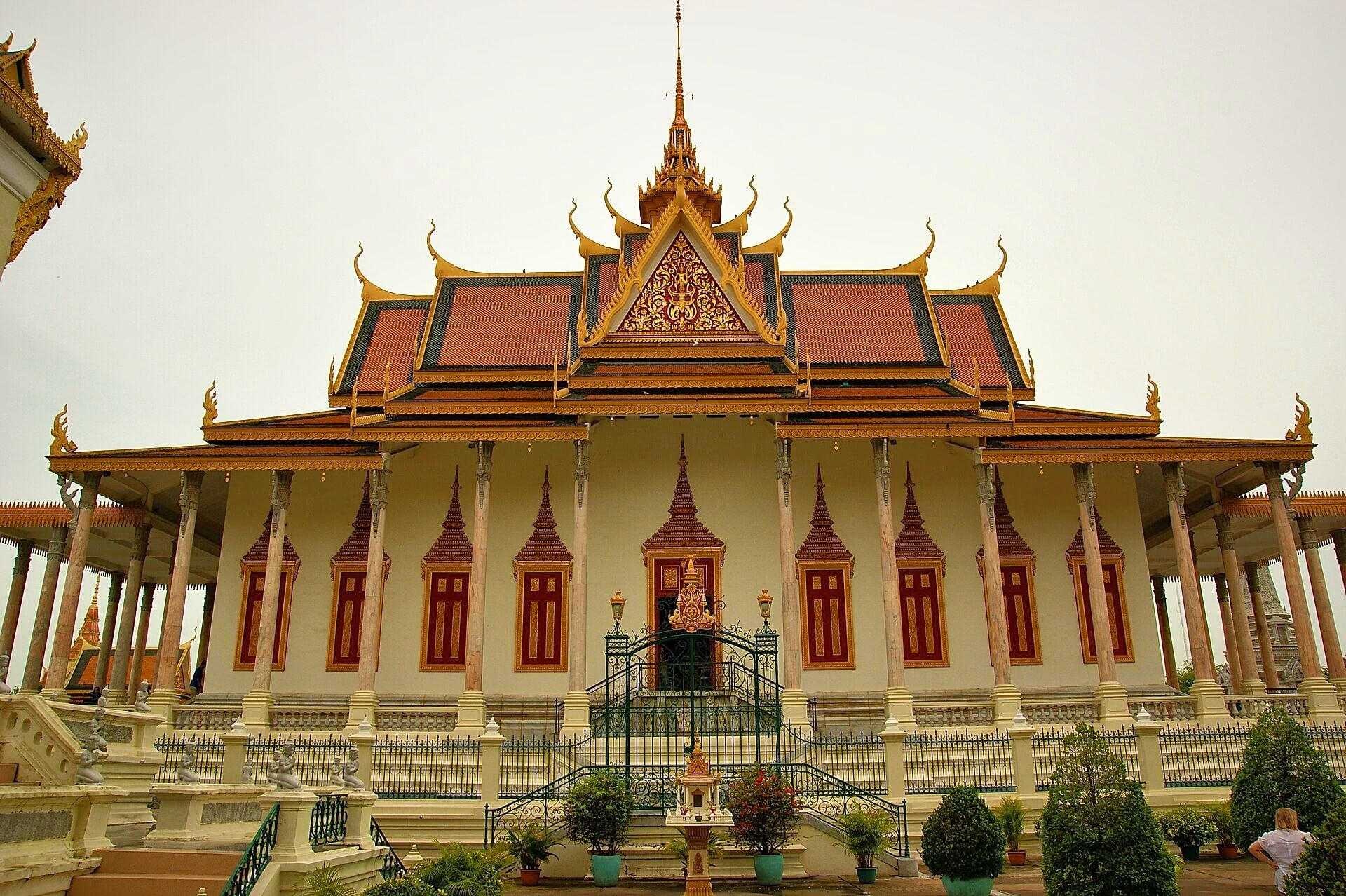
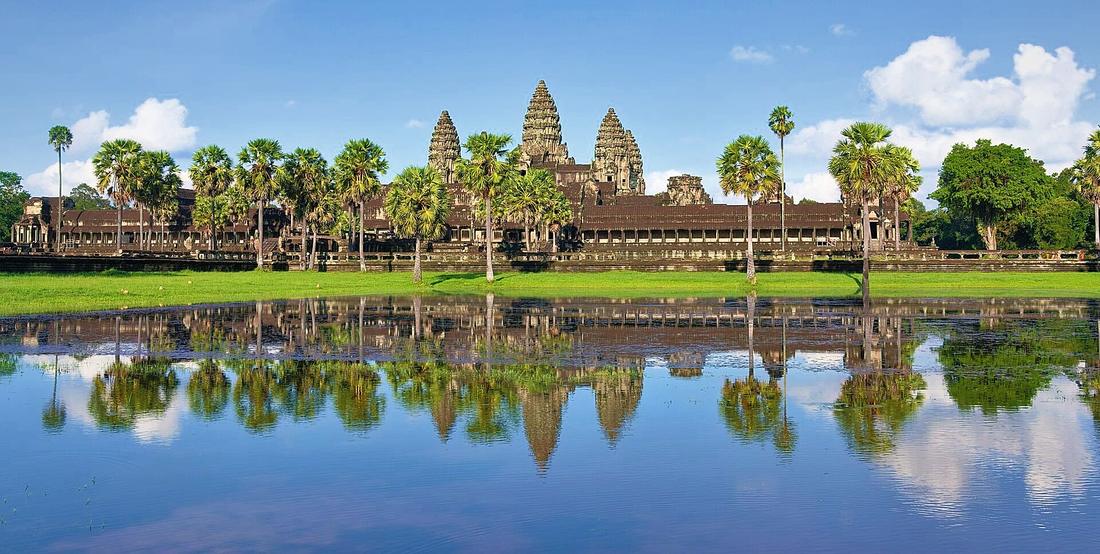
Wear a top that covers your shoulders and trousers or a skirt below the knee. News reports say Angkor refuses entry to visitors dressed immodestly, under a rule effective 4 August 2016.
The rule. News reports say APSARA announced in July 2016 that trousers or skirts must extend below the knees and shirts must cover the shoulders, effective 4 August.
Where it bites. One guide says the rule is enforced most strictly at the upper level of Angkor Wat.
No pass. An APSARA spokesman, Long Kosal, said in 2016 that visitors in revealing clothes would not be allowed to buy a temple pass.
The reason. The Apsara Authority spokesman said revealing clothes disrespect the temple's sanctity. An operator guide suggests packing shirts that cover shoulders and elbows.
Kit to leave behind. Angkor Enterprise discourages backpacks, sharp-tipped umbrellas, tripods and high heels inside the temples.
Hands off. Angkor Enterprise says touching carvings, sitting or leaning on fragile structures, taking artifacts and graffiti are strictly prohibited.
Smoke and litter. An operator guide says Angkor Archaeological Park is a smoke-free zone and asks you to carry your trash out.
Memorials. Tuol Sleng requires appropriate clothing, with legs and arms covered, and solemnity and respect from visitors.
Angkor Enterprise points visitors to the Code of Conduct page at apsaraauthority.gov.kh for what is allowed and not allowed at the temples.
At every wat and every home. When a doorway has a pile of footwear beside it, add yours.
Wat and pagoda
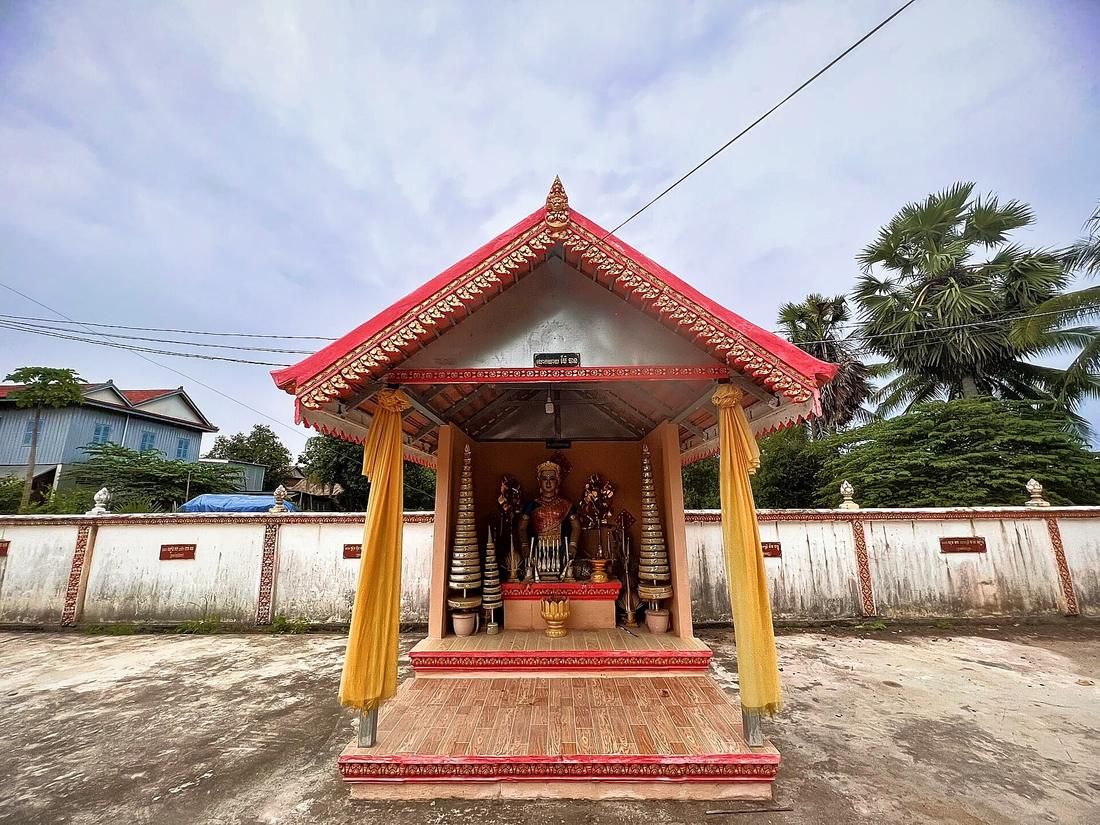
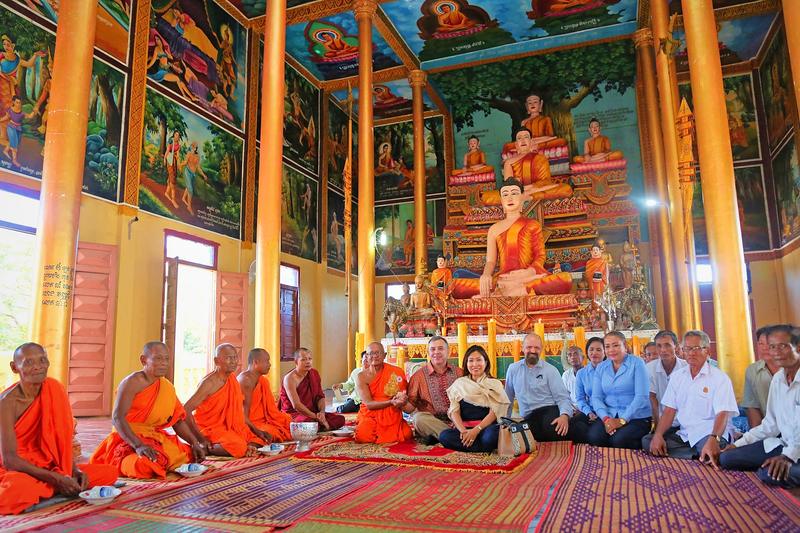
An operator guide says to remove both when entering a wat, a local home or a sacred area. Official guidance names pagodas and the Royal Palace.
Local home
Official guidance says guests leave their shoes at the entrance. Footwear also comes off entering temple complexes, one guide says.
Sitting
At pagodas do not sit cross-legged or with legs outstretched, per official guidance. One guide calls stretching legs and feet out in front of others offensive.
One guide says that to a Buddha image the palms go close to the face and then toward the ground three times. A plain sampeah is enough for a visitor.
No to all three, and for women, no contact with monks at all. The head carries the weight of the rule; monks are respected for their role.
Official guidance calls the head the most sacred part of the body. One guide says Khmer culture holds that it contains a person's soul.
Do not touch or pat the head of people, even children, according to official guidance.
One guide says it is rude for a younger person to put a hand on an elder's shoulder.
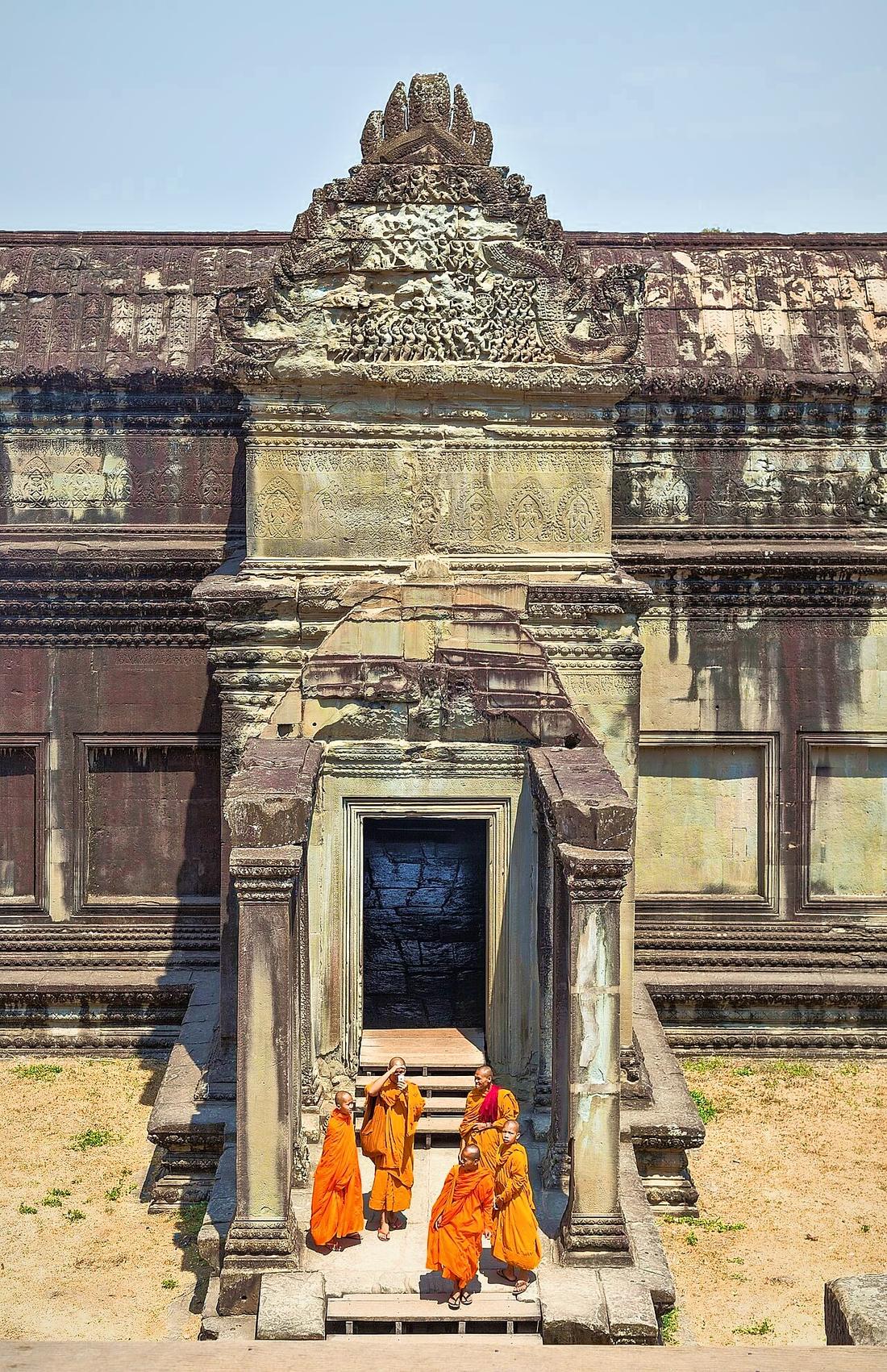
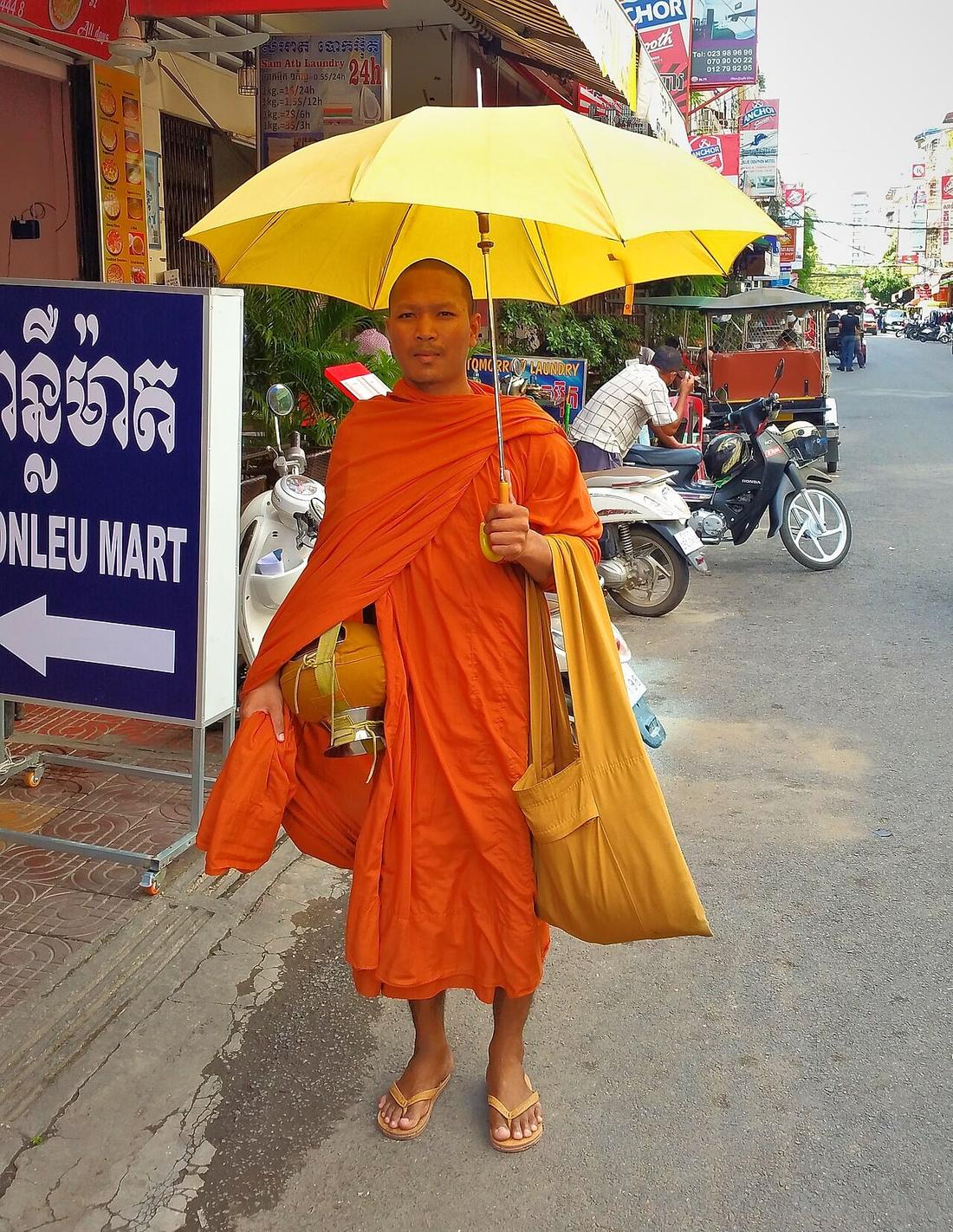
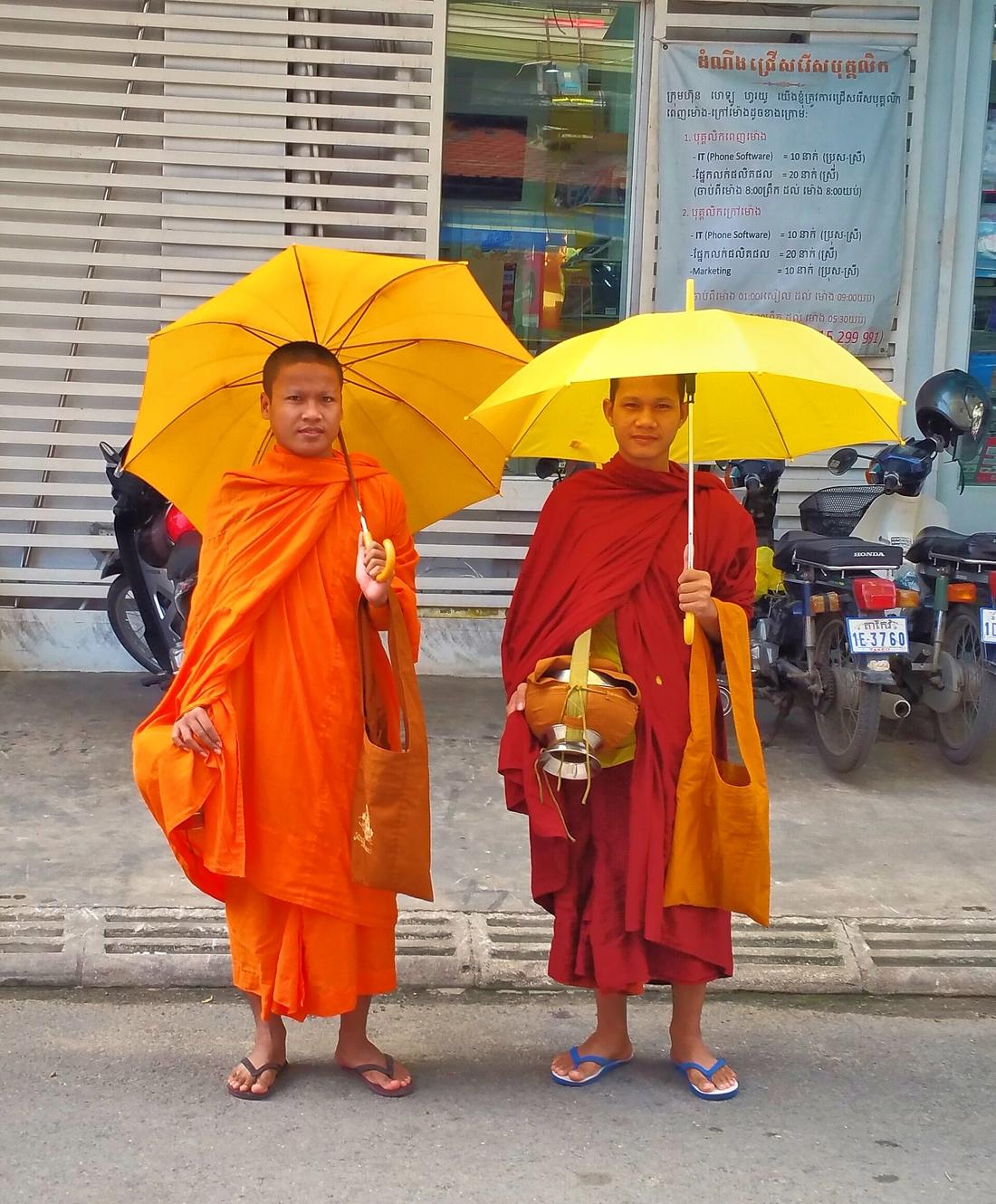
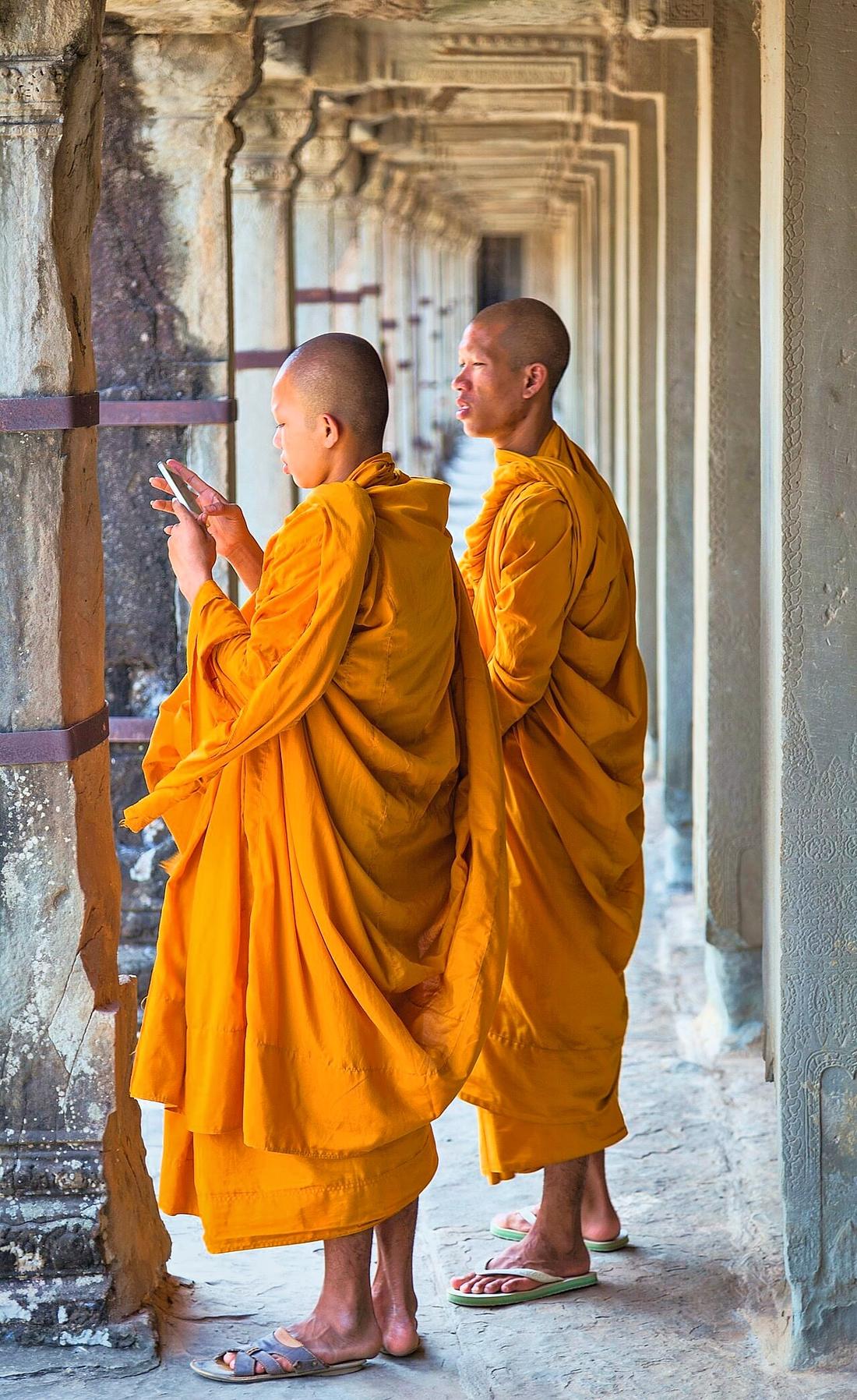
Monks, nuns and lay spiritual leaders are greatly respected in their communities, per one guide. It adds that monks are generally forbidden physical contact with women.
Women are not allowed to touch a monk's robe or body, per official guidance. An operator guide says to place an item on a table rather than hand it over.
One guide says a boy may serve at a temple and then as a novice monk, so young monks are common.
Because feet are the lowest part of the body, and an operator guide says they are seen as spiritually unclean. The head sits at the other end of the same scale.
Use both hands or the right hand with the left supporting it. Using only the left hand is taboo, one guide says.
Gifts. Official guidance says gifts, especially to elders, are presented with both hands.
One-hand version. One guide says the right hand passes while the left supports the right elbow.
Left only. One guide says using only the left hand to give or receive is taboo.
Accept the offer. One guide says guests accept food or drink offered, even a single sip or bite, to honour the host.
Who eats first. One guide says the eldest person at the table starts eating first.
Yes, after you ask. Official guidance says to ask permission before photographing people.
Two festivals worth knowing: Khmer New Year in April and Pchum Ben, a 15-day festival for deceased relatives.
One guide says Khmer New Year usually falls on 13 or 14 April and is a three-day public holiday. Temples mound a big pointed hill of sand representing a stupa, and tables with flower and food offerings for ancestors are commonly set up. Pchum Ben is a 15-day festival culminating on the 15th day of the tenth Khmer month, when, one guide says, families honour deceased relatives of up to seven generations. One guide says the boat races at Bon Om Touk are the largest sporting event in the country. UNESCO lists the Royal Ballet of Cambodia (2008) and Kun Lbokator martial arts (2022).
Stay calm, quiet and covered up. Cannabis is illegal, including possession and use.
Temper
An operator guide says public anger makes everyone lose face, so stay calm, patient and polite.
Affection and noise
Official guidance calls kisses and hugs in public inappropriate and says to avoid shouting, loud laughter and excessively loud speech.
Law
Official advice says cannabis offences, including possession and use, are serious crimes, and it is illegal to carry it out of Cambodia.
 Cambodia religionTheravada Buddhism and temple customs
 Cambodia travel tipsAll the practical basics in one place
 Is Cambodia safe?Risks and emergency contacts
 Cambodia currencyRiel, dollars and paying in cash
 Cambodia visaWhich visa and how to get it
 Cambodia arrival cardThe online form before you fly
Khmer language →Basic Khmer words and phrases for travellers
 Cambodia packing listTemple-ready clothes and more
Yes. News reports say APSARA required trousers or skirts below the knees and shirts covering the shoulders from 4 August 2016, and that visitors dressed immodestly are refused entry. One guide says the rule is enforced most strictly at the upper level of Angkor Wat.
Ask first. Official guidance says to ask permission before photographing people, and one guide adds that a refusal from a monk should be respected.
Yes. Official guidance says not to point your feet at someone or something. One guide says never to point the soles at another person, and an operator guide says feet are seen as spiritually unclean.
Yes. Take shoes and hat off at a wat, a local home or any sacred area. Official guidance says the same for pagodas and the Royal Palace.
No. Official advice describes cannabis offences, including possession and use, as serious crimes in Cambodia, and carrying it out of the country is illegal.