Plug types
One guide says Cambodia mainly uses US-style A and B plugs, plus C, F and G.
Home › Cambodia travel tips › Packing list
Cambodia packing list · clothes, plugs, season
Pack light, loose clothes for heat of around 30 C, with shoulders and knees covered for the temples. One guide says Cambodia runs on 230 V at 50 Hz and that many wall sockets are universal.
By Laura Brennan · updated
Yes. One travel guide says Angkor requires shoulders and knees covered, and that shorts, skirts above the knee and bare shoulders are not allowed at sacred sites. APSARA's 2016 announcement, reported in the news, says the same.
Outside Phnom Penh and Siem Reap, Wikivoyage says knee-length shorts or trousers are more respectful. Speedos and bikinis are not common in Cambodia except among foreigners. More on manners: Cambodian culture.
Heat is the constant. Average daily highs are around 30 C, with 32+ C common and over 38 C possible just before the rains. May is the warmest month and January the coolest.
Cool and dry
The northeast monsoon brings drier, cooler air from early November to March. Wikivoyage calls it windy, cool and the most popular time to visit. Night temperatures sporadically fall below 20 C, mainly in January, so add one light layer for evenings.
Hot
Wikivoyage says April and May are hot and dry, with temperatures peaking at 40 C. Pack sun protection first and keep the clothes thin.
Wet
Nomadic Matt's Cambodia guide says to bring just a rain jacket. An Afar writer keeps a poncho and a camera dry bag handy in case torrential deluges occur.
Sources differ on the wet season: one guide puts it from about mid-May to mid-September or early October, while Rough Guides gives June-October and notes lower prices and thinner crowds. One guide says relative humidity is high all year, usually exceeding 90%, while dry-season daytime humidity averages around 50 percent or slightly lower. Rain also varies by place: Phnom Penh averages 1,075.8 mm a year and Sihanoukville 2,196.5 mm, about twice as much.
One guide says Cambodia uses 230 V at 50 Hz, and that North American 120 V devices need extra care.
One guide says Cambodia mainly uses US-style A and B plugs, plus C, F and G.
The same guide says many wall sockets are universal and accept A, B, C, D, E, F, G, I and O plugs.
The guide gives Cambodia mains as 230 V at 50 Hz.
According to that guide, North American 120 V devices need to be 230 V compatible or use a transformer.
Pack sunscreen with an SPF of at least 15 and a repellent with 20% or more DEET, both per the CDC.
CDC advises sunscreen with an SPF of at least 15, protective clothing and shade at midday. It says heat-related illness such as heat stroke can be deadly.
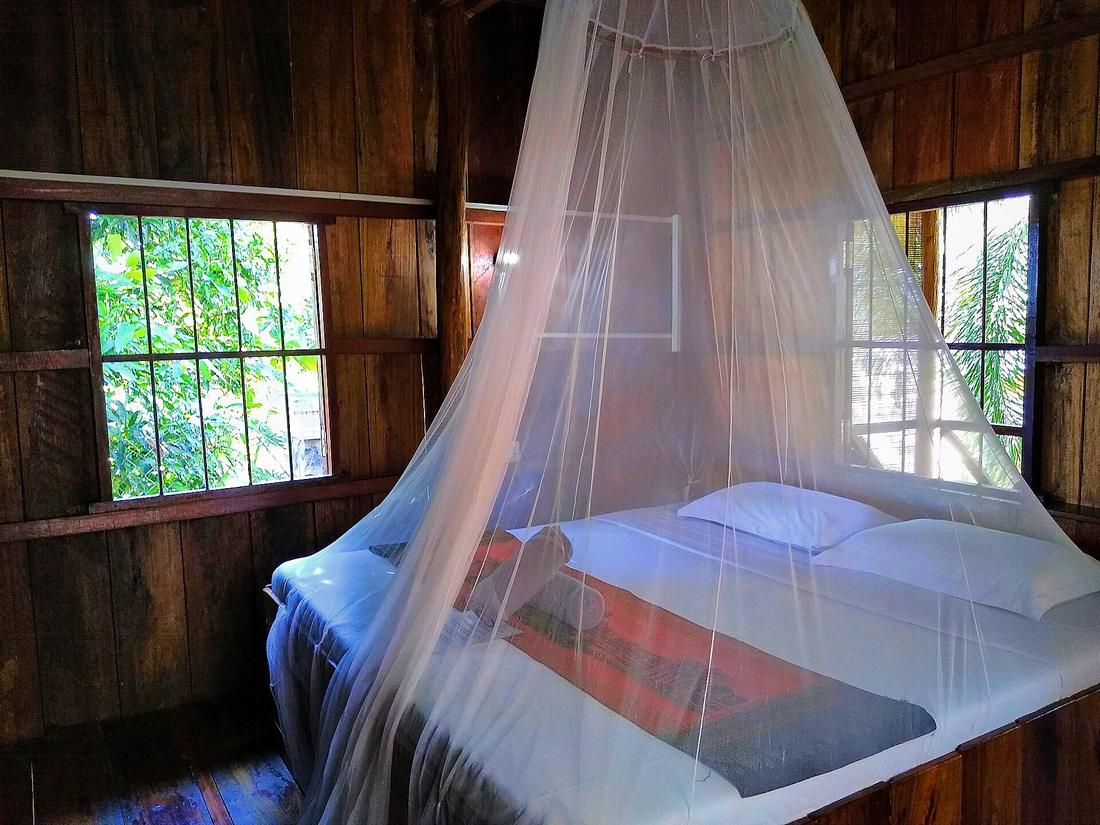
CDC: dengue is a year-round risk, so prevent mosquito bites. It also advises sleeping in air-conditioned or screened rooms, and a bed net if the sleeping area is exposed to the outdoors.
CDC: the risk is negligible in Phnom Penh, Siem Reap and Angkor Wat; transmission is in rural and forested pockets.
Wikivoyage says to assume tap water outside the main cities is not potable. CDC advises avoiding wading or swimming in fresh unchlorinated water.
CDC advises washing hands often, especially before eating.
CDC suggests bringing a travel health kit with items appropriate for your activities.
The temple park opens from 05:00 and closes at 18:30, so the bag is built for a long day outdoors.
Large bottles of water. Wikivoyage suggests carrying large bottles at Angkor and drinking 2-3 litres a day.
Sunblock. Wikivoyage advises bringing it and staying well hydrated.
A covering layer. A shirt with sleeves and long trousers or a long skirt; see the temple rules above.
Repellent. CDC advises 20% or more DEET.
Hand cleaning. CDC advises washing hands often, especially before eating.
A rain layer in the wet months. A poncho or light jacket, as above.
One guide says Koh Rong Samloem is off the mainland grid: each resort generates its own power by generator or solar.
Power. On the separate island of Koh Rong, one guide says resorts mostly run on generators, with power often only evenings around 18:00-22:00. Charge devices when the power is on.
Cash. One guide says there are no ATMs on Koh Rong Samloem and nowhere accepts cards, so bring cash from the mainland.
Wind. Saracen Bay gets strong north-eastern winds between December and March, so a light windproof layer helps on the beach.
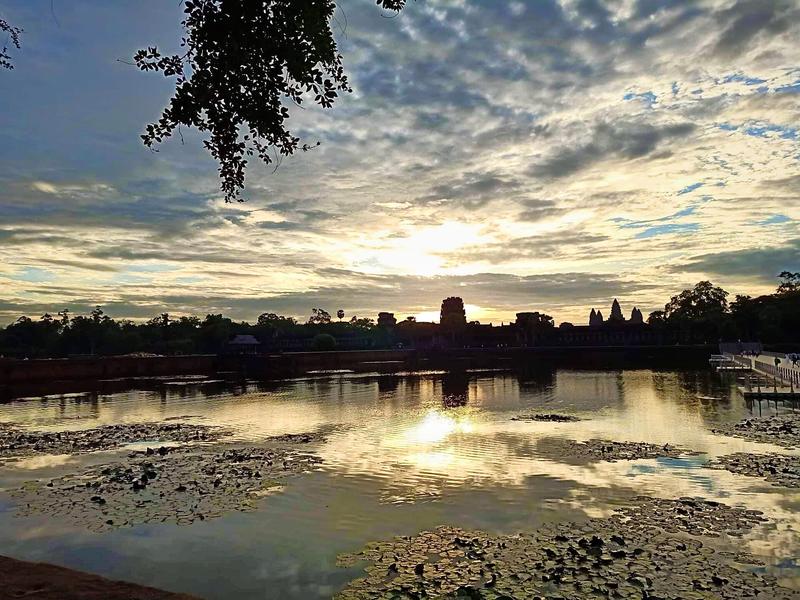
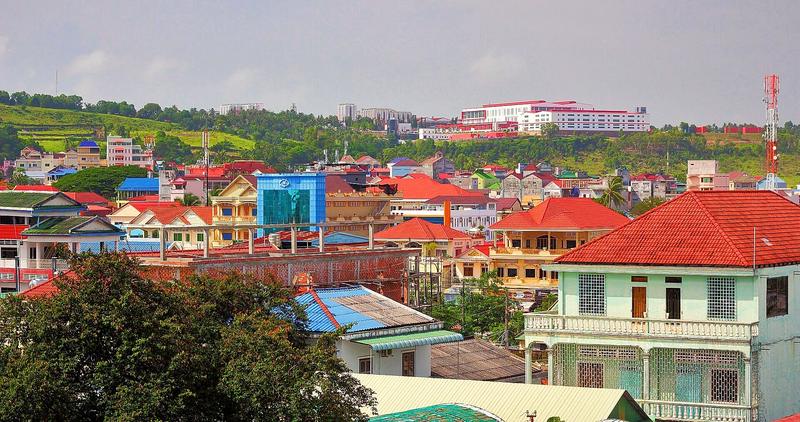
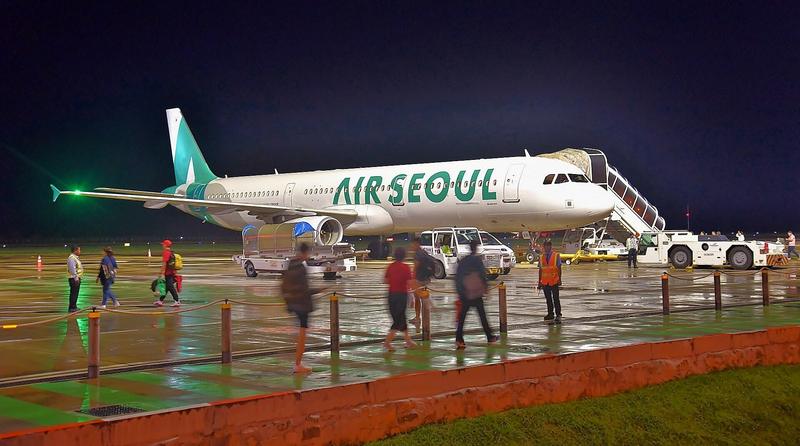
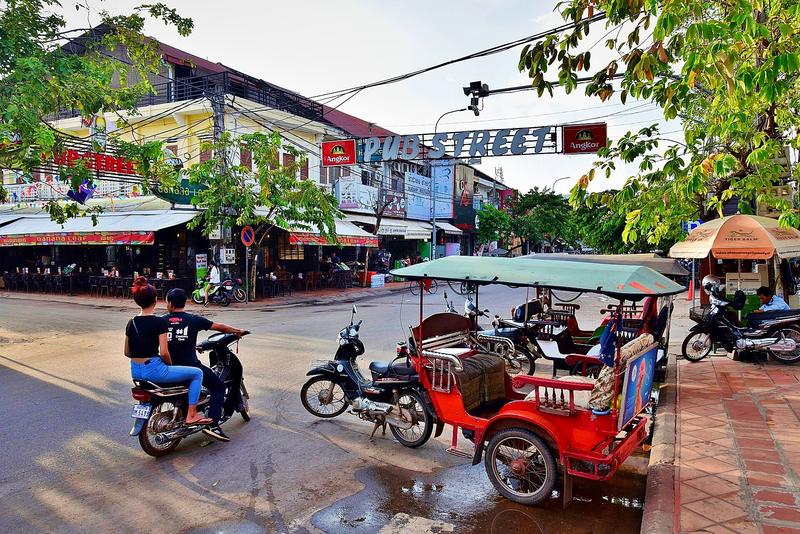
Three photos from Cambodia. Swipe or use the arrows.
 1/3
 2/3
 3/3
 Cambodia travel tipsThe hub for practical advice before you go
 Cambodia currencyHow dollars and riel are used day to day
 Cambodia visaEntry requirements for visitors
 Is Cambodia safe?Safety, health and emergency basics
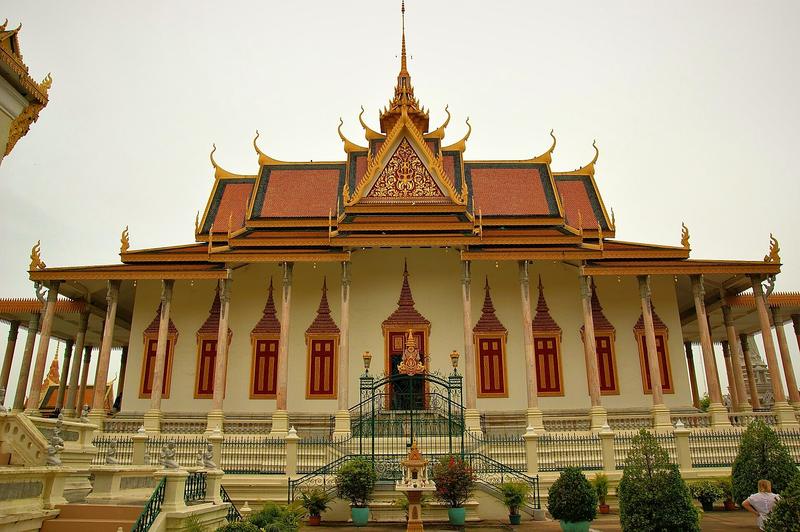 Cambodian culturePchum Ben is a Cambodian 15-day religious festival
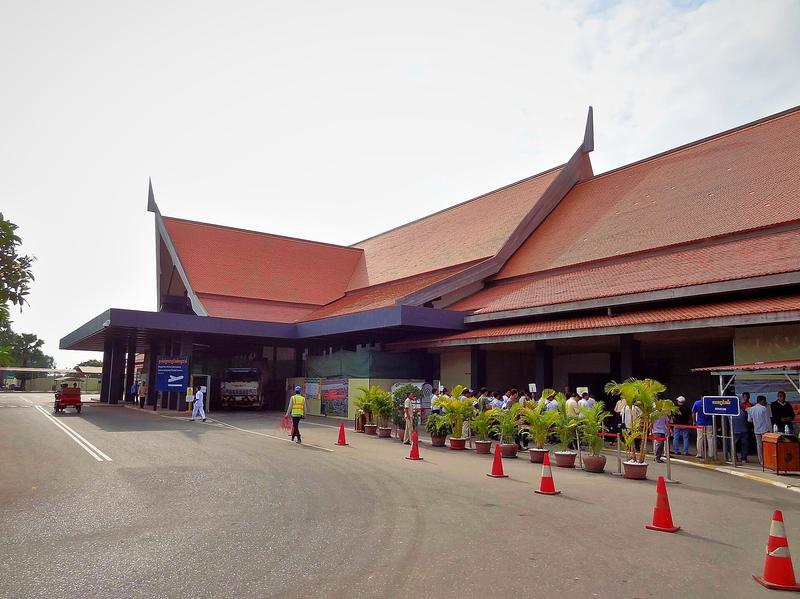 Cambodia arrival cardThe e-Arrival Card is free and, for air arrivals, must be submitted within 7 days before arrival (UK FCDO).
Khmer language →Useful Khmer words and phrases
One guide says Cambodia mainly uses US-style A and B plugs, plus C, F and G, with 230 V at 50 Hz mains.
One guide says North American 120 V devices need to be 230 V compatible or use a transformer.
One guide says no: shorts, skirts above the knee and bare shoulders are not allowed at sacred sites, enforced most strictly at Angkor Wat's upper level.
Nomadic Matt's Cambodia guide says to bring just a rain jacket for the wet months.
The CDC says malaria risk is negligible in Phnom Penh, Siem Reap and Angkor Wat; transmission is in rural and forested pockets. Dengue is a year-round risk, so prevent mosquito bites.
CDC suggests bringing a travel health kit with items appropriate for your activities. It recommends the hepatitis A vaccine for unvaccinated travellers to Cambodia and does not recommend the Japanese encephalitis vaccine for short-term travel to urban areas.
Wikivoyage says to assume tap water outside the main cities is not potable, and advises drinking 2-3 litres of water per day.
Travellers report that toiletries and consumables are easy to buy locally rather than pack. One traveller suggested bringing sunscreen from home.
One operator says its homestays provide drinking water, candles, mosquito coils and shampoo, with electricity 24/7.
One guide says the US dollar circulates alongside the riel, especially in urban and tourist areas. See Cambodia currency.