ACLEDA
$5per withdrawal
- Limit
- $500 a time (one guide).
- Also
- Can pay out smaller dollar notes.
- Smaller notes
Home › Cambodia travel tips › Currency
Cambodia money guide · USD and KHR
Cambodia runs on two currencies at once: US dollars for bigger bills and riel for small change. Count on about 4,000 riel to US$1, and bring crisp $1, $5, $10 and $20 notes.
By Laura Brennan · updated
Expect US$5 to 10 per withdrawal on a foreign card (a February 2026 guide). Listed fees share one $0-30 scale.
$5per withdrawal
$5per withdrawal
$5-17depends on card
$6-10sources differ
Our view: small notes
Most ATMs pay out $100 notes, awkward for a noodle stall. One guide says ACLEDA can give smaller notes.
Our view: fewer fees
The fee is per withdrawal, so a bank with a $1,000 or $2,000 cap costs less per dollar than a $500 one.
Our view: the currency prompt
Conversion markups typically run 3 to 7 percent and can reach 10 to 12, per one guide. Let your own bank convert.
Mekong Bank and Maybank both stopped free foreign-card withdrawals in late 2023. One guide says Maybank Cambodia ATMs stay fee-free if you hold a Maybank Singapore account. Another puts the SBI Ly Hour cap at about USD 200 a time, lower than the USD 500 most banks allow.
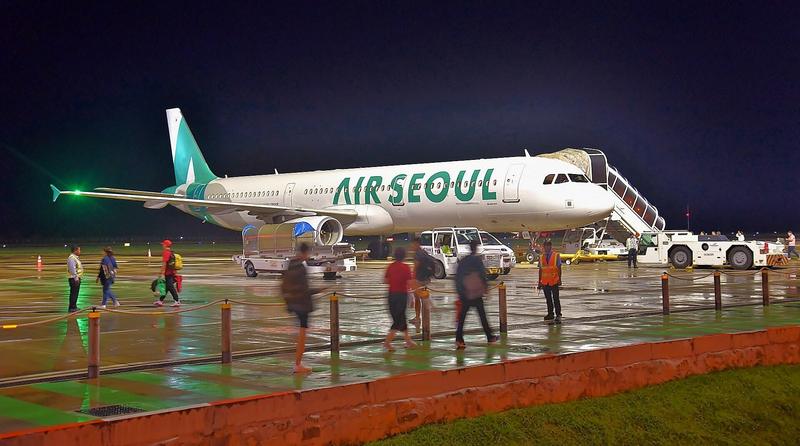
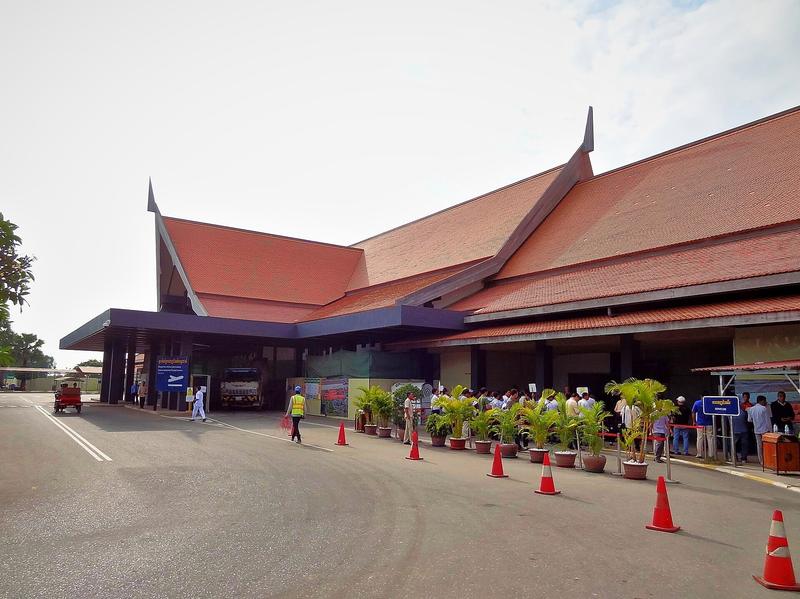
ATMs almost always take Visa and Mastercard; other cards may need several tries, so carry one of each if you can. One guide says the arrivals-hall ATM at Techo airport in Phnom Penh charges about $5 on foreign cards.
Many ATMs let you choose dollars or riel. Wise advises being charged in riel rather than your home currency; either way, decline the home-currency conversion.
Four things to sort before you spend: your notes, the ATM, the changer and your change.
Get clean $1, $5, $10 and $20 notes, as damaged or heavily marked dollars may be refused. Leave foreign coins at home: businesses cannot reuse them. Cash for the visa on arrival is covered in the checklist below.
Look at the card slot for skimming devices and cover the keypad as you type your PIN. Decline the offer to charge you in your home currency.
Use a money changer in town rather than the airport. The section below has the rates, the hours and what to watch for.
Pay in dollars and expect anything under US$1 back in riel. Count it, since sellers often round down, and look over any dollar notes you are handed.
No extra tip is needed when a service charge is already on the bill. In a taxi, round up the fare and let the driver keep the change.
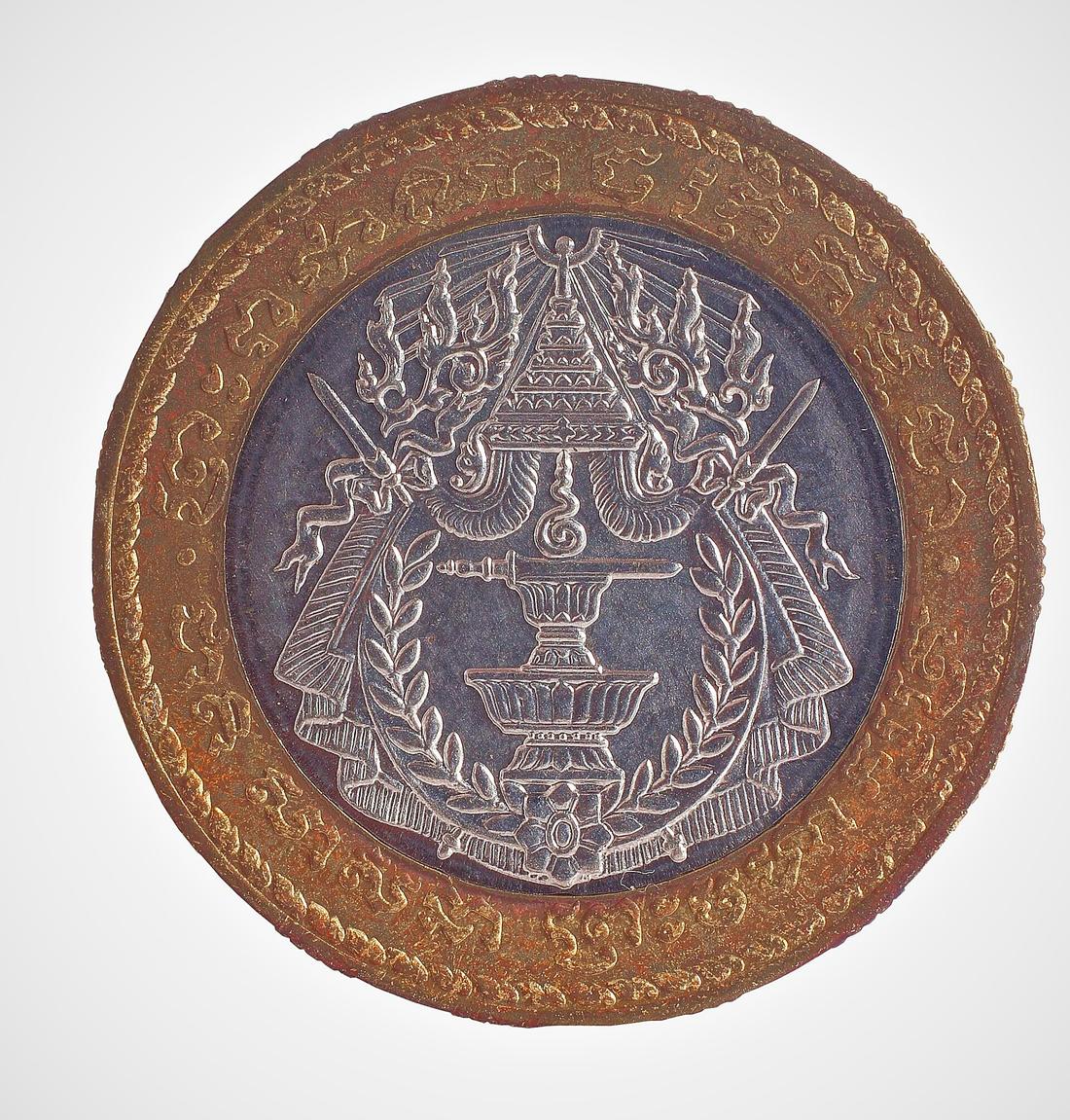
Travellers report a shortcut for dollars to riel: double the dollar price, double it again, then add three zeros, which works at about 4,000 riel per dollar. A local view shared by travellers: there is no tipping culture, and if you tip, a dollar or 2,000 riel is enough. Travellers also report that locals mostly tip security guards and chauffeurs.
One traveller tip is to carry only a few dollars in paper money and pay everything else electronically. Some hotels and bars add 5 to 10 percent as a service charge.
Change in town at a money changer, not at the airport. The Ministry of Tourism says changers offer a slightly better rate than banks.
Our view: best rate
Ignore "no commission" signs and compare the rate, as Wise warns such changers often give poor rates. Count the cash at the counter and keep the receipt.
Our view: second choice
Rates run slightly below a changer's. Most banks open 8:00 to 15:00 or 16:00, Monday to Friday.
Our view: avoid
Wise says airports and hotels almost always offer poor rates and high fees. One guide says changing in town usually beats the airport exchange office.
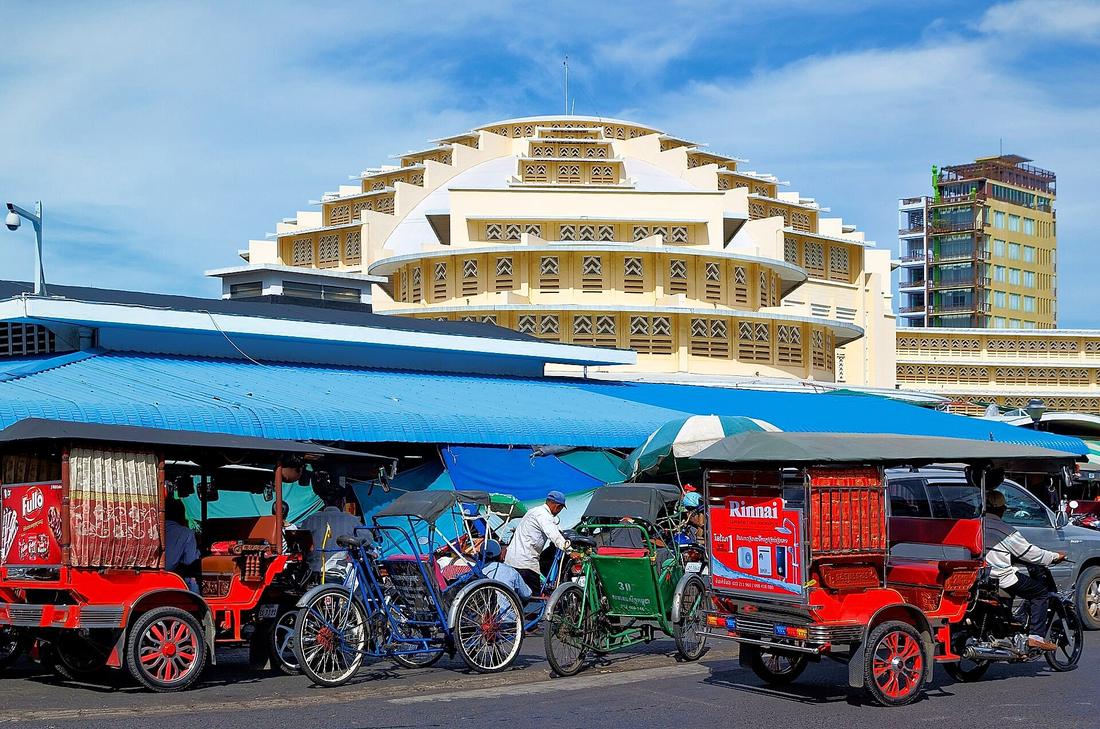
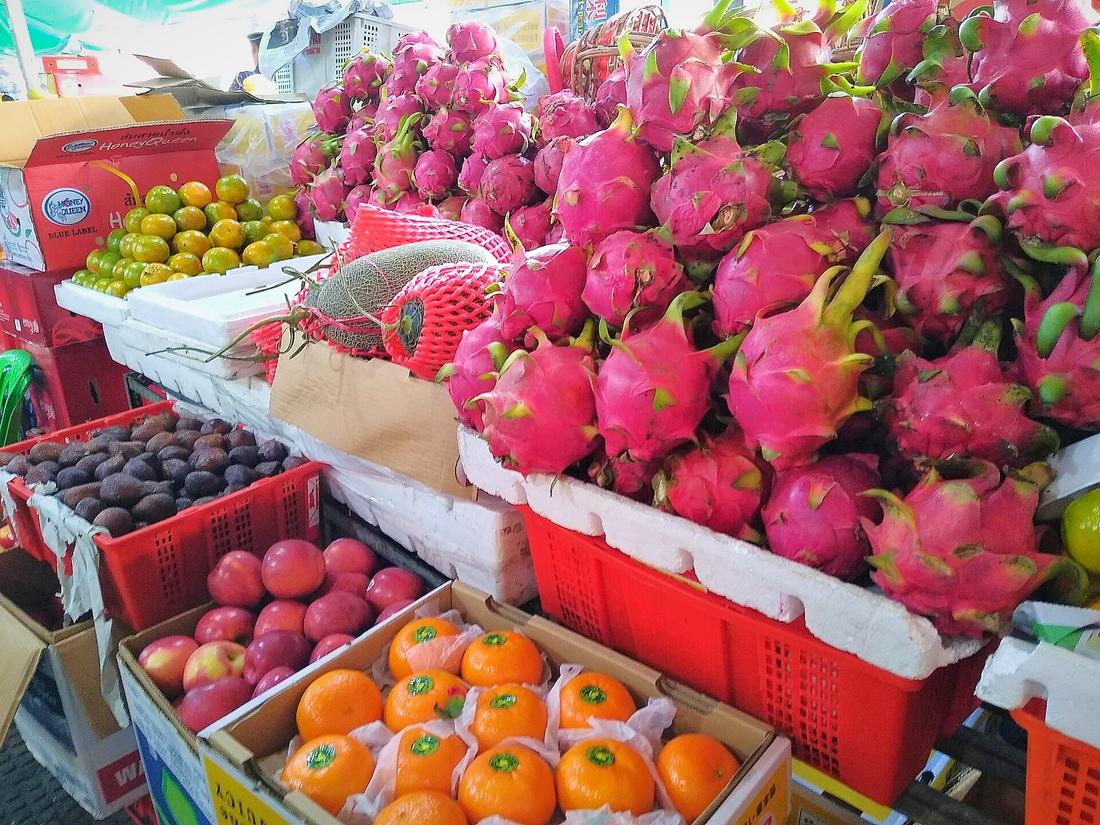
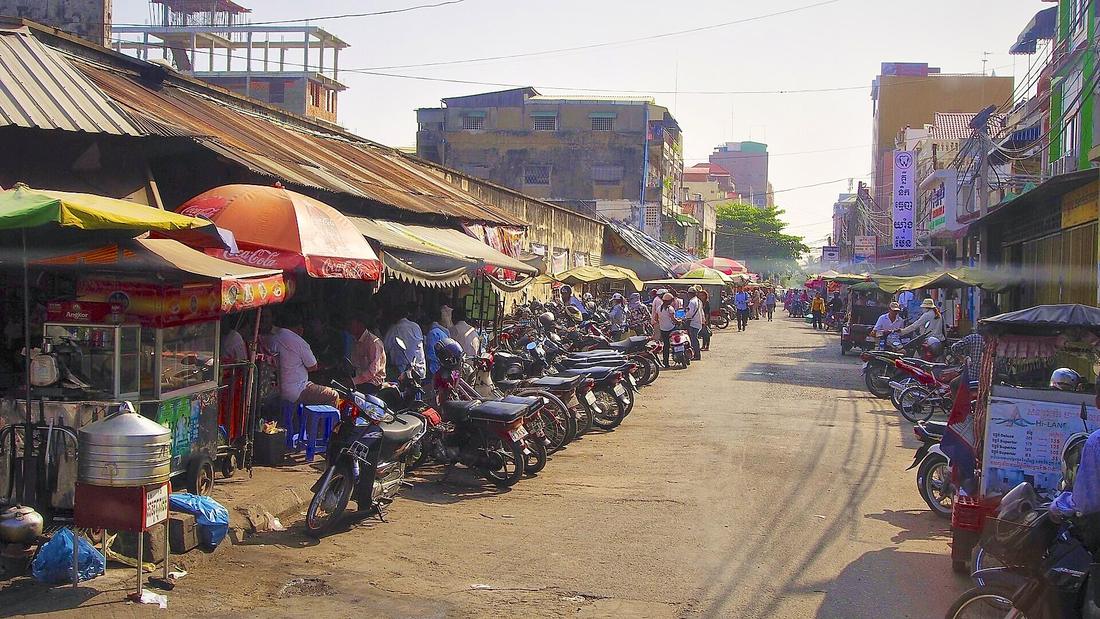
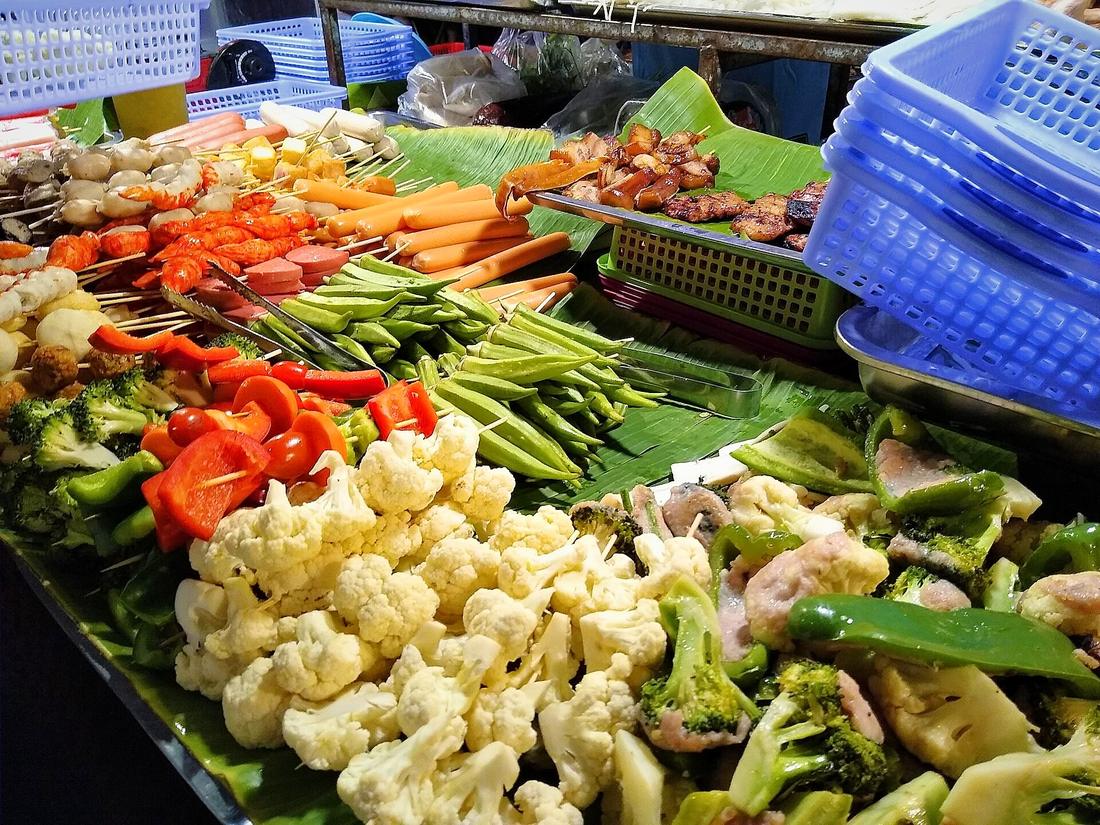
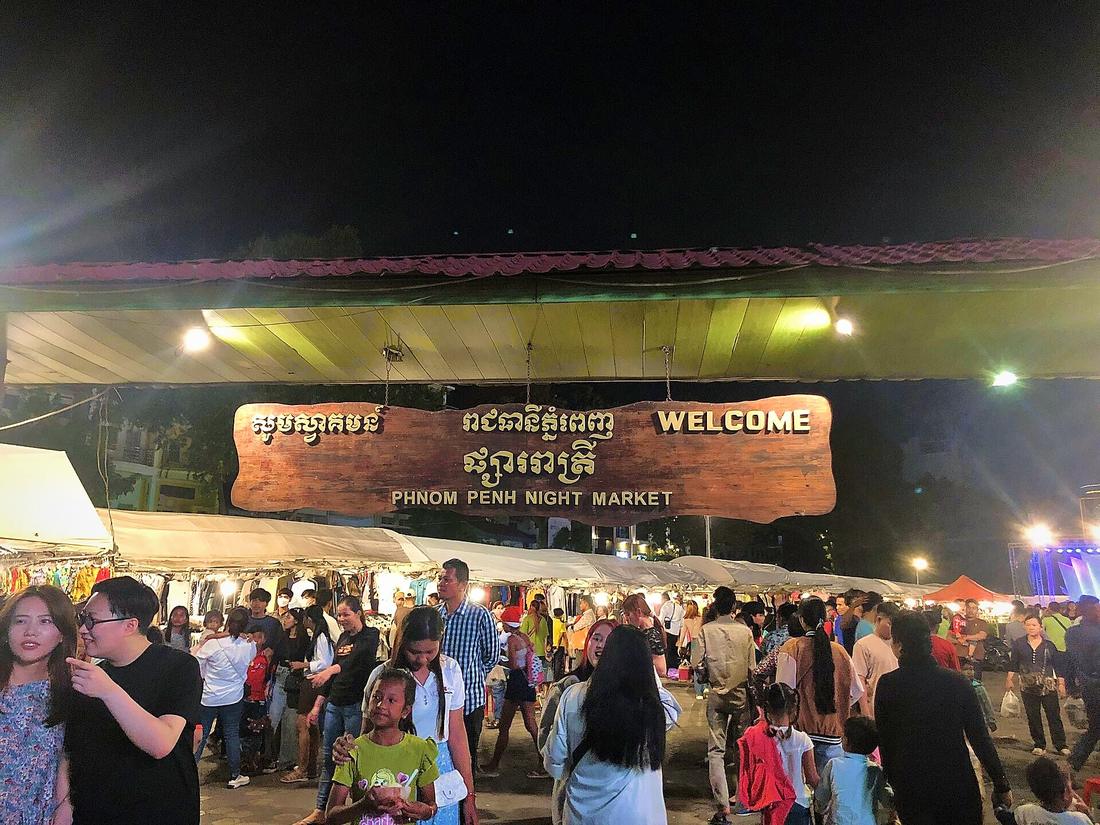
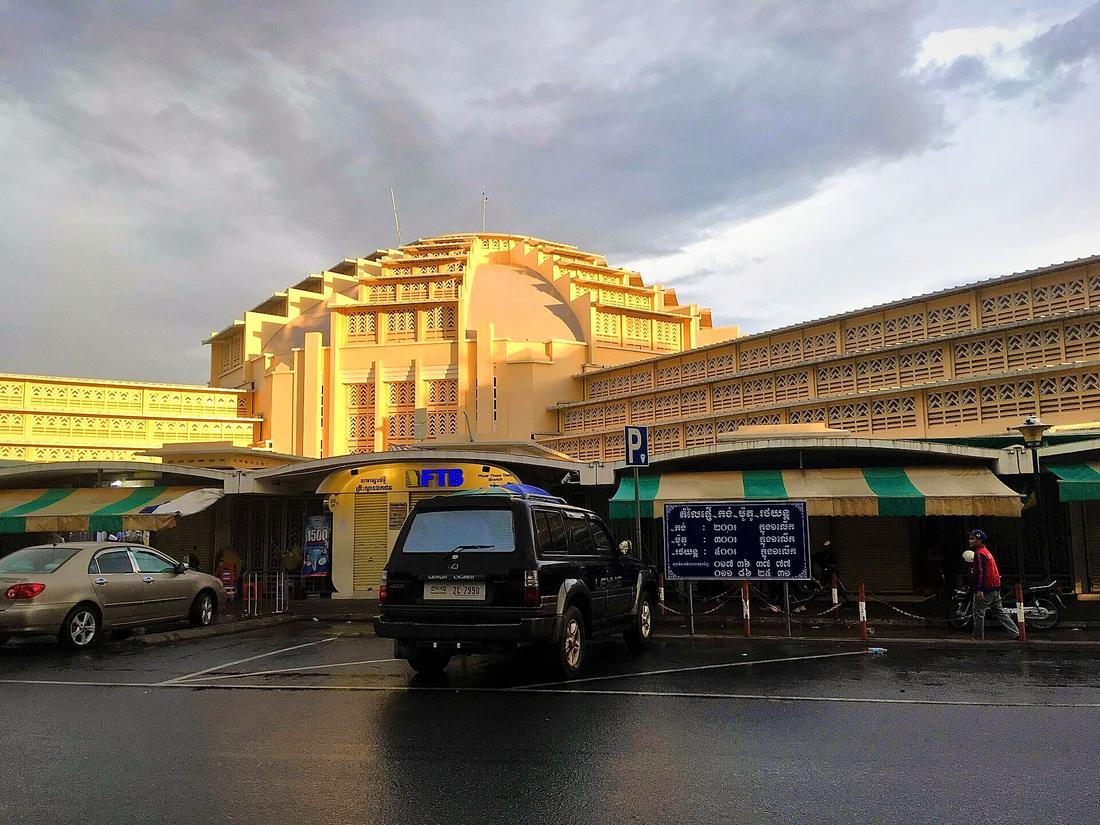
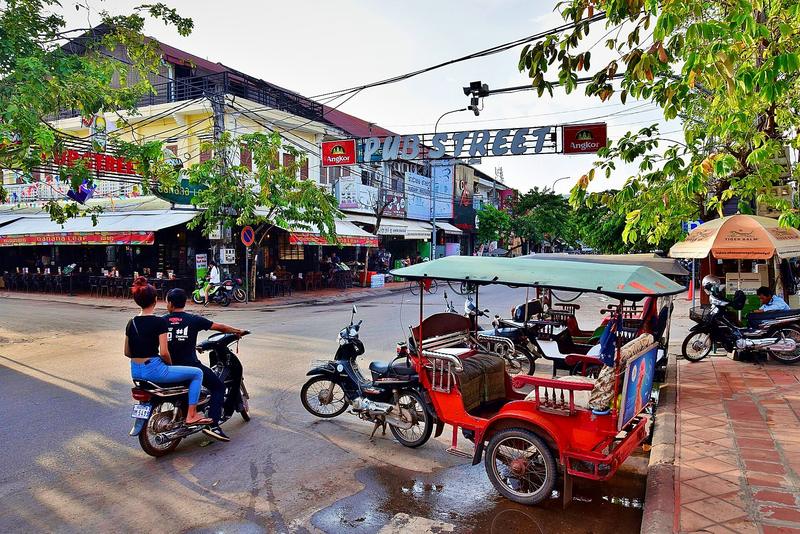
Market stalls and streets in Phnom Penh. Swipe or use the arrows.
 1/4
 2/4
 3/4
 4/4
Do your sums at 4,000 riel per dollar. The real rate runs slightly higher, between 4,011 and 4,075 in the figures below.
The National Bank of Cambodia sets the official rate; its review puts the 2025 average at 4,011 after the riel strengthened 1.5 percent. Trading Economics showed about 4,075 on 20 November 2026, with 4,070 in another field, and is not the bank's reference rate. Dollars made up 83.4 percent of broad money at the end of 2025.
The riel's ISO code is KHR, and exchange shops may write it that way. Coins exist but rarely circulate. The riel was reintroduced in 1980, and the National Bank marked the anniversary on 20 March 2026.
One guide says notes under 1,000 riel are not always useful, so do not hoard small ones. In January 2026 the Deputy Prime Minister urged that price tags be set in riel whatever the amount.
QR payment for visitors is the big change: tourists can now pay at shops showing the KHQR code through a central-bank app.
Cards in cities, cash everywhere else. Carry a physical card and backup cash: contactless is not universal.
Most major hotels and well-known restaurants take cards, mostly in the big cities. Visa, MasterCard and JCB are the most widely accepted, says the Ministry of Tourism.
Tickets bought online from the official seller are paid by card: Visa, Mastercard, UnionPay, JCB, Diners or Discover.
Takes cash and cards in Cambodia, which makes it a simple default for rides.
Pay at any KHQR code. Link a Visa card or top up with Mastercard; top-ups at partner counters such as airports carry no fee, per one guide.
Tuol Sleng takes only riel or dollars, and one guide says Choeung Ek is cash only. The Kulen entrance fee is cash in dollars or riel.
One guide says Koh Rong Samloem has no ATMs and nowhere takes cards. On Koh Rong, Koh Touch businesses hand out cash for about 10 percent.
Sign-up asks for your email, gender, full name and date of birth; identity checks need a selfie and a passport photo. One soft-launch guide says the daily transfer limit is USD 500 until you are verified. Visa says linking a card adds a cash deposit method.
Card top-up fees: the operator page does not state them, while an August 2024 soft-launch article gave fees starting at 8,000 riel, so sources differ. A 2024 article says you can cash out your remaining balance at airports or hotels before leaving. The app was partly designed to cut problems with damaged banknotes, and at launch only about 60,000 card machines existed against 3.3 million KHQR merchants.
Look at every note, both the ones you hand over and the ones you get back.
Fakes in change. The UK Foreign Office says travellers have reported fake dollar bills given as change in shops and clubs. Check each note is genuine and not torn.
Damaged dollars. One expat site says they often get 5 to 10 percent less than face value, and most banks will not change ripped notes.
Old series. Older dollars with the smaller portraits are not accepted, per the same site.
Worn riel is fine. Riel notes are usually accepted if they are in one piece.
Border changers. Wikivoyage warns that anyone telling you to change into riel at Poipet is running a scam; dollars work there. Moc Bai has currency touts at busy times.
Visa fee in cash. The visa on arrival is cash only; bring clean dollars for it.
Visa fees, safety and etiquette all touch your wallet too.
 Cambodia travel tipsPlanning for a country of roughly 17 million people
 Cambodia visaSticker visas issued before 3 Oct 2026 run to their printed expiry
 Is Cambodia safe?Fire emergency: dial 118
 Cambodian cultureKhmer New Year holiday falls on 14-16 April in 2026
 Cambodia arrival card
Khmer language →Basic Khmer words and phrases for travellers
 Cambodia packing listThe CDC advises repellent with 20% or more DEET
Yes. Dollars cover larger purchases and riel is used for small change and daily buys. Tourist prices are mostly quoted in dollars, and change under US$1 usually comes back in riel.
Use about 4,000 riel to US$1 for mental maths. The riel averaged 4,011 per dollar in 2025, and Trading Economics showed about 4,075 on 20 November 2026 (another field on the same page shows 4,070). The National Bank of Cambodia sets the official rate.
Often, yes. Dollars that are not crisp are often rejected and older notes with the smaller portraits are refused. Worn riel is usually fine if it is in one piece. The checklist above has the rest.
Small change usually comes back in riel, not US coins or small dollar notes. Count it: one expat site warns that sellers often round down and keep the difference.
A February 2026 guide puts the bank fee at roughly US$5 to 10 per foreign-card withdrawal. Listed fees: ACLEDA and PPCBank US$5, ABA US$5 to 17 depending on card, BRED US$6 or US$10 (sources differ). Maximum withdrawals run from US$500 to US$2,000 by bank.
Foreign cards mostly get US$100 notes. One guide says ACLEDA ATMs can dispense smaller dollar notes.
At most major hotels and well-known restaurants, mostly in the big cities. Visa, MasterCard and JCB are the most widely accepted. Outside the cities there are few ways to pay except cash, and contactless is not universal.
The National Bank of Cambodia's payment app for visitors, launched on 19 August 2024. It lets you pay at shops showing the KHQR code. Visa cards issued abroad can be linked, and Mastercard cards can top it up. Sign-up needs a selfie and a passport photo.
Yes. A visa guide gives the tourist visa on arrival as US$30, payable in cash; card payment is not possible, so bring clean dollar notes.
Either works. No extra tip is needed when a service charge is already on the bill. The steps above have the taxi rule.