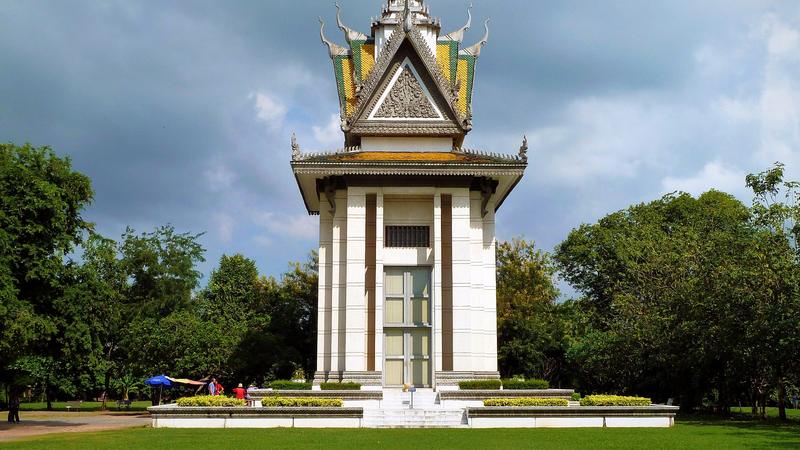
The shape
- Lotus stupa
- Tiered
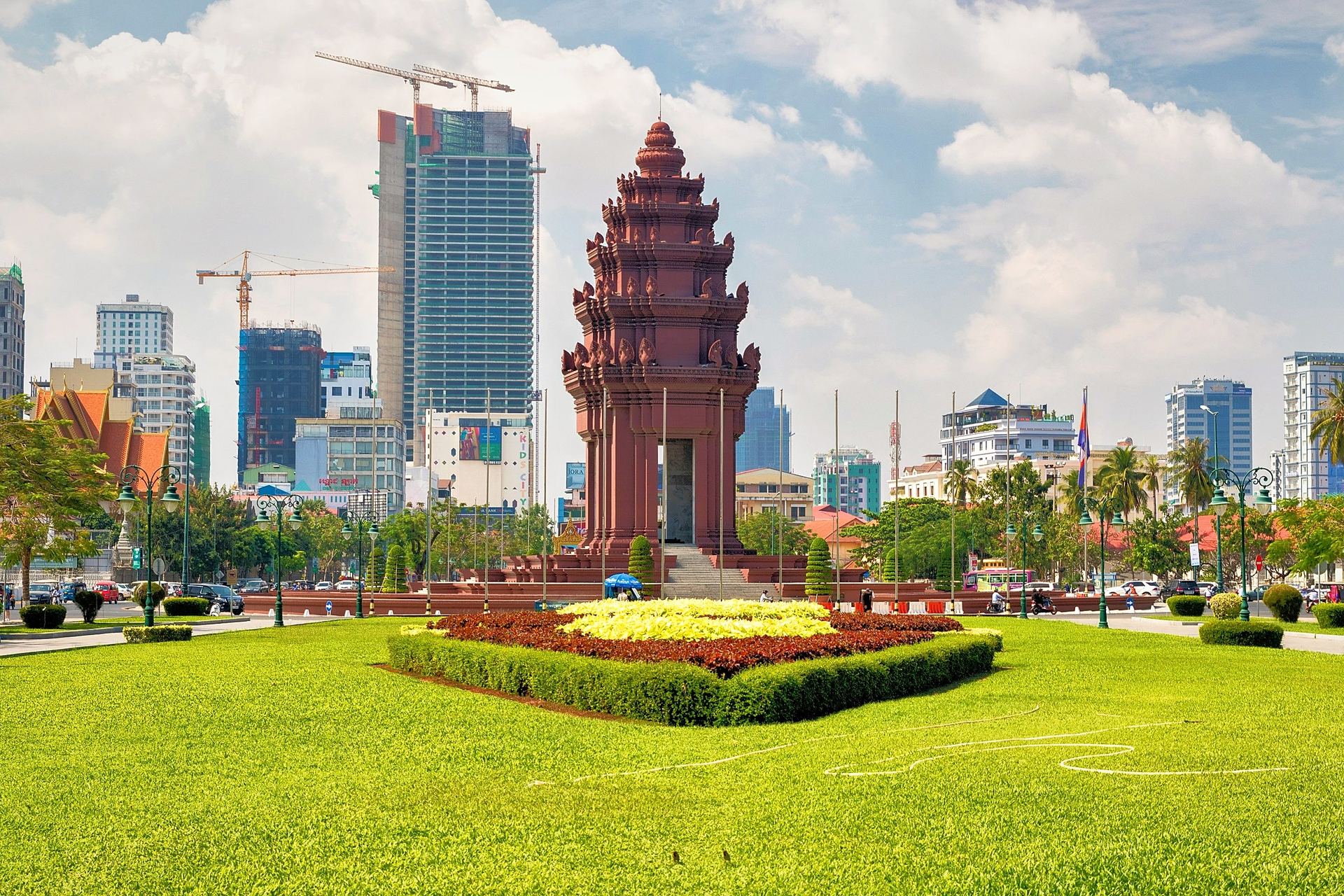
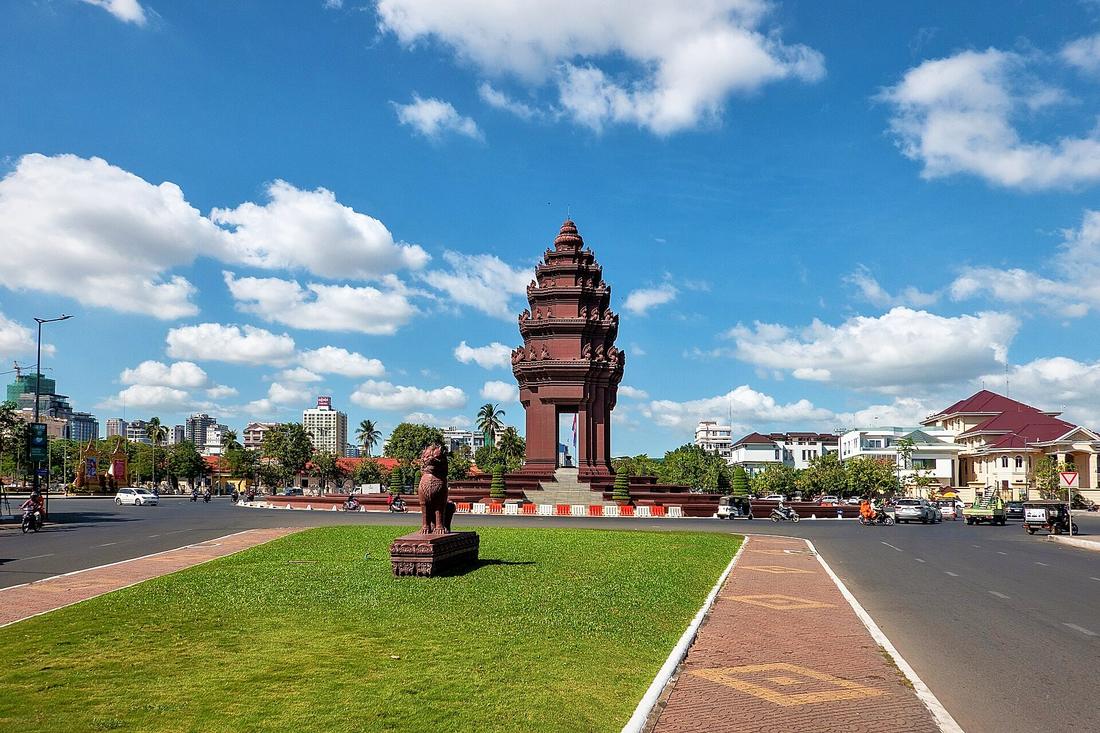
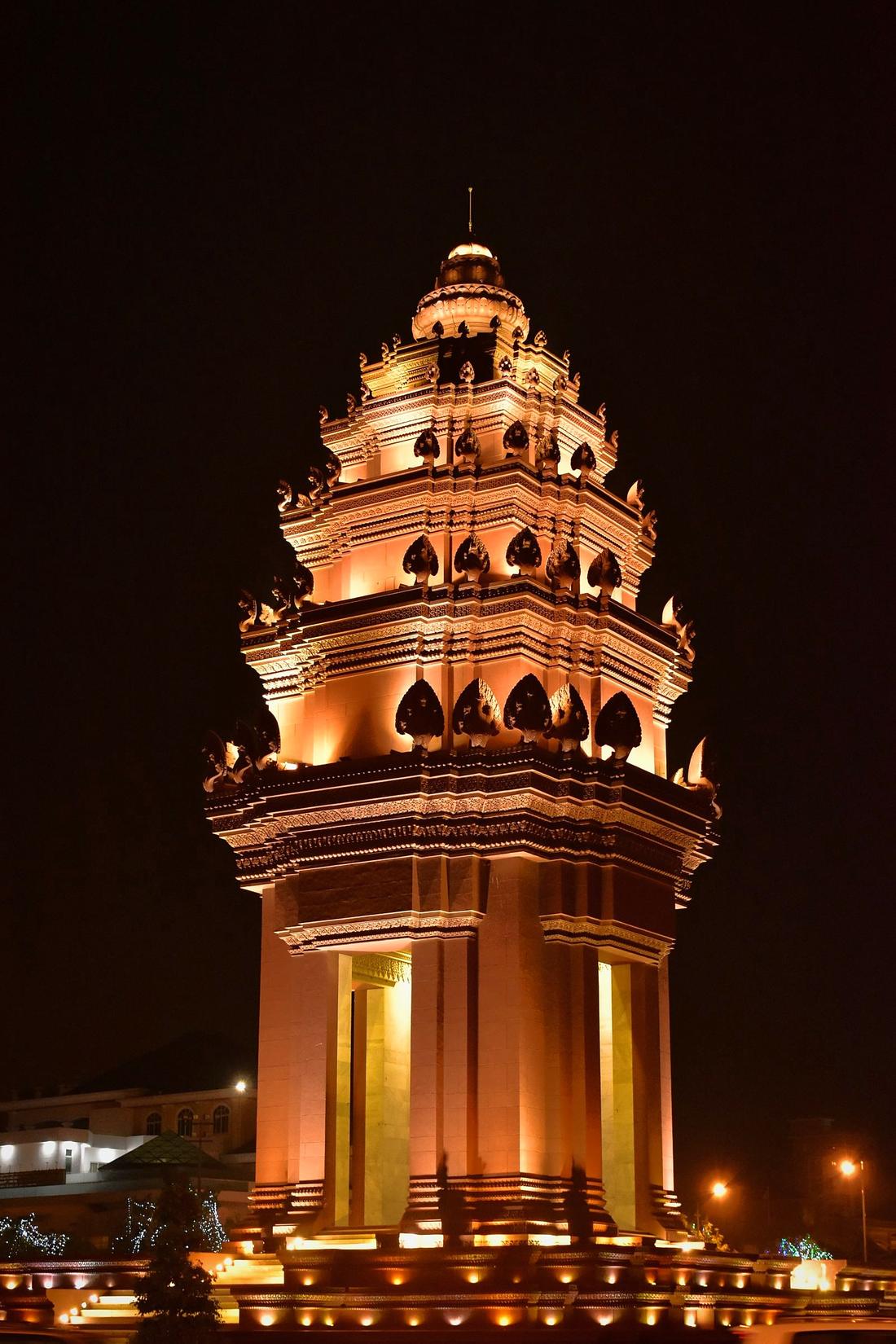
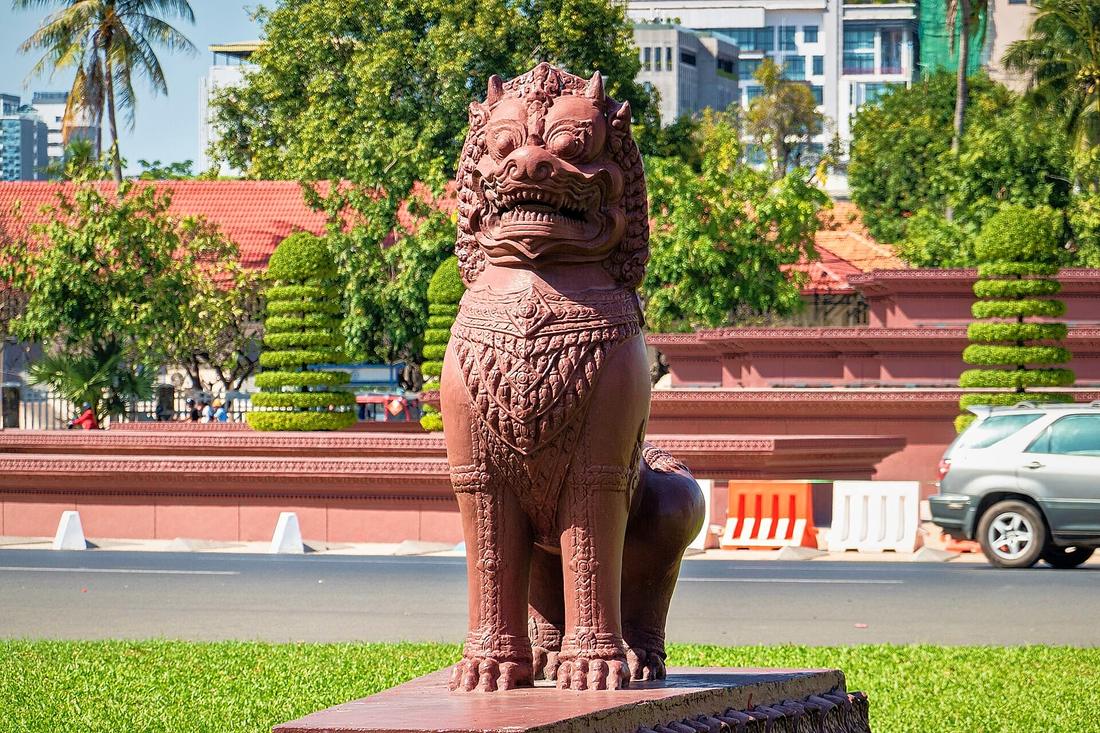
A lotus-shaped stupa, the tiered form you can pick out from across the roundabout. In the photos it stands behind grass and a stone lion statue by day and is lit up after dark.
Home › Phnom Penh › Independence Monument
Phnom Penh
A lotus-shaped stupa on a boulevard roundabout, built to mark independence from France: the Ministry of Tourism says 1958, while Wikipedia gives opening in 1962. It is also a way into the story of one architect.
By Laura Brennan · updated
What it is
It stands on a roundabout where Norodom Boulevard meets Sihanouk Boulevard, so you view it from the surrounding streets.
Where it isWhy it matters
The Ministry of Tourism says it was built in 1958 (Wikipedia gives opening in 1962) to symbolise independence gained in 1953. It is also a memorial to patriots.
The storyDesign
One guide compares its style to the temple at Banteay Srei, and says the design mixes the religious and the secular.
What you seeArchitect
A Cambodian architect who studied under Le Corbusier and designed and built over 100 structures.
Who he wasSwipe or use the arrows.
 1/3
 2/3
 3/3
To symbolise independence from France. The Ministry of Tourism dates it to 1958; independence itself came in 1953.
The first two entries come from one guide.
France controlled Cambodia from 1863 until independence.
King Norodom Sihanouk began claiming independence from France.
Cambodia declared independence from France.
Built to symbolise that independence. One guide says Prince Norodom Sihanouk personally selected and instructed the architect.
Wikipedia lists the opening as 1962, with construction from 1958, so sources differ on completion.
One guide says the Norodom Sihanouk Memorial behind the monument was constructed in 2013.
The monument also doubles as a memorial to Cambodian patriots who died for their country, which is why it is more than a landmark on a traffic circle. Read it as two things at once: a statement about 1953 and a design by an architect whose other work you can trace across the city.
A lotus-shaped stupa. Guides list its height as 37 m, but sources differ on the exact figure.
A lotus-shaped stupa, the tiered form you can pick out from across the roundabout. In the photos it stands behind grass and a stone lion statue by day and is lit up after dark.
One guide describes it as a lotus-shaped stupa in the style of the temple at Banteay Srei.
The same guide says the design combined the religious and the secular: a stupa form for a national monument.
Cambodian architect Vann Molyvann, who studied architecture under Le Corbusier.
Paris, then home
He won a scholarship to study in Paris in 1946. He returned to Cambodia in 1956, in the Sangkum Reastr Niyum era, and was appointed Head of Public Works and State Architect.
Modern meets Khmer
He pioneered New Khmer Architecture, combining modernism and Khmer tradition. His buildings use air holes for ventilation, drainage and irrigation for heavy rain, and natural light.
Over 100 structures
He designed and built over 100 structures, including Chaktomuk Conference Hall. He is nicknamed the man who built Cambodia, and a 2016 documentary used that title.
Vann Molyvann was born in Ream, Kampot province.
He took a scholarship to study in Paris and studied architecture under Le Corbusier.
He returned to Cambodia in the Sangkum Reastr Niyum era and was appointed Head of Public Works and State Architect.
He died at home in Siem Reap, aged 90.
Guides name a conference hall, a stadium and a theatre. The monument is the easiest entry point, and these are the other buildings that carry his name in Phnom Penh. Two of them were lost or damaged.
A concrete fan-shaped structure referencing a palm leaf, made to accommodate 850 people. It is on Sisowath Quay.
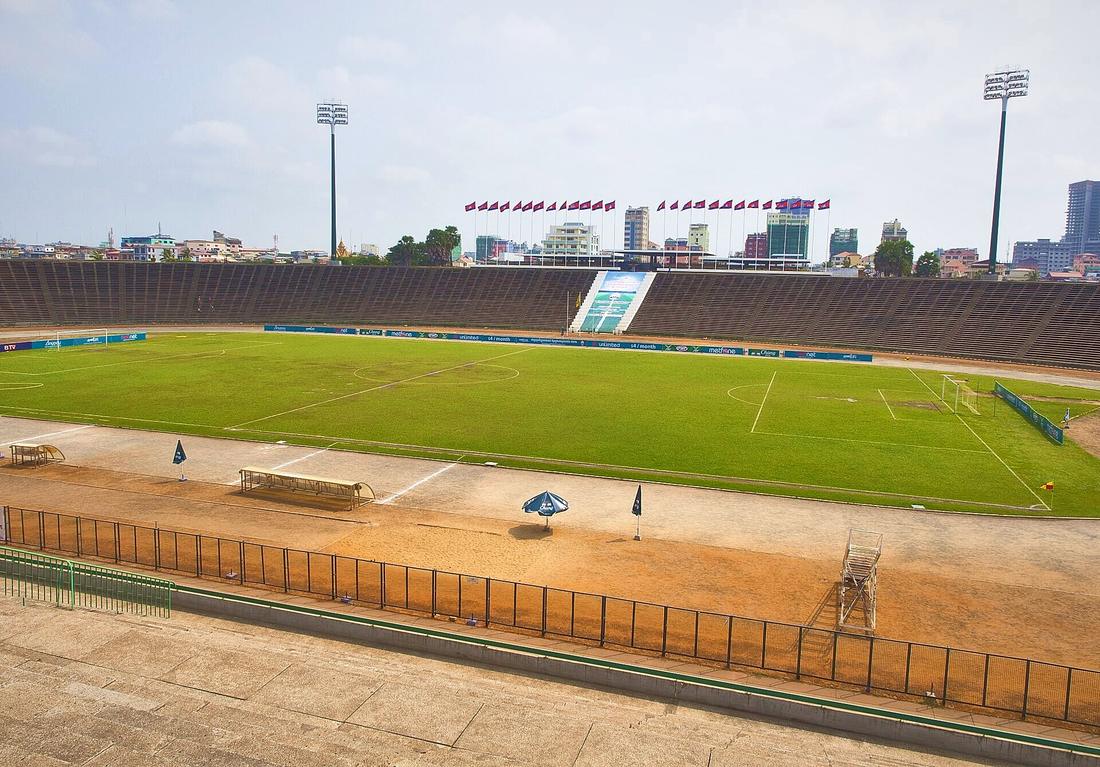
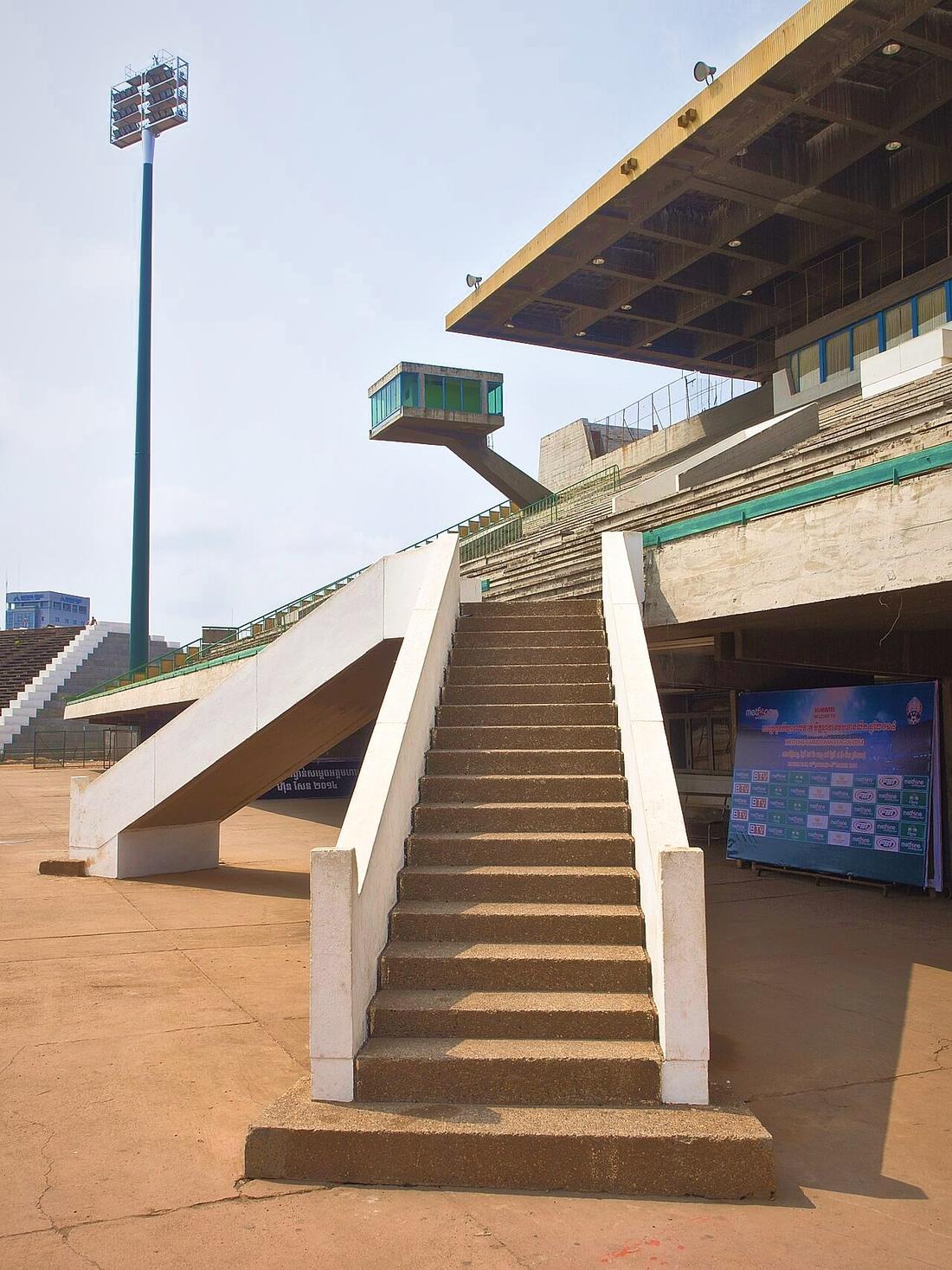
The National Sports Complex was built in 1963 to 1964 (sources differ), with 500,000 cubic metres of earth dug to shape the grounds. The short-lived GANEFO games were held in Phnom Penh from 25 November to 6 December 1966. One guide says it is popular with residents for daily exercise sessions.
Designed in 1966 as the Preah Suramarit National Theatre; it opened in 1968. A fire in February 1994, during renovation, gutted the auditorium.
The Council of Ministers building was demolished in 2008. Many of his buildings were abandoned or used as imprisonment or execution sites in the 1970s, so not everything he designed can be visited as it was.
On the roundabout where Norodom Boulevard meets Sihanouk Boulevard.
7,000 – 11,700 KHR
Trip.com (16 Apr 2026) estimates a ride from Aeon Mall Phnom Penh to the Independence Monument at 7,000 – 11,700 riel, about 8-12 minutes. It is an estimate, not a live fare, so check the price in your ride app.
Independence is marked in Cambodia on 9 November. One guide says the monument is the centre of activity during national celebrations.
9 November
Cambodia declared independence from France on 9 November 1953, and observes it every 9 November.
The centre of activity
One guide says the monument is the centre of activity during national celebrations. A ceremonial flame on the interior pedestal is often lit by a royal or high official, and floral tributes line the stairs during ceremonies. It is a ceremonial site as well as a photo stop.
More Phnom Penh sights to pair with a short stop here.
Independence from France, gained in 1953. The Ministry of Tourism says it was built in 1958 to symbolise that independence, and that it doubles as a memorial to Cambodian patriots who died for their country.
The Cambodian architect Vann Molyvann, born in 1926 and died on 28 September 2017. One guide says Prince Norodom Sihanouk personally selected and instructed the architect.
Guides give 37 m (121 ft), but sources differ on the exact height, so treat it as approximate.
Sources differ. The Ministry of Tourism says it was built in 1958, while Wikipedia lists the opening date as 1962, with construction beginning in 1958.
On the roundabout at the junction of Norodom and Sihanouk boulevards in Phnom Penh. One guide says the Norodom Sihanouk Memorial behind it was constructed in 2013.
On 9 November. Cambodia declared independence from France on 9 November 1953, and one guide says the monument is the centre of activity during national celebrations.
One guide says a ceremonial flame on the interior pedestal is often lit by a royal or high official, and that floral tributes line the stairs during ceremonies.
One guide describes it as a lotus-shaped stupa in the style of the temple at Banteay Srei, and says the design combined the religious and the secular.
He designed and built over 100 structures. Guides name Chaktomuk Conference Hall (opened 1961, on Sisowath Quay), the National Sports Complex or Olympic Stadium, and the Preah Suramarit National Theatre. Not all survive: a fire in February 1994 gutted the theatre auditorium, and the Council of Ministers building was demolished in 2008.
One guide says that in the 1970s many of Vann Molyvann's buildings were abandoned or used as imprisonment or execution sites.
He was appointed Minister of Education in 1967. After returning in 1991 he served as President of the Council of Ministers and Minister of Culture, Fine Arts, Town and Country Planning, and headed APSARA, the authority protecting the Angkor temples. He won the Nikkei Asia Prize in the culture category in 2013.
The short-lived GANEFO games were held in Phnom Penh from 25 November to 6 December 1966.
It was made to accommodate 850 people and is a concrete fan-shaped structure referencing a palm leaf, opened in 1961.